Home Blog Page 35

Meet Josiah Hyacinth, a man in love with telling stories that matter

The lives of black men in the UK have long been adversely affected by negative public perceptions. We are often turned away from jobs because we are not the “right fit”, while on the streets, we are regularly treated by police as dangerous suspects.

In a 2011 study, Media Representations & Impact on the Lives of Black Men and Boys, conducted by The Opportunity Agenda, negative mass media portrayals were strongly linked with lower life expectations among black men. These portrayals, constantly reinforced in print media, on television, the internet, fiction shows, print advertising and video games, shape public views of and attitudes toward men of colour.

Black male achievement is seldom celebrated in the UK mainstream media. Rather than waiting for things to change, we want to use our own framework to do this. It’s consistent with our desire at The Common Sense Network to ‘discover stories from across the political spectrum, local stories, stories that hold power to account, that uncover wrongdoing, that empower the forgotten and the unheard.’

In a wide range of ways, the overall presentation of black males in the media is distorted, exaggerating some dimensions while omitting others. The truth is there are many Black men working hard to do a lot of with a little, changing the world and playing on their own court. Through this series, we want to introduce you to 10.

Chapter 1: Josiah Hyacinth

On the 23rd of July 2020, we sat down with Josiah Hyacinth to find out about his journey and mission.

Strangers describe me as

Wise, creative and random

Close friends describe me as…

Misunderstood. They tell me all the time that people wouldn’t think I’m this complicated.

Only I know that I am…

A fighter. It takes a lot of sacrifices to do what I do. I’m not always happy but I understand that that’s part of the journey. Only I know the pressure of the process. I spend many times in private bursting into tears because I care about a lot for things.
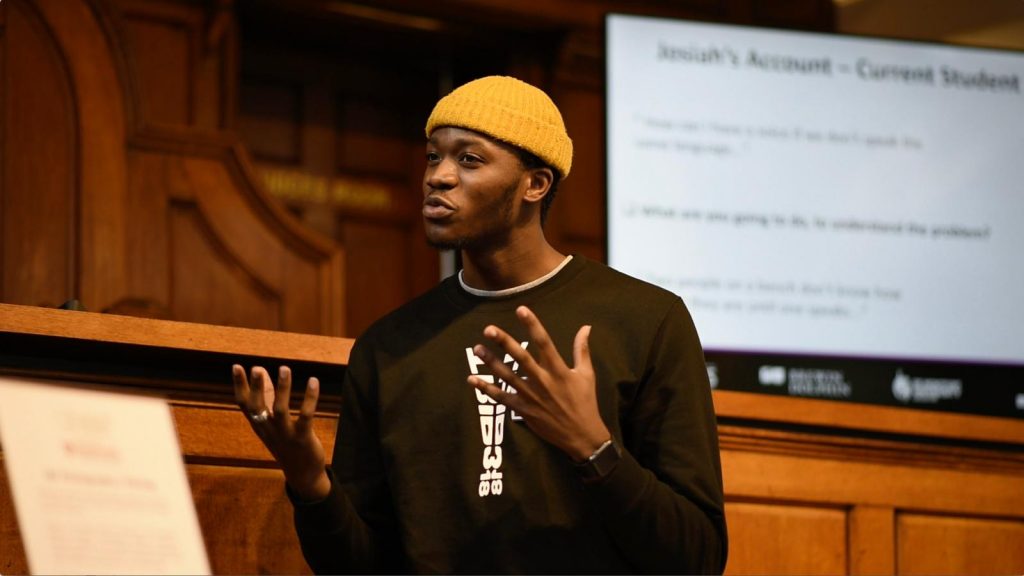
“I’m not on a mission to amplify voices and to make a difference with my work.”

How did this all begin?

My whole creative journey started when I was in university and I was faced with financial problems. Student finance wrongly judged my case and so said I wasn’t eligible to receive any financial support to complete my degree. This meant I had to find a different way to finance my education and pay my rent. During this time, I was living with a photographer and so I thought I could become a photographer too. I had a few friends who were dreamers like me and so when we came to university, we were all eager to start platforms and to try to grow something. 

I was working on a platform for Young Athletes, so that was my first introduction to a camera. Whilst out one night, I heard someone say they needed a photographer. I did quick maths and realised there was an opportunity to make money to support myself during the financial situation from SFE that I said yes to photography. I began shooting and learning and that was why and how I started. The transition was also easier because my friends were photographers

I also started a YouTube channel around this time. The aim was to grow to 30,000 subscribers by the summer, which I did. I was just in the process of learning and trying different things out. The pressure of student finance was what helped me grow and evolve. I became very passionate about learning and passionate about growing and so I got really infatuated with excellence.

How have things been since you started?

I have faced a fair few challenges since starting. At the beginning of my journey, I was shooting a lot of raves, breaking equipment and getting a lot of no’s. That was a difficulty. I have also had challenges that come with having a large platform and growing my Youtube channel. Having a large platform means getting lots of feedback.

I received some amazing support when I was first growing the channel. I was one of the first few black lifestyle male bloggers in the UK at the time and so, it was exciting because I was growing fast every day. I received a lot of hate because I was a free Black boy and a lot of people were not familiar with seeing that. A lot of the hate was based on how I used to dress but also some people were buying into the carefree narrative too. I was bullied because I liked expressing my emotions but I decided I was going to succeed early on. I didn’t see a lot of Black makes in the YouTube space and so that’s why I decided to join.

I just kept on sharing and I was seeing things grow. I made people laugh and that was really what I wanted people to do. I’m here to make you laugh and hopefully think.

I’m here to make you laugh and hopefully think

What do you hope to achieve with this your ambition?

I want to become the most influential creator in the UK. 

I want to do things that actually influence peoples lives. When I went through the Student Finance situation, it led to them making some changes. Student Finance went through some sort of audit. It also led my university’s Vice-Chancellors holding various meetings with student finance too. I got the opportunity to speak to a lot of senior people and as a result of all of this, Student Finance changed some of their processes. Seeing some of this happen was amazing.

I want to be able to develop incredible ideas and to help people tell their stories.

What’s surprised you so far about your personal journey?

I’ll be honest. It’s been shocking to see what it’s like to grow up in the public eye. When you see people like Michael Jackson, you wonder what it must like to be them. What it must be like for people to believe in you that much. Everyone wants to be them but growing up in the public eye is hard. Even from my experience, it has been hard.

There is so much expectation and, on occasion, that’s been hard for me to come to terms with. It’s also been surprising to see just how much of an impact social media can impact your personal mental health and reality. I would never have thought what people say online would really affect you but it has done so and now I was to help the next generation.

What are some of the ways you’ve made an impact thus far?

Raising money for the Go Fund Me campaign was a big moment. As I said earlier, progress with Student Finance was also a big moment for me. 

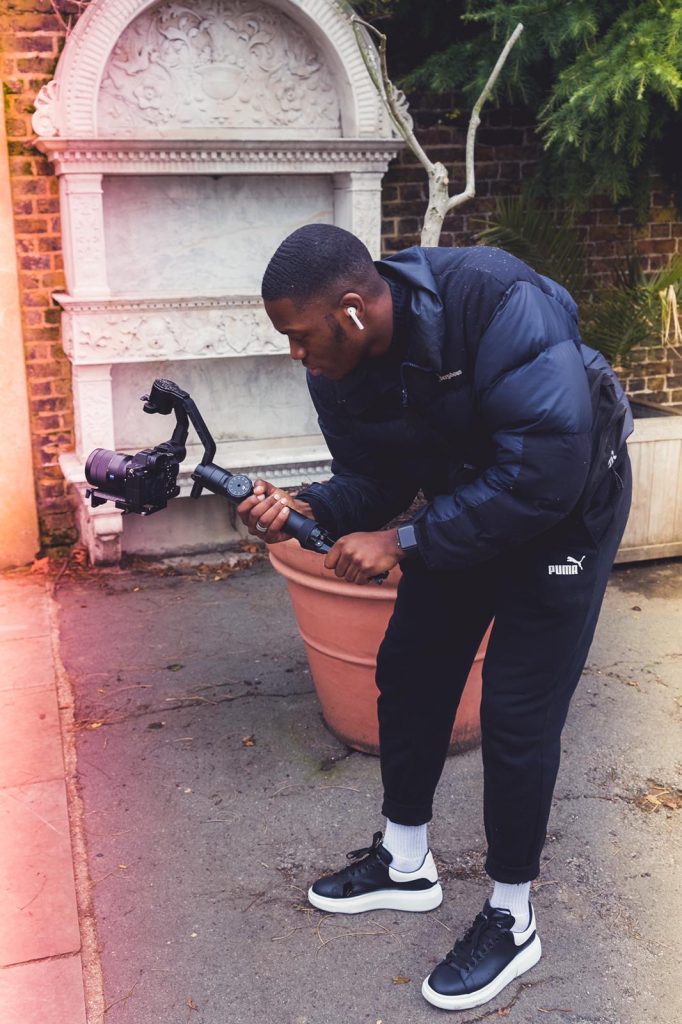
One of the biggest ways I’ve made an impact so far has also been in starting TRIBE318, an organisation all about educating and protecting entry-level creatives. We have been equipping them to avoid the mistakes I made early on in my journey. I also mentor young creatives, helping them navigate the creative spaces and maximise the impact of their work. There have been some great success stories. I’ve connected creatives around the world, ran initiatives across the UK, Canada and Australia. 

I went through a period when I was speaking to a lot of people who were suicidal. A lot of the people I ended up in the same space with – that was a personal victory for me 
What does success look like to you?

Having a family that has access to a better life than I may have had. I mean education or opportunities. Being able to fund my lifestyle with my ideas and projects. 

I’m not overly driven by money. For me, it’s about family and building for the next generation. I want to open a school for young creatives in Nigeria – people who don’t have access to what I had access to here 

What can we look forward to from you?

I’m looking forward to writing a book that will share some of the lessons I’ve learned throughout my journey of new beginnings. An open reflection on some of the most pivotal moments I’ve experienced so far

With Tribe318, I want to partner with more organisations so I can offer more opportunities for creatives. There are a lot of personal things but those are a few things you can expect in the near future.

Can the decline in oil lead to a new energy democracy?

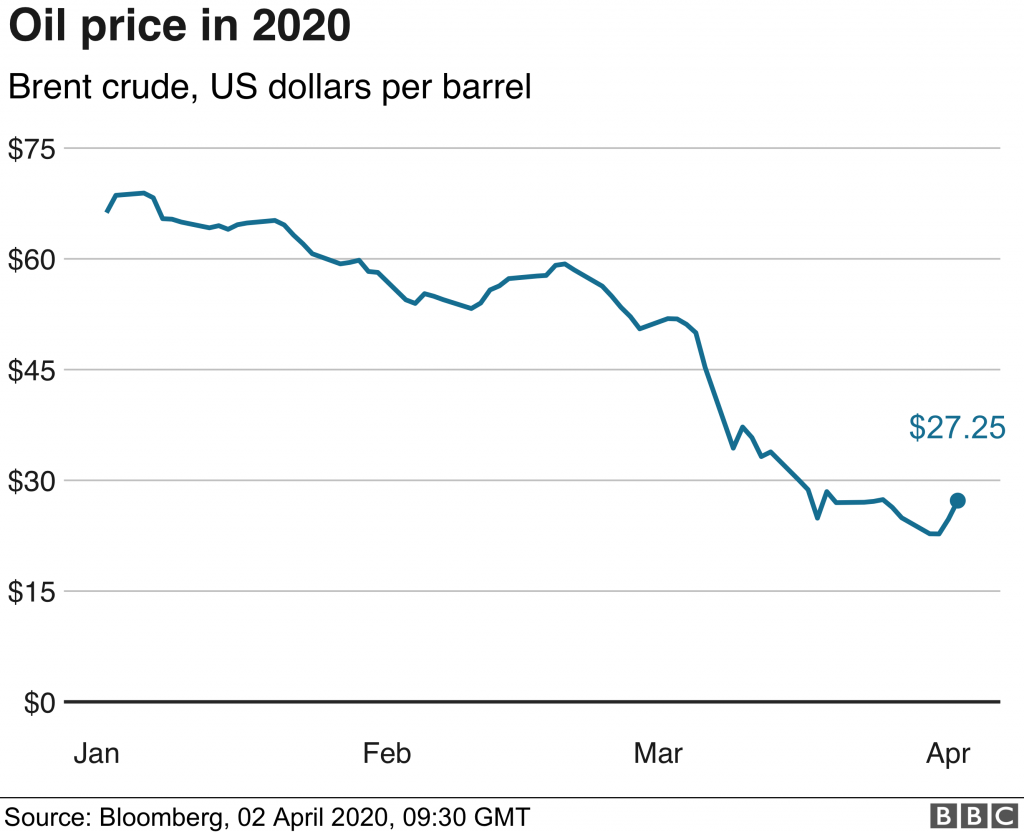
Ravaged by the economic ramifications of the pandemic, the energy sector has regressed into one of the worst declines ever witnessed in the last century. As the demand for oil plummets, the sought-after black lucre that once formed the groundwork for widespread geopolitical instability is gradually losing its political leverage. Nascent renewable alternatives are being integrated into the energy mix – corroborating the declining social importance of oil. The non-commercial implications of this could give rise to a new political milieu in which energy democracy is a central player.

Why is oil on the decline?

As a catalyst for aggressive foreign policy, oil has historically formed the basis upon which many political decisions have been made. It has become a global linchpin and dictates the responses of major players in the economy. So, if this is the case, why has there been a downturn in the market and how has Covid-19 exacerbated this?

  • A decrease in demand: the most obvious reason why the oil industry is predicted to crash and burn is the lack of demand in the wider economy. Remote working has become increasingly popular resulting in reduced transport and production costs for individuals and businesses – eroding oil value as demand continues to drop.
  • Price-wars: geopolitical volatility is inherent in the trade of commodities such as oil, mainly due to the fact that some regions are richer in the resource than others. Price wars have emerged as a consequence of this disproportionality and have deepened this innate tension. The most recent price war between Saudi Arabia and Russia has enhanced the demand side shock of the pandemic.
  • The Paris Agreement: this has rendered 51% of assets as completely worthless; only 41% of carbon can be burnt in order to stay within the 2-degree mark of change. The outward value of many oil companies has therefore diminished on the balance sheet and has reduced investor enthusiasm.
By agreeing to slash supply as a mutual truce, both Saudi Arabia and Russia caused prices to soar by 20%, allowing an intermittent stabilisation of the market.

What is energy democracy?

As this downturn continues, renewable alternatives are coming to the fore. The idea that regions which choose to adopt a green transition will have to undergo social, institutional, and cultural innovations and regulate destabilising power relations is what we call energy democracy.  

How will it work?

Implementing a technical and social transition involves overhauling monopolised fossil fuel energy systems – in other words, dismantling cartels such as OPEC or groups such as the Gas Exporting Countries Forum.

This has the power to change global power dynamics once and for all. By retaining majority control over a hot commodity (such as oil), cartels have the capacity to shape global relations and provide cardinal anchorage for countries embroiled in political warfare.  

Explains how power dynamics have been sculpted using diplomatic tools such as cartels and illustrates how these relations can be reconfigured through diversifying the industry.

But how feasible is energy democracy exactly? Although a stream of renewable energy substitutes has been established, oil is still prevalent in other downstream services such as the production of petrochemicals, natural gas, clothing, and other products.

If there is still a vested interest in products of this nature, the oil industry as a whole cannot be written off entirely. If this is the case, how feasible is it to preserve organisations such as OPEC? If they are retained, will its political influence be tempered by the pandemic?

Understanding how pragmatic this parallel universe of energy democracy is depends upon the trajectory of the oil industry as a whole and the demand for petrochemicals in a post-pandemic future.

Zoox: If Tesla and Über had a baby

Last month Amazon announced that it will acquire Zoox, a company based in Foster City, California. According to someone familiar with the deal Amazon agreed to pay around $1.2 billion for Zoox. The self-driving startup raised around $800 million before the acquisition. Zoox is aiming to develop autonomous driving technology in a way that provides a full-stack solution for ride-hailing. In layman’s terms… a self-driving Über.

Competitors or cost-cutting strategy

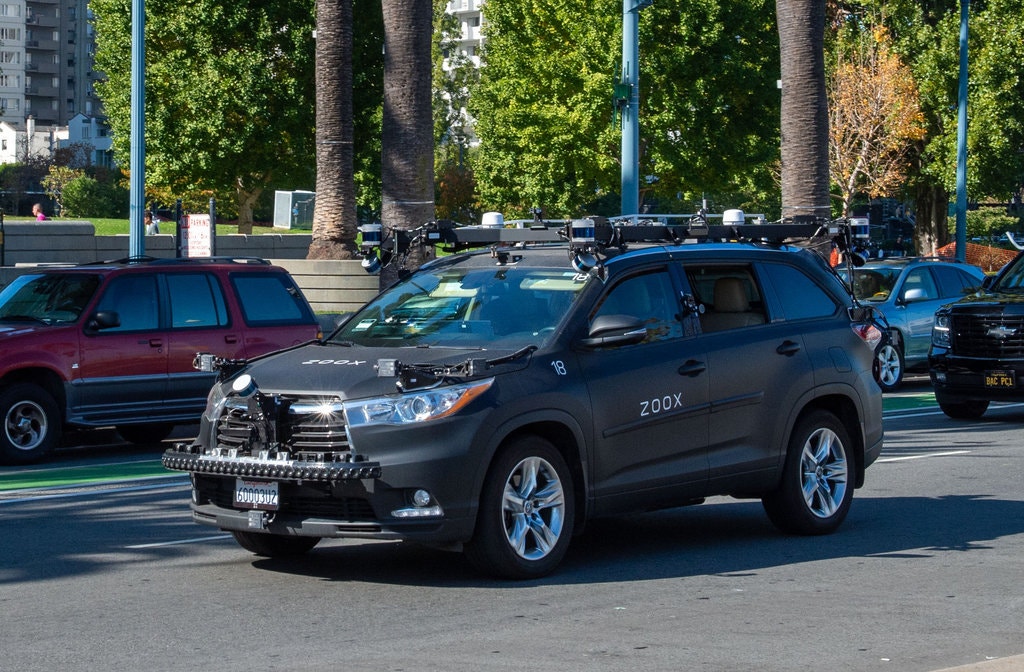
At first glance, it seems that Amazon wants to enter the robo-taxi space and create a fleet of self-driving cars to compete with Google’s Waymo. Zoox is able to differentiate themselves from the competitors because they are not relying on modifying existing cars with self-driving technology. Unlike Tesla, Ford and Uber; Zoox wants to bring an automated vehicle with no steering wheel, that can travel in any direction to the market. Zoox hasn’t clocked in the same number of testing miles as Waymo (Alphabet) or Cruise (General Motors subsidiary) and that is expected for a startup with limited resources when compared to industry giants. However, according to analysts Citi Research Zoox’s rate of improvement, based on the number of times a human has to step in to disengage the autonomy — had been “notable”. This could have been what attracted Amazon to acquire Zoox.

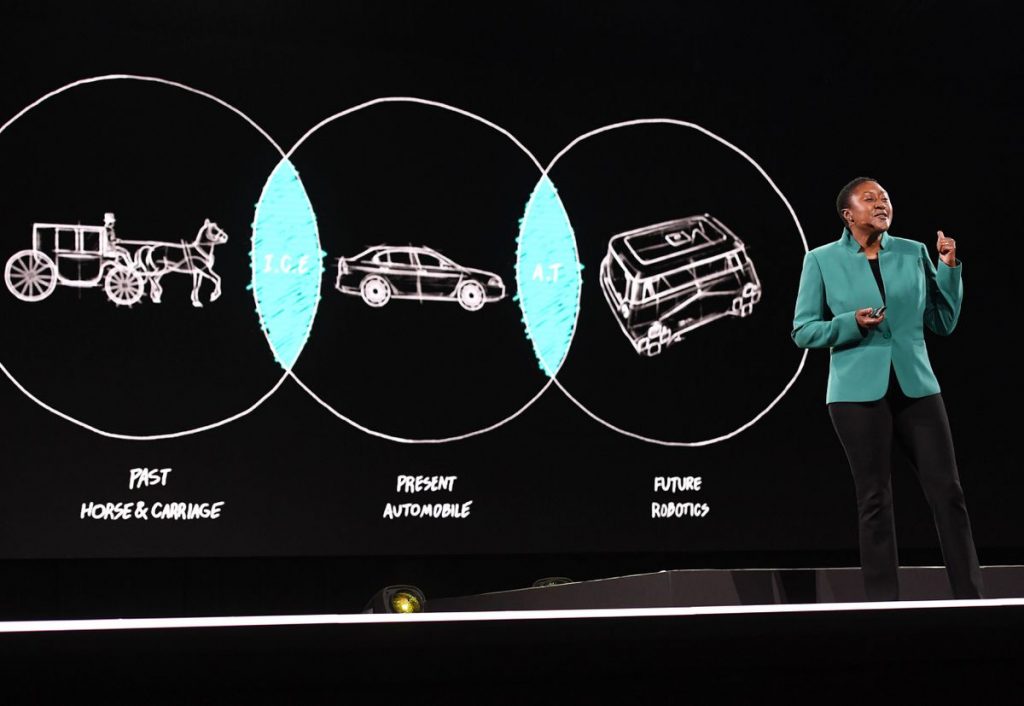
Aicha Evans who is the CEO of the self-driving technology development company Zoox, talks about autonomous cars during a keynote session at the Amazon Re:MARS conference on robotics and artificial intelligence at the Aria Hotel in Las Vegas, Nevada on June 6, 2019. (MARK RALSTON/AFP via Getty Images)

Despite the fact that Amazon claims to have acquired Zoox to help bring their vision of autonomous ride-hailing to reality, analysts are unsure as to whether or not Amazon wants to use Zoox for the sole purpose of competing in the robo-taxi space. Providing that Amazon had an autonomous offering, Morgan Stanley estimates that Amazon would be able to save $20 billion annually on shipping costs. Amazon has spent heavily to automate its processes in the past. They purchased warehouse robot-maker Kiva Systems in 2012 and now their technology has been integrated into warehouses around the world.

All that glitters is not gold

Zoox has had its own unique set of challenges and problems since being founded in 2014. The acquisition figure was $1.2 billion, however, two years ago Zoox was valued around triple that figure (over $3.2 billion). Whilst developing its self-driving car, Zoox struggled with management turnovers as co-founder and former CEO Tim Kentley-Klay was ousted and replaced by Aicha Evans. The coronavirus pandemic only compounded Zoox’s problems as they were from launching their pilot programme this year and laid off about a hundred employees. They were not the only company that has been affected by the pandemic as Cruise has laid off around 150 employees.

Photo by Andrej Sokolow/picture alliance (Getty Images)

Inevitable market domination?

It is clear that Zoox is a direct competitor with the likes of Cruise and Waymo, if Amazon decided to enter the robotaxi race they would add pressure onto companies like Über and Lyft. There is also potential for Amazon to use Zoox’s technology to automate shipping and delivery which would mean that delivery services like FedEx and UPS would have to respond so that they do not lose market share. No matter direction decides to take their acquisition of Zoox will only help to enter, compete and perhaps dominate a new market or tighten their grip on a market they already dominate. With this being said nothing stops Amazon for attempting to do both.

This is why Trump could win again

If Donald Trump wins the election later this year, who will be to blame? Guest contributor, Patrick O Donoghue argues the Democratic Party may have done more to divide America than learn from the lessons of the Trump-era.

The election of a reality television host in 2016 to the most powerful office on Earth should have prompted a deep and self-critical moment of reckoning for America’s political establishment. However, rather than heralding a period of introspection on the part of the political forces responsible for this surreal state of affairs, Trump’s triumph has produced the opposite reaction.

What we have seen from senior Democrats and prominent political commentators in the years since is symptomatic of a system gripped by laziness, complacency, and a complete lack of imagination. In other words, the very people who should have been showing some humility after being sent a loud and clear message –  by voiceless and disenfranchised, Rust Belt Trump voters – that they desperately needed to be taught a lesson, have instead proven that they have learned next to nothing from their past mistakes. 

What we have seen in the years since is a political machine with such little belief in its own ideas to tackle Trump on matters of substance, that it has opted for a constant barrage of cheap abuse and jibes, as a lame substitute for rigorous policy debates, in the hope of concealing the great void at the heart of what it stands for.

What need is there to sink to such petty depths by adopting the infantile, playground tactics of mocking Trump for his “tiny hands”, his bewildering hairdo, or his orange-like complexion, if you have a serious offer to make to the American people? The answer is that in the absence of a willingness to fundamentally change and take ownership of its own policy failures, the Democratic Party establishment, aided by a gang of media goons, have resorted to playing Trump at his own game. What has been the end result of this strategy? Undoubtedly, it has been the ever-worsening trivialisation of American life.

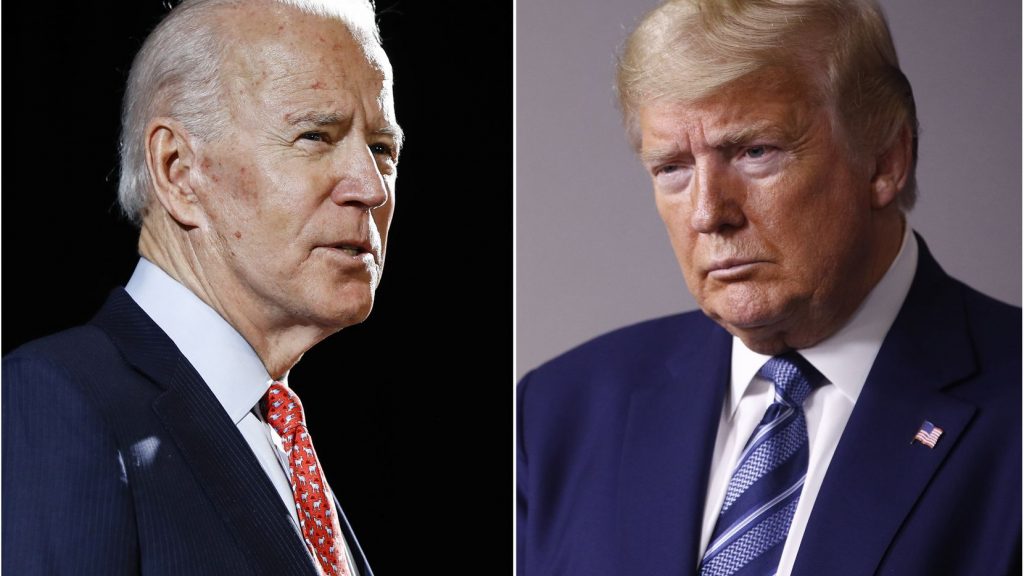
Left: former Vice President Joe Biden. Right: President Donald Trump speaks at the White House.(DALLASNEWS.COM)

Let’s face it. Trump needs no help in making himself look and sound stupid. What do Jimmy Kimmel or John Oliver believe they are achieving with their snarky monologues highlighting Trump’s latest gaffe? Trump is beyond self-parody as it is. Therefore, this kind of arrogant approach does not constitute thought-provoking satire but further patronises, alienates, and insults the intelligence of, the exact groups that need to be won over. Ultimately, it ends up entrenching bitter divisions and pushing further away the people a real anti-Trump resistance should be busily recruiting with real and hopeful alternative solutions. 

This trivialisation of American politics is the precise reason we have witnessed others, such as Kanye West, with even less experience and fewer credentials than Trump attempting to enter the presidential fray.

Sure, Joe Biden may beat Trump this time around. But in many ways the damage is already done and you can bet your bottom dollar that Biden’s conservative, neoliberal agenda will only ensure that the next Trump who comes along will be ten times worse than the one we’ve already got. This is a dangerously slippery slope that we are sliding down at present.

The wounds that had been gaping for decades in the left-behind communities that propelled Trump into office can only be healed by addressing the resentment that has been seething under the surface of American society for too long. In short, authentic change is needed; not a return to the way things were. So, the question is: with the Democrats possessed by short-term thinking, who or what can secure America’s long-term future? 

“Patrick O’Donoghue is a writer based in Dublin, Ireland. He is a recent graduate in Philosophy and Sociology of Trinity College, Dublin and the former Magazine Editor of the award-winning The University Times. Patrick will begin his Masters in Journalism at DCU in October. He currently writes for the The Last Word on Football and the Indiependent. His poetry can be found at The Honest Ulsterman.” 

Wiley’s anti-semitism: the double standards in the racism debate

Wiley’s recent twitter outburst is the product of an ideology that labels certain groups as innately “privileged” and thus evil, and others as eternally “oppressed” and thus virtuous.

Last Saturday, “Wear my Rolex” rapper Wiley decided to embark on an antisemitic rant on his Twitter feed — the latest episode in what seems to be a trend of high-profile rappers espousing racial hatred.
In another tweet he appeared to dismiss the significance of the holocaust claiming: “I don’t care about Hitler, I care about black people”, and compared the Jewish community to the Ku Klux Klan. He also called for a “war” with Jews and claimed that they ought to “take some corn” (slang for “take bullets”).

“Golders green yes see you soon I will come on my own,” Wiley wrote later on Facebook, referencing the largely Jewish-populated London neighbourhood. 

He posted: “Jewish people you think you are too important I am sick of you”.

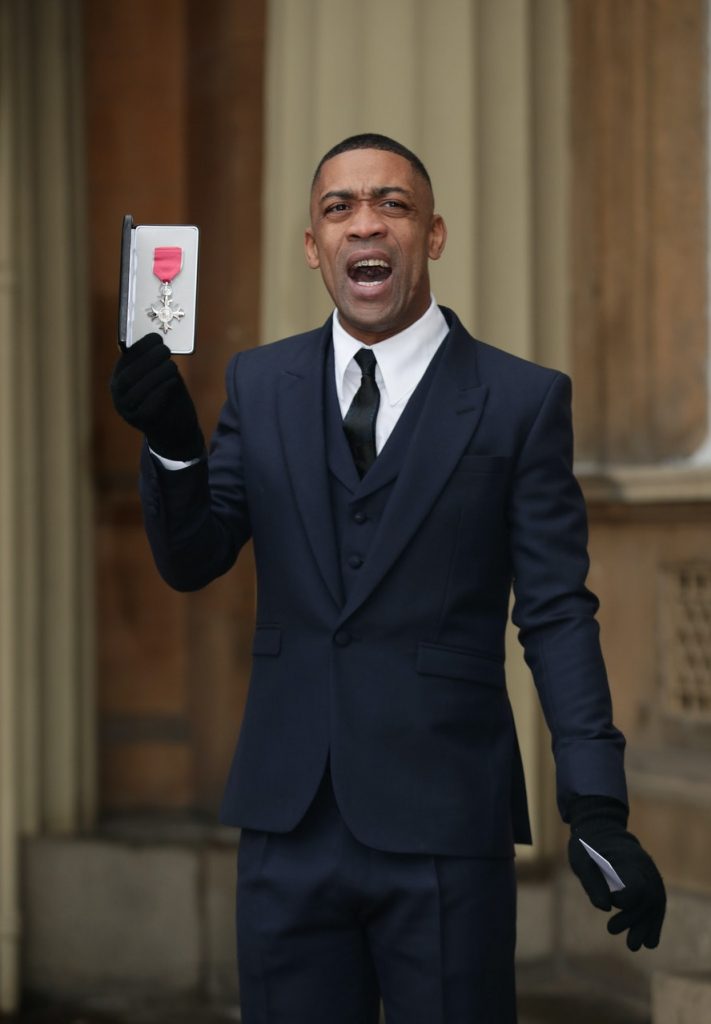
Wiley holding his MBE following an investiture ceremony at Buckingham Palace in 2018 (Yui Mok/PA)

Why is it that progressives who are so quick to chastise hoop earrings and cornrows as oppressive cultural appropriation, and harass critics of intersectionality, are so eager to sideline antisemitic hate? Why is it that those quick to label the #AllLivesMatter hashtag as white supremacist are so hasty to complain that the #NoSafeSpaceforJewHate campaign unfairly focuses on anti-Jewish racism?

The answer is simple. For these political groups, truth is not an objective reality that exists regardless of whether we would like it to or not, but it is merely an instrument of power. This radical claim is the inheritance of postmodern theories now the staple of university syllabi across Europe and America.

Jacques Derrida denounced the “tyranny of reason” and Foucalt claimed that “knowledge” is simply an attempt to mask bias with the illusion of legitimacy, and thus implied that progressives were justified in trading “truth” for influence in pursuit of their aims. In this framework morality quickly becomes a question of what benefits one’s agenda, rather than an inflexible principle. People are encouraged to speak “their truth” as if it were one among many. Thus to question the usefulness of the #BLM slogan is to unfairly erase the issue at hand — police brutality against African Americans. Yet to challenge a campaign against twitter’s double-standard concerning antisemitism is wholly justified, as it is unfair to focus on anti-Jewish prejudice.

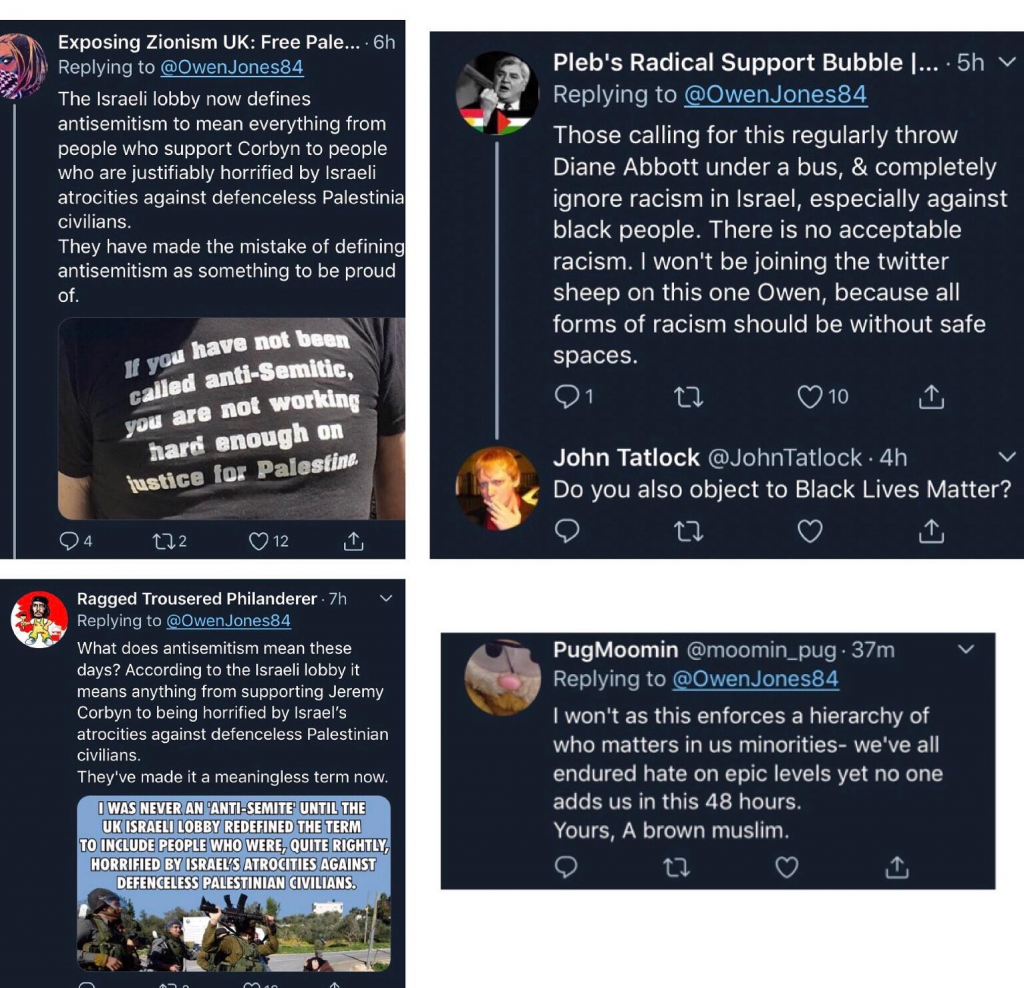
Many activist accounts criticised Owen Jones’ tweet in support of the #NoSafeSpaceforJewHate campaign

As the backlash to his posts began to amass, Wiley responded to the multitude of antisemitism and racism accusations aimed at him. “I am not racist,” he insisted, adding, “Black People can’t be racist; they can only be upset about how they have been mistreated.”

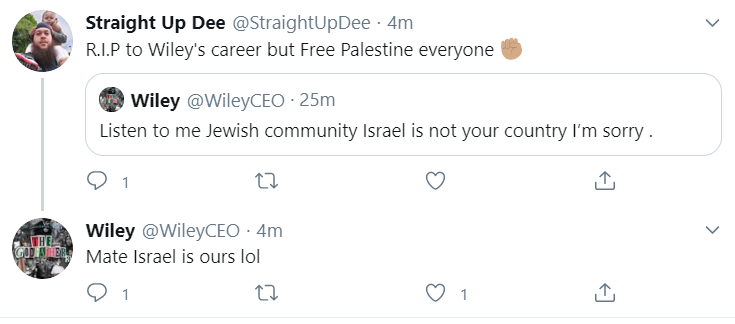
His perspective, therefore, was not an isolated outburst, but rather a measured application of the intersectional victim hierarchy in relation to his perceived struggles. He also interspersed his caricatures of Jews as nefariously powerful aggressors with tropes likely drawn from pseudo-historical black supremacist sects such as the Nation of Islam, who claim that those of African descent are the “real Jews”, claiming “Israel is ours”

Daniel Sugarman on Twitter: "I have to say, it is bleakly amusing ...
SOURCE: Twitter

Singer and left-wing activist Lilly Allen shared an Instagram story in which she claimed she was “worried” about Wiley, and seemingly absolved him of responsibility by lamenting that “we’re all being egged on by big data and big tech”. Would she have been similarly sympathetic if the controversy had involved a white supremacist spouting hatred against Muslims or Black people? 

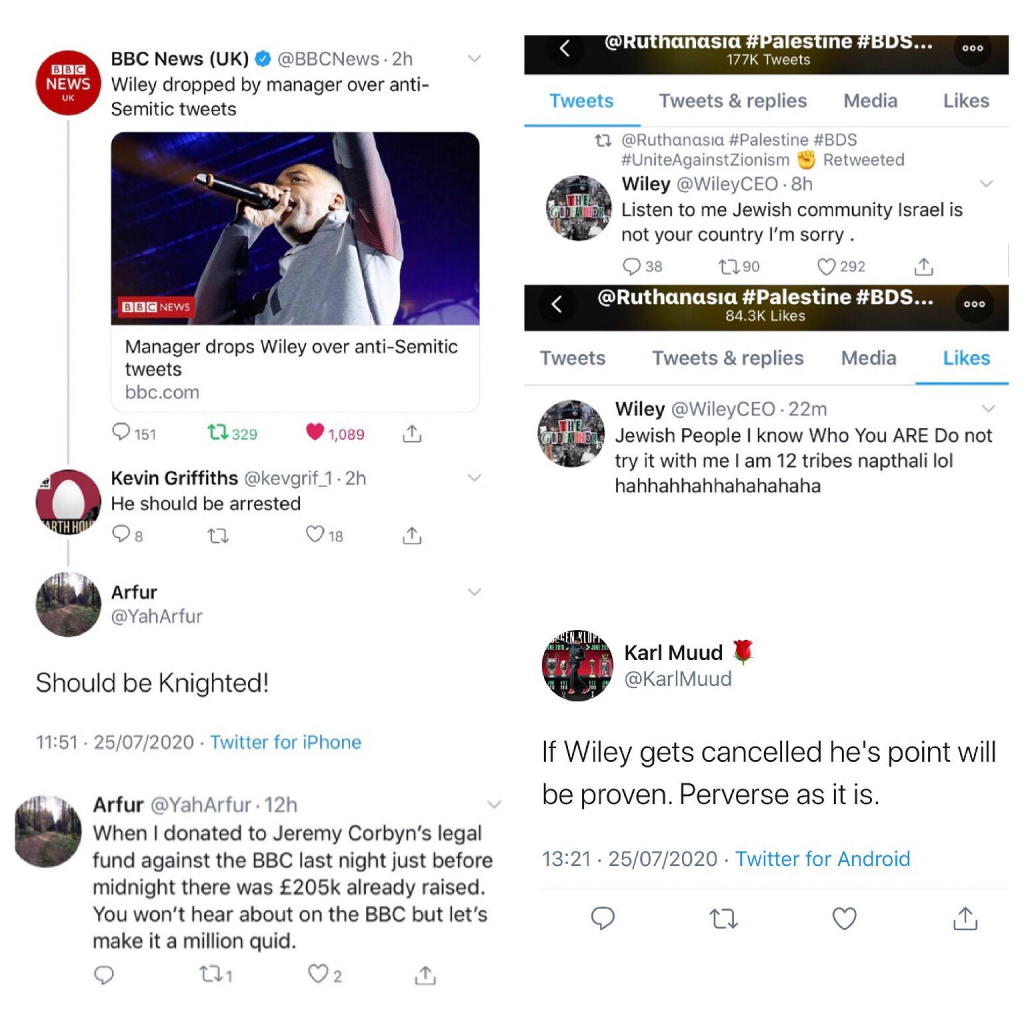
Many public figures and organisations rightly condemned Wiley’s comments and a 48 hr twitter boycott was announced in response to the site’s failure to remove his tweets. The reaction of mainstream media was lacklustre, however. The NME led with ‘Wiley responds to antisemitism accusations over his Israel tweets’, and numerous other outlets referred to mere “accusations” of antisemitism. Yet the majority of the tweets did not refer to Israel at all, and he only began to mention Israel after many tweets caricaturing Jews as malicious cowards. So why did respected news outlets and Wiley’s defenders instantly jump to erase his unbridled antisemitism as merely a political critique? 

Numerous anti-Israel accounts supported Wiley’s comments

Israeli writer Hen Mazzig criticised this alarming trend in a tweet: “I’m really over this pattern where a celebrity does something antisemitic unrelated to Israel, and then suddenly, starts talking nonstop about Palestine. It’s as if they’re intentionally muddying the waters, and get the “anti-zionism isn’t antisemitism” crowd to the rescue.” This phenomenon is nothing more than tactical gaslighting. A person professes profoundly antisemitic views; many react with accusations of antisemitism; the person then begins to talk about Zionism and the Arab-Israeli conflict so to give the appearance that their antisemitic tirade was not antisemitic at all, but was a bold political statement against the perceived evils of Israel and Zionism.

Once again, the “soft” totalitarianism of intersectional theory rears its head. If Jews are mostly Zionist (i.e. they are in favour of the existence of Israel), and I believe Zionism is an evil colonial ideology, Jews are therefore evil colonists and merit neither pity nor respect

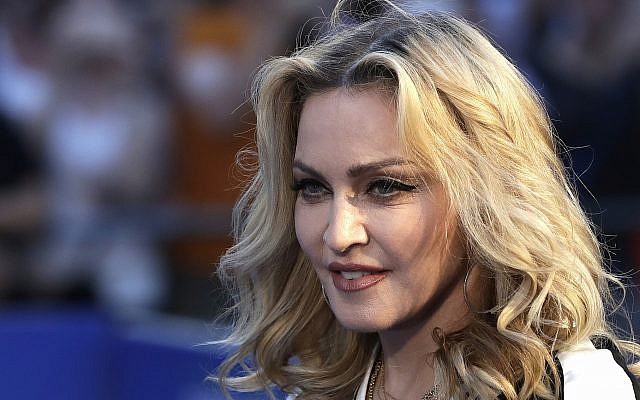
Madonna poses for photographers upon arrival at the world premiere of the film 'The Beatles, Eight Days a Week,' in London, September 15, 2016. (AP Photo/Kirsty Wigglesworth)
On July 4th singer Madonna posted speeches by Nation of Islam leader Louis Farrakhan, and has since posted a series of messages in “solidarity” with Palestine. SOURCE: AP Photo/Kirsty Wigglesworth

There is an underlying assumption in intersectionality, that anti-Jewish prejudice is somehow less of a moral qualm because Jews are “privileged”. Although it is ridiculous in any case to claim that one identity group is universally “privileged” above others, the Jewish community, like any other is not a monolith.

Jewish immigration to the UK over the past few centuries has consisted mostly of Ashkenazi Jews fleeing pogroms in Eastern Europe and twentieth-century fascism. Most British Jews today are middle-class, but until several decades ago they primarily resided in working-class areas of London.

Haredi Jews are responsible for the highest birthrates within the community and have higher levels of poverty than the UK average. Jews represent only 0.5% of the British population but are the victims of eighteen per cent of hate crimes, many of which are violent in nature.

In 2019 almost 50% of Jews said they would consider emigrating if Jeremy Corbyn became Prime Minister. Synagogues and Jewish schools are routinely required to employ armed security for fear of attacks.

The successes of many in the Jewish community against the backdrop of persecution and discrimination ought to be celebrated, but that does not mean Antisemitism does not risk terrible consequences or that Jews are innately privileged. The only way to tackle racism is to defend truth. An “intersectional” movement rooted in the bogus theories of postmodernism will not help us do so.

The Boris “report card”

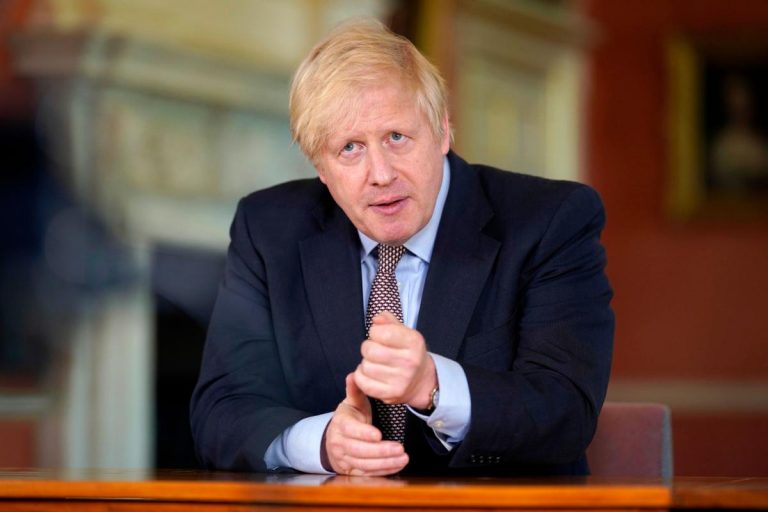
Boris Johnson’s first premiership was marked by drama, defection, and parliamentary deadlock. How has he done the second time around? We take a look at his performance since his December landslide victory.

Largely unharmed by its leader’s colourful personal scandals, last December the Conservative Party gained its most significant victory since Thatcher’s 1987 landslide. Perhaps Boris Johnson and his cronies were not electoral geniuses, as they had been conveniently pitted against an increasingly unpopular Labour leader. Still, the result seemed to justify the means. Boris had blown the naysayers out of the proverbial water. After years of uninspiring Brexit bungling, the parliamentary floor was his to do as his party wished. 

Sedgefield fell, and they erupted into song — things can only get ...
Boris Johnson, Carrie Symonds and chief aide Dominic Cummings celebrating the result from Blyth Valley, which had been Labour since it was created in 1950 I SOURCE: ANDREW PARSONS/I-IMAGES


Brexit

Arguably the biggest reason behind Boris’ success, particularly in the traditionally Labour-voting heartlands, was his tough stance on Brexit in comparison to his predecessor and the divided shadow cabinet. Predictably the issue has taken a backseat to the Coronavirus crisis. On January 31st, the UK officially left the European Union, and its transition period will not be formally extended beyond December 31st 2020. Yet the future of the UK’s relationship with the EU remains uncertain. Boris Johnson did not create the Brexit quagmire. Still, the success of the deal (or lack thereof) reached by his government will surely define how subsequent generations view the movement to exit the political bloc.

Foreign Policy

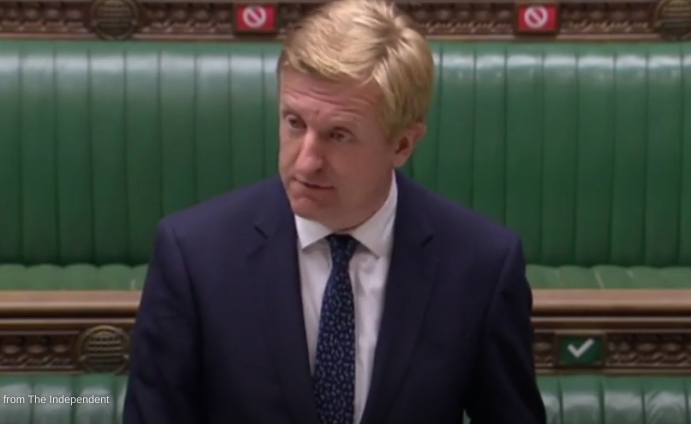
Digital secretary Oliver Dowden announces the decision to ban Huawei from UK’s 5G network on July 14th I SOURCE: The Independent

Johnson’s stint as Foreign Secretary in May’s cabinet proved brief and unexceptional. As Prime Minister, Johnson has proved as decisive as he is divisive. The mid-June announcement that the Department for International Development was set to be absorbed into the Foreign Office ignited fiery protest from many sides. The Guardian described the move as fuelled by the corrosive idea… that a generous Britain is being taken for a ride by foreigners.”

The decision appears to be a somewhat token attempt to satisfy foreign aid sceptics in the Tory Party, and the government remains committed to spending 0.7% of its gross national income on international development. More useful would be comprehensive of the UK’s foreign aid budget and structure, to ensure aid is justified and effective.

Furthermore, despite defending controversial plans to allow Chinese corporation Huawei — which has faced allegations of espionage — to construct Britain’s 5G infrastructure going forward, Johnson has since made a U-turn.

There has also been a significant shift in the rhetoric against the Chinese regime in the wake of its repressive National Security Law aimed at Hong Kong, revelations regarding the abuse of Uighurs and other minorities, and ongoing questions regarding the Coronavirus outbreak.

Hong Kong citizens have since been offered a fast-track to UK residency, and the extradition treaty with China has been suspended indefinitely.

How Johnson responds to China’s ongoing threat will no doubt define his legacy over the coming years.

Coronavirus

The initial stages of the Coronavirus outbreak were marked by some degree of national unity, with general public support of the lockdown implemented in March.

The statistics on COVID-19 deaths remain spotty, but one thing is clear: there was an abject failure by the NHS and the government to ensure the virus did not spread to care homes housing the elderly- the demographic for whom COVID-19 is demonstrably more fatal. No doubt this scandal and criticism of the lockdown policy (from both those who thought it too heavy-handed and others who thought it not strict enough) will form the basis of much scrutiny at the next general election.

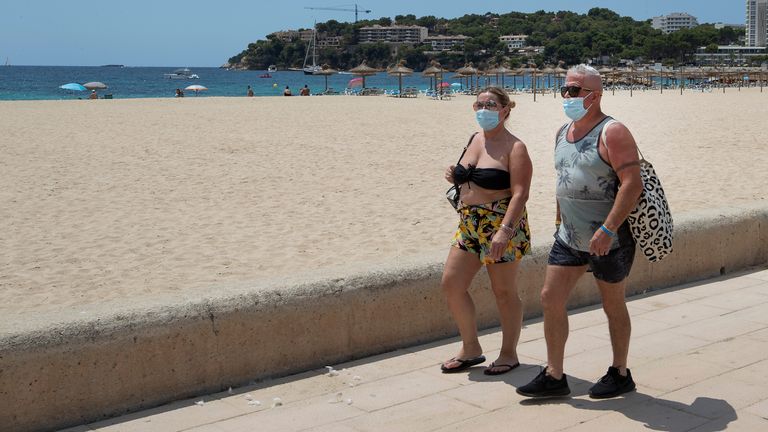
Late last week the government announced — after initially deciding the opposite — that returning holidayers from Spain would be forced to quarantine for two whole weeks. Transport minister Baroness Vere of Norbiton confirmed the idea might yet be reversed once again, after pressure from Madrid over the change to travel advice made by the government over the weekend.

Mask-wearing holidaymakers walk along a beachfront  Balearic island of Majorca
Mask-wearing holidaymakers walk along a beachfront on the Balearic island of Majorca I SOURCE: Sky News

Johnson’s ideological eclecticism may have once made him a compelling columnist, but his tendency to back-pedal and frequently change tact does not bode well for a Prime Minister.

Economy

For a man who enjoys waxing lyrical about the achievements of the free market, Johnson’s approach to the economy has been surprisingly Soviet. The government’s response to the threat of Coronavirus, shut down swathes of the British economy. One thing is clear, the current emergency provisions cannot last forever. Sources from the New Statesman to The Spectator have sounded the alarm bells regarding an impending implosion with the possibility of rivalling the Great Depression.

Borders

One of the key reasons for the “Leave” vote was a desire to restructure the type of immigration to the UK, in favour of an Australian points-based system for example.

Meanwhile, during the first half of 2020, over 500 illegal immigrants gained access to the UK across the English Channel and disappeared without a trace, likely into exploitative informal sector work. This debacle does not just fail British voters. The government has failed the very people seeking safety and opportunity in the United Kingdom by incentivising dangerous illegal smugglers and ignoring the impact of unchecked unlawful immigration on both host and source countries.

The early days of this government have been beset by such challenges that its success at the next election will likely rest upon public perception of how they were handled. The uneasy consensus of summer 2020 could easily tip to intense disapproval in the event of an economic crisis. The only thing certain about the years ahead is that the United Kingdom will face a heavy dose of uncertainty.

Where is the government getting all this money from?

Since the coronavirus pandemic started, the Office for Budget Responsibility estimates the government has spent over £100bn in response. From the furlough scheme, to ‘eat out to help out’. Whilst some of these schemes are welcome, questions are being raised about where the government is getting all of this money from, and when it will need to be paid back.

The government has three sources of income:

Taxes

Money paid by individuals and businesses. this includes VAT, income tax, national insurance and more. Since the coronavirus pandemic made its way to the UK, the Government has made significant cuts to taxes. This includes a cut in VAT from 20% to 5% in the hospitality sector along with a stamp duty cut for properties below £500k.

Borrowing

The government will have to borrow money if it is spending more money than it receives in taxes. For example, if the government collects £100bn in taxes and had a total expenditure of £150bn then it would need to borrow £50bn. This is known as a budget deficit.

Printing Money

The government can create more money to finance spending. This can be done by getting the Bank of England to print more money; the bank of England will then use this ‘new’ money to buy bonds issued by the government. The government will then use this money to finance its spending.

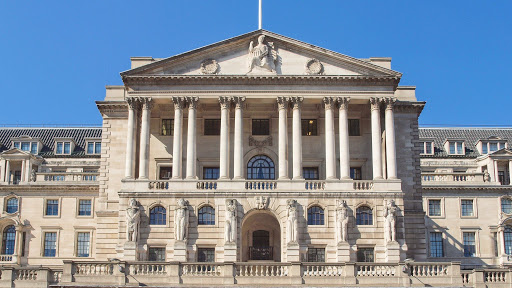
The historical building of the Bank of England(Source Financial times)

How does the government borrow money?

According to the Office of National Statistics, the government will borrow £298.4bn in this current financial year (April 2020 to March 2021), this is 5 times higher than the government borrowed in the last financial year. The reason why government borrowing is at a record high is to pay for the furlough scheme, bail out major industries and to invest in infrastructure projects that will boost the economy.

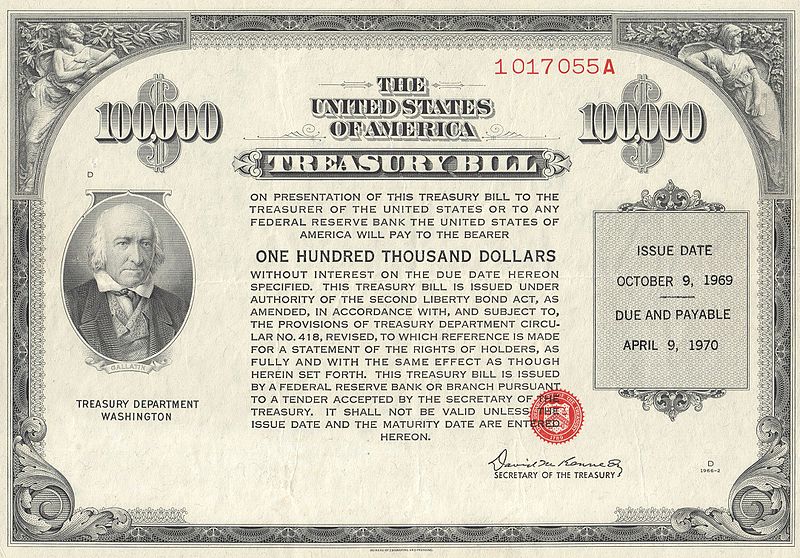
When the UK government wants to borrow money, it will create something called a bond. A bond is a government ‘I owe you’. This means that an individual is lending the government money which must be paid back in full. Every government bond has a cost, an interest rate and a maturity date.

Richard Murphy - The market is moving to bonds – which is one of ...

The cost is how much the individual is agreeing to lend the government. For example, if a bond cost £1000, the individual purchasing the bond will be lending the government £1000.

The interest rate is the percentage paid to the individual for holding the bond every year. For example, if an individual buys a bond that costs £1000 and has an interest rate of 10% then the interest paid by the government, to the bondholder, will be £100 every year.

The maturity date is how long the bondholder has to wait until their money is paid back in full. For example, if an individual buys a bond in 2015 that costs £1000 and has a maturity date of 5 years, the government will have to pay the bondholder £1000 in 2020.

Who lends money to the government, and why?

Pension funds and insurance companies are the two biggest buyers of bonds. This is because lending money to the UK government is seen as a low-risk investment. It is seen as low risk because the UK government has never failed to pay its debt and has a good credit rate. Private investors will also get a steady return on investment, as interest is paid by the government yearly.

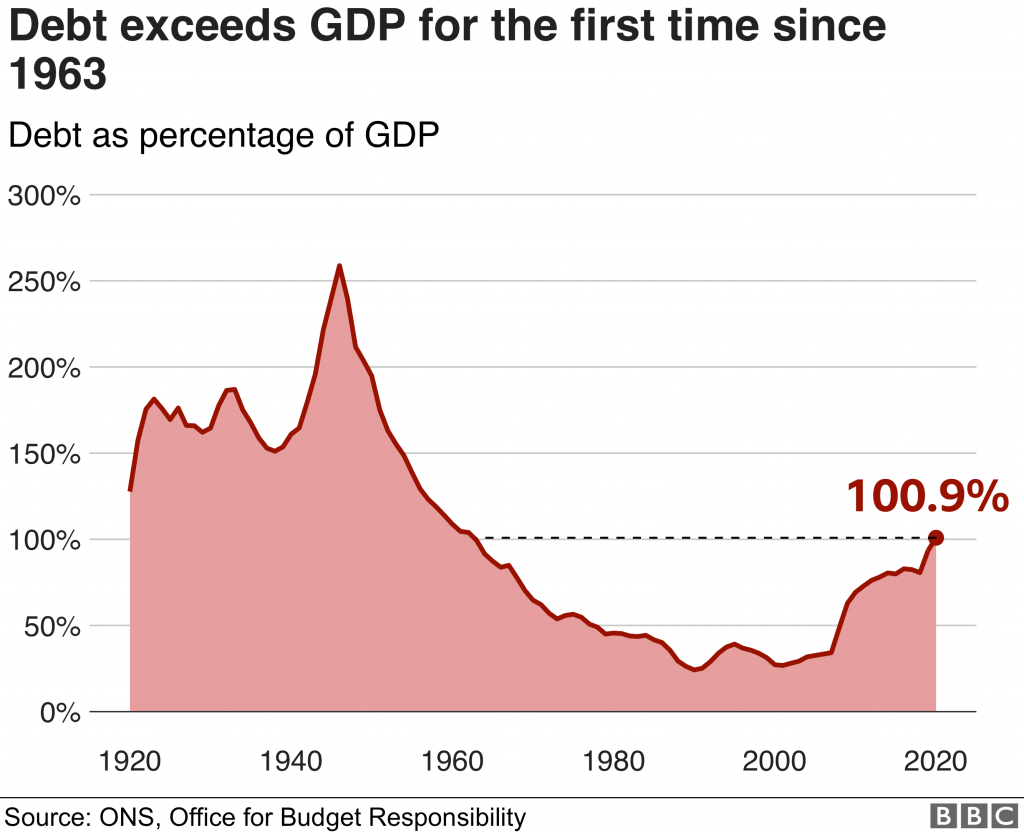
The total amount of money the government owes is known as the national debt. Currently, the UK national debt is £1.95 trillion. When a country is unable to pay back its debt it is called “defaulting”: the national equivalent of going bankrupt.

What happens if the government cannot pay back its debt?

If the UK were to default on its debt then its international reputation and creditability would plummet.

Banks and pension funds would struggle or be unable to give the customer back their money, as they are the biggest purchasers of UK bonds. Foreign lenders will also be hit, as there is no international law or court for settling sovereign defaults. When Argentina refused to pay £1.1 billion-plus interest of the money borrowed there was very little investors could do to force the Argentinean government to pay. The only thing investors could do is move their money out of the country, which would cause the value of their currency to fall. Furthermore, defaulting would mean the UK government would also find it very difficult to borrow money from lenders in the future, and foreign governments could impose sanctions on the UK until they agree to pay.

Liverpool are Champions after 30 years

0

Liverpool have finally won a domestic league title after 30 years of waiting.

The last time they won one Sir Kenny Dalglish was the manager, a club legend who now has a stand named after him at Anfield.

Liverpool has come close in recent years, however, they finished second last year and 6 years ago they came even closer.

In a guilt edge spectacle that would have seen Liverpool take a six-point lead at the top with two games to go, a literal slip at a crucial moment against Chelsea by one of their greatest players ever, Steven Gerard, proved fatal in their title chances.

A bad run of form followed, Liverpool’s title hopes ended and Manchester City lifted the trophy that season.

Liverpool has been on the rise since the appointment of Jurgen Klopp in 2015. Season by season the well-renowned manager has assembled an elite team that has seen them become a formidable force not only in the country but Europe too.

Throughout his tenure he has reached three finals in four years, losing two in a row before winning the Champions League in 2019.

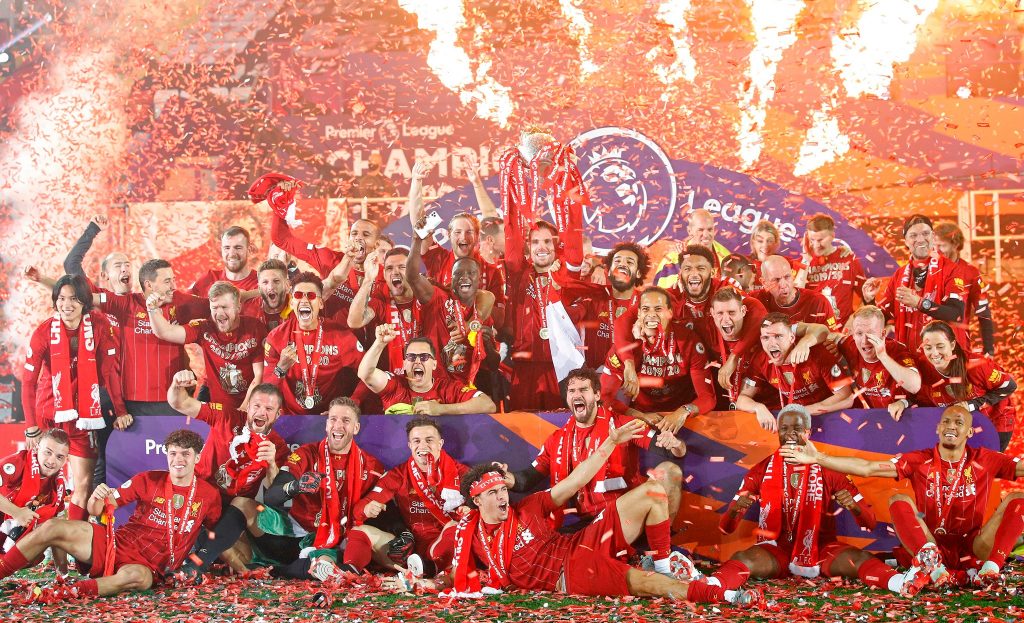
Liverpool Premier League 2019/2020 Champions with a dominant campaign// Source – Liverpool Echo

Liverpool started very strong in this year’s campaign. Staying top of the table from November and unbeaten for 44 games, just five games shy of the Premier League record (link) .

Since the post COVID return, they’ve looked shaky but they could afford that luxury with the gap they created.

They were on pace to set points and defensive records however, any chance of reaching the points record was snuffed out by their loss to Arsenal.

Likewise, since the return, they’ve conceded too many goals to claim the defensive record but that didn’t dampen their trophy presentation after an eight-goal thriller against Prem rivals Chelsea.

The stand out players for this campaign have been the usual core of Salah, Mane, Van Dijk and Allison.

The emergence of Trent as one of the most promising right-backs in the world certainly aided the cause, his ingenious corner during Liverpool’s historic comeback against Barcelona in the Champions League semi-final now folklore.

Jordan Henderson has been the heartbeat of this team and kept them ticking before his injury.

His work rate and efforts lauded him early praise as a potential PFA player of the year and he has already won the Football Writers Footballer of the Year award.

This title win could spell a new era for Liverpool.

https://www.instagram.com/p/CB7lUIvpZ-N/?igshid=u1yucuxux17q

WeWork’s Collapse: Shifting the definition of ‘tech’

About a year ago today WeWork was Wall Street’s favourite darling. Being backed by the like of JP Morgan, Goldman Sachs and SoftBank they raised billions in investment rounds and were valued at $47 billion. However, not too long after cracks started to show, and WeWork’s rapid decline soon followed. There is a lot of discourse surrounding the reasons for their collapse namely, growth strategies, lack of leadership and their inflated valuation.  

What is a tech company?

No matter what WeWork claims they are in their annual or global impact reports, it is clear that WeWork is not a tech company despite positioning themselves as one. There has been plenty of coverage on “Why WeWork isn’t a tech company”. In their S-1 filing WeWork mentioned the word “technology” 110 times and chief product officer Shiva Rajaraman told TechCrunch that the company is “moving toward a Google Analytics for space”. Despite this, their organisational structure and their investments (mainly in real estate) suggest otherwise.

WeWork isn’t the only start-up that has been stretching the definition of tech as of late. Companies like Peloton and Sweetgreen may have been able to position themselves as tech companies although their products, services or business models suggest otherwise. The initial growth of these companies at one point shifted what it meant to be a tech company – for an extended period of time it seemed that just using technology to operate was the only pre-requisite needed to position yourself as a tech company. 

We are in a digital age where technology is the driving force behind the operations of a company (e.g. subscription management, data analytics, takes online payments) but using technology or the hiring of many software engineers shouldn’t be what denotes a tech company. 

It’s more than just semantics

Some of you reading this may think that being positioned as a tech company is nothing more than just semantics, however, posing as a tech company does have its ramifications. A quick look at the valuations of WeWork, Sweetgreen and their competitors (who don’t pose as tech companies) shows the problems with tech companies and their valuations:

Tech IPO tracker art
Goldman Sachs believes that tech companies are becoming overvalued (Javier Zarracina / Vox)

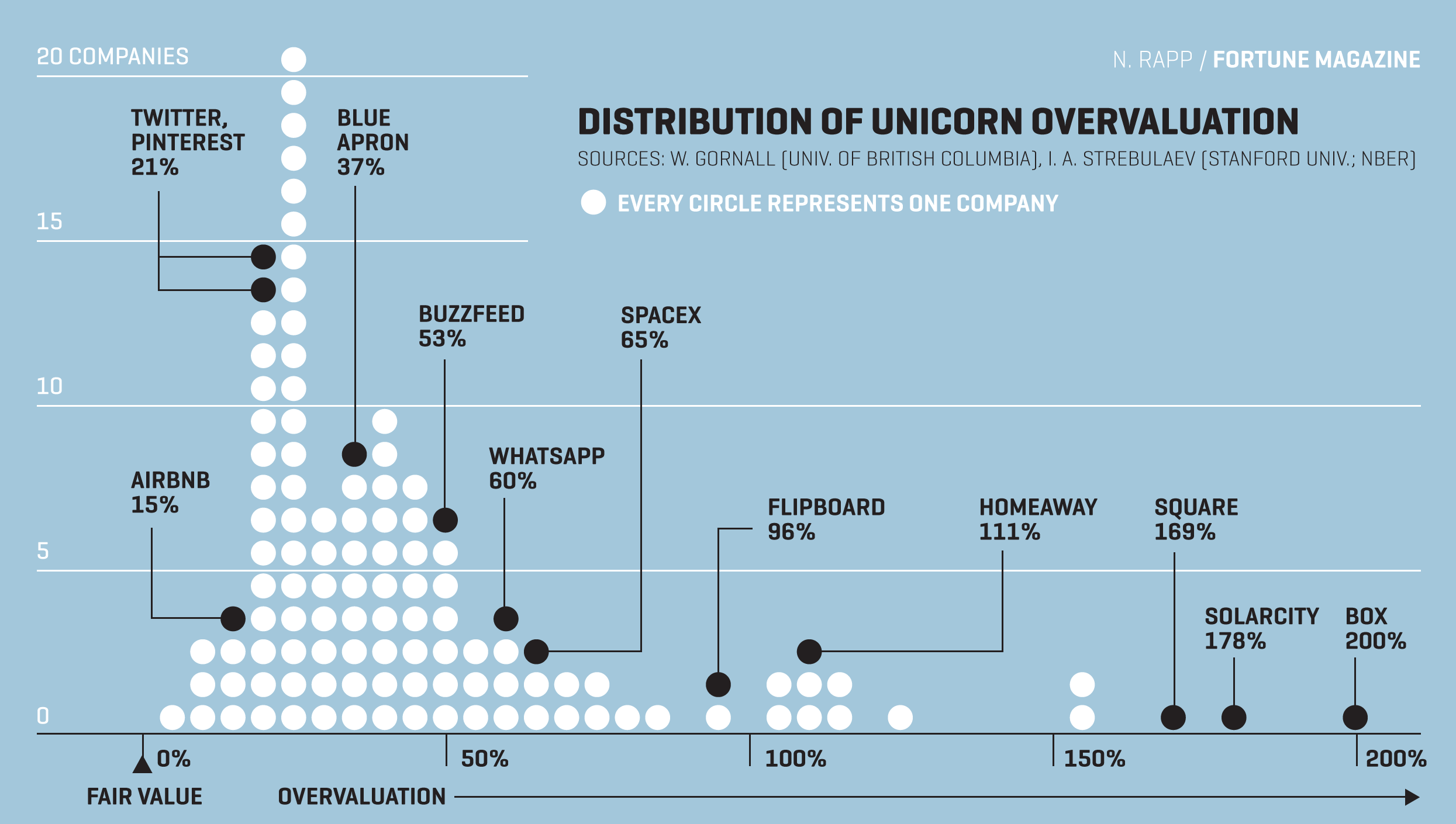
Tech startups are often valued much more than what they are worth, and until recently this was a common practice as investors bought into the brand, or name hoping that it will bring large returns. This inflated valuation could be one of the reasons why a number of companies are posing as ‘tech’ companies.

However, investors are catching on and have become aware of the slipperiness around tech terminology and valuations. Some investors are concerned that this could contribute to an economic bubble; there are indications that this could be the case as the share prices of most tech companies that had an IPO in 2019 are currently trading at a price lower than their opening price. 

Overvalued Unicorns: What You Need to Know in One Chart | Fortune
The fair value of tech unicorns calculated by two business school professors (Fortune)

Responsible Unicorn Hunting

Consumers and investors are keen to find and invest in the next billion-dollar tech company. In this hunt investors (venture capital firms, investment banks etc) have the responsibility of making sure that tech companies looking to IPO have accurate valuations. Making sure that valuations are based on the company’s growth or investment return potential will prevent them from using the terms tech as a way to goose up their value.

Black People are tired of explaining racism – it’s affecting our mental health

First published on Lankelly Chase

When the Office of National Statistic broke the news that Black people are more than four times more likely to die from Covid-19 than white people, it confirmed what Black communities always suspected – that Covid-19 would compound the stresses already felt by people of colour and cause a disproportionate amount of pain and loss. Many read the headlines and found it hard to deal with, feeling mentally and physically depleted. Black people, overrepresented in front line services, have in this season faced unique challenges and pressures whilst still having to show at work because lockdown is largely seen as a luxury.

Source: Unsplash

When global protests erupted over George Floyds death in America, Black people looked at their screens and knew that it would have real world ramifications, especially at work. Already dealing with the mental trauma from COVID-19, the worldwide exposure of racism has had a particular sting. Not only did it remind us of the broken system we live in, it reminded Black people up and down the country about their wounds. Many young Black males could empathise with police brutality and excessive police force. Hate crime rates have more than doubled since 2013. Stop-and-search became more common against all ethnic minority groups apart from white and Chinese people between 2014 and 2019, and Black individuals are almost ten times more likely to be searched than white individuals. This is the country where, in the last 10 years, the Windrush scandal, the Grenfell fire and the hostile environment are symptoms of a very deep-set racism.

Black people are tired

As well as these fresh reminders, witnessing the heart wrenching images of the final moments of George Floyd’s life has led to an endless number of conversations, panel discussions, meetings, surveys, one-to-one chats, webinars, texts exchanges, interviews, workshops, blogs and social media postings. Front and centre in all of these discussions are Black employees who are called on by their bosses to be the spokespeople for the black plight and struggle. Many have had to talk about their personal experiences, explain the differences between Black Lives Matter and All Lives Matter, break down microaggressions, ally-ship, all this whilst staying professional and working hard to not be perceived as a moaner or a bad sport. This creates another layer of trauma and fatigue for Black professionals. Some bosses are well-meaning however, Black people are tired. Having to explain our struggle when saddled with unprecedented stress and injustice is exhausting. Black employees are expected to do their jobs and take on an added responsibility of educating those who benefit from the system… for free. They are expected to teach, correct, and speak on all these issues at work when it is not in the job description.

Black people are tired of negative press, tired of health inequalities, tired of micro-aggressions, structural and institutional racism, tired of being asked where we are from or why our food smells the way it does, we are tired of waking up in the morning worrying that someone may accuse you of a crime you didn’t commit, tired of being the only black person in the Board room, tired of comforting our black children and grandchildren because someone called them the N word, tired of being stopped and searched, tired of being by-passed for promotion, tired of being told to “go back to your country”. All of these things have an adverse effect on our mental health and being asked to sit on yet another panel does not help.

The ask is simple, before you thrust another ‘opportunity’ at your Black colleague or employee, consider how they may be feeling. If you are unsure, ask. Many Black people are dealing with battle fatigue and trauma; the constant requests make things worse. What are you doing to make things easier for the Black people you work with or are you contributing to the problem?

Lankelly Chase is the result of a merger of two organisations. The names Lankelly and Chase were chosen by their respective founders to preserve their anonymity. The Chase Charity was set up in 1962 by the philanthropist Major Allnatt, whose fortune came from developing land along London’s North Circular. Ron Diggens, succeeding him, merged the property company with Slough Estates and established the Lankelly Foundation.

As large employers, the two founders saw the role of work as giving people self-respect and purpose. Major Allnatt had a long-term interest in the rehabilitation of offenders and also understood the power of the arts to touch people.  Ron Diggens set a broader remit for the Lankelly Foundation that allowed the Trustees to focus on the arts, old buildings and charities working directly with vulnerable people, such as elderly people and those with disabilities.

Racism is not just a “white” problem

On July 14, 2020, Nick Cannon was fired by ViacomCBS after making anti-white and antisemitic remarks during an episode of his podcast. Was Cannon guilty of racism or mere prejudice? It would appear that the plight of Jews has been made conditional. A white man can be racist against a Jew, but a non-white man such as Cannon cannot.

In her 2008 book History Lesson, American Classics Professor Mary Lefkowitz describes a chilling ordeal in which she faced a barrage of ostracism and antisemitism after confronting her colleague Professor Anthony Martin.

Martin had been teaching his students – at the respected Wellesley College in the early 1990s – a range of patently absurd conspiracy theories as fact, including the idea that ancient Greek culture had been stolen from Africa, and that Jews were responsible for the slave trade.

He taught directly from “The Secret Relationship between Blacks and Jews”, a virulently antisemitic polemic that accused Jews of instigating a “black African Holocaust” and was derived mainly from Henry Ford’s The International Jew: The World’s Foremost Problem.

Lefkowitz was accused of disrupting “campus harmony”, and told she was attacking Martin because he was black.

Lefkowitz’s ordeal is simply one example of the attitude toward antisemitism in American academia. However, the erasure and hatred long ceased only to poison the narrow hallways of the universities, but have penetrated far into the popular culture over the past decade.

Last week, comments made earlier this year by rapper and comedian Nick Cannon on his CBS podcast went viral. Cannon referred to Jews and white people as “savages” and “closer to animals” than black people.

The comments were made during an interview with former Public Enemy member Professor Griff, who was kicked out of the rap group in 1989 for saying Jewish people “were responsible for the majority of the wickedness in the world”.

Cannon’s recent comments provoked much outrage. He was subsequently fired from ViacomCBS, although he has held on to his presenter contract for hit TV show “The Masked Singer”.

Radio personality “Charlamagne tha God” defended Cannon following his sacking from ViacomCBS, claiming the incident only further proved “Jews have the power”.

Former NBA star Dwyane Wade and rapper P. Diddy also waded in with their support for Cannon’s comments.

Although Cannon has since apologised for his remarks regarding Jews, he has failed to reconsider those directed at “white people”, and has complained that “his community turned against him” and called him “a sellout”.

The apology, and the barrage of ongoing twitter support for his outrageous comments would seem to prove him correct.

The intersectional response to these chilling examples of antisemitism and anti-white hatred have broadly been that this African-American professor, and this collection of celebrities, despite their distasteful remarks, cannot be guilty of the evil of racism because they simply do not possess the institutional power required for racial oppression. Theirs is a much lesser crime of “discrimination” or ignorance.

Jews, it is argued, have faced lesser crimes than African-Americans and that today their plight is “lesser”, despite experiencing centuries of violence, discrimination and genocide, making up over half of all hate crimes in New York City, and with over eighty per cent of the populations of Morocco, Qatar, Jordan, Bahrain, Kuwait, Tunisia, Libya, Algeria, Yemen, Iraq and the UAE professing overtly antisemitic views in a 2014 poll.

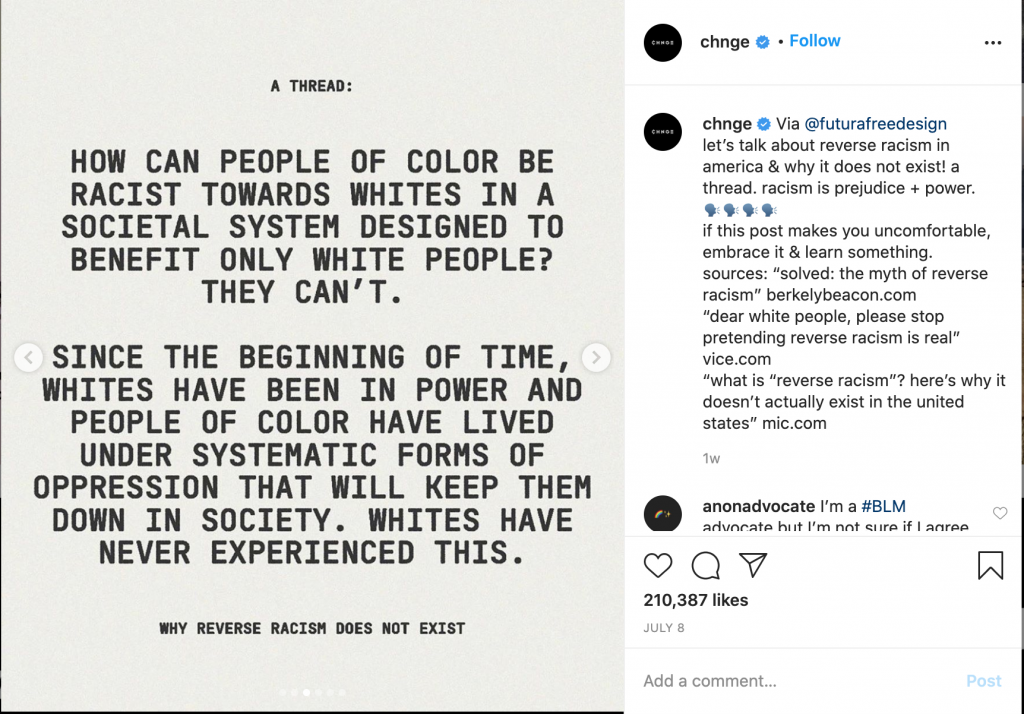
The plight of Jews has been made conditional. A white man can be racist against a Jew, but a non-white man such as Cannon cannot.

Jews are defined as “white” when it suits the narrative to demonise them, and non-white and “other” when discussing white antisemitism.

Instagram post on “Why Reverse Racism Does Not Exist” by ethical clothing brand Chnge with over 200,000 likes

Yet are racialised hatreds such as antisemitism as simple as white versus “non-white”?

It is not a fact of even recent history that white people have never faced racialised hatred. It is not a fact that white people have anywhere and everywhere dominated power, even if it is historical power that the intersectional crowd argue is required for a group to be capable of racism.

A glance over the details of thousands of years of human history will reveal a tangled web of empires, communities and nations, thousands of which involved no white Europeans whatsoever.

In 2020 a survivor of a British-Pakistani grooming gang recently recounted how her abusers shouted “You white sl*g. You white c*nt,” as they repeatedly raped her, and how police refused to act upon her testimony and physical injuries, or categorise the incident as racially-motivated.

In China, job advertisements often expressly exclude African migrants or set a lower salary for African applicants. Earlier this year African migrants in Guangzhou were forcibly evicted, banned from restaurants and harassed in the street.

The idea that racism is a crime of which only “white” people can be guilty, and in fact, they all harbour inside as some original sin is not based on historical nor psychological evidence. The attempt to erase the complex question of racism across time and place is not a push to correct an inaccurate definition to reflect reality. Rather it is a concerted effort to redefine a concept to reflect the Foucaldian ambition of redefining truth itself as a mere reflection of power, as opposed to an undeniable fact.

Is the solution to this warping of racism as a concept to recast groups we perceive as aggrieved in certain situations, as eternally overpowered and oppressed by others? Of course not.

Occurrences of racism and discrimination are complex across time and place, and to cast one group as a perpetual victim and others as forever empowered ignores the complex web of historical and contemporary culture and legal structures so to silence critics of the “woke” agenda as either intellectually blinkered or morally reprehensible.

Is the solution to the soft treatment of the likes of Nick Cannon and Anthony Martin to subject them to censorship and cancellation? I do not think that silencing anyone changes their mind, but instead gives them the impression that nefarious forces are at work to silence their fearless professions of truths.

The solution is instead, to counter bigotry and inaccuracy where we find them, and to face the world with a grip on reality rather than a debunked academic lens for the sake of caving to what is popular.


Has racial bias caused police negligence in the UK?

0

In lieu of the recent BLM protests, many forgotten injustices have resurfaced, including the case of Shukri Abdi. Although the movement is a predominantly American initiative, racial tensions have extended beyond the shores to the United Kingdom as many were recently seen protesting on behalf of Shukri’s family in Manchester. 12-year-old Shukri was found dead in the River Irwell in Bury, Greater Manchester on the 27th of June 2019. Her death raised many questions regarding the Police’s remissive handling of her case and the general prevalence of Police negligence amongst BAME communities in the UK.

The case

The specifics of Shukri’s death have been thoroughly contested throughout the past year. Shukri’s family were Somali refugees who had settled in the UK in 2017 as part of the ‘Vulnerable Person’s Resettlement Scheme.’ Having recently migrated from a Kenyan refugee camp, Shukri was described by her peers as bubbly, slightly introverted and eager to make friends. The events before her supposed accidental demise have been looked upon sceptically by her family members who stated that it was out of character for Shukri to be playing near water due to her inability to swim. Despite this, a criminal investigation was not launched as the Police believed the incident to be a tragic mishap that happened whilst the young girl went to ‘cool off.’ Previous complaints of bullying and anti-social behaviour towards Shukri had also been made to her school, Broad Oak Sports College (since rebranded as Hazel Wood High School) and were dealt with ineffectually as she continued to face such incidents. Alongside this, despite there being no post-mortem, Shukri’s body was found with visible bite-marks and abrasions.

These suggestive circumstances led many to believe that Shukri’s death had not been an accident and the Independent Office for Police Conduct reintroduced an opportunity for a more comprehensive investigation as a result of the influx of investigative incompetence complaints and the surmised nature of her ’cause of death’. As the case came to prominence once again during previous months, the Mayor of Greater Manchester, Andy Burnham announced on BBC Asian Network during his appearance on the Big Debate, that the case would be looked into once more. Shukri’s family solicitor commented on how the Police handled the situation and talked deplorably about the way in which Zam Zam Abdi (Shukri’s mother) was summoned to the Police station on the Friday of Shukri’s death to receive a report.

Types of Police negligence

The palpable issue that comes to the fore as a result of this tragic incident is the level of trust vested into institutions such as the Police and how, over the years, there has been a distinct undercurrent of negligence regarding cases involving black and coloured bodies. When looking at Shukri’s case, the lack of a criminal investigation despite several indicative contextual factors that made it somewhat obvious that there was an element of foul play involved, shows that there has been a clear subversion of Police procedure. However, this was not an isolated incident of Police negligence. Police negligence is an umbrella term used to describe instances where police fail to investigate a crime properly, where a suspect dies in police custody or where there has been a failure to follow specific procedures.

Within the wider context of the recent racial discord, police negligence can extend beyond simply failing to properly investigate a potential crime scene. In the UK in particular, the Police’s role in inflaming racial tensions has manifested itself through the fact that the Police are 8 times more likely to target Black citizens in stop and search procedures – this is a measure that could potentially fall within the remit of Police negligence. Section 60 of The Criminal Justice and Public Order Act 1994 states that a Police officer can stop and search in anticipation of violence if he/she reasonably believes that incidents involving serious violence may take place in any locality in his/her Police area. The keywords in this legislation are ‘reasonably believes.’ All stop and search instances are therefore completely dependant on Police discretion as opposed to perhaps a more authentic statistic analysis of the locations Police officers are mandated to monitor. The notion of racialised negligence and pre-existing understandings of certain multi-cultural localities, therefore, contributes to the idea that entrenched prejudice within one of the most important facets of our judiciary, is exacerbating racial tensions in the United Kingdom. By narrowly construing how reasonable the judgement of many Police officers is, it becomes increasingly difficult to ignore the impact of personal opinions have in day to day situations.

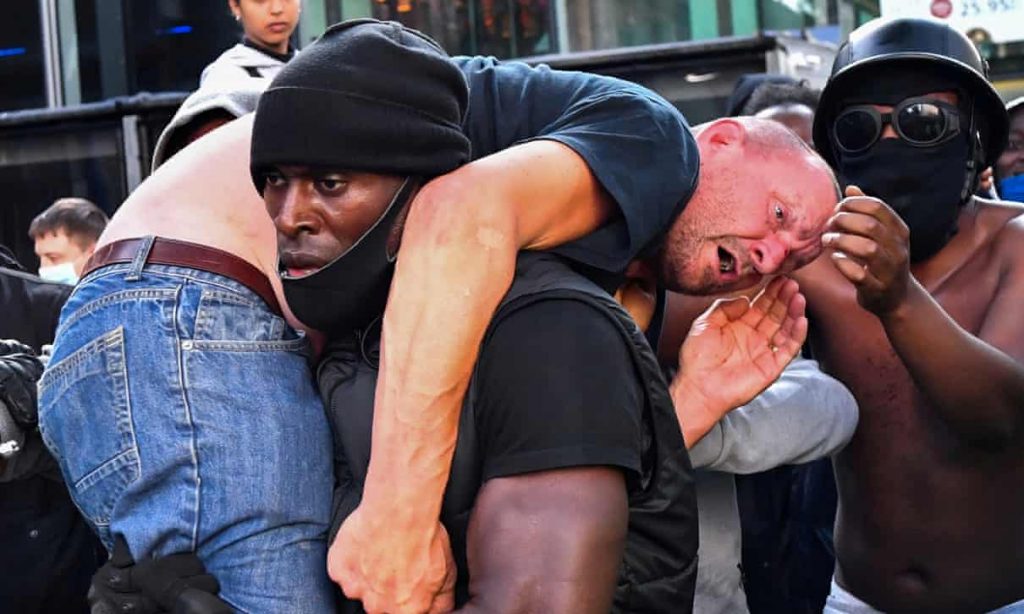
Source: https://www.theguardian.com/world/2020/jun/18/man-rescued-by-uk-black-lives-matter-protester-is-ex-police-officer

The above image of BLM protester Patrick Hutchinson carrying the anti-protestor now identified as Bryn Male (a former Police officer) to safety instantiates this very point of interventional biases existing within state institutions that should ideally remain neutral. It is unclear how Males’ contempt for the BLM movement may have been evinced during his career as a Police officer, however, it is likely that it would have adversely affected BAME groups in British society due to the emphasis placed on personal discretion in statutes that authorise racially inflammatory procedures, such as stop and search.

Potential solutions

Therefore, potential racial bias has been indentured into our legal code allowing personal affiliations to cloud the principles of law and in turn cause procedural failures – giving rise to tangible Police negligence that has affected the lives of many. The last prong of discussion to consider is the best way to combat the problem. When looking at Police negligence in cases such as Shukri Abdi’s, where a failure to investigate a potential crime scene occurred, it could be argued that Police officers should perhaps be given more extensive training in dealing with situations involving BAME victims, particularly refugees who may not be accustomed to the UK’s formal procedures. Notwithstanding this, in instances where Police negligence involves a failure to abide by rules, there is scope for wider legislative reform. Setting more indiscriminate objective standards for the requirements of stop and search measures may help tackle part of the problem. The problem is, however, so vast that a more holistic package of measures needs to be implemented in order to compensate for the various pitfalls of the existing system.

Why is it almost impossible to sue the American Police?

As many have expressed their indignation over the murder of George Floyd in recent months, one question remains central amidst the heated discussion regarding Police brutality: why have the perpetrators not been sentenced? Although the prosecution of former Minneapolis police officer Derek Chauvin does not involve the application of qualified immunity, the doctrine continues to grant many defendants impunity in Police brutality related instances in recent years. But what is qualified immunity? How does it work? And what is being done to amend this inherently inhibitory doctrine?

What is qualified immunity?

Qualified immunity is a legal, judge-made doctrine that shields government officials from being held personally liable for constitutional violations, (such as the right to be free from excessive Police force), for monetary compensation, as long as the officials did not contravene ‘clearly established’ law.

The key to understanding this piece of legislation and why it could inherently be considered defunct in protecting victims of Police brutality is the requirement for the violation of the rights to undermine clearly established law. Clearly established law refers to existing precedent (cases) in which the facts are exactly identical to the case being contested. In fact, the US Supreme Court has explicitly stated that a ‘factually identical case’ for the ‘clearly established’ standard needs to be fulfilled. The likelihood of a set of circumstances being entirely tantamount to a previous case is near enough impossible, creating a distinct issue in tackling the violation of constitutional rights by government officials. This was seen in a decision made by the US Court of Appeal where a SWAT team fired tear gas into the plaintiff’s (the person bringing the case to court) house, causing egregious physical damage to his belongings and violating his fourth amendment right – the right for there to be a search warrant before arrests are made within an individual’s home.

The officers, in this case, were awarded qualified immunity as the precedent that the plaintiff relied upon did not establish a violation ‘at the appropriate level of specificity.’

Some other things to consider

Despite this glaringly obvious loophole, the doctrine poses many other issues that collectively render it a defensive tool used by state officials to legally ignore their civil duties of protection. In a 2009 case, for example, the courts reversed the way in which the doctrine was applied. Usually, in order to purport the defence of qualified immunity, a constitutional right must be violated and then an analysis of whether the law was clearly established ensues. However, in the 2009 case of Pearson v. Callahan, the order was reversed and qualified immunity was administered based on whether there was existing ‘clearly established’ law without determining the exact constitutional violations that had occurred. The effect of this was that there were fewer precedents finding constitutional violations, limiting the subsequent applicability of the doctrine and creating an “absolute shield”, (as articulated by Justice Sonia Sotomayor) for future cases.

There is also a discretionary element to the test for qualified immunity which focusses on the ‘subjective good-faith’ of the officer and requires the plaintiff to show that the officer “violate[d] clearly established statutory or constitutional rights of which a reasonable person would have known.” The question then comes down to what would a reasonable person have known? Differentiating between someone who is incompetent and someone who knowingly violated the law is increasingly subjective and therefore easier for some to manipulate in court litigations.

Is abolition the answer?

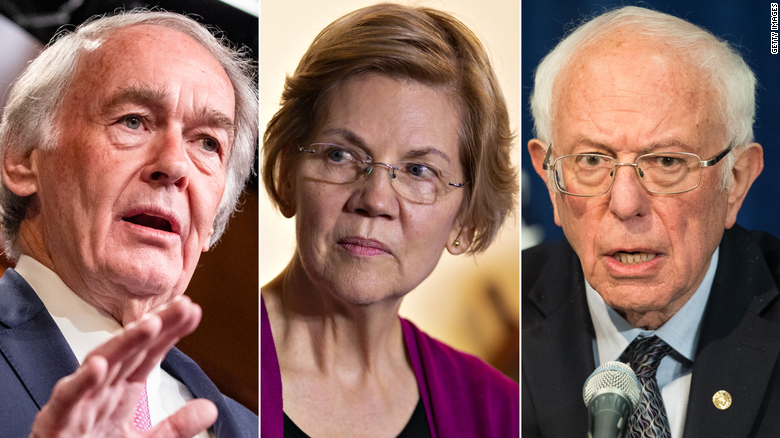
The three Democratic senators looking to propose the bill that ends qualified immunity, Edward Markey (far left) Elizabeth Warren and Bernie Sanders (far right). Increased Democratic support for abolition highlights the politically polarising nature of the qualified immunity dilemma. Source: https://edition.cnn.com/2020/07/01/politics/qualified-immunity-senate-markey-warren-sanders/index.html

The doctrine emerged in 1967 so as to allow officials to perform their duties without constantly having to defend themselves against claims for damages and allegedly enables those acting in good faith to carry out their job without unnecessary intervention. Concerns over abolishing the doctrine, despite its hyper functionality, have emerged as it’s arguably a cardinal tool needed by Police officers to essentially do their job. However, the chances of reform are unlikely as the Supreme court declined to hear a set of cases challenging the constitutionality of qualified immunity. A recent bill co-sponsored by libertarian Justin Amash seems to be the only way forward to redact the doctrine and eliminate the judge-made tests that have been added to it over the years.

However, even if this bill was to be introduced and qualified immunity did cease to exist, would this end Police brutality in the US? Although we have no way of determining this for sure, it is highly improbable due to the existence of other institutions such as Police unions. It was found that the number of protections unions fought to include in police contracts directly and positively correlated with the increasing instances of Police violence in the US. Disciplinary actions against Police officers are also withdrawn if the arbitrator finds that the penalty administered was tougher than those dispensed in previous similar cases, no matter how lax they were – a suspiciously similar approach to the principles of qualified immunity. Many unions have also pushed back on the creation of a contemporary Police reform package, obliging senators to postpone the vote on the new set of policies.

It, therefore, goes to show that, Police brutality is structurally upheld and is tightly interwoven into various institutions within the States including the judiciary. However, dismantling this systemic issue won’t be as simple as abolishing a judge-made extension to existing legislation such as qualified immunity.

14 Ways Life Will Change After Covid-19

As lockdown is phased out along with furloughing, deferred loans and newscasting turns back to Brexit, what will Britain look like?

Will we treasure our grandparents more? Perhaps divorce rates will rocket. Could we see a Coronial baby boom next year or greater uptake on flu vaccines? Will those tight social curbs be a legacy of pandemic restrictions? Maybe there is less strain on the National Health Service as many health compromised patients will have died. We can probably expect fewer foreign holidays as providers and airlines go under, unable to remain viable from reduced capacity and inadequate financial support. Social adjustment disorder and domestic abuse could be a hidden crisis.

Travel

With fewer providers offering less choice and lower capacity for travel, this supply constraint won’t immediately raise prices. This is because many won’t want to hit the skies and seas until they know it is safe and the quarantine restrictions are not so limiting. For those that do, the recession and unemployment we are faced with will mean we all have to tighten our belts and rein in on such luxuries for the foreseeable future. When demand does recover with the economies rebounding, jobs returning, and potential vaccine rollouts; there simply won’t be the boundless travel capacity for them to return to business as usual. This will mean prices get bid up by competing travellers via evermore advanced search algorithms. Good luck for your average middle-class holiday to France or Spain, let alone those casual European city breaks.

Transition Costs

Many countries, not as fortunate as leading Western nations, are quickly bankrupting themselves to foot the Coronavirus bill. Hardly anywhere can afford the cushy 80% British furlough scheme, or cutting interest rates into negative territory like the USA alongside pumping trillions of dollars in rescue helicopter money into the economy. Most countries simply couldn’t afford to enter lockdown, period. Even Sweden, the social paradise it is lauded as, had to pick for social responsibility instead. Going into the crisis, Italy had a debt-to-GDP ratio of 134% and Spain and France around 100%.

To patch up the recession we are faced with, the money printers need to keep pumping.

Not so glamorous holidays // Alamy

Localisation of Supply Chains

Besides not taking into consideration the environmental cost of outsourcing production to China and Southeast Asia, the crisis showed us the vulnerability of having medical infrastructure located on the other side of the world. China had a stranglehold on PPE, immunological assay chemicals and makeover 90% of the base components for our generic medical products. We may now wake up to the reality that ‘last-minute’ supply chains are a fragile way of operating. One that may not justify the lower cost-per-item in the short-run.

Inflation

Border closures made trade harder. Fewer businesses remained viable, reducing available goods and services. Relocating industries nearer to home comes at a higher cost than Chinese government-subsidised goods. When people cannot afford the higher local prices, atop restricted variety, wages must rise, or else people won’t work. Business costs rise and this feeds an escalating cycle of higher prices and inflation eroding middle-class savings, harming those without bargaining power to demand more. When inequality is lower because wealth is lower, it won’t be as fun as the intellectual literati promised us. It is hard to preserve wealth amidst a backdrop of inflation. The UK 1960s to 1982 had cash go to zero, bonds became ‘certificates of confiscation’, appreciation in land was heavily taxed and broad equities fell by 80% in real terms (they rose nominally, but inflation ate away at their value). Property doesn’t do so well as rates rise. Higher interest repayments on mortgages make borrowing larger sums harder.

End furlough and deferrals return

Deferring mortgage payments, rents, taxes and social security contributions improve immediate liquidity positions of individuals and companies but do not cancel their obligations. When these schemes like mortgage holidays and furlough come to an end later this Fall, we shall see who was preparing and who failed to do so.

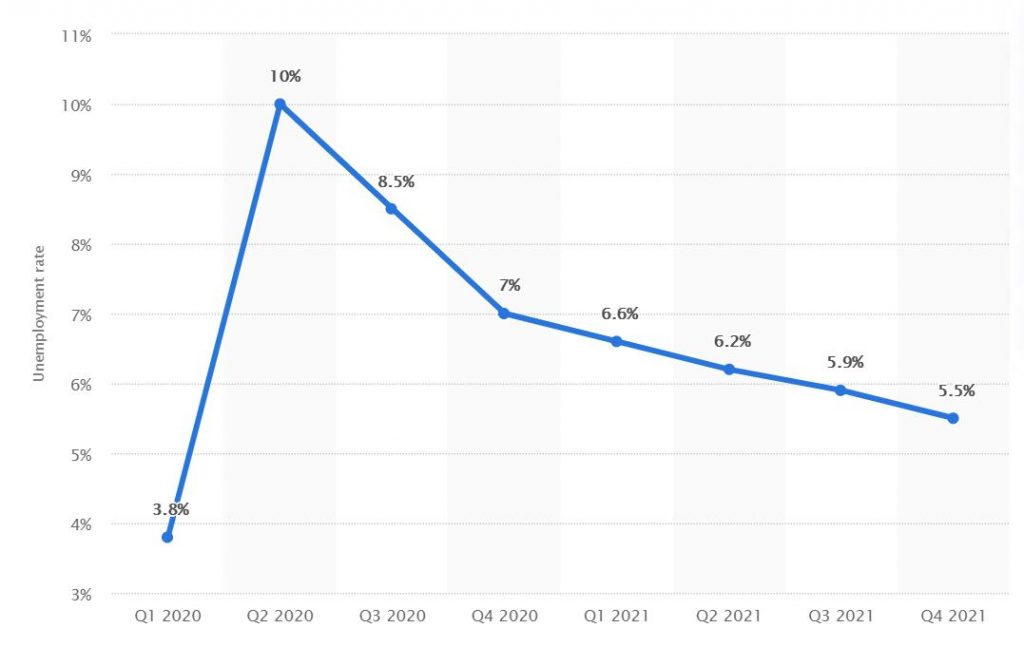
UK Unemployment forecasts 2020 and beyond // Statista

World repaired itself

Our overreliance on a consumer work-based society exposed the false securities of cash and commerce to save us during times of siege. We have run a world in which a fifth of us are using 4/5THs of the World’s resources with reckless abandon.

Birds have changed migratory, behavioural and hunting patterns since the world went “quiet”. Pictures and images from NASA showed how pollution quickly dissipated. Scientists have shown us the O-Zone layer repairing itself fastest since its discovery.

Rural > Cities

Quality of life may take precedence in the coming seasons as society drifts away from the onslaught of big city living. Financial centres are unlikely to enjoy the same rich, exciting and fast-paced lifestyles; possibly living in the great outdoors with allotments, access to woodlands, parks, recreation and fresh produce may turn out to be better.

Work from home

As it turns out, we can. Plus, we get an extra hour for a decent breakfast and spend more time with their kids instead of a sweaty, stressful ride on the Tube. Office rents are a major cost for businesses and with companies finding productivity higher with staff working remotely.

Divorce Spike

On the flip side, those working from home or just isolating with their families are experiencing the longest bad weekend in history and that puts a certain unique kind of pressure on human relationships which can start to strain them to breaking point. You know all those jokes about going on holiday and having to deal with people you find out you don’t really like – like your husband/wife/children – kind of inevitable when locked up together inside for 3-5 months. The little things that peeve you about your partner will start to gnaw even more.

Generation Coronial

Another baby boom would be a good thing for Britain to look after the ageing population, but maybe not if all those elderly were disproportionately culled by wave after wave of the virus.

NHS

We value our health service in Britain to the point of being a cherished national treasure, as the half a million volunteers indicated. A tax break or NHS reservist force like the Territorial Army may be handy to call upon in times of crisis.

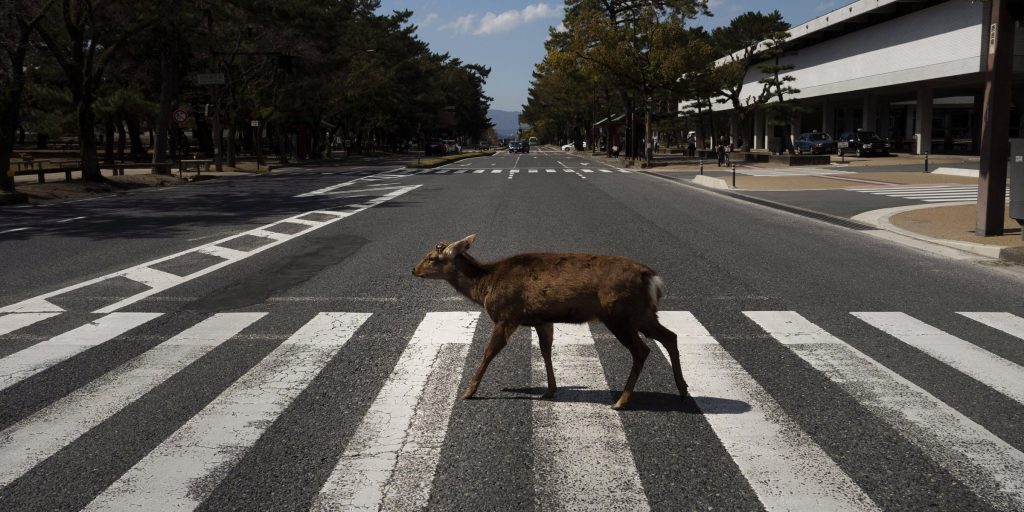
Empty cities during and after lockdown too? // Getty

Realities across the pond may hit home as America wakes up to see 600 million citizens in Europe are afforded universal, free at the point of consumption healthcare while maintaining healthy, capitalistic approaches to economic organisation.

Less is More

After we have watched every Netflix show and pillaged Amazon’s more extensive library, perhaps we may see time in nature, board games, baking and reading books are more fulfilling than the TV and internet washed down with fizzy pop and delivery pizzas.

Education

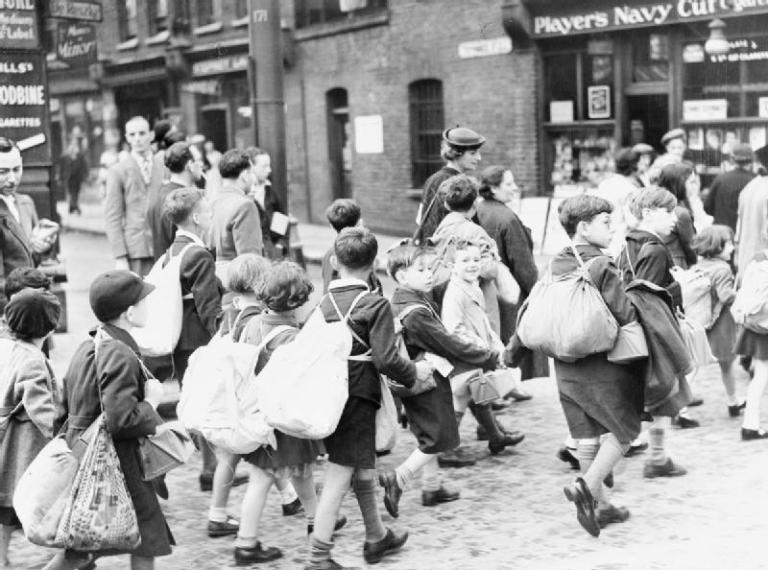
During the Blitz, middle-class rural folk were shocked by how badly fed, housed and educated the poor, inner-city evacuee children were. Education improved leaps and bounds. Conceivably, our system of sudden-death exams may be at its end, with modular learning and assessments back in favour.

Universal Basic Income

The welfare state and NHS were considered an impossibility before the war. And today, unless you have experienced a five-week waiting time for benefits, the rollout of basic income may now be a real prospect not just confined to Scandinavian countries.

Civilian evacuation WWII // British Museum archives

Nationalise strategic industries

Highly leveraged companies, like airlines, are particularly vulnerable to shocks. Lucky airlines will be nationalized or bailed out, many others will cease. According to the Center for Aviation, by the end of May, most world airlines will be bankrupt. The virus is attacking complexity in economic organisation. Yet, complexity is what leads to our astounding degree of prosperity. The present holds similar social significance as the outbreak of World War I. A great simplification is coming, and it isn’t going to be much fun.

Alternative Perspective

Perhaps nothing will change, people will revert to their old ways, and Brexit will once again be the daily obsession. Like the New Year’s resolution, they rarely last. We don’t go around fearing another London bombings, nor do those who lived through 1918 Spanish Flu ever mention it. Cruise ships have already begun sailing and bookings have never been higher, all in the midst of a pandemic in which we saw weeks of headlines of Diamond Princess death trap being rejected from port to port.