Home Blog Page 28

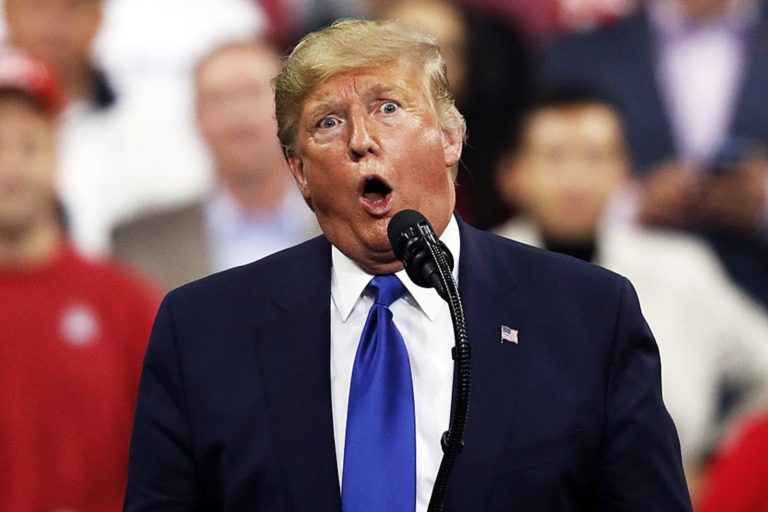
Top Three Unbelievable Moments Of Trump’s Presidency

Four years and thousands of tweets ago, Donald Trump ran for the Presidency and won, beating the likes of Hilary Clinton and Bernie Sanders along the way. Like him or loathe him, Donald Trump is arguably the most controversial President in United States history.

Many of his policies, speeches and decisions have been overshadowed by comments and actions which many would describe as publicity stunts. Whether it’s getting into Twitter spats with London mayor Sadiq Khan or starting a trade war with China, Trump has never been one to back down or mince his words.

A businessman first and foremost, he is anti-political correctness personified.

There have been several unbelievable moments during Trump’s presidency. Here are the top three most jaw-dropping moments from the 45th President of the free world.

‘Kung-flu and disinfectant’

Coronavirus has impacted the world, and the United States is no exception. First being reported in Wuhan, China, it spread worldwide which has had catastrophic effects on multiple levels. Different countries have handled it in different ways, some worse than others.

Trump has been accused of not handling the virus seriously enough, and this was not without good reason as the United States has recorded over 200,000 deaths due to COVID-19.

Trump, sparked fury and controversy when he suggested that disinfectant be injected into the body to combat Coronavirus. During a press conference at the White House, Trump, who himself later caught Coronavirus, said, “and then I see the disinfectant where it knocks it out in a minute. One minute. And is there a way we can do something like that, by injection inside or almost a cleaning? So it’d be interesting to check that.”

Donald Trump sparks fury by suggesting disinfectant be used to combat coronavirus. Video credit: The Telegraph

Sticking to coronavirus, at a rally Trump nicknamed the disease as ‘kung-flu’, relating to its Chinese origin. The phrase caused significant backlash across the entire political spectrum, as many saw it as a racial slur against Asian Americans. It comes as part of Trump’s rhetoric to blame China solely for the coronavirus pandemic.

He has also used phrases such as ‘Chinese virus’ and ‘Wuhan virus’ in order to demonise the Chinese as much as possible. Such was the backlash that Trump felt forced to publicly declare his support for Asian American citizens.

‘Greenland is not for sale’

In 2019, Trump confirmed that he was considering purchasing the country of Greenland. He said it would be “essentially a large real estate deal”, and was met with fierce backlash and ridicule.

Trump said, “Denmark essentially owns it… We’re very good allies with Denmark, we protect Denmark like we protect large portions of the world. So the concept came up and I said, ‘Certainly I’d be.’ Strategically it’s interesting and we’d be interested but we’ll talk to them a little bit. It’s not No1 on the burner, I can tell you that.”

Greenland makes it clear that they’re ‘open for business, not for sale’.

Of course, this was met with both ridicule and anger, especially from the Danish as Greenland is a territory of Denmark. Former Prime Minister Lars Løkke said in a tweet, “It must be an April Fool’s Joke … but totally out of season!” Current Prime Minister Mette Frederiksen called the idea ‘absurd’, and a spokesperson for the Danish People’s Party said that this was “final proof he had gone mad.”

It did not help things that after being categorically denied permission to purchase the country, Trump cancelled a state visit to Denmark. “It has gone from a great opportunity for enhanced dialogue between allies to a diplomatic crisis,” said former foreign minister Kristian Jensen.

‘Rocketman’

When a country starts to make threats against another, most world leaders would try to diffuse the system and prevent war and conflict to the best of their ability. Diplomacy would be key, and the situation would have to be handled in a delicate and sensitive manner. However, when a character like Donald Trump is neither diplomatic nor sensitive, it does not fill a person with confidence or reassurance.

Donald Trump engaged in a war of words with North Korean leader Kim Jong-un over Twitter. Jong-un had become increasingly threatening and hostile in nature through testing nuclear weapons, despite being told to denuclearise and signing the Denuclearisation Agreement with Donald Trump in Singapore.

“Rocketman should’ve been handled a long time ago”

The purpose of this nickname is debatable. Some believe that it was an attempt to emasculate and undermine Jong-un, to make him realise that the United States do not see North Korea as a legitimate threat. However former US national security adviser John Bolton said that “Little Rocket Man” was a term of endearment to the North Korea leader.

In his book The Room Where It Happened: A White House Memoir, Bolton remarked that Trump had an “inordinate interest” in giving Kim Jong-un a CD of the song Rocketman by Elton John. He said, “Trump didn’t seem to realise Pompeo hadn’t actually seen Kim Jong Un, asking if Pompeo had handed [the CD]. Pompeo had not. Getting this CD to Kim remained a high priority for several months.”

Trump’s legacy

Donald Trump was a Marmite president; you either loved him or hated him. There have been several highs and lows during his time and he certainly divided opinion. Whether you thought he was the best President ever or the devil incarnate, one thing is for certain; Trump was a controversial character, the likes of which we may never see again.
Should Countries Intervene with Uganda’s internet blackout?

Ugandans, like many others across the world, are desperate for a political change. However, unlike the US or even the UK where governments rule nations in terms of 5 years of less, the current president, 76-year-old Yoweri Museveni, first assumed office in January 1986. Which means he has been in power for 35 years.

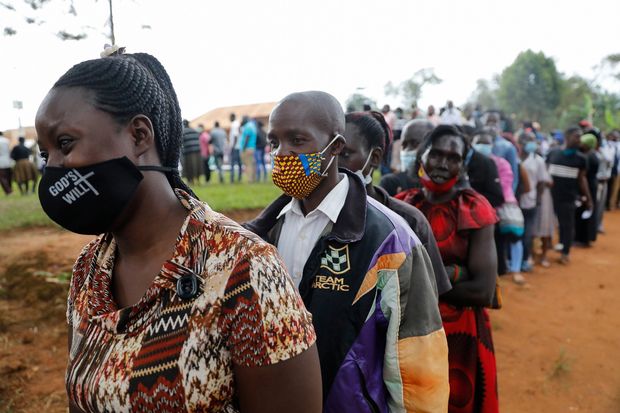
Just days prior to Uganda’s voting day (the 14th of January), the President of Uganda switched social media off. Cutting off all of its citizens from the constant influx of media and news. While some people managed to go round this via virtual private networks (VPNs) majority of the population remained in the dark with their only source of information being the government itself. This was followed by the government shutting down all of the internet the day before the election. Citizens across the nations have only been able to communicate with loved ones through text. Suffice to say that Museveni won.

A debate has started as to whether other countries should intervene with Uganda’s internet blackout, censorship and what Museveni’s opposition Robert Kyagulanyi is calling, a rigged election.

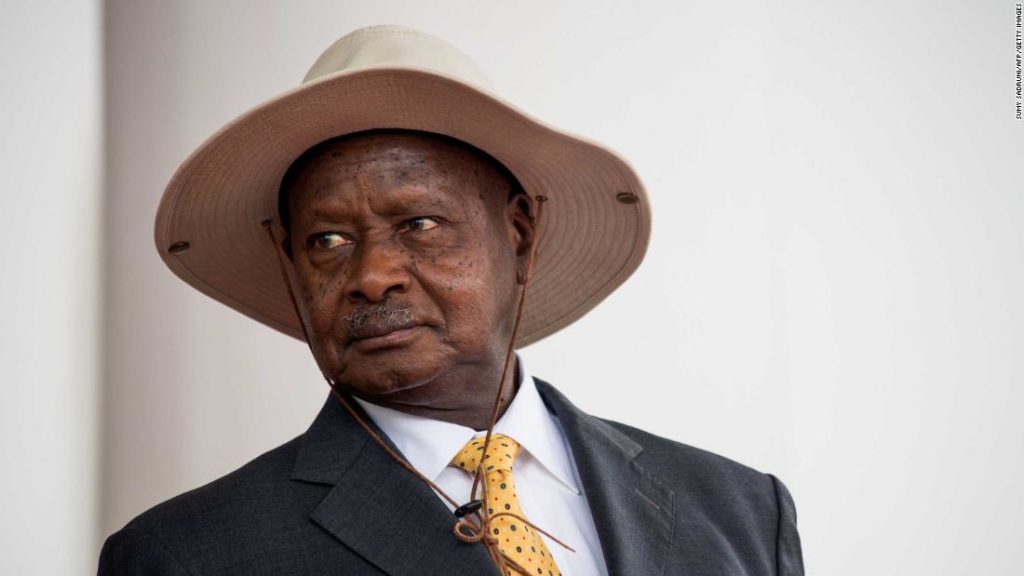
Uganda’s President Yoweri Museveni. (Photo by Sumy SADRUNI / AFP/Getty Images)

Although Uganda’s internet penetration rate is markedly lower than much of the world, it long ago became a cornerstone of public access to news and information. Notions that the Ugandan regime may be justified in switching off internet access amidst a tense election are nothing short of a spineless moral relativism that unfortunately penetrates much modern debate. No one should be forced to use the internet, but Ugandans are not being given a choice.

The Ugandan government’s motives are no secret. This latest crackdown comes after years of mass arrests and intimidation of opposition candidates. Uganda’s 2016 elections witnessed a similar internet shutdown in which the UCC had directed Uganda’s main communications providers to block access to social media platforms for “national security” reasons, which had not been defined.

Many other states endeavour to throttle online dialogue, and countless news organisations, NGOs and individuals routinely risk their lives in these conditions in order to monitor and expose these crimes against human dignity. Why should Uganda be the exception?

There are also financial pressures to consider. NetBlocks has estimated that Uganda will lose the equivalent of £1.2m a day as a result of the internet shutdown, against the backdrop of a pandemic that continues to disproportionally haemorrhage the economies of developing countries.

The idea that foreign actors intervening to provide internet access is tantamount to hawkish meddling is a heavily blinkered vision of the situation. Major initiatives currently working to increase technological infrastructure in Uganda and its neighbours are already dominated by international projects, often sponsored by multilaterals such as the World Bank and the Development Bank of Southern Africa, and one of Uganda’s biggest challenges in recent years has been obtaining affordable, reliable Internet bandwidth, government censorship aside.

The internet has been the way of life for decades and has been wonderful at progressing globalization. The internet has wonderful ways of progressing cultures and spreading information all around the world.

Nevertheless, it is not other countries’ job to jump in when countries shut down the internet for their citizens. Uganda is not the only country that has put restrictions on accessing the internet. Iran, Iraq, China, Venezuela, and many other countries have placed some restrictions.

Personally, having access to the internet is important. Everybody should have the right to access it, but that is an opinion. Not everyone shares that same opinion. Before other nations decide to invade another country’s land base on their own beliefs, maybe they should learn the motive behind why countries are restricting internet access. If it is highly apparent the citizens of a country want the help, then rightfully help said country. However, where countries draw the line with interventions?

Intervening when governments shut down internet access is one thing, but who is concerned with the lack of internet? Who is saying the internet is a necessity? Said countries government? Its citizens? Foreign entities? Intervening in other countries’ affairs can come across as forcing one countries agenda on its own.

For centuries, bitter wars have started because one country thought that what another country is doing was wrong. Foreign interventions thought they were helpful when they think their countries are being oppressed. What may seem like oppression to one may not be to another person. Having government control every facet of somebody’s life doesn’t work for some people, especially when the people you elect to make decisions and policies on the citizen’s behalf have ill intent. Nonetheless, foreign intervention should consider an individual’s moral compass and how this will affect the country in which they are intervening.

Stripe and Visa Bans Prompt Questions About Financial Freedom

In December 2020, Visa and Mastercard announced they would be blocking users from making purchases on adult site Pornhub, following allegations of child abuse, sexual assault and revenge pornography being allowed on the site. Pornhub reacted to this immediately by removing all videos that were not verified, which was the majority of their content.

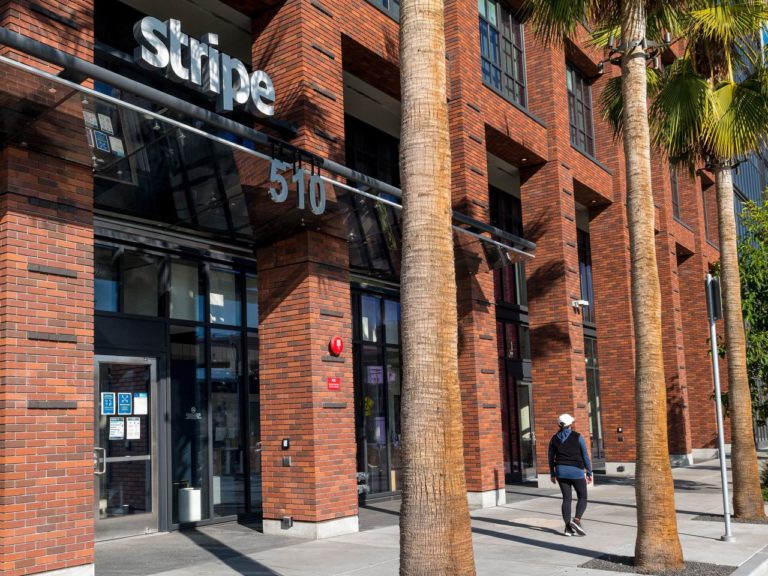
Following this, after Trump supporters laid siege to Capitol Hill in January 2021, payment processor Stripe announced they would no longer be processing payments for Trump’s administration. Stripe said they won’t accept payments for ‘high-risk’ activities, especially for businesses and individuals that “engages in, encourages, promotes or celebrates unlawful violence or physical harm to persons or property”.

Whether people agree with these institutions’ actions or not, it certainly raises questions as to whether or not financial freedom still exists in the contemporary world. With cashless payments becoming the norm, and cash becoming increasingly irrelevant in the Western world, it does give private companies like Visa, Mastercard and Stripe power over who they allow to use their services.

The Facts

Pornhub: Visa and Mastercard announced they would be blocking all transactions to adult site Pornhub. This was a reaction to an investigation by Nicolas Kristof – an opinion columnist for the New York Times – who alleged that the site allows revenge pornography and videos uploaded without the consent of the participants.

Kristof also alleged that the site has “monetised child rape” and does not have enough safeguards in place to distinguish legal and illegal content from each other.

In response, Pornhub immediately removed all videos that were not verified by them from the website and denied all allegations. They added that they found the decision “exceptionally disappointing” and that the news was “crushing for the hundreds of thousands of models who rely on our platform for their livelihoods”. They have also banned downloads direct from the site.

Stripe: Stripe, a payment processor, have distanced themselves from the Trump campaign. Despite Trump’s campaign paying Stripe more than US$1.8 million in the 2020 election cycle alone (according to a report by Federal Election Commission records), Stripe have cut ties with them.
The San Francisco-based company said that Trump encouraged violence on the 6th January 2021, when Trump supporters laid siege to Capitol Hill and forced entry. Stripe has user policies that prohibit “high-risk” activities when using their services, and decided that Trump was in direct violation of those policies. The policy also states that accounts are restricted if the person or business “engages in, encourages, promotes or celebrates unlawful violence or physical harm to persons or property.”
Stripe is one of many companies in the United States who have distanced themselves from Trump and specific Republican Congress members, who have been accused of attempting to overturn the election results after objecting to the Electoral College results.

It seems as if financial freedom is at an end.

For the record, regarding Visa and Mastercard’s decision to suspend payments to Pornhub, I agree with them. Child pornography, rape and other non-consensual forms of abuse must never be monetised. In the interests of morality, finances and public relations, it would be unwise to continue doing business with a company who have been accused of such shocking things.

As for the Trump situation I am still undecided, as I see no hard evidence of Trump actively encouraging violence, although I will say that his administration is not looked upon too favourably at the moment.

My primary concern comes from the amount of power these companies have. It shows that at any time, for any reason, they can suspend an account for reasons they see fit.

CNN reports Stripe’s decision to halt processing Trump campaign donations.

Whilst it’s perfectly reasonable and understandable that safeguards have to be in place, my concern comes to where the line is drawn between legitimate safety or legal boundaries and a simple difference of opinion between the user and the company/owner.

These major companies that own most of the market share of their respective industries (such as Visa and Mastercard), have terms and conditions that seem less like boundaries and more like biased restrictions on day-to-day life, due to their monopoly and the power that brings, and the lack of competition.

With contactless payments becoming the primary way to purchase and sell products, people’s livelihoods hang in the balance, purely at the discretion and mercy of their respective financial institutions.

The power to suspend a person’s finances – and therefore by extension, their lives – can easily be weaponised. Today, it’s to stop child pornography and abuse. Tomorrow, it will be to stop the livelihood of a person who has committed a “hate crime” by having a controversial opinion on a matter.


TWiT Tech Podcast Network discusses the potential impact of companies suspending payments.

If, for example, banks decide not to do business with people who are deemed ‘homophobic’, would that mean religious leaders (many of which strongly believe in traditional heterosexual marriage) would no longer be able to buy or sell things?

Their lives would effectively be suspended unless they go against their conscience and beliefs. Banks would have the power to effectively coerce and blackmail people into behaving a certain way.

We should all be very concerned about the power of these financial institutions. There is a line that must be drawn and regulation must be imposed in order for financial freedom to be preserved.

There are plenty of moral and legal reasons to deny or terminate financial services with both individuals and organisations. Those undergoing criminal charges, especially if they relate to financial abuses, often have assets frozen or removed. People with poor credit scores are not typically trusted with huge loans. There is already a wealth of legal regulations in place to assess such cases. On the in international stage, sanctions and tariffs are employed between states for a variety of reasons- some more justifiable than others. In 2010, the whistleblower website WikiLeaks suffered an extra-legal financial blockade spurred on by unofficial government pressure, though they had not been charged with any crime in the United States.

However, overtly political discrimination against private citizens (when criminal charges are not involved) should not be encouraged. Such practice poses a danger both to the targeted individual and their family and the balance of society as a whole.

Yet the explosion of online systems such as Monzo, Revolut and Starling Bank over the past few years is proof that there remains plenty room for innovation outside of traditional banking. In the absence of hard-line regulations in the UK & US, the banking sector will continue to diversify and those who may decide to unfairly penalise their own customers will simply lose out on their share of the market.

Of course, the issue is not so simple. If financial services begin to flex their moral muscles against customers, it may not be as simple as a smooth transition to another service. People can and already do across the world, lose income, savings, property and livelihoods over corporate discrimination. As California-based NGO The Electronic Frontier Foundation highlights: “Any website or individual can find itself running afoul of Visa and Mastercard’s moral sensibilities and shut off from receiving online payments.”

Mesut Özil vs. Arsenal – And the Winner is…

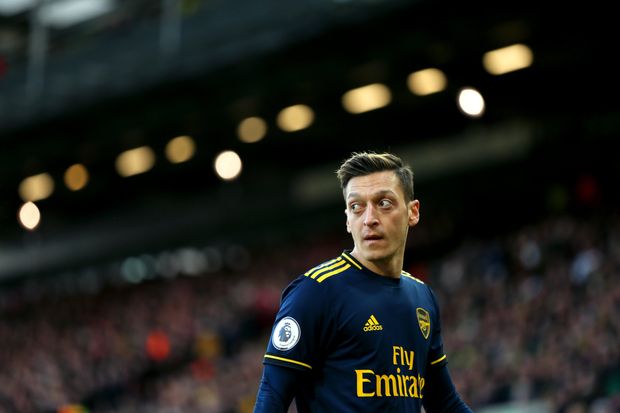
Arsenal midfielder Mesut Özil is close to completing a move to Turkish club Fenerbahce.

Mesut Özil is set to leave Arsenal after eight years of service for the North London club.

With only six months left on his £350,000-a-week contract in north London, Özil can earn around £7million between now and the end of the season, but reports have been released stating that he is willing to leave the money on the table to push for a move away from the Gunners in January.

. Özil was Arsenal’s Player of the Season in 2015-16 season.

Özil is currently under contract with Arsenal, but his relationship with the club has been a strained one.

This season he was not registered as part of the 25-man squad for the Premier League and was involved in multiple public disputes with the club ranging from refusing to take a pay cut due to the pandemic and him publicly questioning the club’s decision to cut jobs of 55 non-playing staff.

During his time at the club, the central attacking midfielder has won three FA Cups and in the 2015-16 season he was was the Premier League assists leader and Arsenal’s Player of the Season.

Should the German playmaker be remembered for his time as a creative orchestrator for the Gunners, or has his bitter end to his Arsenal career left an ugly smear on his legacy?

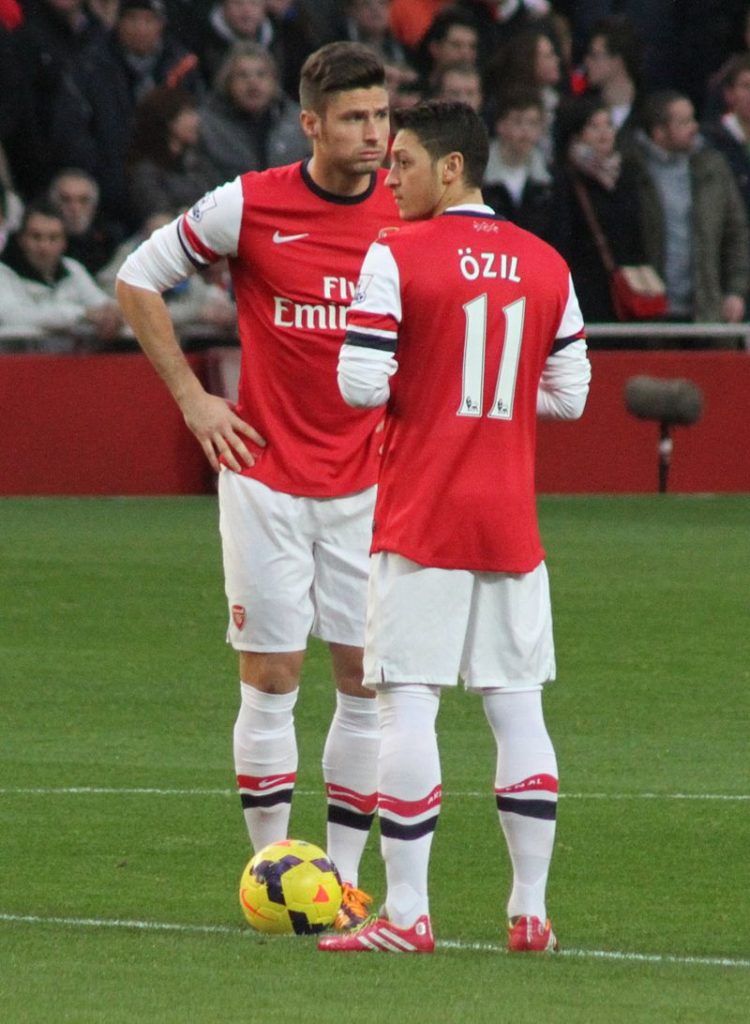
At long last, Mesut Özil is leaving Arsenal Football Club. It’s a sad state of affairs and is telling of the situation that I, as an Arsenal fan, am pleased and relieved to see the back of him. Once upon a time in 2013, when Arsenal announced the signing of Özil, fans gathered outside Emirates Stadium and blocked traffic.

Many fans believed that Özil’s signing was the beginning of a new era at Arsenal, and there is no denying that he is one of the most decorated players of Arsenal’s Emirates era.

However, Özil has failed to live up to expectations, both on and off the pitch. Not all the problems since his signing can be attributed to him, however to leave him totally blameless would be disingenuous.

Özil’s anonymity in games cannot be understated, especially in big games. Both Mikel Arteta and Unai Emery have dropped him from their squads due to a lack of motivation from the German. Two games which come to mind are the Europa League final against Chelsea – which Arsenal lost 4-1 – and the home game vs Manchester City in the 19/20 season, which was a 3-0 loss.

He is clearly not part of Mikel Arteta’s plans going forward, and the fact that he commands such high wages makes him an expensive liability to the club. Despite being told that he would no longer be included in Arsenal’s first team, he decided to stay and ‘fight for his place’, which makes me suspect his motivations were no longer for football and purely financial.

He has also weaponized his profile, charisma and relationship with players against the club, offering to pay Gunnersaurus’ wages during the pandemic after Arsenal let him go, and saying that ‘Arsenal look better with a number 10’ after watching Emile Smith-Rowe’s performance against West Bromwich Albion.

All in all, it is time for the German to leave. Whilst his contribution to the club (which ended a nine-year trophy drought) cannot be understated, it seems he is more of a liability than an asset, and an expensive one at that.

Mesut Özil wins this battle against Arsenal and it’s not even close. Arsenal have lost the best creative player they’ve had since Santi Cazorla. Mesut Özil should go down as having a good era at Arsenal, especially when you consider the mess he entered. His arrival stemmed the tide of the Gunners constantly missing out on big stars and letting their big stars go on the cheap after the previous summer’s sale of one flying Dutchman. 

Despite suffering only a few injuries in his time, only two seasons did he feature in 30+ league matches, where he’d previously featured that many times in every campaign since coming out of his teenage years. Since his exile, it’s become clear that his creativity has been missed, especially during “Project Restart”.

Mesut was great, but we “what if”

When the Turkish-born German international was bought on transfer deadline day in 2013, the excitement was palpable across the country, because not only did Arsenal break their transfer record by more than £24m, but they had acquired one of the most creative playmakers in the world. His quality could not be denied, especially as a year on he played a crucial role in Germany winning the world cup for the first time since 1990.

The Gunners thought they’d won the lottery, but just over seven years later, his departure leaves us with more questions:

What if Arsenal had a proven 20+ goalscoring centre forward in his peak era?
What if Arsene Wenger resigned after missing out on the title in 2016?
What if the team was properly built around him?

All can only be speculated now, but one thing for sure as an offensive threat, definitely one of Arsenal’s most creative players in the 21st century.

Corbyn Is The Leader We Needed During A Pandemic

The UK has recorded another 48,682 coronavirus cases and 1,248 deaths.

It takes the total number of deaths within 28 days of a positive COVID-19 test to 86,015, which is the fifth-highest fatality count worldwide, according to Johns Hopkins University.

On Wednesday, the UK reported a further 1,564 coronavirus deaths. This was the highest daily figure since the pandemic began but accounts for when deaths were reported – not when they happened.

How is Boris Johnson’s Government handing COVID-19

Some high profile celebrities and commentators have had a lot to say about Boris Johnson’s performance as prime minister so far including Miriam Margolyes.

The Harry Potter star slammed Prime Minister Boris Johnson‘s handling of the COVID-19 pandemic – after previously claiming she wished he’d died of the virus.

The Labour-supporting actress, 79, who has never minced her words when discussing the politician, admitted she fled the UK in May and doesn’t wish to return home until the case numbers have improved.

Speaking from Tuscany, which is just one of her homes, Miriam also took aim at US President Donald Trump after he was impeached for the second time for inciting the US Capitol protests, claiming he was a ‘dangerous fascist’ who she ‘hopes to see the back of.’

Twitter poll says Jeremy Corbyn is ‘best prime minister Britain never had’

Times Radio presenter Matt Chorley’s “World Cup of Best PMs We Never Had” saw some 12,300 Twitter users get involved.

As well as Mr Kennedy, Corbyn fans beat off competition from predecessors Ed Miliband and John Smith, as well as former Lib Dem leader Paddy Ashdown and Conservative former chancellor Ken Clarke.

But the unscientific poll results show an exact opposite outcome to a recent survey by official polling company YouGov, which put Mr Corbyn bottom of the list – with a net score of -53%.

Was Jeremy Corbyn the one that got away?

This week 23-year-old footballer Marcus Rashford had to put the government to task about the pitiful Free School Meals parcels that struggling children of the UK were receiving.

It was recently revealed that the firm responsible for the parcels was a Conservative party donor.

According to the New York Times, companies run by friends or associates of the politicians in the Conservative party pocketed around $11 billion through central government contracts during the pandemic.

Paul Walsh may have stepped down last month, but this debacle points towards the cronyism and political back scratching that the Conservative government has indulged in at the expense of a nation on its knees.

The government was faced with a simple question and easy answer when the pandemic began. Profit or people, and they’ve chosen what’s important to them above all else.

In 2019 the UK had the chance to vote for a man who’s socialist ideals would have left us in a better position to cope with the effects of the pandemic.

It’s absolutely true nobody could have predicted a global pandemic that brought the world to its knees, nobody could have foreseen the 80k dead and 3m confirmed cases.

But many, including Corbyn rallied against the austerity that was crippling the people of one of the richest nations in the globe.

Think of the struggling households that would welcome the free broadband for home schooled children or the rising unemployment and furlough schemes that would have been eased by a universal basic income that Corbyn had been keen on implementing.

Some might be lamenting the opportunity to place a man in charge who would have answered “people” if he was asked the same question.

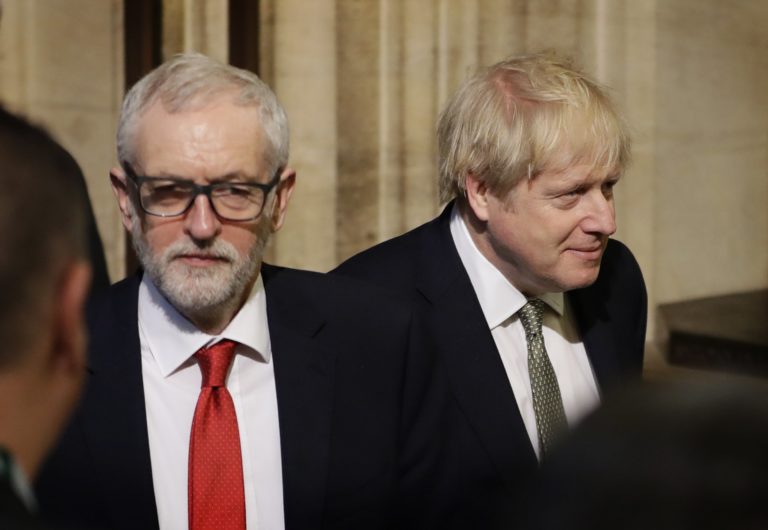
Just because Boris Johnson has handled the pandemic poorly, that does not mean Jeremy Corbyn would have been much better. Even more than “Get Brexit Done” Boris, Corbyn’s strength is campaigning rather than leading.

His Labour leadership was wrought with tribulations in part because of his unconventionalism, but equally due to his penchant for the old-Marxist activism that first kickstarted his career, and which his backbench lifestyle up until 2015 never allowed him to grow out of. Moreover, his crackpot shadow cabinet would have invariably turned out to be just as, if not more, useless than Boris’ crew.

The blunders of Emily Thornberry, Dianne Abbot and company (not to mention the persistent stink of antisemitism among their ranks) would have surely distracted from the rush to curb the pandemic, not to mention what their hijinks would have produced in terms of concrete policy. It is possible that a Labour administration would have locked down harder and longer, but it is likely that this would have simply have grated against the economic and social concerns of the nation moreso.

What was required to tackle the pandemic in the best way possible, was New Zealand’s early bird approach, and there is zero evidence that a Corbyn government would have pushed for that.

That said, the rhetorical retreat of “What if Corbyn was in charge?” by Conservatives seeking to excuse Johnson’s devastating blunders is as nonsensical as it is irritating. A Corbyn counter-history of the Coronavirus pandemic is not an argument for what the Conservatives have failed to achieve.

In A Pandemic, Should We Be Cheering For Elon Musk?

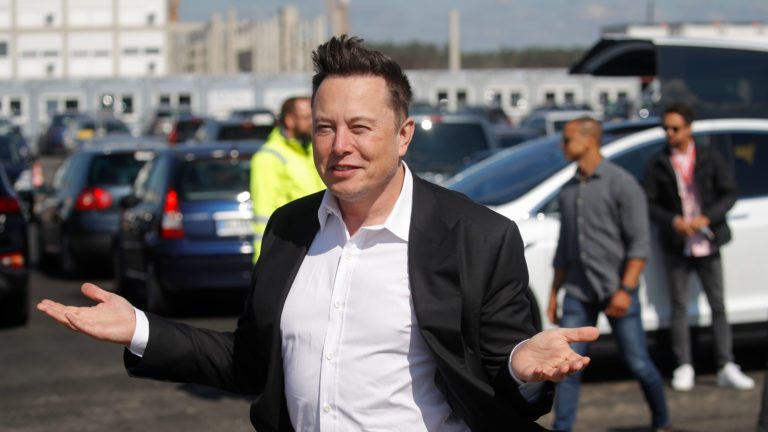
Elon Musk has become the world’s richest person, as his net worth crossed $185bn (£136bn).

The Tesla and SpaceX entrepreneur was pushed into the top slot after Tesla’s share price increased on Thursday.

Mr Musk’s electric car company Tesla has surged in value this year, and hit a market value of $700bn (£516bn) for the first time on Wednesday.

That makes the car company worth more than Toyota, Volkswagen, Hyundai, GM and Ford combined

The 49-year-old entrepreneur’s net worth hit $186bn (£136bn) at 10.15am in New York on Wednesday, making him $1.5bn richer than Bezos, who had held the top spot since October 2017.

Musk responded to the news of his status as the world’s richest person with tweets stating “how strange” and “well, back to work …”

Musk said he intended to use half of his fortune to “help problems on Earth” and “half to help establish a self-sustaining city on Mars to ensure continuation of life (of all species) in case Earth gets hit by a meteor like the dinosaurs or WW3 happens & we destroy ourselves”.

In a series of tweets that the South African-born billionaire pinned to the top of his timeline, Musk said the reason why he wants lots of money was “not what you think”. He said he had “very little time for recreation” and doesn’t have “vacation homes or yachts or anything like that”.

It’s an incredible achievement that has left a sour taste in some mouths of some people.

Becoming the world’s richest man isn’t an easy feat, typically speaking billionaires amass their fortune by providing a product or service that consumers wanted or needed. Now I am not going dabble into the “capitalism is built on exploitation” or “your net worth isn’t cash in the bank” conversation. However, and hear me out on this one:

I have no problem with Elon Musk’s wealth increase during the pandemic is fair (from a business standpoint).

If we are being honest, we have come to rely on the products and services owned by current billionaires. We relied on Amazon for their delivery services, Netflix to pass time and Zoom to facilitate remote learning (or meetings). To me it is no surprise that the wealth of billionaires has increased during the pandemic especially when the compensation pay plan of many founders and Chief Executives are tied with the performance of the company they are heading.

Given the circumstances we find ourselves in, I do understand how the widening of the wealth gap doesn’t sit well with people. When unemployment is at an all-time high, I can see how the increasing success of billionaires rubs salt in the wounds of those suffering at this unprecedented time.

Elon Musk was on the verge of personal and business bankruptcy from 2017 to 2019. A Securities Fraud settlement meant he had to step down as CEO of Tesla in 2018. He forwent salaries, worked on the production lines and slept in the factory for half a year. He put up his billions in net worth from Zip2 and PayPal as collateral for Tesla bailouts to keep the company afloat. He took immense financial risks, and admitted to being a “month from bankruptcy” for 2 years. He fought off armies of the richest short sellers in the world. He tied all future compensation to certain company milestones. And now is the richest man on earth, taking “humanity to Mars in 10 years with SpaceX.”

Besides many of his low-level employees now becoming millionaires from their stock compensation. You want to talk about quality of life? So does Elon. The difference is instead of throwing money at the problem like politicians do without much success – if not harming recipients more –  he is trying to come up with a sustainable solution.

He works 100-hour weeks. He professes to have little interest in the material trappings of wealth, instead seeks to provide people with the best products and working toward making humanity an interplanetary species. While government’s have been going to Climate Meetings for nearly 50 years now, with little to show for it. He is putting every effort to salvage what little time we have left to fast track our transition to sustainable energy.

He conceived and patented Hyperloop and gave it away so the public can get develop it into a feasible mode of transport. He did the same with Tesla’s Electric Vehicle technology.

His launch of 830 Starlink satellites aimed to provide affordable internet to every corner of the globe. Politicians worldwide have promised this many times over. He did it. He has disrupted industries from online banking to transportation, automotive, aerospace and AI. He single-handedly privatised Space, taking the entire launching monopoly NASA had to use from Russia.

He is putting every ounce of his personal resources to give humanity a second chance if the earth goes wrong and before the space debris clogs our atmosphere for good. Above all, he has inspired a whole generation to see problems with a different perspective and come up with innovative solutions to tackle the most concerning problems faced by society. When he is dead and gone, his visions will be carried on by those who believed in his ideals.

Yes, Musk gets richer while his customers get larger than expected product. It is a win-win situation for humankind. Elon Musk judges his success by problems solved, not how much money he made in his lifetime.

If this person is not deserving of praise and leaving to his own devices, then who is?

What Could Biden’s America Look Like?

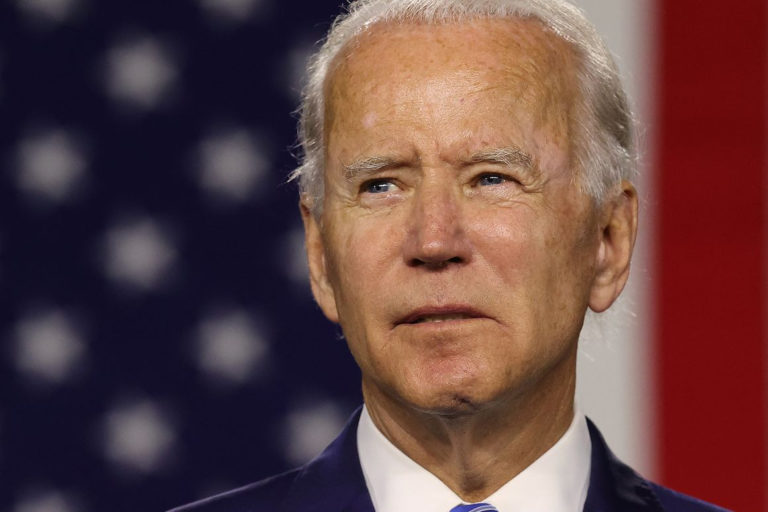
With Vice President Biden’s inauguration just 7 days away, many are pondering what Biden’s inauguration will look like but also what Biden’s America could look like. What do the next 4 years look like?

Vice President Mike Pence will attend President-elect Joseph R. Biden Jr.’s inauguration on Jan. 20, an aide to the vice president said on Saturday, a split with President Trump’s decision not to go.

The adviser revealed the decision four days after Mr. Pence hunkered for cover at the Capitol complex as a mob of Trump supporters who had attended a rally with the president overtook the building during the certification of the Electoral College votes.

Mr. Trump confirmed on Friday that he would not be attending the inauguration.

What is the inauguration and when is it ?

The inauguration is the formal ceremony that marks the start of a new presidency, and it takes place in Washington DC.

The only required feature is that the president-elect recite the presidential oath of office: “I do solemnly swear that I will faithfully execute the Office of President of the United States, and will to the best of my ability, preserve, protect and defend the Constitution of the United States.”

Once he utters these words, Mr Biden will then take his place as the 46th president and the inauguration will be complete (but that’s not all – celebrations follow).

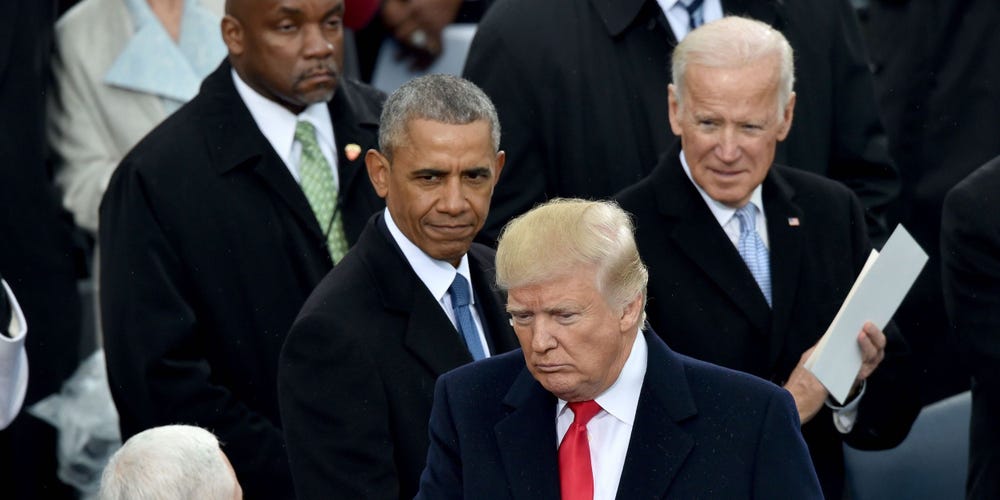
US President Donald Trump with former President Barack Obama and former Vice President Joe Biden at Trump’s inauguration in 2017. 
PAUL J. RICHARDS/AFP via Getty Images

Kamala Harris will become vice-president once she takes the oath of office, which usually happens just before the president is sworn in.

By law, inauguration day is 20 January. Opening remarks are usually scheduled for around 11:30 EST (16:30 GMT) and Joe Biden and Kamala Harris will be sworn in at midday.

Mr Biden will move into the White House later in the day – his home for the next four years.

What will Biden’s America look like?

For most of the world’s diplomats, Joe Biden’s foreign policy slogan “America is Back” is no metaphor.

On global issues from climate change, to non-proliferation and human rights, the US under the Trump administration had literally gathered up its papers and pens and left the meeting room. Biden’s election victory and choice of committed internationalists to lead the foreign policy team, means that there will actually be someone sitting in what has been an empty chair.

Pundits are divided on what America will look like after a Biden administration is sworn in . Here is what two of our journalists make of the situation

Biden’s America is daunting

Biden’s America is daunting simply because America is divided, the deepest cracks have not to be healed and America remains a nation divided by race, class, gender, and more social issues.

Social media has now deleted Trump’s account to the joy of others and to the dismay of others.

Biden lacks the intellectual or political tools to heal the gaping wound America so vastly leaks from. Neither did Trump.

The left has afforded Biden forgiveness in his support of the 1994 incarceration bill removing millions of black fathers from the home. His comments “I tell you if you have a problem figuring out whether you’re for me or Trump, then you ain’t black,”. Biden assumed the black vote and unfortunately, still, people voted for him against the great white evil that was Trump. Malcolm X once said “White liberals are those who have perfected the art of selling themselves to the black man as our ‘friend’ to get our sympathy, our allegiance and our minds. The white liberal attempts to use us politically against white conservatives, so that anything the black man does is never for his own good, never for his advancement, never for his own progress, he’s only a pawn in the hands of the white liberal.” Biden and Trump, are they the same? We are pawns in the political game, whilst I do not want the captain of the ship to fail, I begrudgingly support Biden as he now runs America. However, I do not hold my breath.

In a perfect world, it would be wonderful if Joe Biden’s presidency automatically restored balance to the world. Donald Trump’s America left a lot of citizen’s scared and bruised both metaphorically and physically. It is natural for Americans to be excited for a sense of normalcy after four years of absurdity.

The main excitement that Americans are longing for is things to go back to “normal.” They want a leader to come up with solutions and not excuses, especially during the Coronavirus pandemic. Americans are expecting restoration on COVID-19 and the economy. During the 2020 elections, two of the top issues concerning Americans were the coronavirus outbreak and the economy. On top of COVID-19 and economic issues, a Biden presidency could mean reconciling with America’s allies. America might be many things to the outside world, but the last four years have made American vulnerable to foreign adversaries. If Americans were a laughing stock before President Trump, they are a laughing stock now. A Biden Presidency will mean mending relations within NATO, the Paris Climate Accords, and some revisions to the North American Free Trade Agreement.

However, people shouldn’t get overly excited for his first day either. One has to understand that Biden is coming into heavily partisan politics along with turbulent race relations. People are experiencing tremendous grief, and President-elect Biden has to realize that change will not happen overnight. Some raw and honest conversations need to be had. This is not an easy task, especially with Biden and Vice President-Elect Kamala Harris’ past views on crime. While some may argue that Biden is a step in the right direction, one thing is certain, It has given people hope for the future.

Travelling To The UK Just Got Harder

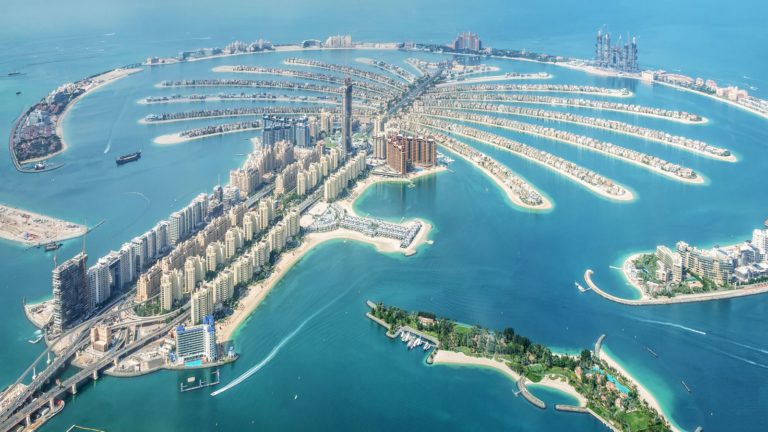
The United Arab Emirates has been removed from the UK government’s travel corridor list, the transport secretary has said.

It means that anyone arriving in England, Wales or Northern Ireland from the federation of states, including Dubai and Abu Dhabi, from 4am on Tuesday must self-isolate.

Transport Secretary Grant Shapps tweeted to say a 52% rise in new coronavirus cases meant the decision to remove the destination had to be taken “immediately”.

A statement from the Department for Transport said: “The decision has been made following a significant acceleration in the number of imported cases, along with the number of reported new cases over the past seven days, which have risen in the UAE by 52%.”

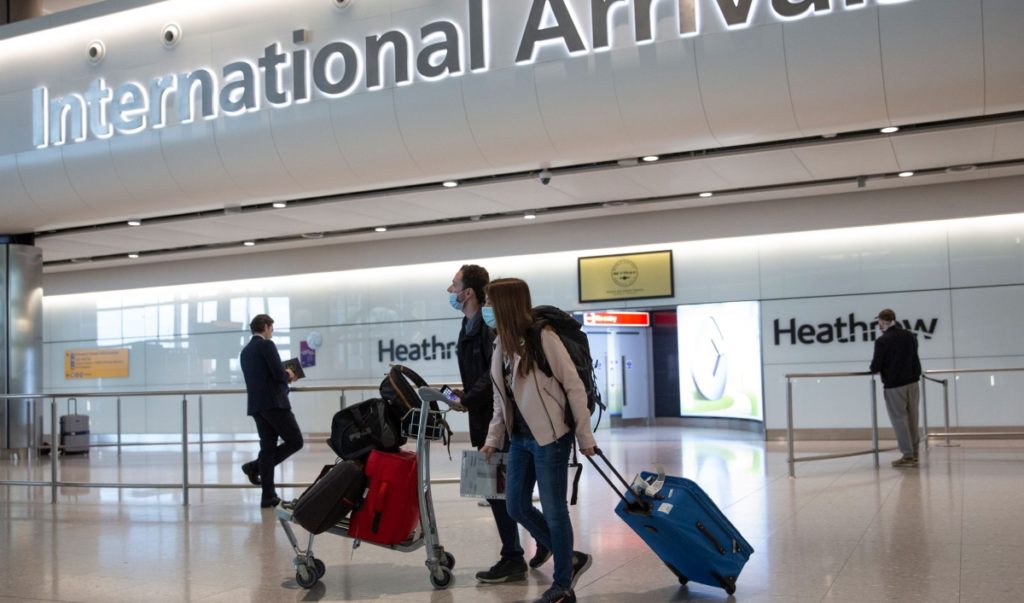
Passengers wearing face masks arrive at London’s Heathrow Airport, June 2020. The two-week quarantine period that travelers arriving in England from a destination not on the British government’s coronavirus safe list could be cut to just five days if they test negative for COVID-19. // Matt Dunham/AP/File photo

Mandatory COVID-19 testing introduced to bolster border measures

Just days ago, the Government announced that all international arrivals to England, including UK nationals, required to present a negative COVID-19 test taken up to 72 hours prior to departure

  • all international arrivals to England, including UK nationals, required to present a negative COVID-19 test taken up to 72 hours prior to departure
  • passengers will be subject to an immediate fine of £500 if they fail to comply with the new regulations on pre-departure testing
  • all passengers arriving from countries not on the government’s travel corridor list will still be required to self-isolate for 10 days, regardless of test result
  • passengers will still be required to fill in a passenger locator form and be subject to national lockdown restrictions

Passengers arriving from all international destinations will be required to present a negative COVID-19 test result before departing for England to help protect against new strains of coronavirus circulating internationally.

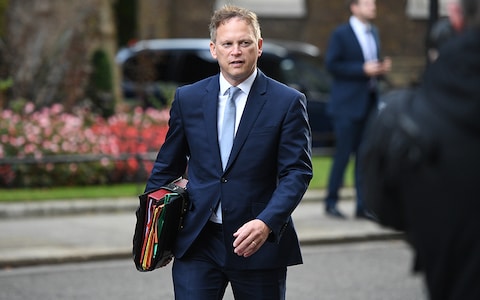
Transport Secretary Grant Shapps has announced the creation of a taskforce to open up international travel with coronavirus testing CREDIT: 2020 GETTY IMAGES/LEON NEAL

Transport Secretary Grant Shapps has announced that from next week inbound passengers arriving by boat, plane or train will have to take a test up to 72 hours before departing the country they are in, to help protect against the new strains of coronavirus such as those seen in Denmark and South Africa.

Transport Secretary, Grant Shapps said:

We already have significant measures in place to prevent imported cases of COVID-19, but with new strains of the virus developing internationally we must take further precautions.

My first thought when this headline popped up on my news feed? Too little, too late. Of course, a move like this would have been impossible this time last year. Our knowledge of COVID was minimal at best and there was no testing system to speak of. In hindsight, the UK’s most sensible move early on would have been to implement strict border policies of the likes of New Zealand, so to reduce the threat of the virus entering the country in great numbers at all. But in the absence of a time machine, we must make do.

Although there remains much to be desired in the government’s overall approach to the pandemic, this move makes sense as deaths and case numbers rise, but its impact will be minimal at this stage. One positive of this move is that it- as of- yet avoids the problems of a “jab and go” system. At least 90% of people in 67 low-income countries stand little chance of getting vaccinated against Covid-19 in 2021 as many wealthy nations such as the UK jealously guard patents and, according to the People’s Vaccine Alliance, have reserved enough doses to vaccinate their entire population nearly three times over. However, as vaccination programs begin to be rolled out across the world, only time will tell whether a more practical policy will remain in force, or risk further alienating developing countries against the backdrop of global financial struggle.

UK Airports and airlines have been demanding a coherent testing regime since last April.

The government’s decision to finally announce this nine months later perfectly sums up their handling of the crisis. 

Both sides of the political spectrum have questioned the government’s handling of the crisis.

Covid-19 placed a bright hot spotlight on the poverty, insecurity and inequality we face in this country and the Conservative government’s reluctance to properly address them. 

Even when the government was faced with the question of profit or people during the christmas period.

 They elected to ignore scientific advice and introduce a failed ‘Tier System’ that caused more confusion than anything as we find ourselves back at square one in a national lockdown.

A lot of Johnson’s detractors today had the chance to vote for a man who’s socialist ideals would have left us in a better position to cope with the effects of the pandemic.

It’s absolutely true nobody could have predicted a global pandemic that brought the world to its knees, nobody could have foreseen the 80k dead and 3m confirmed cases. 

But many, including Corbyn rallied against the austerity that was crippling the people of one of the richest nations in the globe.

Think of the struggling households that would welcome the free broadband for home schooled children or the rising unemployment and furlough schemes that would have been eased by the universal basic income that Corbyn had been keen on implementing. 

Some might be lamenting the opportunity to place a man in charge who would have taken the humanitarian approach to all of this.

The Next Steps With Brexit

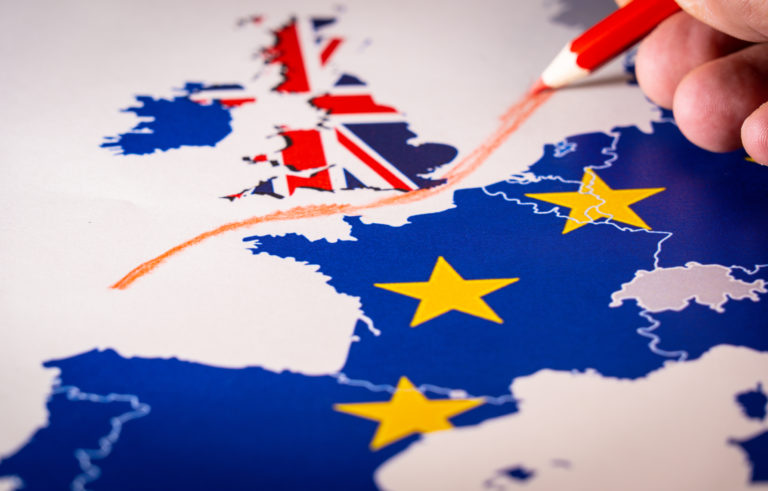
After years of protests, shock and denial, Brexit has finally been delivered. The UK government has finally reached an agreement with the European Union regarding trade and other issues, at the last minute before the transition period between the two ended. Despite the struggles and issues along the way, Boris Johnson and the Conservative government have delivered on the main promise that their landslide election victory was based upon – to get Brexit done. This is a major coup for the United Kingdom, and a sign that democracy is still alive and well.

Brexit: The Facts

Brexit is officially over. The United Kingdom reached a deal with the European Union on 24th December 2020. It had already left the EU in January 2020, but both parties agreed to keep things the same during a transition period. This ushers in a new era for the United Kingdom going forward, and will affects all aspects of the relationship between us and the EU on multiple levels. The deal took effect from 11pm, 31st December 2020. So what are the facts of Brexit, and what does this deal contain?

The Lockdown Has Overstayed Its Welcome

London and the South East of England have been put under Tier 4 restrictions, with more areas in the region to follow. With these restrictions coming just as we enter the holiday season, it will effectively cancel Christmas. With lockdown affecting people on multiple levels – especially financially and socially – we must ask ourselves whether this ‘cure’ is worse than the disease itself. Evidence has shown that lockdowns do more harm to people than benefit them; so what is the government doing?

After the second national lockdown ended in early December many saw this as a positive end to the year, especially those in Tiers 1 and 2. In addition to this, it seems as if the vaccine is just around the corner, with the government prioritising the elderly and care homes and rolling out the vaccine to the rest of the public in stages. The Christmas period is usually very busy, with businesses (especially hospitality) facing increasing demand for their products and services.

Due to the pandemic many jobs and businesses have already been lost, and many are on its last legs. The Christmas period, for many independent businesses, is seen as a last hope to keep their trade afloat. Now, London and the south east of England is to go into Tier 4, which is essentially lockdown-Lite. This is a bad idea, and would be catastrophic for businesses.

There’s no ethical justification for continuing this [lockdown] failed experiment.

John Tierney, contributing editor at City Journal

The Arrogance of the Government

The main issue with this is that the government seems to deal purely with statistics and hypotheticals. There is currently no evidence that suggests Covid spreads faster in restaurants and pubs.

It’s as if the government considers the hospitality industry to be a necessary casualty of the pandemic, having no idea just how damaging it will be to thousands of people employed in this sector. A new lockdown is essentially a nail in the coffin to pubs and struggling businesses in this sector.

To many people, furlough is simply not enough. Given the fact that furlough only covers 80% of a person’s salary (up to £2,000), any other expenses that are not covered by the scheme will have to be borne entirely by the worker.

Many workers live by the pay check; if they don’t work, they don’t eat. With rent set to increase in London, and inadequate support for workers, many will live on the breadline and be made homeless. An apology from Matt Hancock will simply not cut it.

There are those who would argue that due to a new strain of Covid being discovered, a swift reaction to it would be justified. To a certain extent, this is reasonable. It would be irresponsible for any government to not react to new developments; some would even suggest that if they didn’t react, any and all consequences would be borne by them.

Channel 4 reports UK unemployment rises to 2.1 million as of May 2020. Video credit: Channel 4 News

The Harsh Realities of Lockdown

With that being said, it seems as if the government does not seem to be too concerned about the collateral damage caused by lockdown. There are other factors at play here that are as a result of lockdown which aren’t necessarily economic. Yes, financial health is an important part of a person’s life, but there are other things to consider.

An example of this is our humanity. New lockdown restrictions mean that Christmas is essentially cancelled, despite earlier promises that restrictions would be temporarily relaxed during the period. When asked if people should consider leaving Tier 4 areas, chief medical officer Professor Chris Whitty advised people to ‘unpack their bags’.

Christmas is the one time of the year where the nation becomes more cheerful and spirited, and many people use it as an opportunity to see their relatives, lots of whom live far away. To cancel Christmas is a bitter blow and a kick in the teeth after what has been a terrible year.

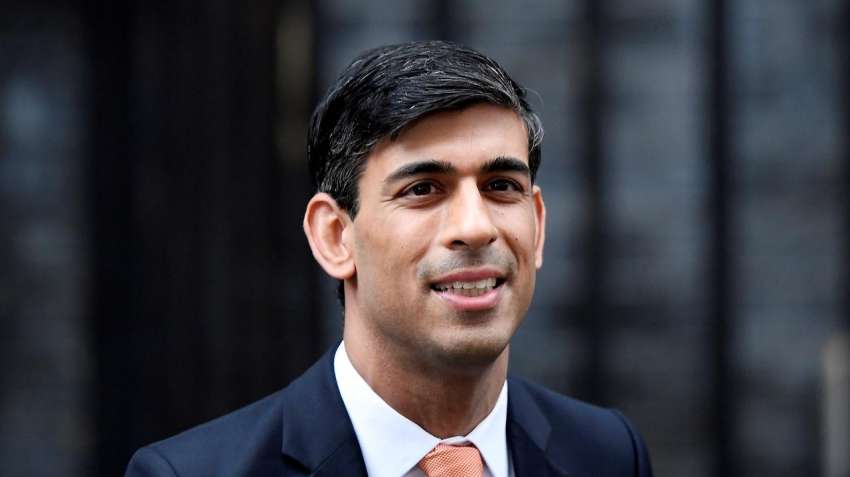
Rishi Sunak says the UK ‘will face a recession, the likes of which have never been seen’. Photo credit: Zee Business

Those who are living on the breadline will be further isolated from their families and friends, with socially distanced support simply not being adequate. This will have a major impact on people’s mental health, with anxiety, depression and suicide rates already increasing.

There’s also the elite snobbery that comes with lockdown. Many of the people who are pro-lockdown are either middle/upper class elites and celebrities, or those who work in the public sector. All of these people enjoy financial security.

Many of the most prominent pro-lockdown voices haven’t missed a single pay cheque since the pandemic began. It’s too easy for those people to speak about ‘safety’ (when Covid has a 99% survival rate) when their livelihoods aren’t at risk.

Civil Liberties are Being Eroded

There is also a growing concern about civil liberties being infringed upon. The UK, for the most part, was a free nation pre-Covid. Now, there has been a radical political paradigm shift. No longer are we free by default; now we’re ‘allowed’ to do things.

We’re ‘allowed’ to meet up with only one person outside our home. We’re not ‘allowed’ to mix households. We’re not ‘allowed’ to leave home unless necessary. The UK public, under the guise of ‘safety’, has been infantilised. Too many are fine to allow the government to consolidate power and strip individuals of their civil liberties, to give them a false sense of security.

Times of crisis always create the conditions for our rights to be swept away – we must now demand them back.

Martha Spurrier, Director of Liberty, a rights group

The lockdown has overstayed its welcome. It’s one thing for the government to stop helping us; it’s another thing entirely for them to stop us from helping ourselves. It’s a cure that is so much worse than the disease and it simply must end, before it causes irreparable damage to our economy and our nation as a body of people.

Leeds Should Stand Their Ground

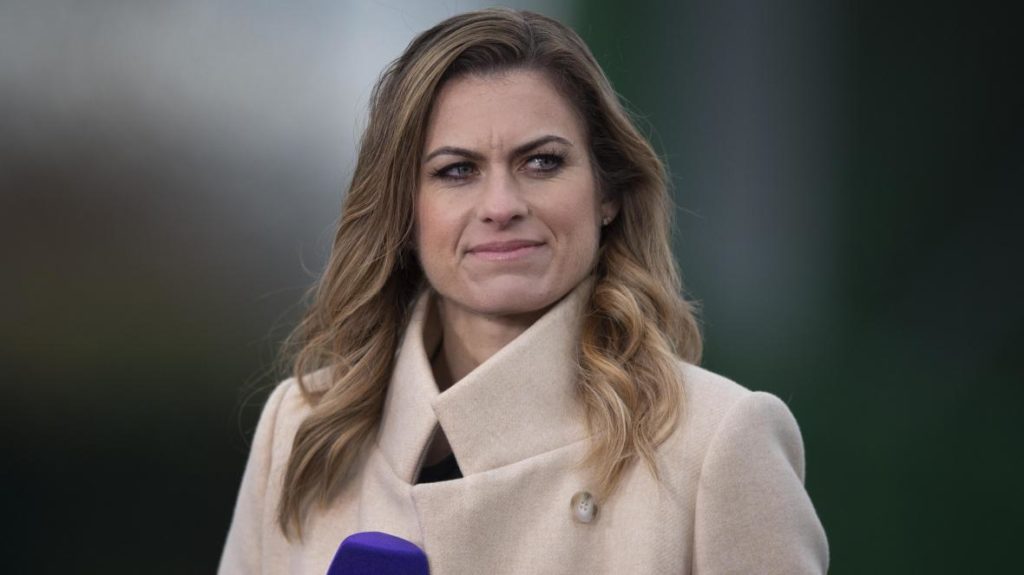
During an Amazon Prime Video broadcast of a Premier League fixture between West Bromwich Albion and Leeds United, pundit and former Arsenal winger Karen Carney said that Leeds were promoted from the Championship ‘due to Covid’. Leeds United hit back on their official Twitter account, and owner Andrea Radrizzani defended the tweet, labelling her comments as “unnecessary and disrespectful”.

As a result of the fallout, sexist trolls have targeted Carney. Whilst we should strongly condemn sexism in any form, Leeds should not delete the tweet or apologise for their words. Equal rights does not mean female pundits are exempt from criticism; neither should the club be held responsible for an individual’s actions.

Controversy on Amazon Prime Video

In December 2020, Leeds United played away at The Hawthorns to West Bromwich Albion (WBA) in the Premier League. An own goal and a screamer from Leeds winger Raphinha contributed to a 5-0 thrashing of the home side.

Despite WBA holding champions Liverpool to a draw in their last game, and Sam Allardyce being brought in specifically for the task of avoiding relegation, they were simply no match for Leeds, who have had a somewhat mixed (but certainly entertaining) season thus far, after their return to the top flight after more than fifteen years.

However, the result was overshadowed by the controversy during the coverage. Pundit and former Arsenal winger Karen Carney said that Marcelo Bielsa’s side were only promoted from the Championship ‘due to Covid’, referring to the three-month football hiatus back in March due to Covid.

Carney said, “….I actually think they got promoted because of Covid in terms of it gave them a bit of respite. I don’t know whether they would have gone up if they didn’t have that break”.

Leeds United’s official Twitter account responded to the comment publicly, tagging Amazon Prime Video Sport, and pointing out that they won the Championship by a clear ten-point margin.

Leeds midfielder Mateusz Klich and defender Ben White backed the club, posting emojis to show their disagreement with Carney. As of December 30th 2020, the tweet is still up, signalling their intent to stand their ground.

https://twitter.com/LUFC/status/1344027568484343814
Leeds United were not happy with Carney’s comments on Prime Video

The Fallout

The main controversy seems to be from three main talking points; whether or not Leeds and Andrea should be held responsible for trolls’ sexist comments, whether or not the post itself could be perceived as sexist, and if her comments were unfounded and fraudulent enough to be called out publicly.

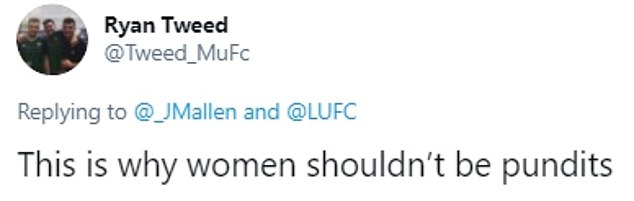
Carney was subjected to horrendous sexist abuse from Twitter trolls. Comments such as “back to the kitchen”, “this is why women shouldn’t be pundits” and “slag” were thrown around.

Former England, Leeds and Manchester United defender Rio Ferdinand urged the club to delete the tweet, whilst others suggested that Leeds United would be responsible for any and all abuse that Carney has received.

Despite this, Leeds United’s owner Andrea Radrizziani has claimed responsibility for Leeds’ tweet and defended his position.

He said “I take the responsibility of the Club tweet. I consider that comment completely unnecessary and disrespectful to our Club and particularly to the fantastic hard work of our players and coaches whom were understanding on the pitch for the last two championship seasons by all stats.”

He and Leeds have since condemned the abuse Carney has received.

Twitter troll @Tweed_MuFc targets Carney

Criticism is Not Gender-Specific

This situation raises questions as where the line is drawn between influence and personal responsibility. Some have questioned whether the post itself was sexist, and if Leeds are directly responsible for the sexist abuse that has been directed at Carney.

Many feel that the post was sexist itself because Leeds publicly called out a female pundit and speculated as to whether or not the same action would be taken against a male pundit.

They point to the sexist comments directed at Carney and attribute it to Leeds singling her out publicly.

However, this is a dangerous misnomer for two reasons. Firstly, there is no evidence that Leeds’ tweet was in any way sexist or discriminatory. Carney chose to make her comments about Leeds on national broadcast, and therefore Leeds called her out publicly.

It isn’t as if Carney isn’t used to being in the spotlight; she has won several trophies in her career as well as being England Women’s third-most capped player.

Leeds United players celebrate after Raphinha makes it 5-0. Photo credit: The Telegraph, AFP

Leeds United and Andrea felt as though the Club’s integrity was being called into question, and reacted accordingly. Although it is correct to condemn sexist abuse, neither Leeds nor Andrea can be held responsible for troll’s comments.

Whilst it’s understandable that as a well-respected club and owner respectively they are expected to act and speak in a certain manner, this is only applicable up to a certain point.

Secondly, ultimately a person is responsible for their own actions. Sexists don’t need much of a reason to be sexist. On another given day, it could be another situation and they’d reappear from the woodwork. The only people responsible for a sexist’s behaviour are sexists themselves.

This is further backed up by the condemnation of the comments by both Leeds and Andrea, so it’s fraudulent to suggest they are responsible for the sexist abuse.

If we want to truly stand up for women’s rights and equality, then we can’t make more of a point of Carney facing criticism than any other person.

Leeds United owner Andrea Radrizzani defends the tweet and the integrity of the Football Club

The fact that Carney is being treated with ‘kid gloves’ by some people proves that there are some who still hang onto outdated attitudes towards women. They still believe that women are ‘softer’ then men, and therefore deserve to be treated differently to men.

Equal rights mean exactly that. By definition, there is no room for selectivism.

Were Her Comments True ?

Most people believe that Carney’s comments referred to something called ‘Bielsa burnout’. Leeds manager Marcelo Biesla is known for his high-intensity training regimes and in-game tactics which involve constant running for 90 minutes.

Bielsa’s teams usually perform well for most of the season with this style of play, but eventually experience significant fatigue which leads to a drop in form.

An example of this was in the 14/15 season. Bielsa was managing French team Marseille in Ligue 1, and were top of the league by Christmas.

Fatigue kicked in and the team’s form dipped, eventually finishing fourth, barely scraping Champions League qualification.

Carney was referring to ‘Bielsa burnout’ when making her comments. Based upon his track record with football teams, it would be understandable why she said that the team would have benefitted from a long hiatus.

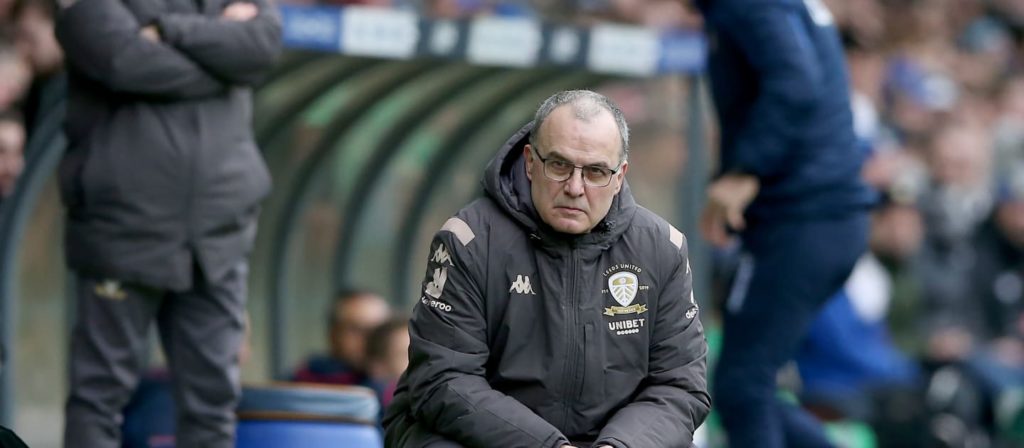
Marcelo Bielsa is known for his high-intensity training sessions. Photo credit: FIFA, Getty Images

A break from football would have given the players significant respite and allow them to overcome fatigue. This would mean that it would be a refreshed Leeds United team on the pitch after the restart of the Championship.

This logic could be inaccurate for two main reasons. Firstly, although Bielsa’s teams do experience burnout, anything is possible. To try to predict the future based upon previous history is reasonable and logical, but not definite.

There are no absolutes in life, and especially not football. Things can happen that you think could never happen, and vice versa.

In the Premier League era, seven teams have won the competition; Arsenal, Chelsea, Manchester United, Manchester City, Blackburn Rovers, Liverpool and Leicester City. The three biggest clubs from this list are arguably Manchester United, Liverpool and Arsenal.

Logically it would seem that these three would win the title before the others, and in United and Arsenal’s cases this is true. However, the truth of the matter is that Leicester City have won the Premier League title before Liverpool. This seems highly unlikely, but it’s true.

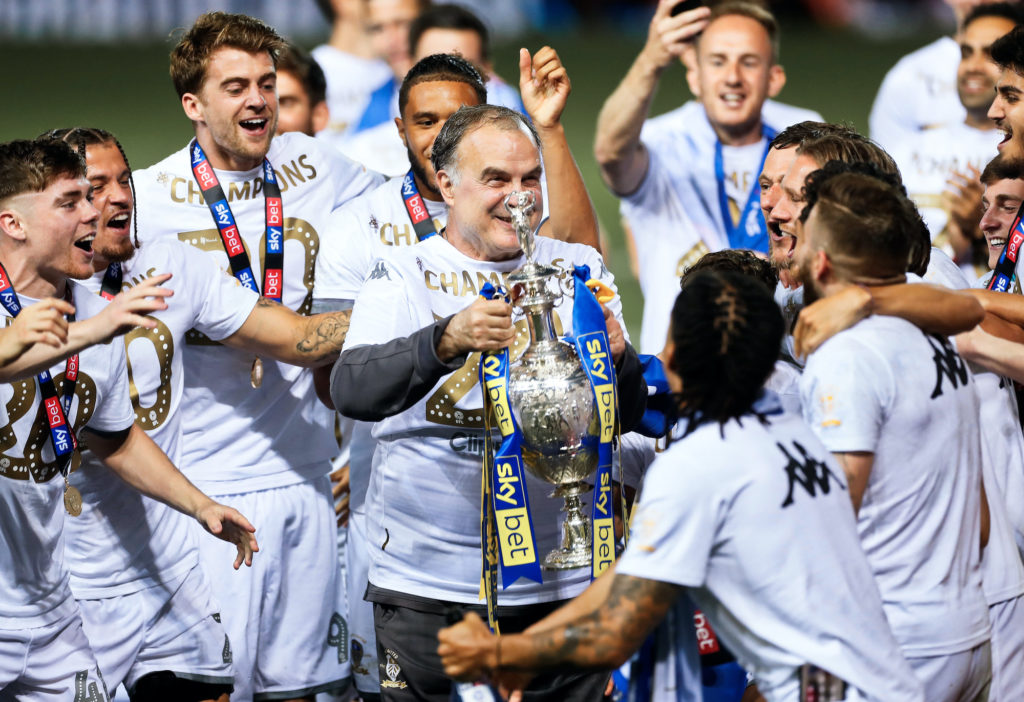
Marcelo Bielsa celebrates winning the Championship with his players. Photo credit: These Football Times

Track records and statistics are used increasingly by the football world as a whole. From television pundits to managers to players to even gambling sites, they are used to try to predict the outcome of a game.

It certainly paints a likely outcome of a result, but there are no guarantees of anything. People take issue with Carney’s comments because it seemed to be based upon a hypothetical situation.

The other reason is that her point was proven to be partially untrue. After the restart, Leeds’ first game was away to Cardiff City. They lost 1-0.

If Leeds had allegedly benefitted so much from the hiatus (as if they were the only team in the league to take a break), then why did they lose their very first game back?

Of course, they went on to win the Championship by winning seven of the last nine games left, but given the fact that they had won 20 and drawn 8 of their previous 37 matches, it was clear that Leeds were a team in form, and deserved to win the league in their own right.

To suggest they benefitted more from the hiatus is to undermine the team’s form and question their sporting integrity.

Karen Carney has attracted fierce criticism from Leeds United. Photo credit: The Times; Joe Prior, VisionHaus

Leeds Should Stand Their Ground

The truth of the matter is that Leeds United have done nothing wrong in this situation. The club and the owner defended their integrity publicly, in the same way that Carney made her comments publicly.

This had nothing to do with Carney as a woman, but rather as a pundit. The comments were made on national TV, and so she was called out. Being a woman should not exempt her from criticism.

There was no evidence of sexism in the tweet, neither is it correct to indirectly blame the club or owner for the actions of individuals. To blame the owner and club for sexism is to imply that they are solely responsible for abhorrent abuse. This kind of gaslighting should be rejected.

How Antisemites Hijack Progressive Causes on Campus

This year the world is changing, and great calls for social and political reform have been heard everywhere. After the murder of George Floyd, the strongest calls were for equality for the Black community, inspiring many other groups to join the fight. Unfortunately, some have tried to hijack this momentum for their agenda. Anti-Zionist groups have attempted to tie these popular causes to their own, blaming many of the world’s problems on the only Jewish state. These groups shoehorn anti-Zionism into progressive causes to exclude Zionists, which most Jews identify as – it being the Jewish national liberation movement for self-determination in the Jewish ancestral homeland. This tactic is a blatant attempt by anti-Zionists to label Israel as an inherently racist, illegitimate and temporary state. 

In June for example, the Palestine Solidarity Campaign attempted to blame racist police brutality in the USA and by extension the death of George Floyd on Israel. According to the PSC website, a ‘deadly exchange’ exists between Israel and America to ‘reinforce practices of surveillance of public space, racial profiling and the excessive use of force’. In reality, Israeli emergency services train their counterparts all over the world in how to deal with mass casualty incidents and terrorist threats. It’s no surprise considering how familiar Israel is with these kinds of threats. There is no technique used by Israeli police to kneel on the necks of those being arrested, and police brutality obviously did not originate in Israel. The mere suggestion that Israel is behind racial profiling in America ignores all government-sanctioned racism in the USA before 1948 and reinforces antisemitic tropes concerning international control. PSC’s statement goes on to address this and clarify that this isn’t the case, but still erroneously condemns Israel as a guilty party. 

Likewise, at an Oxford anti-racist protest calling for the removal of the statue of Cecil Rhodes, President of Leeds Palestine Solidarity Group, Adam Saeed suddenly began talking about Israel and various alleged crimes. Rhodes was key in the British colonisation of Zimbabwe (formerly Rhodesia, after himself), and his credentials as a colonial oppressor and slaver are indisputable, unlike his non-existent connection with Israel. After complaints, the Equality and Diversity Officer at Oriel College condemned the speech as antisemitic, citing conspiracy theories relating to Israeli complicity in American racism as well as ‘bringing Israel in where Israel is not relevant’. The speech reflected an old habit of antisemites, to blame the Jews for everyone’s problems. 

More recently, Leila Khaled was invited by San Francisco State University onto an online panel that honoured her as a ‘Palestinian feminist’. Firstly, it is quite difficult for anyone to seriously describe Khaled as anything but an antisemitic terrorist. This is a woman – in fact, the first woman – who carried out that most quintessential modern terrorist activity, hijacking planes. Is being the first woman to hijack a plane really a great stride forward for the feminist movement? More importantly, Khaled hijacked the plane in order to threaten innocent lives, not to prove that women are capable of hijacking planes. While the event was cancelled by Zoom and Facebook, few people saw it as problematic, including President Lynn Mahoney of SF State, who wrote a letter alleging that the university was being unfairly censored by tech companies. Last month Khaled was invited to speak at a Leeds Palestine Solidarity Group event, as part of a campaign opposing the no-platforming of Khaled by Zoom, Facebook and Youtube. She was once again billed as a feminist icon, sending the unfortunate message that Jews are unwelcome in the feminist movement. 

There are also those who use the feminist and LGBTQ+ movements to accuse Israel of “pinkwashing”, i.e. using queer rights to seem progressive so to distract from atrocities. The word was coined in a New York Times op-ed entitled ‘Israel and Pinkwashing’, purely to delegitimise Israel. One BDS article defines it as an ‘Israeli government propaganda strategy that cynically exploits [LGBTQ+] rights to project a progressive image while concealing Israel’s occupation and apartheid’. Anyone who has been to Tel Aviv, the biggest centre of gay life in the Middle East, knows this to be false. Tel Aviv Pride is one of the biggest celebrations of queer identity around the world, not a fake photo op. Israel is the most welcoming country in the region to queer people and calling that ‘pinkwashing’, is a clear attempt to erase any good things about Israel. The article goes on to suggest that ‘queer and trans liberation cannot be separated from Palestinian liberation’. This sentence illustrates clearly the message of the piece; that if you want to be an ally to LGBTQ+ people, you are not allowed to be pro-Israel. This excludes all Zionists (even those identifying as queer) from fighting for LGBTQ+ rights.  

What could be the motivation of pro-Palestinian groups such as Apartheid Off Campus and the PSC in coopting so many progressive causes? Obviously, it helps to make any liberation movement all about Palestinian liberation, but surely this strategy isn’t as useful as a universal call for Palestinian liberation? The remaining explanation is the fact that this method excludes Zionist (or “bad”) Jews from the liberal movement, leaving only the anti-Zionist (or “good”) Jews. This is like the antisemitic practice of asking any Jew one meets for their opinion on the Israeli-Arab conflict in order to give Jews a loyalty test because, as the old trope goes, Jews are only loyal to each other. Regardless of intention, these occurrences amount to an effort to characterise Jewish people as “the enemy”, not belonging in a progressive movement and not on the right side of history. 

Ben Harari is the CAMERA on Campus Fellow at the University of Nottingham.

We Can’t Let Emma Reilly Go Unheard

Last week was a jam-packed one where the commemoration of human rights triumphs was concerned. Wednesday, December 9th marked the 72nd anniversary of the adoption of the Genocide Convention by the United Nations General Assembly. The following day commemorated Human Rights Day in honour of the adoption and proclamation of the Universal Declaration of Human Rights by the same UN body.

Although I have previously written about my pessimism in regards to the efficacy and consistency of modern human rights doctrines and institutions, it would be foolish to deny that these anniversaries mark important steps in the ongoing mission toward a better and fairer world. Yet criticising the United Nations’ flawed approach to human rights is as much a pitstop on the road to justice as was the organisation’s hopeful beginnings.

The list of UN failures is hardly a short one. During the 1970s, the United Nations recognised the brutal Khmer Rouge regime that claimed the lives of up to 2 million Cambodians, ignoring its human rights violations. Amid Civil War in Somalia, the UN peacekeeping mission was an abject failure not only in keeping the peace but in providing humanitarian aid. Of the 172 UN General Assembly resolutions on the Arab-Israeli conflict, none mentions the approximately 800,000 Jewish refugees (over ninety per cent of the Jewish population outside of the West) displaced by the conflict.

During the 1994 Rwandan Civil War, UN troops abandoned the victims of the genocide in which up to 600,000 Tutsis were murdered, or in some cases remained as spectators while the horrific violence raged on. During the Srebrenica massacre the following year, many victims fled to the UN “safe zone” in Srebrenica only to find the Dutch troops there incapable of defending them. 

In August 2017, Myanmar’s military launched a crackdown on the Rohingya minority, killing almost 24,000 civilians and displacing up to 750,000 others, including women and children. Mass gang rapes, killings — including of infants and young children — brutal beatings and disappearances were committed by Myanmar state forces. China, a member of the United Nations Human Rights Council as of 2020, blocked UN efforts for the Rohingya in the Security Council.

These decades-long failures, although largely unreported, have at least been the subject of massive publicity and in some circumstances, compensation and useful reflection. Yet one shocking tale of UN corruption, that once again came to public attention in early November has gone virtually unnoticed.

Speaking to Maajid Nawaz on LBC radio in early November, UN human rights lawyer Emma Reilly has accused the UN Human Rights Council of deliberately passing names of Uyghur dissidents to the Chinese Communist Party. Reilly claimed that before each UNHRC session, the Chinese representatives would ask the UN “whether or not certain people were planning to come,” which is “completely against the rules.” 

This may seemingly have been the case for years. In a recently-released letter, UN Watch, an NGO that highlights UN malpractice and bias, revealed that as far back as February 2017 “Chinese authorities, and others, regularly ask the UN Human Rights Office whether particular NGO delegates are attending future sessions.” It is even speculated that the practice may have gone on from as early as 2013. Just as alarming was the official acknowledgement of this information from the Office of the High Commissioner for Human Rights in a 2017 press release.

Both Reilly and UN Watch have asserted that the Chinese regime uses the information provided by the UN, to track and harass Uyghur activists and their families – often accusing them of terrorism and other crimes. In an exclusive interview with Indian media outlet WION, Reilly expanded on the fate of those whose names were handed over: “They described the Chinese government attending their homes in China, forcing their family members to phone them, to try to persuade them not to appear. In some cases, they were holding the mobile numbers that they haven’t shared with their family members for their safety. In some cases, family members were arbitrarily arrested, detained, tortured and even died in detention, particularly in concentration camps in China.” 

A moral scandal of this magnitude ought to be the subject of intense press scrutiny and public outrage, and yet it has routinely slipped to the bottom of headlines since it was first revealed in 2017. Transcripts from the United Nations Human Rights Commission show how Reilly has repeatedly been insulted and ostracised for her whistleblowing. It is now our job to make sure that her message does not go unheard.

Georgia is an associate writer for Foundation for Uyghur Freedom. Follow them on Instagram @foundation4uyghurfreedom.

What Lies Ahead For Britain’s Nuclear Future?

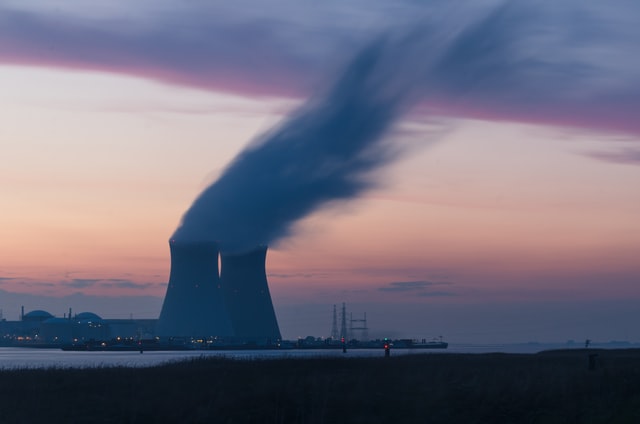
Nuclear power has long been seen as a viable route to converting the energy industry to a carbon-neutral one. However, Britain is simply not prepared for the next generation of reactors, with half of its nuclear capacity to be retired by 2025. Thankfully in recent weeks, there have been some major new developments. This is an exciting time for the energy sector and will help convert the UK’s economy towards a clean and freer one, as nuclear power generates no carbon emissions. 

These developments come alongside the recent Ten Point Plan for a Green Industrial Revolution, in which the UK government pledged, “£525 million to help develop large and smaller-scale nuclear plants, and research and develop new advanced modular reactors.

This is a good step forward and will help encourage new investment from the private sector in this industry. Hinkley Point C Nuclear Power Station is currently being built by EDF in Somerset as the first in the new generation of reactors. This site has already generated around £2.2 billion for local businesses, 10,300 jobs created, 644 apprentices have worked on the project and £119 million invested in local communities. 

This shows some of the additional benefits of building more nuclear reactors- especially important due to the economic climate we now face due to the Coronavirus outbreak. 

Recent footage showing the progress being made at Hinkley Point C I SOURCE: EDF Energy

It was also announced in November that Rolls-Royce is heading a consortium that will create a new Small Modular Reactor (SMR). There are plans for 16 reactors to be built over 20 years creating around 6,000 jobs initially, potentially creating an additional 34,000 in the future and plans for exports of SMR’s valuing up to £250 billion.

These plans are particularly pleasing to hear as it is a new adaptation of how SMRs can create electricity. This will also help the UK economy recover in a green way, along with kickstarting the expansion of the nuclear network in Britain. Each SMR will create enough electricity to power 450,000 homes for 60 years, equivalent to 440MW of electricity. Moreover, eighty per cent of the parts for the reactors will be created in the Midlands and the North of England, in line with the government’s ‘Level up’ plan for the country. 
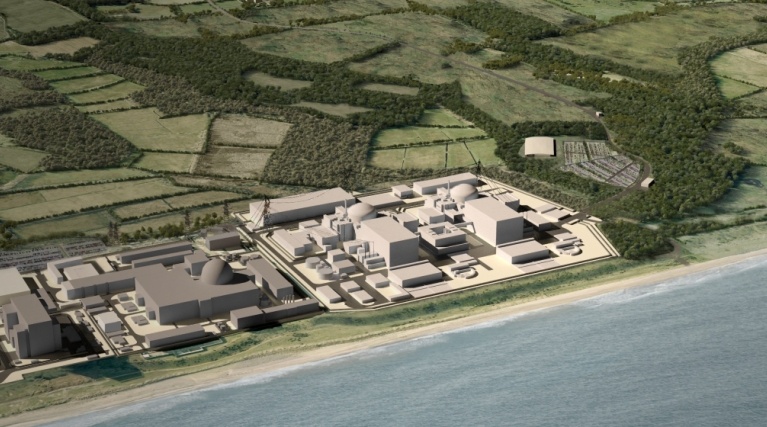
Sizewell C is another project that is likely to take off in the next few years. At the end of October, it was reported that the plans were about to receive the go-ahead from the government. The only issue with this new reactor is the way it will be financed. 

In an article, this summer, we explained how why we not allow Chinese investment into the nuclear industry within the UK. This is due to the regime’s atrocious human rights record against their own citizens. We simply cannot rely on a state which keeps Uighur Muslims in containment camps en masse and has ended the ‘One country, two systems’ rule in Hong Kong this year.

Just as the government took the courageous decision to remove Huawei from our 5G networks by 2027, similar steps must be taken in Nuclear. Currently, the Chinese state-owned company China General Nuclear Power Group (CGN) have a 33% stake in Hinkley Point C and a 20% stake in Sizewell. It was previously thought that CGN would be able to build their own reactor at Bradwell. Thankfully, this now seems unlikely.  

The proposed Sizewell C station in Suffolk I SOURCE: EDF Energy

Another exciting new development is the speculation that Wales may be getting a new nuclear reactor. This is not yet confirmed, but the government is in talks with an American engineering group Bechtel. If a deal is made it would mean that work can resume on a project that had the plug pulled on it in September by Japanese firm Hitachi. This deal is far from over the line as of yet, but it is encouraging to see more investment from a firmer ally than China in our nuclear sector.  

UK nuclear projects still require more private investment but we are currently seeing great leaps ahead and hopefully in the next 10 years or so we will be reaping the rewards. Building this new generation of reactors will be hugely important to providing skilled jobs during the economic recovery in the wake of Covid-19 and will help move our economy to a greener one in the future.

Nuclear power can be a great tool for our future energy policy if we harness it and we must do that if we want to move the country towards the goal of net-zero carbon emissions by 2050.  

Alex Game is a Campus Coordinator with the British Conservation Alliance. He studies at Manchester Metropolitan University, where he is the founder of the British Conservation Alliance Society.