In February last year The Terms & Conditions Film School released Terms & Conditions: A UK Drill Story, a feature-length documentary that set out to dissect UK drill’s negative reputation and shine a more positive light on the scene. The film school, which launched in November as a partnership between Livity Studios and YouTube Originals, is now continuing in that vein with a trio of short docs from emerging filmmakers.
The three short films were selected from a total of 150 applicants. Of those, 15 students were picked to attend a weekend of workshops where they studied storytelling and filmmaking. Those lucky enough to be there were treated to insight from Terms & Conditions director Brian Hill and producer Kandice Abiola; director Olivia Rose; YouTube music journalist Mr Montgomery; TikTok’s head of UK artist partnerships, David Mogendorff; LinkUp TV creative director, Jordan Boza; and YouTube Originals’ head of originals, Luke Hyams.
The first of the three films is Dare To Dream by filmmaker Naomi Grant, a deconstruction of “the hypermasculine stereotypes that society forces on young Black men”. The second is Life Of Lid by nineteen-year-old music video director Ellis Harvey, which follows the experiences of Lid, a young, gay, female rapper who grew up in care. The third and final film is Try And Stop Me from first-time documentary maker Stephanie Okereafor, which stars Lioness in an examination of the challenges faced by female rappers working in UK music.
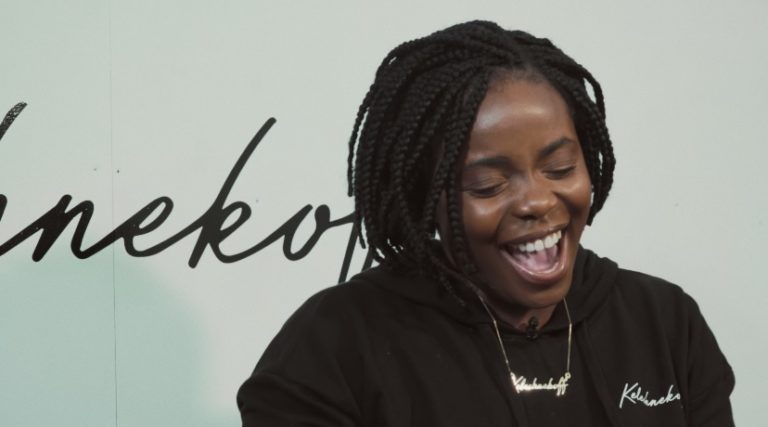
We sat down with the director and creator Stephanie Okereafor to find out a little bit more about the project.
What is Try and Stop Me About?
Try And Stop Me is a film about women’s’ struggle to be seen, respected and free to define their own identity in the UK rap scene. But it’s also a celebration of how they are doing it bigger and better than they ever have regardless.
Your short film was picked out of 150 applicants, what do you think made it stand out?
I think it’s a subject matter that hasn’t received as much coverage as it should have. When doing my research on the topic it was hard to find much, and if I did, 9 times out of 10 it would be from a US standpoint. I think the intergenerational element of having an older and younger artist also brought a fresh dynamic to the subject that they hadn’t seen before, this was probably the biggest factor.
How did you feel when you got the news?
Honestly, it was a mixture of emotions. Part of me couldn’t believe it, I hate pitching and don’t tend to do well with it so it was a big milestone in that respect. The idea of doing it seemed super exciting. But on the other hand, I wasn’t really sure how it would work out. The timelines were FAST, and I was already in production for another film. So I’m super happy we were able to pull it off in the end.
How would you characterise the challenges faced by female rappers in the UK?
There are so many dimensions to the challenges female rappers face. The pressures to look a certain way and meet a certain aesthetic standard, the expectations that they just won’t measure up in comparison to male counterparts, lack of support, the pressures to please and perform the list goes on. Overall there just seems to be a weight to their existence that shouldn’t be there.
What do you wish more people knew about the female rap scene?
I wish more people knew that there are women killing it in the scene, lyrically and otherwise. But also that they do not exist to meet anybody’s expectations but their own.
Last week, former British Prime Minister Gordon Brown said the U.K. will either become a “failed state” or be “reformed” as he urged politicians to counter support for Scottish independence.
Brown’s intervention comes after a Sunday Times poll found people in all four nations of the United Kingdom believe Scotland will leave it in the next decade — with Brexit and the U.K. government’s response to the pandemic seen as having accelerated the trend.
Writing for The Telegraph, Brown said the U.K. “must urgently rediscover what holds it together and sort out what is driving us apart,” and warned that the “world’s most successful experiment in multinational living is under greater threat than at any time in 300 years.”
“I believe the choice is now between a reformed state and a failed state,” he said.
We asked two of our writers in England whether its time for the UK to support Scottish Independence
Much like Bobby Gillespie (Primal Scream musician), I support Scottish independence despite being critical of nationalism in general. As someone based in Manchester (North of England), I sympathise with the desire to not be associated with the rest of England. Over the past 5 years, we have given the impression that we are nothing more than a petulant little child in the form of a former empire. You may have guessed (though I’m not exactly secretive about it) that I am a remainer. Even though we have now actually left the EU, my heart doesn’t believe it. For Scotland to want back into the EU and want to separate from us, should we really stop them?
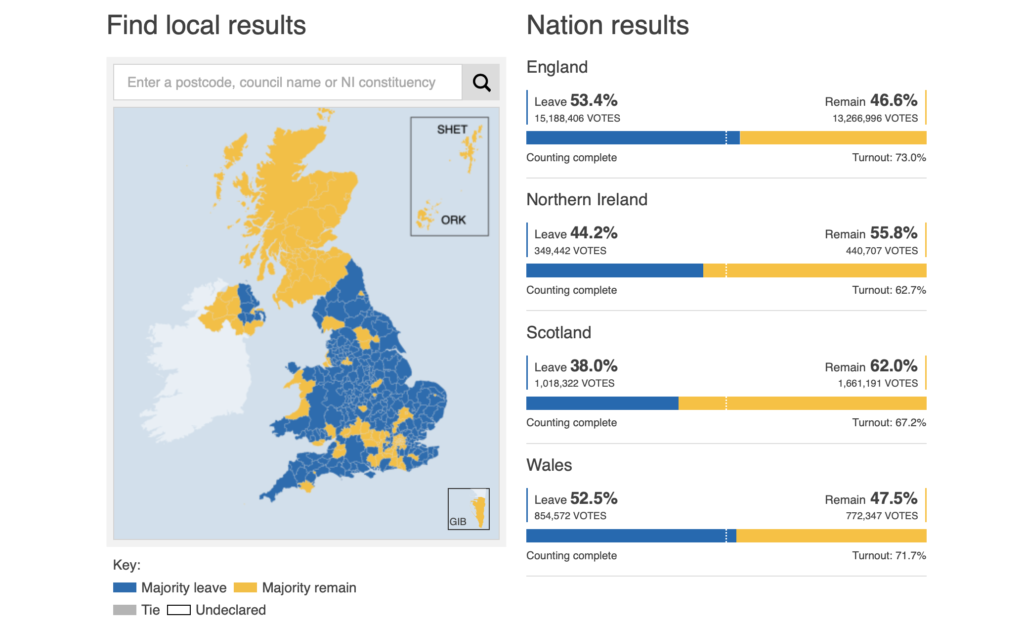
The last Scottish referendum in 2014 was before the Brexit vote. Things have massively changed in the UK since the 2016 referendum to leave the EU. Interesting to note is that every council in Scotland had a Remain majority.
The results of the 2016 EU referendum
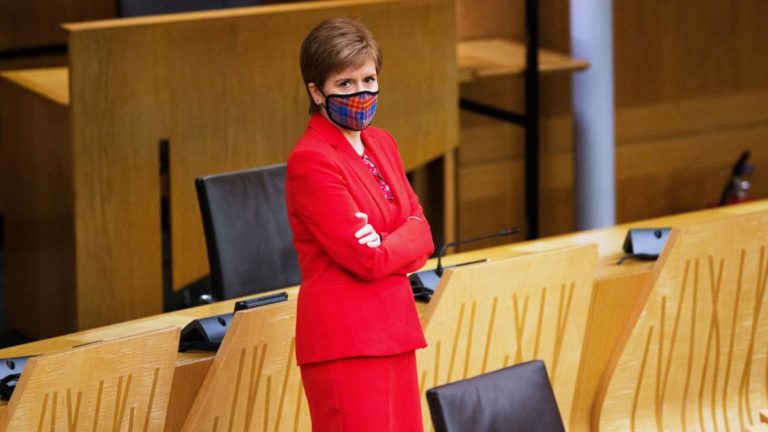
This week we also saw that Nicole Sturgeon polled as the most popular politician across the UK. Scotland is actually doing really well and we are forcing them to be associated with us. It’s unfortunate really how we are dragging Scotland into our mess. If Scotland wishes to leave then they should. Or, at least they should be able to vote on it.
While the Scottish Government is only partly funded by the UK government, it is also partly self-funded through raising revenue from devolved taxes and borrowing. we have seen how Scotland has handled the pandemic and while it has not been the best approach, it is certainly better than the way Westminister has handled it. My Northern solidarity, in this case, trumps my jealously that Scotland may actually be able to separate from the rest of the UK. It’s not that I want them to leave, its that we shouldn’t be forcing anyone to deal with our terrible government.
The numbers don’t add up.
A new economic study into trade concludes that the costs of Scottish independence would be two to three times greater than the impact from Brexit and that joining the European Union would do little to offset that cost. The report, from the London School of Economics, is set to fuel the post-Brexit debate about independence. Of course, as it has been the SNP response is that there is no reason why Scotland cannot emulate the success of other countries of a similar size.
Brexit and indeed, the global response to COVID19 is teaching Britain a lot about borders and trade barriers and it is proving so far to be quite a painful lesson. After years of lessening friction, we’re seeing the impact of paperwork, the need to prove where products came from, and, in some cases, tariffs. There were lessons also from the USA, where Donald Trump showed how tariffs can be used as an economic weapon, wielded by strong economies against weaker ones. In these perilous times, companies need certainty and stability.
The report from the London School of Economics and City University of Hong Kong discussed earlier found that quitting the UK’s common market would hit the Scottish economy two to three times as hard as leaving the EU, just counting the impact on trade alone.
Suggesting that the worst economic effects would take several decades to take hold, the LSE’s Centre for Economic Performance said the impacts on its trade with both the UK and the EU would shrink Scotland’s economy in the long run by between 6.3% and 8.7%.
That was equivalent to a loss of between £2,000 to £2,800 per capita a year: with Scotland’s population estimated to be nearly 5.5 million, that puts the losses at between £11bn and £15.4b.
In the middle of a pandemic, entering into a debate about the Scottish referendum is just redundant. Supporting Scottish independence during a time like this is tantamount to gutting the country
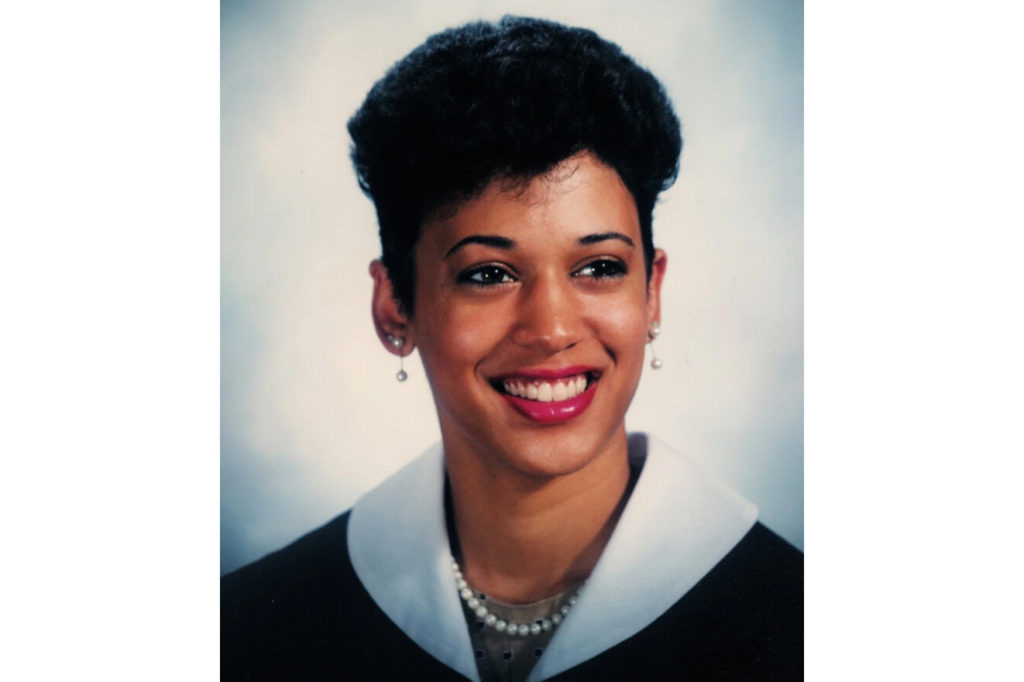
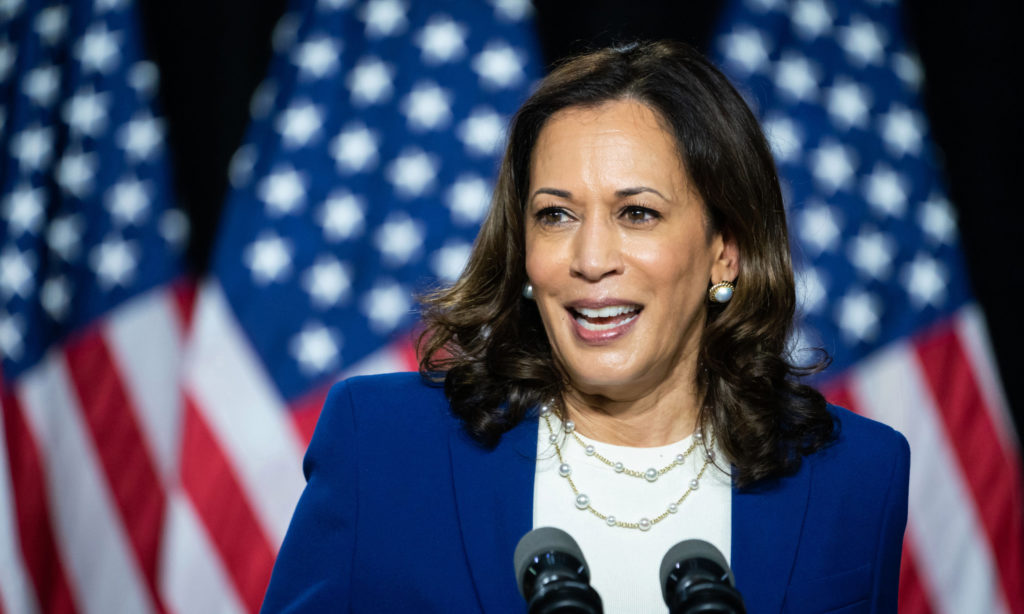
From the California State Attorney’s Office to the White House, Kamala Harris has made a name for herself in more ways than one. It wasn’t long ago that Harris dropped out of the 2020 Presidential Race, yet she now holds one of the highest titles a woman has held in the United States: “Madam Vice President”. Here is what you need to know about Kamala D. Harris:
The Early Years
Kamala Devi Harris was born and raised in Oakland, California, to a Jamaican father and an Indian mother; the oldest of two children. One of the things that subsequently shaped her career, was her parents taking her to civil rights protests on the Berkeley campus. As she grew up, she had a sense that pursuing law in the fight for social justice was something she felt passionate about. Harris was part a part of thesecond in-take of the city’s integration program to help desegregate the school system. She then attended Howard University (a historically black college & university) for her undergrad, where she earned a degree in Political Science and Economics. Harris later earned her law degree at Hastings College.
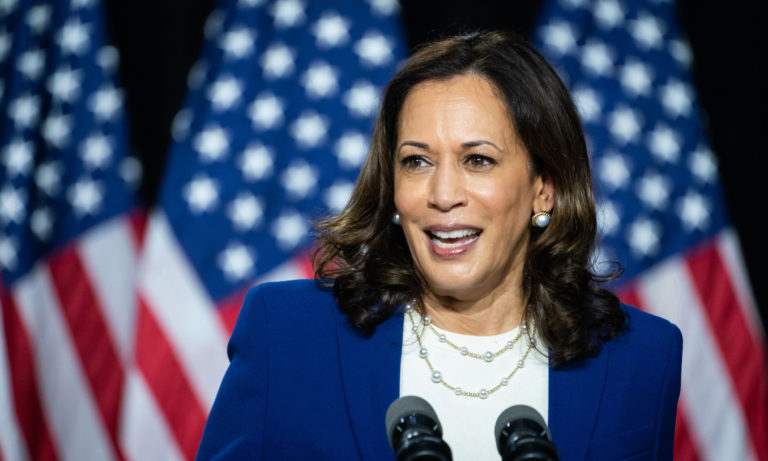
Kamala Harris [The New York Times]
A Career as a Prosecutor
Harris made history to become the first Black woman to be elected district attorney in California as well as the first woman to be California’s attorney general. She took up these roles driven by a desire to influence change from within the system. Ms. Harris had described herself often as a progressive prosecutor and argued that one could be tough on crime and reform the criminal justice system, at the same time. She, however, faced severe criticism as attorney general for: allegedly rarely prosecuting police officers who wrongfully killed civilians, refusing advanced DNA testing in the Kevin Cooper case, and defending her office’s actions amid claims of prosecutorial misconduct. Moreover, she appealed California’s law to ban the death penalty. Some of her views on crime were laxer in the latter part of her time as attorney general — which later haunted her during the presidential campaign trail.
Kamala Harris [White House]
A Career as a Senator
During her brief stint as a U.S. Senator, she developed a reputation for her intense interrogation of the Trump administration officials and nominees, especially Bret Kavanaugh’s confirmation hearings. In recent years, she has taken a more progressive approach in her politics. She initially supported Bernie Sander’s Medicare for All bill but shifted her position during the presidential campaign. She has also been an advocate for reforming the criminal justice system with proposals such as calling for a revision to the country’s bail system.
The Road to The White House
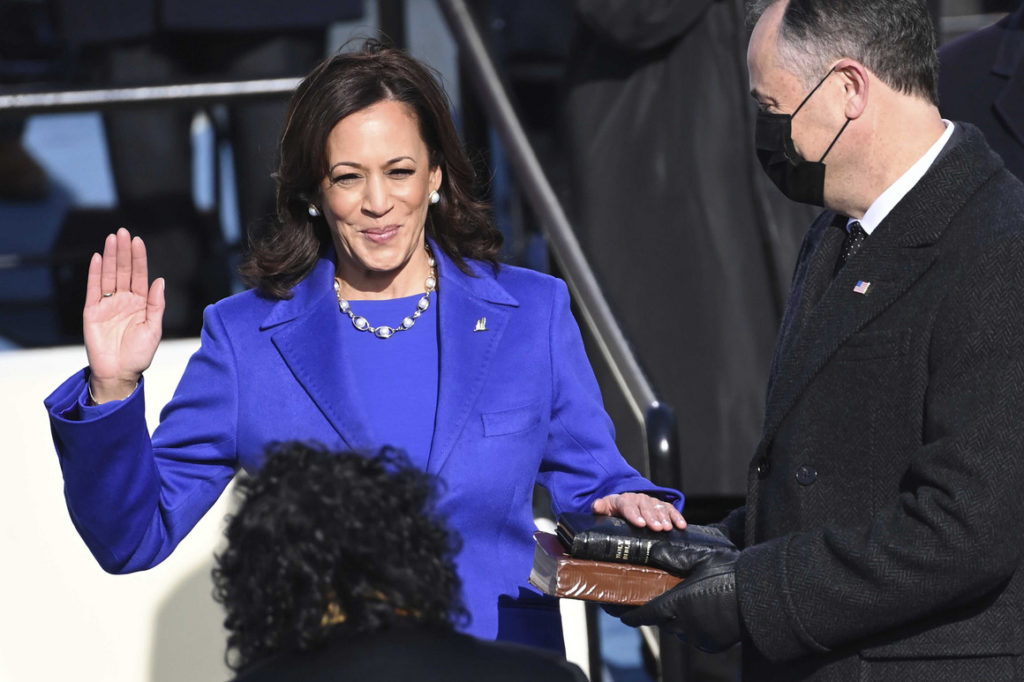
Kamala Harris Sworn in as Vice-President [Politico]
Although Kamala Harris and Joe Biden might have initially had a rocky relationship during the Democratic race, their relationship goes back to her friendship with his son, the late Beau Biden. The two worked very closely as they were both attorney generals of their respective states, and remained friends until he died in 2015. Her relationship with the Biden family during through her friendship with Beau played a factor in President Biden’s decision in picking Harris as a running mate. The two – Joe Biden and Harris – were aligned on some policy issues as well – another contributing factor to the decision to have her a running mate.
Harris and Biden agree on the approach that priorities scientific perspectives in relation to combating the coronavirus.
On race relations both agree on the need for economic and educational investment in communities of colour to create safer, healthier communities.
Vice President Harris has had an impressive career to date with her fair share of challenges along the way. However, whether you agree or disagree with her policies, one thing is sure: she has been a trailblazer. Her South Asian and Black heritage resonate with little girls across the nation. She has held her own in predominately white male dominated environments and has been an inspiration to people in America, and the intriguing part is that this just the beginning.
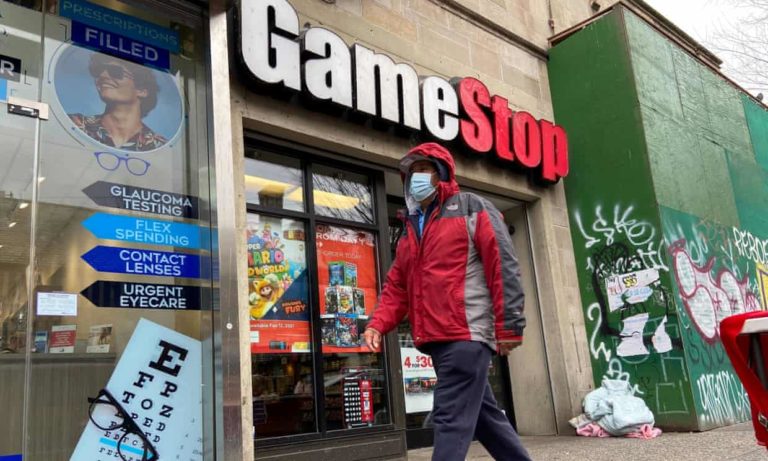
Investment platform Robinhood has been hit with a class action lawsuit in the US after it prevented people buying shares in GameStop and some other companies that had seen big swings in prices and a high volume of trading.
Scores of amateur investors cried foul, suggesting Robinhood had acted against the interests of ordinary investors to help financial firms that had bet against GameStop and did not want to see its price go up any further.
Shares in GameStop, Nokia and AMC fell sharply after trading was suspended, resulting in losses, on paper at least, for some traders who had backed the stocks.
Is this really a conspiracy against average Joe investor, or is there a more mundane explanation?
Robinhood, among other share-buying apps, is facing a lawsuit after restricting trading of GameStop and other shares. The restrictions have since been loosened. Photograph: Nick Zieminski/Reuters
RH breached its fiduciary responsibility to look after its retail clients after it emerged it came under pressure from Citadel and The White House to help the short-sellers (Citadel being one) by artificially crashing the price of $GME and other stocks. RH only stopped buying instead of pausing all trading in tickers like $GME. Multiple lawsuits have been filed accusing them of illegal market manipulation.
By stopping new purchases with loaned money (trades on margin), but allowing sales, RH could balance their deficit at the end of day tallies. They have a deficit because RH own the stocks bought on margin to speed the processing, not the traders. They loan you the funds to complete the transaction. Behind the scenes of margin trading is lending between various other parties (Market Makers, Clearing Houses…), creating counterparty risk if Peter fails to pay Paul – insolvency ensues.
RH didn’t have enough spare capital (liquidity) to afford the trading volumes, being already in default. With instant settlement and most accounts margin trading, RH needs a lot more capital to send to execute all trades. Without the large loan last week, they would have been insolvent.
This would have been a nightmare for all the retail margin accounts as millions of traders would have lost all their money and become another creditor in bankruptcy. Increasing margin to 100% would have covered themselves if they weren’t relying on last minute adjustments according to modern portfolio theory. Halting trading activity would have stemmed the flow but may not have been enough to save RH from bankruptcy.
Cash accounts don’t carry the same risk but clearing takes two days allowing adequate time for the transaction to complete the loop and the funds to return to RH. Cash allows functionally liquid back systems. Margin does not during periods of high volume.
RH, in only allowing selling, caused panic and the price to crash. There is a conflict of interest here since Citadel was exposed to GME price rising further, and Citadel pays RH a small fee as e-broker for each share transaction that is routed through them. Citadel alone buying RH’s order book equates to 40% of RH’s revenues. The same Citadel that shorted GME stock, and bailed out Melvin Capital last Monday. Citadel can see RH’s order flow (pending trade activity) and can front run retail clients’ trades, making tiny amounts on each transaction, but leaving you with a slightly worse execution price. Millions of orders provide big data they use against you in collusion with hedge funds. Usually not an issue, until now.
Let me be clear and explicit; I fully condone and back what the Redditors are doing. Clever people online have found a hole in the free market, and used it to gain an advantage.
Their motives for doing so is a subject of discussion, but legally they’re doing nothing wrong. Robinhood is wrong for interfering, and by doing so they have highlighted where their loyalties lie; with the elites.
There are three main perspectives from which to view this situation; financial, class and Big Tech intervention. The three are broad enough in their own right to each have a conversation, but they are closely linked. The situation with Robinhood has raised questions and debates around these three topics, and has had unexpected results and unlikely alliances.
Redditors are surely within their rights to exploit the market in the way they have done. Although it sounds harsh and inhumane to say, the free market does not care about morals or empathy. Trading is a ruthless and unforgiving business and it’s all about getting ahead.
Redditors simply found a way to make money legitimately and did so, albeit at the expense of short sellers. Some may argue that this is immoral, but that’s how the industry works.
Translation: We were perfectly fine with our rich prick friends gaming the system but now that some little people have come together to expose their game we are springing into action to see what can be done to stop them https://t.co/VXJb8sacnU
Conservative commentator Dinesh D’Souza is outraged over the incident.
Short sellers have made billions off accelerating the process of failing businesses by betting against shares to decrease their value. They have treated businesses, big and small alike, as a kind of institutional casino; pawns in a get-rich-quick scheme.
If such a market is legal, then why shouldn’t investing be? If anything it’s more reasonable for investors to expect a return on their investments, rather than making money off failing businesses.
It’s also ironic that the short sellers who complain about losing significant capital kept silent when they profited off businesses who were also losing capital. Redditors have simply (and legally) beaten Wall Street at its own game, and they don’t like it.
For Robinhood to stop sellers from buying more stock in Gamestop is an attempt to enforce a status quo, which says that only specific people are allowed to be rich and wealthy. It’s classist and yet another way by which Big Tech companies are attempting to control every aspect of human life.
The only people angry about this are those with money to lose. People on both ends of the political spectrum and different classes have united in their outrage. Even Elon Musk has encouraged investors to make the most of this situation.
The ‘little guy’ has become successful, and it angers the rich elites. Good. More power to them.
University has been one of the most glorified locations throughout the lives of numerous youths in high school and college and some even before then. It appeared to be second to highest achievement a person from African descent could have, just below being a doctor or lawyer. Succeeding this is a marriage that falls in third place. University was, is, and probably will always be a big deal to many young people simply because of its status and the ability for young people to use their experience to build self-confidence and independence.
Preparation for university is preparation like no other. Students in college and high school stress trying to meet deadlines which were often extended to make lives easier. All that fuss over this revered place in university. The older they get and the closer they get to university, the more stories they are told about how exciting this place called university would supposedly be.
The pandemic worked in the favour of most college students thinking they would get predicted grades which for some would be better than doing the exams. However, this wasn’t the case for all. The pandemic spared the class of 2020 from the pressures of exam season and deadlines. This happened to be like a golden ticket into university just to get the shock of their lives. The predicted grades had turned out to be one of the most scandalous event of the year. This is because of how the grades were awarded. In some poorer areas of the UK, the grading was so low, that it felt like a stab in the back. Of course the reasons and politics behind this is whole other story.
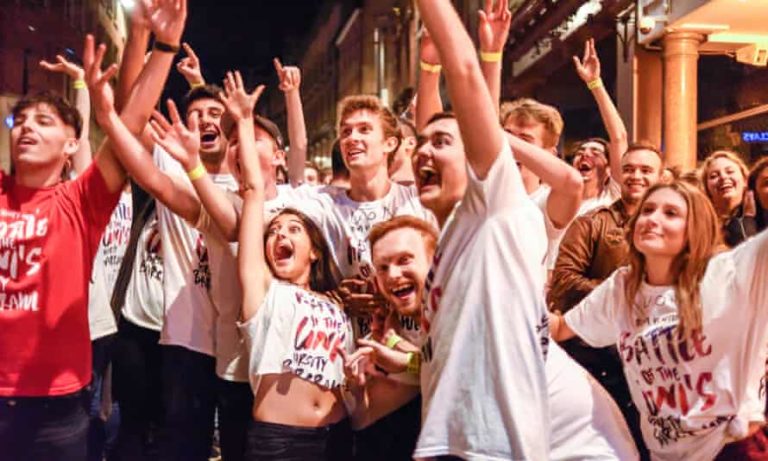
According to many first-year students in 2020/2021, living as a fresher during the pandemic is one of the most deceitful experiences ever. This includes aspects from the abandonment of freshers’ week to the dreadful online lessons. This has left many freshers and other students in the other years questioning why they are paying £9,250, a year for a course which is worth about £75 in the student’s opinion.
This has led the majority of the freshers to feel ‘ripped off’ by the universities because of this. The musical chair-like lockdown systems does not make things any easier leading to university students reacting in various ways. Such as some trying to make their money’s worth by partying illegally. Others, as weighted up protecting their physical health and mental health and made decisions to prioritise their mental health. COVID-19 has badly affected the mental health of students. Can they then be blame for breaking the rules?
This has resulted in the university experience not being as glorious or as the adults praised it to be. It was left to students themselves to do something outside of university to make it better for themselves one way or another. However, this does not mean university is a horrible place, but it is a place that works for some and not all. At the end of the day, it is an experience that would not be forgotten, simply because of the opportunity students are privileged with ie. discovering more about themselves.
Elijah ‘Elie’ Kalambayi is a full-time student who is also an upcoming musician who is involved in charity organisations such as Creative Change (Music Director), Chord as well as Youth Charter which built the foundation of who he is today. He is currently consultant for future creatives at MediaCom.
Earlier this month a study published by Lancet Public Health surveyed almost 1.4 million adults (over 55 years of age) and found new insights into why people of Black and South Asian origin have a greater risk of death from Covid than white people.
Dr Ruth Watkinson, who led the study, suggests that “It is going to be really important that, as we move beyond the pandemic, we don’t start to look away again, and that we put health equality and equity right at the heart of any efforts to build back better.”
“We saw that, consistent with other findings, people from many ethnic minority groups are more likely to have certain long-term health problems, and a greater number of them,” said Watkinson. “But on top of that we saw these different layers of disadvantage building up, so people from some ethnic minority groups are also more likely to report that they had a poor experience when they went to their GP practice.”
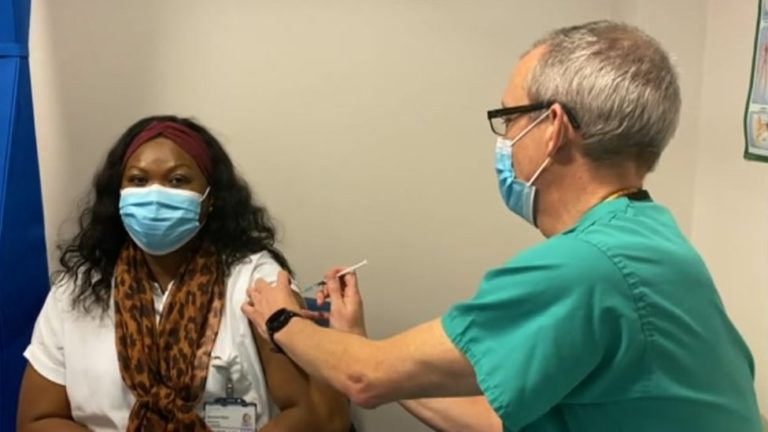
Given the way Covid has disproportionately affected people from Black and South Asian backgrounds, and the fact that a high number of key works are also from Black and Asian backgrounds, would it then make sense to prioritise those people to get the vaccine?
BME people are not a homogenous group and should never be treated as such – there is no one solution that fits all. However, as evidence shows BME adults have been disproportionately affected by coronavirus, making up only 12% of the population but experiencing higher rates of death and infection. How a healthy society works is that those who are vulnerable are cared for and protected – and as we have seen during this pandemic, BME communities have continuously sacrificed and put their own lives on the line multiple times for the good of the country. Furthermore, different socioeconomic factors such as the level of wealth and occupation has put BME people at risk. So why has this country, who many BME people have given so much to, not decided to care for and protect them in the way that it should?
There has been a heavy news focus on the fact that there is less uptake of the vaccine across BME communities, and yet, whilst this is helpful, it also keeps the focus on BME people’s actions. The Government has a responsibility to not only educate, but to provide what at-risk people need!
They must address why BME adults were not on the priority list for the COVID-19 vaccine – a vaccine that has been praised by the Government as being the key to our current pandemic. Some may argue that basing priority on ethnic background discrimination by some, but positive discrimination and differentiation is not a bad thing – that is how you separate those who are at risk. BME people have remained as an afterthought of the Government. Extensive studies are carried out, findings are published, and the facts remain the same. Yet BME communities have to continuously justify why they should be protected. It is time for action.
We are no stranger to studies around racism in the NHS. The study above highlights what most people already knew. We know for example that Black women are more likely to die during childbirth than any other race, and this has less to do with genetics and more with how much Black women are believed when they come to their GPs with complaints etc.
There is a huge distrust between people of colour in the UK and the government. Partially this has been exacerbated by the fraught history of eugenics, sterilisation and colonisation of African and South Asian countries.
We are already receiving reports to suggest that the hesitancy of the vaccine is more than 70% amongst Black people, which is nearly three times higher than vaccine hesitantly rates amongst white people.
Liam Smeeth, a clinical epidemiology professor at London School of Hygiene and Tropical Medicine, when asked about the study around vaccine hesitancy said: “These are preliminary findings but they do suggest worrying patterns, and they are particularly worrying because the groups that are getting lower coverage are those most at risk of bad outcomes,.”
While it is important to be aware of vaccine hesitancy rates, Black and South Asian people cannot be blamed for being cautious. They will not and should not be forced to be guinea pigs. While they should be prioritised for having the vaccine, they should not be berated for not taking it.
I’m afraid that a policy to prioritise vaccine for BAME people would result in more distrust and lead to victim blaming if people don’t take the vaccine.
If the White House and Market Makers (legally granted liquidity providers) had not intervened to pressure brokerages to stop trading in these meme stocks, then the whole US stock market could have imploded this week. The WSB (Wall Street Bets) Reddit bandwagon is the market rationally adapting to take advantage of the institutional agents that irrationally underwrite unlimited downsides.
It’s like that moment in The Big Short where Mark Baum wanted to “make them bleed” until the very last minute. His billions in betting against the Big Banks could have gone to zero as their companies would have gone under one by one unless the US Government bails them out as “lender of last resort”.
GameStop (GME) shares became a vessel for wealth transfer from those who promised to pay an uncapped price to the people who took them up on the offer. As Melvin Capital went billions into the red along with fellow short sellers, the original downside exposure was passed up the chain to those who had vested interest in the “at risk” hedge funds. This extends to Market Makers Citadel and Virtu Financial, who run the order books and clearing houses for massive pension funds and asset managers. This could lead to massive losses in life savings of prudent investors. Can we blame them for placing their faith in asset managers?
Hedge funds go under. Banks excessively exposed go under. They are obligated to honour those short positions, so if enough GME longs (i.e. long-holding retail investors) refuse to sell, all these actors get margin calls from the agent above them. They get forced to cover and buy more GME, and sell the rest of their portfolio e.g. Tesla longs, which pushes GME higher, screwing their other shorts who are forced to cover to hedge risk or because they themselves have been margin called.
The net result being GME holders are the beneficiaries of the greatest transfer of wealth in history.
If the SEC or Government steps in, and we don’t allow the loser hedge funds and High Frequency Trading outfits to actually lose when GME shoots up, then it proves the system is fundamentally rigged.
Short Selling and Options Gamma Squeeze
Those betting against GME stock had to borrow shares. They sold these shares into the market to increase supply in the hope of driving the price lower so they could rebuy them at a discounted price. They have to return those shares eventually and in theory they would get to pocket the difference.
Trouble is, they got greedy. They sold more shares than existed (naked short selling). They then have to return those shares. So subreddit Wall Street Bets took advantage of new commission-free trading, dense information channels coordinating millions of speculants to try and bet against these greedy hedge funds. GME shares are, officially, a fixed asset. Massive demand influx drove the price up, forcing massive losses and margin calls on the short-sellers leveraged bets. Billion-dollar private bailouts ensued to keep the ship afloat. Coordinated attacks outside regular trading hours closing the retail communication groups and flooding the market with more fake shares; pressure on retail brokerages with conflicted revenue stream interests (their owners were net short on GME); cronyism getting the White House involved – all simultaneously only goes to show how corrupt the system is.
This turned a “because we can beat the system to make money” ingenuity into a political war against the elites: Occupy Wall Street 2.0.
The other feature which has killed Wall Street is a “gamma squeeze” wherein the market runs out of liquidity (no supply of shares). Interactive Brokers Chairman admitted they didn’t have the capital to pay out the winners. Not just pay out GameStop winners, but to service the entire market. No capital means no shares and infinite losses.
Where the shorts are obliged to “cover” (buy back) the securities at higher prices as they get margin called, there was also deep-out-of-the-money option trading going on. The writers of these leveraged derivative products had to hedge (protect) against the infinite risks to have their sold calls exercised, by buying the GME stock steadily – ready to deliver these promised shares to the investors if the price target (strike) is reached. These middlemen in the transaction were short stock (gamma). With no let up in the buying from both short-sellers going bankrupt and the Reddit armies and the options writers, orders were being executed for GME in the $1000s per share as any “ask price” were being bought.
The mounting losses by hedge funds could spill over to other areas of the market as they close out their other positions, which is what caused the S&P index to fall sharply this week. The risk is that they go under, and take banks, pension funds and asset managers with them. This ripple effect could have tanked the whole market, leading to a transfer of wealth never seen before.
End of GME?
Naked short selling needs to properly be clamped down on. And either the retail trading infrastructure needs to improve or commission trading needs to return so we don’t risk the brokerages going under forcing taxpayer bailouts up to $500,000 per account because of market volatility.
The price discovery longs and shorts both contribute to, protects investors from corporate greed and over-exuberance and is being disrupted. Longer term this hurts the individual retail participant and pension saver more than the big firms. However, the retail bandwagon wouldn’t be jeopardising the entire system if it weren’t for the naked short selling greed getting in the way of prudent risk taking.
The only way out of infinite GameStop prices was to stop the market. Or else risk everything collapsing. It will take the asset managers losing big to force the system to correct itself. A more decentralised system is the answer.
Regardless, anyone who lost or made money did so because of where they chose to allocate their money.
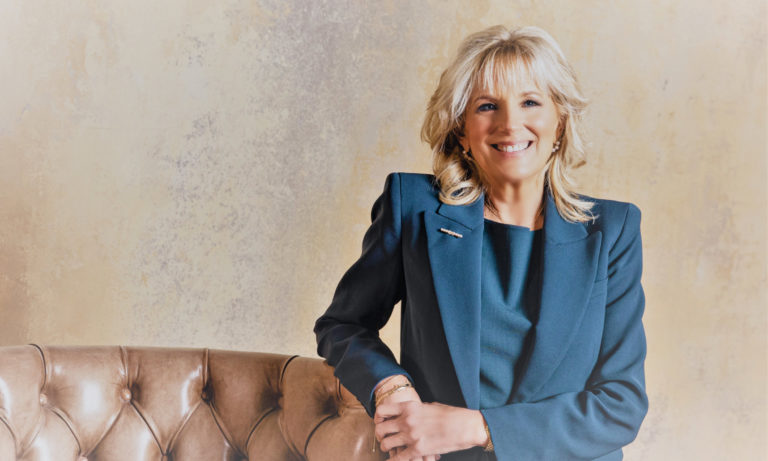
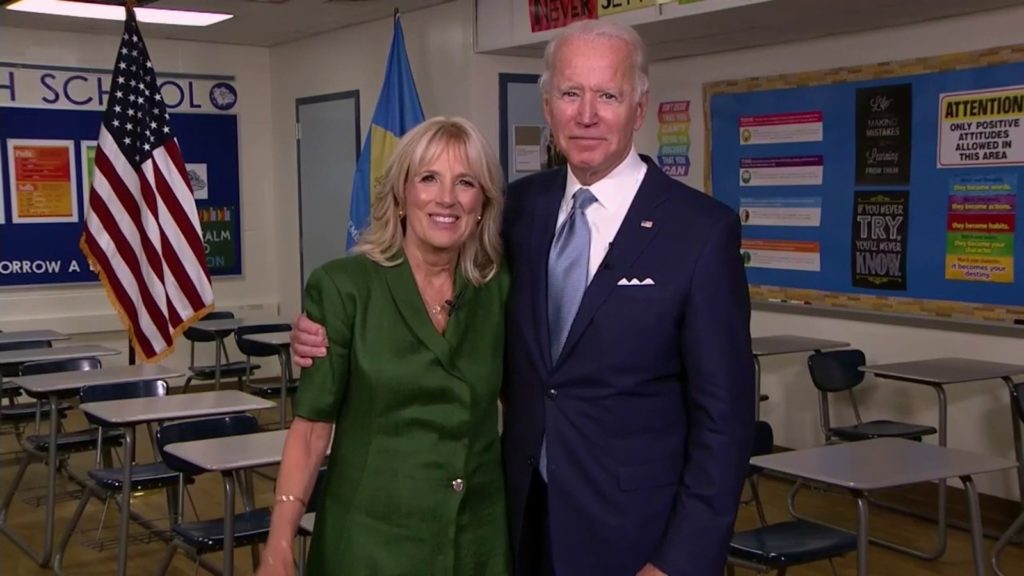
Dr. Jill Biden is no stranger to the political stage, and she definitely is not a stranger to the White House. The former Second Lady has been standing by her husband’s political career for as long as they have been married. Nevertheless, First Lady Biden is more than just her husband’s wife. Here is what you need to know about First Lady Dr. Jill Biden.
Before Joe Biden
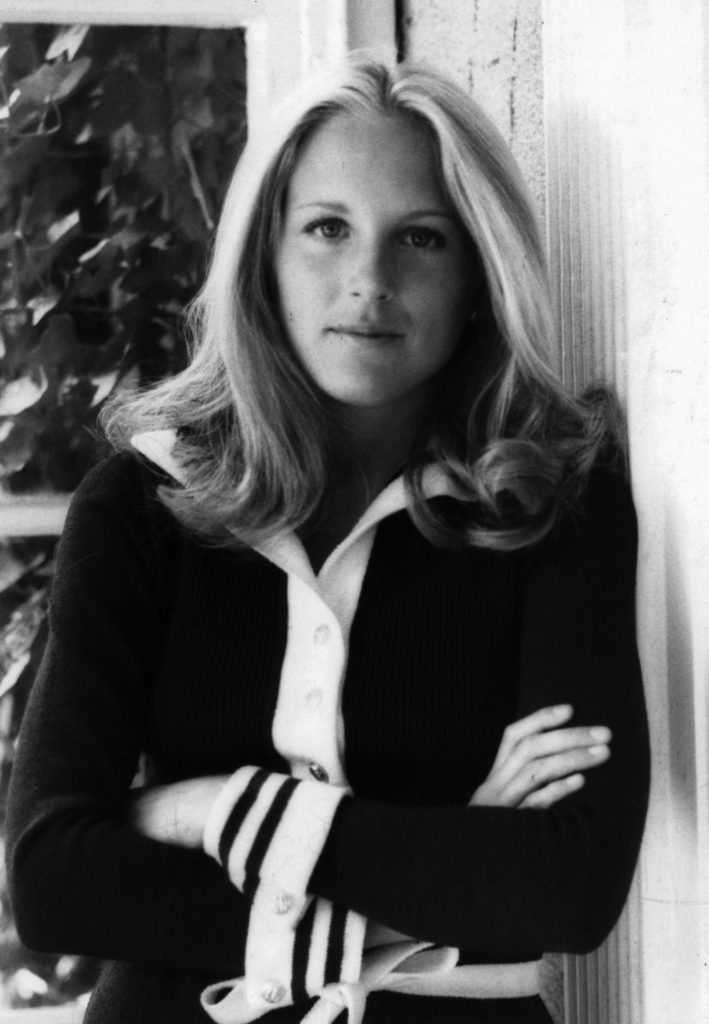
Young JIll Biden.
Biden was born in Hammonton, New Jersey; later, her family moved to Willow Grove, Pennsylvania. Jill graduated from Upper Moreland High School in 1969 and went to a junior college after high school. While she studied fashion merchandising, she did stick with it and went with something else. in 1970, Biden married Bill Stevenson but divorced in 1975. During her divorce, she attended the University of Delaware, earning a bachelor’s degree in English (https://www.britannica.com/biography/Jill-Biden).
A Life with Joe
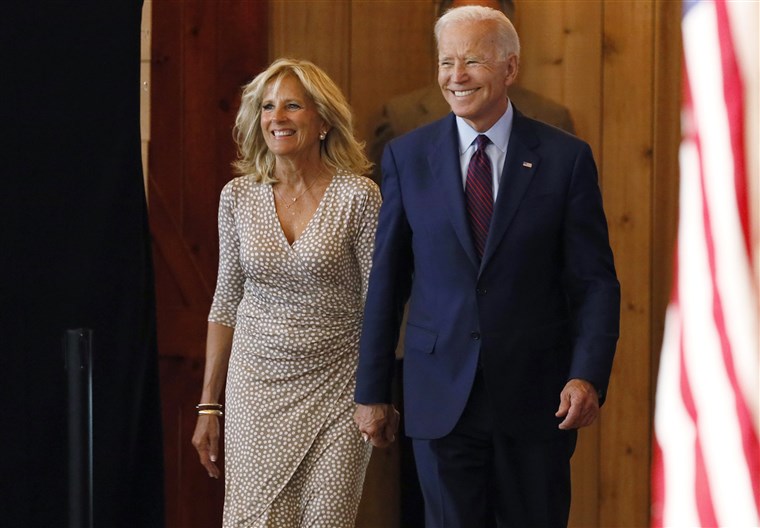
Joe and Jill Biden
In 1975, Jill and Joe met on a blind date arranged by Joe’s brother. Jill wasn’t exactly interested in Joe at first. She didn’t think that the date would last very long, but the two quickly realized they had an instant connection. Joe proposed to Jill times before she accepted; she wanted to be 100% that t. his was the right thing to do for their blended families. The couple married in 1977 in New York and welcomed a daughter in 1981. 40 years have stood the test of time. Joe Biden often gooshes about Jill and the love he has for her.
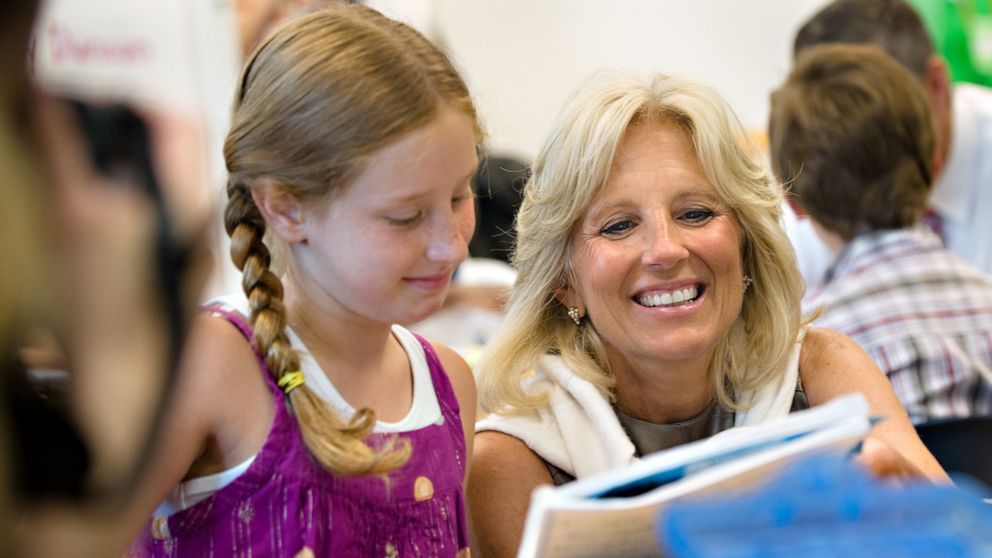
One of the most remarkable things about Jill Biden is she never stopped pursuing her passions, and it followed her to the White House. Not once but twice. Dr. Biden will be the first First Lady to maintain her paid job still. She never wanted to stop fighting for education. Whether in or out of the classroom, her top priority is to advocate for education across the nation. Much of her agenda will be the same agenda she had when she was Second Lady: to be a fighting advocate for free community college, military families, and cancer awareness. According to Jill, the main beauty of being FLOTUS is that you can mould the role into anything one wants
Jill’s compassion for education and her passion for it will definitely help her in her role as First Lady. She is no stranger to the political arena, but her outside view of politics will help her relate to the American people differently. She can understand the struggle for the regular American families as they look for options to pay for school in the midst of a pandemic or just sending little ones to school period. Biden will definitely make an active presence in her role as First Lady, and most importantly, she will do it her way.
Ahealthcare company ultimately controlled by leading Tory donor and former party chairman, Lord Ashcroft, has received a £350m contract as part of the government’s COVID-19 vaccination roll-out, openDemocracy has learned.
Last month the Department of Health and Social Care gave the lucrative contract to Medacs Healthcare plc. In recent weeks, the outsourcing company, which specialises in providing staff to the NHS, social care services and private healthcare providers, has been advertising for staff to work on the huge vaccination project.
Medacs is a subsidiary of Impellam Group, a FTSE-listed firm whose largest shareholder is Michael Ashcroft, the Belize-based Conservative peer who has donated millions to the party, including more than £175,000 in the past year.
The award of a major COVID contract to a firm with close ties to the Tories has sparked further questions about politically connected firms benefiting financially from the UK’s pandemic response.
Last year, a highly critical National Audit Office report found that companies with political links were directed to a “VIP lane” for government contracts where bids were ten times more likely to be successful.
The awarding of government contracts to ‘friends’ of the incumbent administration is no newer an idea than the beginnings of business and government themselves. The word most used to denote such cronyism in English, ‘Nepotism’, is derived from the mid-seventeenth-century French and Italian terms denoting ‘nephew’, connotating the privileges bestowed on the ‘nephews’ of popes, who were in many cases their illegitimate sons. In some ways, nepotism is simply part of the natural order. Most of us care more for our family and friends than strangers after all. Yet, the bestowing of prestige and financial gain on certain groups and individuals due to their proximity to our social circle rather than their merit is not just immoral but grossly inefficient.
According to The Guardian, “Ashcroft’s spokesman said that he was not involved in the negotiation of Medacs Healthcare’s £350m contracts with the DHSC, and did not know about it until after it had been awarded.” Indeed, there is certainly a chance that Ashcroft’s connections to the Tory Party had little to do with the awarding of the contract, but there are plenty of examples under both Labour and Conservative leadership, where this has been the case. In the context of the COVID-19 response, “Four of the companies engaged for such consultancy services on contracts not put out to tender have political links either to the government, the Conservative party, Cummings himself or the Vote Leave campaign he ran during the Brexit referendum.” The standard reaction to such scandals is a call for further state interference in the process. In reality, more government meddling simply means more likelihood that investment becomes a question of politics rather than what is most efficient.
Many people worry that Covid has made the world a less equal place, but that hasn’t been the case so far — at least at a global level. Studies have shown that the global gap between developed and developing countries is narrowing, despite most people’s assumptions.
The left has been quick to criticise income inequality, and there have been narratives that are exacerbated to paint a picture of a widening gap between richer and poorer countries, even in the midst of a crisis. However, there is evidence to the contrary and shows the significant process that poorer countries have made.
On an individual, country-by-country basis, the outcome and effects of Covid are more apparent in Western countries than in poorer countries. From a wider, generalised perspective richer countries are doing better, but not as much as the left would have you believe.
The Facts
Despite income inequality being a huge topic in modern society, there is evidence that suggests that not only is the gap not as wide as people think but that the gap is actually getting smaller despite crises such as the financial crash years ago and the current coronavirus pandemic.
Bloomberg reports that assumptions which automatically favour Western countries to be less affected by the coronavirus pandemic are a misnomer and that in fact, the opposite has happened.
A study by Nobel Prize-winning economist Angus Deaton showed that in 2020, the gap between poorer and richer countries had shrunk, due to the pandemic hitting high-income economies disproportionately.
There is debate as to what the reason for this is. Some theorise that this is not due to the successes of poorer nations, and more to do with the failure of Western countries at handling the virus.
It has exposed the tragic failure of the healthcare systems that Western countries operate, and the sheer size of the death toll from Covid in some of the world’s wealthiest countries is breathtaking.
Deaton also found that on average, places with a higher-per-capita income also suffered mostly from the pandemic and that the countries with the most deaths also had the biggest predicted drop in GDP.
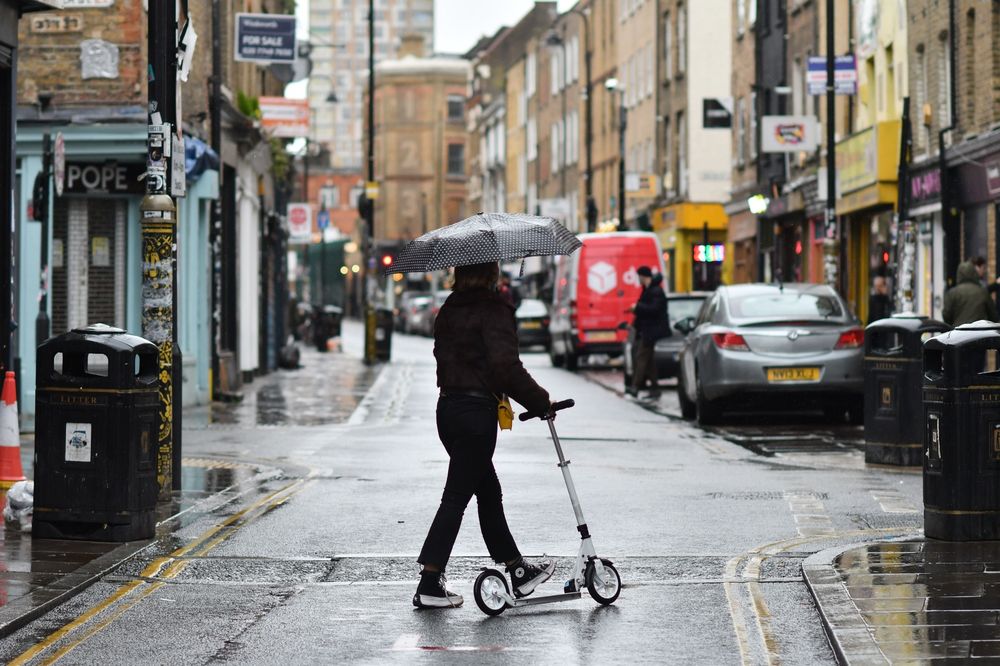
Empty streets and poorer prospects in the West. Photographer: JUSTIN TALLIS/AFP
I think Bloomberg’s report is a welcome and refreshing response to the seemingly constant ‘doom and gloom’ rhetoric from the left, as well as highlight the failure of Western governments (especially the UK’s) in protecting the financial and holistic wellbeing of its citizens.
Regarding the wealth gap, it’s a good thing that poorer countries are developing at a faster rate and are catching up to Western countries. For those who are concerned about wealth inequality, this should be welcome news. Not only is the gap smaller than people think, but it’s also actually shrinking.
Bloomberg reported that the global income gap was reduced between 2008 and 2013, despite a financial crisis. Although Covid has had a strange and slightly different in Western countries, I see no reason why they can bounce back.
If anything, those who are concerned with an economic gap should be pleased that Covid has slowed down the GDP of some Western countries, as it gives poorer countries a chance to ‘catch up’ and develop their economies. It shows the benefits of capitalism.
‘Lockdowns buy time, but won’t extinguish coronavirus’. Video credit: WHO
It’s also a huge wake-up call for Western governments, who have falsely assumed that lockdowns are beneficial. The report shows that even the countries who took a looser approach to lockdowns in the interest of protecting their economies didn’t benefit much.
Logic dictates that harsher lockdowns would have an even worse effect, as the fewer people are working then the slower the economic growth.
It leaves me wondering why have a lockdown in the first place if the benefits aren’t tangible and all you have left is mass unemployment and ever-deteriorating mental health of the population? If there is no economic benefit to lockdown, why have one?
All in all, it’s a good insight into just how much smaller the gap is becoming between richer and poorer countries. It shows that the so-called ‘wealth gap’ is smaller than people think, and highlights just how harmful lockdowns are.
Despite headlines of the richest adding trillions of dollars to their coffers since the Pandemic started, while the average citizen burns through savings; global poverty levels have been on a steady downward trajectory for decades. China’s economic miracle lifted a billion out of extreme poverty. Too many, worldwide, are stuck in a low-income existence. But the negative ramifications of inequality is not so much from the latest Tech mogul’s product we all decided to buy, but bad government policy.
We could reduce the resentment inducing inequality by annual redistribution until the coffers run dry. But as our former Prime Minister Margaret Thatcher countered, “you eventually run out of other people’s money.”
Inequality isn’t a problem in itself so long as most achieve a decent standard of living. Attending to inequality alone would level down the wealth of the richest and make everyone poorer. The 20TH Century Socialist experiments were testament this diminishes incentives to work hard. The free-market, with winners and losers, spurs harder work, more production of things we actually want and need, leading to everyone doing better combined than the alternatives.
Trade is the essential ingredient to lifting the Global Poor, bringing more affordable goods to more and more people. The more remote from economically active areas, the less able you are to meet material needs.
The world has been catching up to the early industrialisers, outcompeting our domestic industries and displacing jobs. This hurts your British auto or steelworker but benefits your Indian worker who now has a higher paid job.
Wealth has been the exception, not the rule for human history, with existing in relative poverty the norm. It is not poverty, but the existence of wealth and prosperity that requires explanation.
Wealth is an achievement created by specific preconditions. You cannot have a stagnant, closed, collectivist society where the elite’s gain is another’s loss – a zero-sum outcome where greed, backed by coercion causes some to be poor.
Adam Smith realised the division of labour enables different specialisations to cooperate peacefully and spontaneously in voluntary exchange, without the guiding hand of governments. The market process is a source of new wealth. As the population has risen by the billion, so to have standards of living, because the total amount of wealth is not fixed.
The high-incomes and profits are the rewards for serving your fellows by using scarce resources most efficiently in the competition to satisfy consumer desires. Reward is the incentive to create. By permitting profit, it maximises available capital for the next project to satisfy consumer demand.
The only way to get more, in a free market economy, is to serve others. The way to lessen poverty is to create a favourable environment for investment and wealth creation. The necessary condition for prosperity is allowing ownership and exchange of property.
The transfer system locks people in the cycle of poverty by destroying opportunities. The welfare state encourages degrading dependence, rather than self-reliance. A scheme to try to live at the expense of others. The free-market: you gotta give to receive.
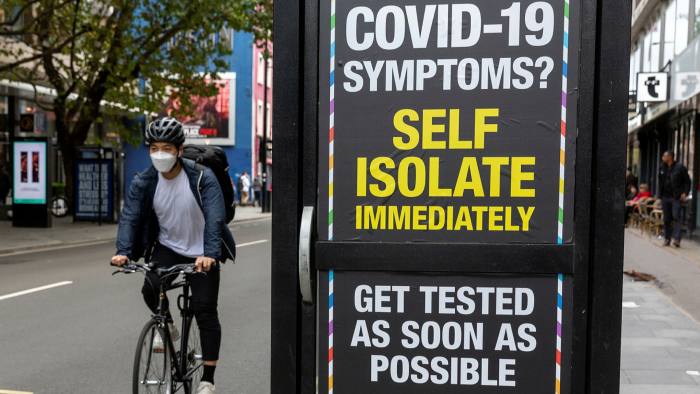
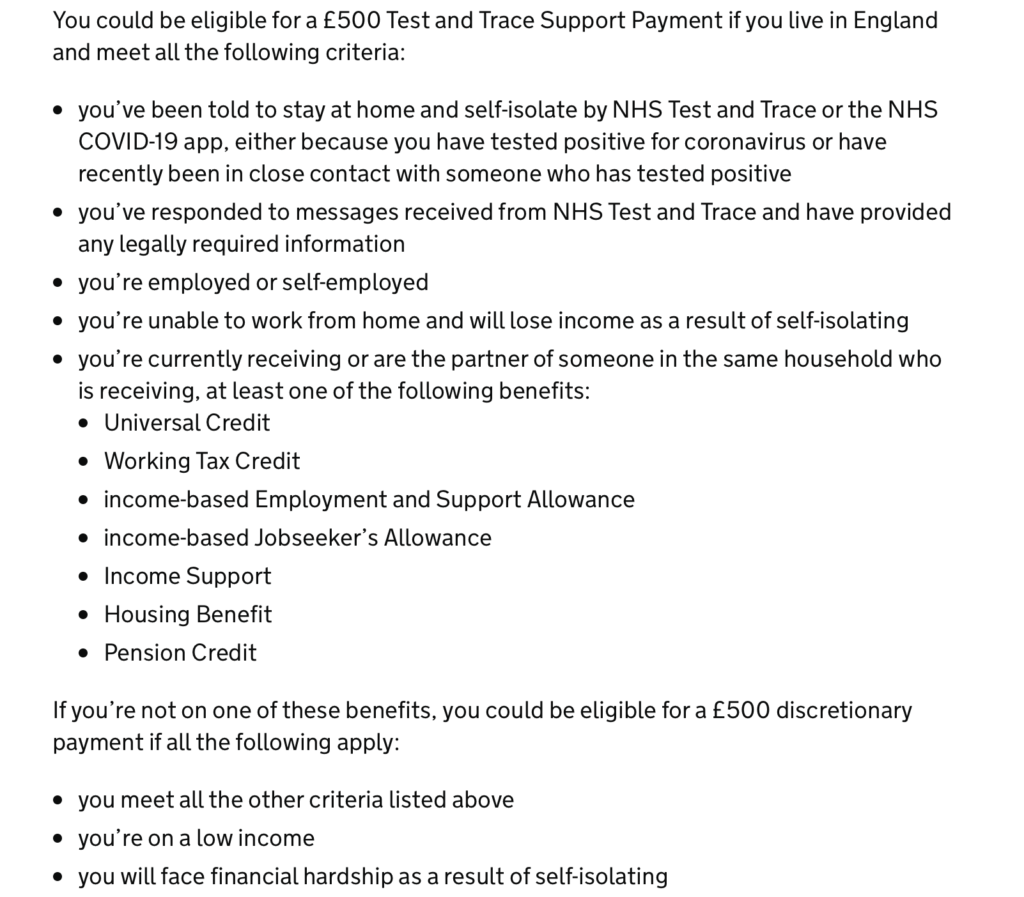
It was leaked last week in a Department of Health document, that the government is planning a Test and Trace Support Payment scheme which would give all people who are told to self-isolate £500 grants. The one-off payments could cost the government £453million a week. But the cost has been defended by ministers who believe this could encourage more people to get tested and self-isolate.
These radical plans would be different from previous schemes in that this grant is being offered to everyone with covid rather than just those from low-income families. While the government has denied any plans for a universal grant scheme, it has been suggested that this will incentivise people to stay at home and eventually stop the spread of the virus.
Like much of the government’s policies since the onset of this deadly disease, this new policy is ‘too little and too late’ and fraught with issues.
The thinly developed proposed change is thought necessary because government polling found only 17% of people with symptoms are coming forward to get a test, owing to fears that a positive result could stop people from working.
With such a small amount of people coming forward after showing symptoms, the problem at hand is clearly a systematic one. The universal payment system is not s systematic solution. The new system has been described as the “preferred position” of Matt Hancock’s Department of Health and Social Care (DHSC) and would cost up to £453m a week, 12 times the cost of the current system, according to official policy papers reported on social media.
The problems with a blanket payment are apparent. One is enforceability. Just look at the U.K.’s patchy efforts to get people to comply with other guidelines such as mask-wearing. Administering a pay-to-stay policy — and keeping it from being abused — may require the sharing of health data with police and enforcement bodies. That will not work well in the UK, where we saw a large cohort of the public refusing to sign up to use the track and trace app because of the fear the police, may be able to access their health data.
Handouts, of course, can result in perverse incentives. Would young people go out and try to catch the virus in order to claim a payment? They could then end up spreading the infection even more. A large household might be able to claim multiple payments — but at what risk to themselves and the community?
On the whole, the policy seems short-sighted and thinly developed.
Earlier this month we were hearing about how school children were being given pithy meals as a substitute for school dinners. We were seeing many campaigners push for the government to just give families the £30 vouchers to spend on food. Money is tight. The fact that a universal basic income has still not been instituted given the way covid has affected family income is ridiculous.
MP Steve Reed, shadow communities secretary, said: “This Government’s serial incompetence is forcing many workers to choose between protecting their health and putting food on their families’ tables.”
A universal grant in the way the leaked paper suggests would not only help the people that would not ordinarily be eligible for such a grant, but would also incentivise people to stay at home. In the capitalist society we live in today it is a difficult fact that money is a motivator. Had we already had a universal basic income, a government that put people instead of companies and the economy first, we would not be in this mess.
There may be some who believe that the grant would incentivise people to leave the house and get covid so that they may get a grant. And if that is the state of poverty in which people are in, that they would risk their own health in order to get a one-off £500 payment, then things really need to change.
We really need to start taking this disease seriously. As we wait for vaccines to be rolled out nationally self-isolation can make things rather depressing for some people. If a £500 grant can momentarily change that, then why not?
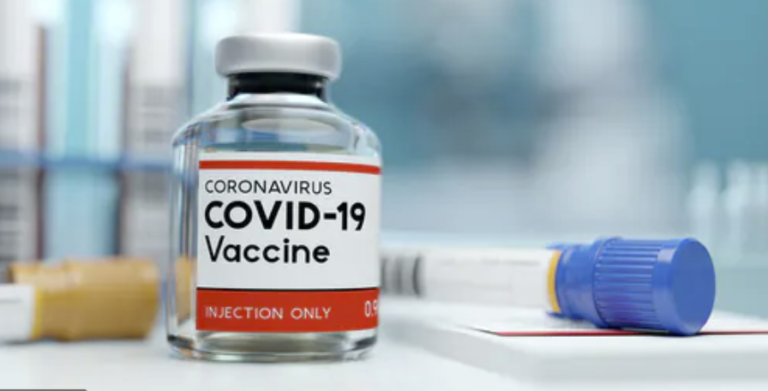
In January 2020, maintenance firm Pimlico Plumbers announced they would be introducing a policy which would require new workers to be vaccinated against coronavirus.
The London-based company has drafted up new employment contracts to include the requirement for its workforce of over 400 people.
There has been significant backlash to this, and raises questions as to the legality and morality of the decision, and where the line is drawn between safety and bodily autonomy.
Despite this, Pimlico Plumbers has defended its ‘no jab, no job’ policy, although employment lawyers have questioned whether or not this would be legally enforceable.
The Facts
Pimlico Plumbers (PP) is a property maintenance company, founded by businessman Charlie Mullins. Founded in 1979, the London-based firm offers services such as plumbing, central heating installation, drainage and carpentry.
Charlie Mullins, now the chairman of the firm, has drafted up new employment contracts that require workers to have the vaccine for coronavirus. The ‘no jab, no job’ policy is being planned for all employees at the firm, with over four hundred workers on their payroll.
In an interview with City A.M., Mullins said, “No vaccine, no job…. When we go off to Africa and Caribbean countries, we have to have a jab for malaria – we don’t think about it, we just do it. So why would we accept something within our country that’s going to kill us when we can have a vaccine to stop it?”
Mullins has offered to foot the bill for private vaccinations for all of his workers, if it were ever allowed in the UK.
The vaccine is not yet available privately, and Mullins has said that would not “pay to jump the queue”, but admits inoculating his staff would be “money well spent.” He expects the costs of this to be an estimated £800,000.
There are employment lawyers who have challenged this. Nick Wilcox, a partner at BDBF, a London-based law firm, said mandatory vaccinations “could be an issue.”
He added that if an employee has a religious or ideological belief, they should not be forced to take a vaccination simply to work.
Other employment lawyers have also expressed other concerns about such a requirement, believing that attempts to force workers to take the vaccine would open up a legal can of worms, in the form of discrimination claims and constructive dismissal, opening employers up to potentially expensive compensation claims.
The debate between people who agree with mandatory vaccinations and those against it seems to be similar to the debate between those who think wearing a mask should be made mandatory versus though who see it as a fundamental attack on our rights. For many people the issue comes down to safety. Safety for ourselves and others.
We’ve been using vaccines for 225 years. The first successful vaccine was against smallpox and was administered by Edward Jenner in 1796. The way to eradicate a contagious disease is to vaccinate as many people as possible to stop the spread of it. If there are few people that can get the disease, then the disease itself dies out. This is why we no longer have smallpox deaths.
Of course, when it comes to injecting oneself, there comes a lot of concern and worry in how it will react with other medications or health conditions. Doctors around the world are answering people’s questions and dispelling myths around the workability of this vaccine. The British Heart Foundation, even came out with the following statement: “No vaccine will be approved unless it is considered safe for people with long-term conditions, including heart and circulatory conditions, and including older people.”
Even when travelling to particular countries we have to vaccinate. For example, to travel to Ghana you must have taken the yellow fever vaccine. This is not just to protect yourself, but to protect everyone else in the country. No doubt, there will be people who do not want to take it for religious reasons and will be exempt. I am almost certain those people will be exempt from PP’s policy.
This vaccination ‘debate’ has become a victim to scaremongering and rumours. The idea that being told to vaccinate before going into premises is a consequence of our losing our free will is missing the point.
Whilst I understand the urgency to get back to work as quickly as possible, and the desire to keep workers safe, I fundamentally disagree with PP’s decision to make vaccinations mandatory. There is a fine line between free choice and coercion, and PP have crossed that line.
The debate around mandatory vaccinations is quite nuanced. There are a few people who believe that vaccinations should be mandatory (even if it means by force), and people that do not trust vaccinations at all and believe in total bodily autonomy.
Most people believe that it should be a personal choice as to whether or not to take the vaccine, though vaccinations are highly encouraged.
In this context, where is the line drawn between free choice and coercion? My answer is simple; when a company has any form of leverage or power over its employees (outside reasonable parameters) and weaponises it against them.
Everybody has free will and free choice. The issue here is that the consequences of not taking the vaccine would result in dismissal, which is a huge moral and ethical concern.
Charlie Mullins defends his ‘no jab, no job’ policy. Video credit: Jeremy Vine on 5
I cannot attempt to justify PP’s stance under the illusion of ‘safety’. To threaten an employee with dismissal if they refuse to take the vaccine is nothing short of blackmail. Should an employee be forced to choose between their beliefs and their livelihood?
Bodily autonomy is a fundamental right of UK citizens. If the UK government does not have the legal authority to mandate vaccines, so why should PP be allowed to do so? The choice to take a vaccine or not should be down to the individual themselves.
I’m against mandatory vaccinations for employees. To weaponise a person’s livelihood against them undermines the right to bodily autonomy.
Dating app Bumble temporarily removed its politics filter in response to viral tweets encouraging users to change their political view to conservative in order to match with and identify Capitol rioters.
The tweets came, a day after thousands of pro-Trump supporters participated in a deadly riot at the Capitol building on 6th January.
Bumble users living in Washington, DC began reporting seeing profiles belonging individuals who were in the area to attend the Stop the Steal rally.
On the 12th January Bumble’s official support Twitter account assured users that it was “monitoring activity and will remove any users that have been confirmed as participants in the attack of the US Capitol.”
Two days later it a confirmed to users that it had removed the filter to prevent misuse.”
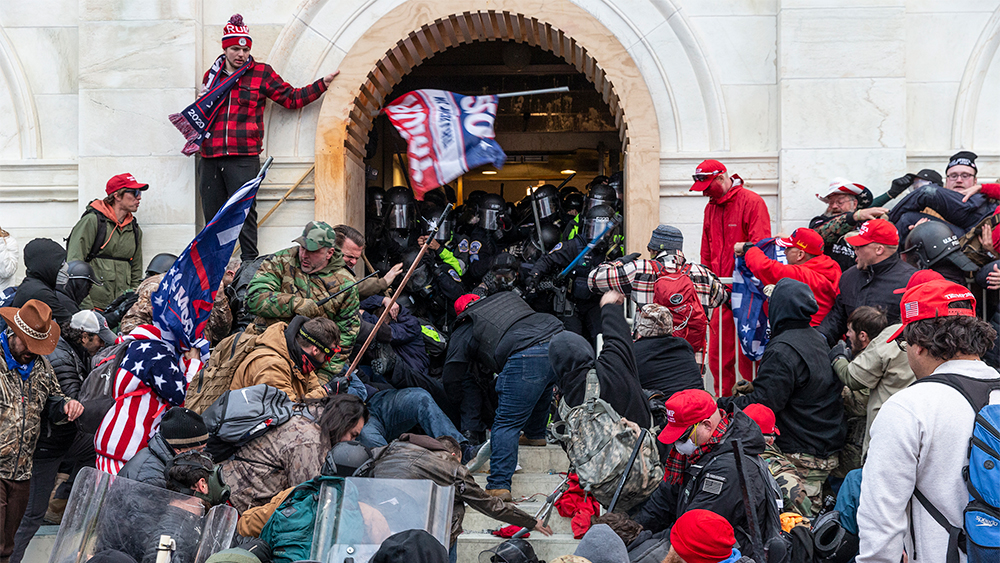
Rioters clash with police trying to enter Capitol building through the front doors.
The deadly riot left five people dead and with the FBI taking to social media to ask for help in identifying the insurrectionists from the violent protest, questions arise as to whether Bumble were right to remove the filter.
Interestingly, the story opens the discussion about dating apps having filters in the first place, just how important are they? and are they doing more harm than good?
Considering the capitol riots – the incitement of violence and its aftermath, it makes sense that Bumble chose to temporarily remove their politics feature for the US version of the app – I do not believe that anyone deserves to have their lives put as risk, even if they disregard the lives of others.
It is only natural to view the world through the lenses of our politics and other factors – they have a huge impact on how we live our lives. However, it is dangerous to filter our experiences in life because of this, and whilst the reasons may be clear, Bumble has set a healthy precedent.
We do not grow from limiting our contact with people who do not look, act, or think like us – in fact, doing so ensures that we stay as the close-minded people who we may often criticise behind doors. We must open our minds to engage with people even if their politics differ from ours.
Now, this may be different when it comes to intimate affairs – everyone has a right to choose their romantic partner and I for one, would not enjoy dating someone who’s beliefs about social justice for instance, were radically different to mine. I would have every right to reject someone on that cause whether others would agree with me. The right to choose must be protected, always.
However, it would be self-limiting to never expose myself to others – dating should be a genuine and fun way of learning about others, as well as finding love.
Furthermore, dating apps are not only used for romance – many find friendship and companionship through them, even if they do not find love – meeting others with different political views is a great way to build key relationships. As Amanda Gorman so eloquently said, “And so we lift our gazes not to what stands between us, but what stands before us. We close the divide because we know, to put our future first, we must first put our differences aside.”
There’s a Muslim dating app (Muzmatch) that is supposed to be for people that are Muslim identifying, but I have definitely come across non-Muslims, people that are either fetishizing or wanting to antagonise Muslim women. To remove the political filters (or other filters for that matter) just exacerbates the problem.
People lying on the app isn’t new. So people lying to find rioters is not surprising. The issue is people lying. Not the filters themselves.
Dating for me is about finding someone on my level, someone who understands who I am and what I’m about and wants to contribute to the world in similar ways. The idea that I am supposed to step outside of my echo chamber to meet people who are on an opposite political spectrum to me, why would I want that? In some circles I’m classed as radically left. It would be incredibly difficult for me to be in a romantic relationship with someone who didn’t agree on things like world view.
Alongside this, I’m in support of race, gender and religion filters. I don’t want to be thrust onto someone’s page just because they should be ‘exposed’ to other perspectives.
If someone doesn’t want to see a brown queer woman in their ‘dating line-up’ why should they? There are already enough spaces in the world where exposure to other opinions and ideologies can happen. Surely a dating space should be safe?
Dating should be about honesty, but it also about finding people that you feel comfortable around. You should get to choose the person or people you want to date.
In his first speech as president-elect, Joe Biden made clear his intention to bridge the deep and bitter divisions in American society. He pledged to look beyond red and blue and to discard the harsh rhetoric that characterizes our political debates.
It will be a difficult struggle. Americans have rarely been as polarized as they are today.
The studies we’ve conducted at Pew Research Center over the past few years illustrate the increasingly stark disagreement between Democrats and Republicans on the economy, racial justice, climate change, law enforcement, international engagement and a long list of other issues.
The 2020 presidential election further highlighted these deep-seated divides. Supporters of Biden and Donald Trump believe the differences between them are about more than just politics and policies. A month before the election, roughly eight-in-ten registered voters in both camps said their differences with the other side were about core American values, and roughly nine-in-ten – again in both camps – worried that a victory by the other would lead to “lasting harm” to the United States.
We hear and read across the media that the democrats are to blame, that the republicans are to blame, or that the president is to blame, etc. But who should bear the responsibility for the division in America? Is it China, is it our politicians or the laws that have been in place for years?
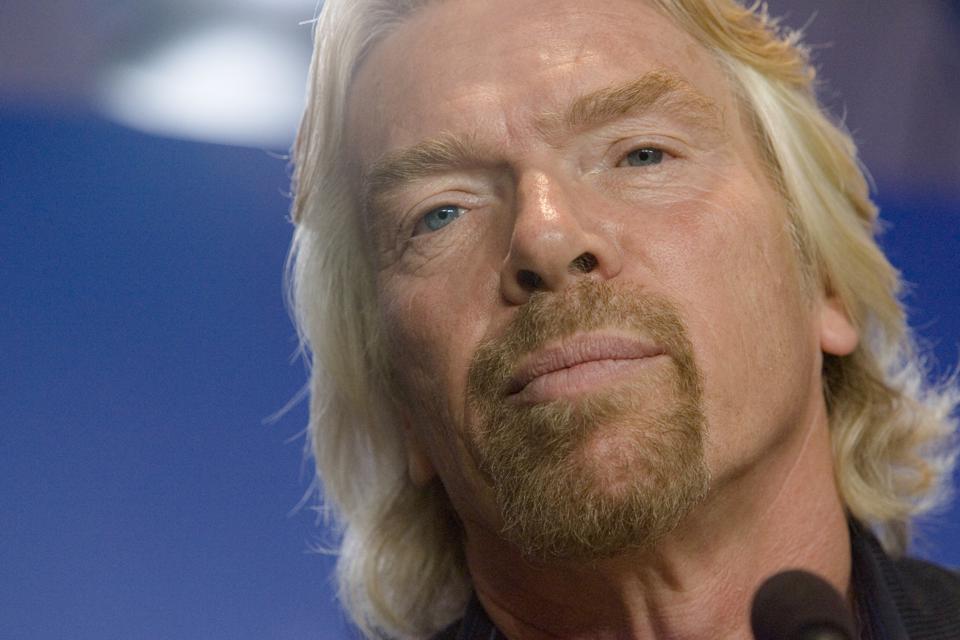
Sir Richard Branson has blogged about the violence in the U.S. CORBIS VIA GETTY IMAGES
We only need to look at the violence that erupted in the Capitol weeks ago to see a physical display of the deep division in America.
The division that has happened in America this past year was centuries in the making. America had its set of problems, and it took a lot more than Donald Trump’s America to reach its boiling point. What people do not talk about was that America was founded on division.
Colonists came to the country and stole it from the Native people. They came to this land, took it from the Native Americans, told the Native Americans their customs are unsavoury, implemented genocide to the Native American people, and claimed this land is the land of the “free.” That same mindset followed the Founding Fathers’ creation of the American Constitution. While the first line, “We the People,” sounded nice, it didn’t include all people.
The Constitution’s main priority was protecting rich white men with property. They didn’t include women, people in a lower class, and they certainly didn’t include Black people (who were considered property at the time).
What is happening today in America is nothing but the fallout from the moment the first set of colonialists stepped foot on America’s soil. Trump’s America brought to light issues that have already existed. They existed long before the Obama, Bush, Clinton, Lincoln, or even the Washington administration.
Race tensions have always been an issue in America (there was a whole war based on it). The political division has been an existing issue since the Constitution’s conception (when there is a multiple party system, there is bound to be friction).
The only difference between America of today than America of yesterday is the issues that we thought were hidden are brought to the surface. Ultimately, there is no specific person or group of people to blame for America’s division because this division started at the very beginning
America was born out of a shared ideal of an American dream that folks from different walks of life could all believe in.
Social and cultural productions were watched and understood by most, if for lack of choice and access. The internet-enabled Americans to choose their own content, eroding shared popular culture to isolated islets on divergent paths.
Most Americans have seen their real earnings, and consequently their standard of living, plateau, and decline. The middle-class that believed in a prosperous future, and held moderate political views has dwindled to an increasingly embittered and desperate demographic living paycheque-to-paycheque. Barriers to education have risen while the necessity has grown substantially.
The profusion of lifestyles has altered the country’s course. From the previously alienated demographics asserting their political rights to women now expected to be not only working but primary breadwinners. Lifestyles that will never interact, nor listen to the same radio, follow same programs, share outlooks, or have peers with widely divergent worldviews.
Today, news caters to different audiences, emphasising different events. Celebrities for one demographic come and go without notice by another. The economic prospects of communities can be starkly contrasted via access to mobile devices in every hand. The collapse of the American middle class since 2008 shattered the dream. Disillusioned, disparate individuals fail to share mutual interest and commitment to any common good. Survival, rather than living, becomes increasingly stricken for many, leading to more estranged, self-absorbed in their own blinkered problems rather than committing to any longer-term future for society.
America seems to have forgotten what made her great: “all men are created equal”. A country founded by cast-outs in search of a better life. The civility grounded in respecting others’ life experiences was lost because of changes the 1913 16TH Amendment to the US Constitution enabled. Power was let loose. Individual’s income was no longer their own, but the state’s after “income tax”. What made America unique, she lost. Federal government runaway spending programmes bankrupted the freest, most prosperous society ever created. It turned a nation of entrepreneurs and go-getters into a nation dependent on the state for support. It has crushed hope, lowered prosperity through disincentivising profit through all levels of society. The “living Constitution” conjured up to justify amending a limit on power to a blank cheque failed to limit government power at all. A constitutional government that defines its own powers is a contradiction in terms.
The political splintering has just accelerated since the 1960-80s. It is nothing new. Two opposing camps with neat, easily summarised positions enjoy fervent support that cannot compromise. What ensued was chronic government gridlock, the tendency toward plurality and the inability of a winner-takes-all election that fails to adequately represent the divided views of most Americans. Trump was a symptom, not the cause, of decades of decay brought about by higher taxes that allowed for unconstrained federal spending.