Home Blog Page 60

Feminism and Veganism: Are they intrinsically linked?

Feminism is in no way a new movement. It’s waves span from longer than a century ago, however its is only recently that the word feminism is being used in every day language.Over the last decade talks of the word ‘feminism’ have risen tenfold in conjunction with the supposed pay gap, the opening up of feminism to be representative of all types of women considering class, sexual orientation and race with the central goal of feminism being the equality of the sexes.

Similarly, veganism has also risen tremendously over the last ten years, with a more than 350% rise in vegans in Britain since 2006. It is difficult to ignore the growing number of demonstrations and documentaries concerning animal rights, the effect of consumption on the environment and general health.

These two ideologies, though seemingly very distinct and disparate, may have more similarities than one might first notice. Furthermore, coming into question is whether one can be a feminism without being a vegan, if we are to consider the intersectionality of the two movements.
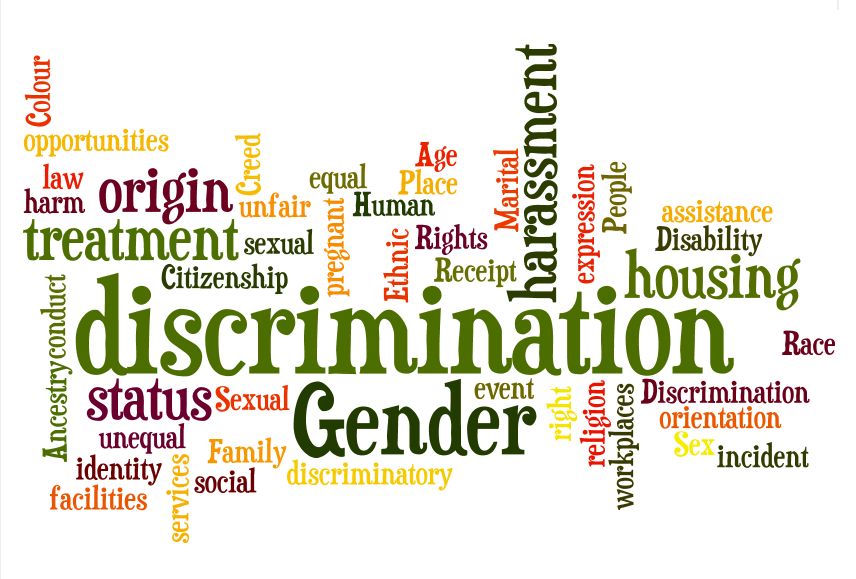
Types of Discrimination (SOURCE zerotoleranceblog)

Women and Animals; both vulnerable, both pieces of meat

The objectification of women is used notoriously by patriarchal powers. However the general public tend to stay oblivious to the fact that animals and women are reduced to being treated like pieces of meat (literally in animal cases) in the ways that they are objectified, manipulated and abused. We often refer to ill-treatment as being “treated like an animal” without considering that animals are literally treated like animals in inhumane ways that humans would never stand for. An example of this is that 50% of pigs in the UK are gassed in gas chambers. And this is known as the humane way to kill them. Though for many, this type of murder might be reminiscent of something similar that has happened to humans in our atrocious history.
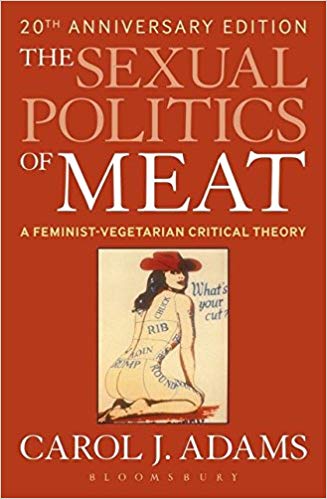
“Dominance functions best in a culture of disconnections and fragmentations,” Sexual Politics of Meat: A Vegetarian Feminist Critical Theory by Carol Adams (SOURCE Amazon)

The logic of dominant cultures in discrimination are the same

The goal in political movements such as feminism is to protect those who are perceived as weaker and to rebel against dominant cultures. This also follows the same logic as xenophobia, racism and misogyny, repeating the idea that one type of being is superior making the other inferior by nature. Both movements deal with objectification and power dynamics.

What we do is instead of acknowledging what makes us similar, we focus on the differences: colour, religion, sex, species. When the similarities that we share are greater than what makes us divergent. Our laughter, our cries, the pain feel and the suffering. But we don’t think about this and allow our differences to aid in our reasons for discrimination.

We also pay for living beings and non-human animals to be raped, exploited and in the end killed all whilst fighting against rape culture, trafficking and violence against women, which to a level could be seen as hypocritical.

The Manipulation of Feminine Bodies
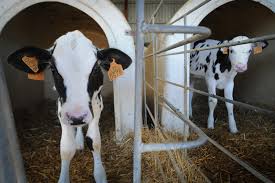
Diary calves in kept in cages (SOURCE veganuary)

Cows are dosed with recombinant bovine growth hormone (rBGH) to increase milk production and are raped by either (what is known in the industry as) rape racks or put in enclosures with several bulls who will brutally attack her.

Most milk, despite what most of us are aware of, is acquired like this (at least in the western world). The babies (calves but babies still) are taken away so that the milk can be given to humans and cows take on a lifetime of continuous sexual intrusion – rape and exploitation. Sound familiar? However, the fact that it’s a different kind of being in pain leads us to believe that this is acceptable.

There has even been much argument of whether word rape can be used as it is insensitive to compare an animal’s experience to a human, even though they are both forms of violence.

Being considered as property for monetary gain, to be constantly used and abused would never be accepted if it were women but any other type of female being abused is supposed to be fair game?
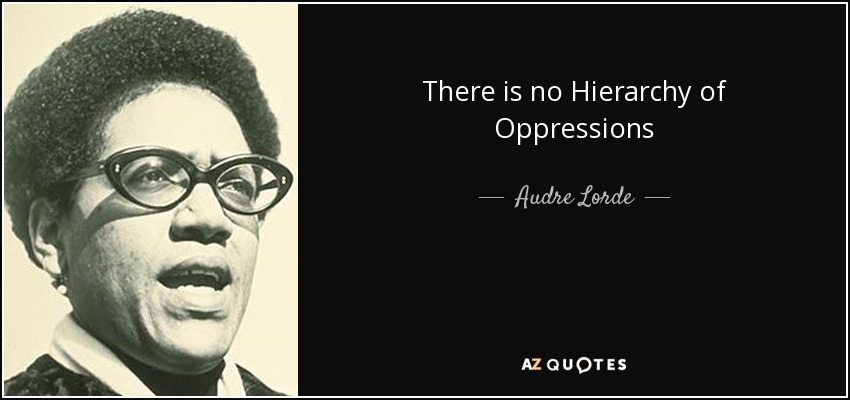
Audre Lorde Famous quote, famous vegan, civil rights activist and feminist (SOURCE AZQuotes)

Always looking at the differences between people instead of the similarities is what causes all types of discrimination. For that reason we must always consider intersectionality of different issues in order for one’s actions to be in accordance with one’s beliefs. Speciesism we consider to be a small issue in comparison to all other world issues, however it is very much like every other discrimination we face.

Both the movements of feminism and veganism militate for equality and both groups look at various different forms and spaces of oppression. All types of oppression are linked because as humans we create the hierarchies which place those who are more vulnerable to exploitation, whether that be according to race, gender or species.

Or are these two issues all too different to compare?
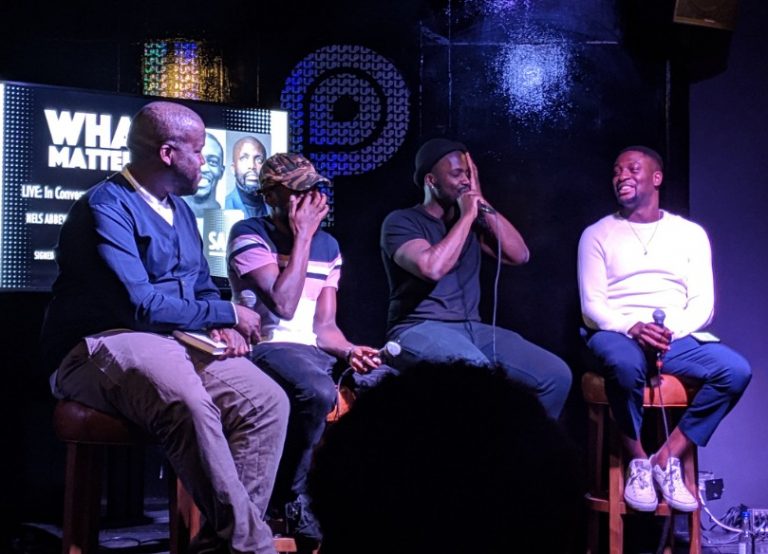
What Matters in the Black British Male Experience?
In a generation inundated with quick changing trends, toxic levels of social media and an endless host of woke capitalism campaigns, it’s becoming increasingly difficult to answer the simple question of what actually matters. What matters to us personally? What matters to us as a community? What matters to us vocationally? These are all seemingly easy questions, that in reality, leave many people devoid of any answer to the type of inquiry that well-being, good mental health and joy hinges on quite strongly: What matters?
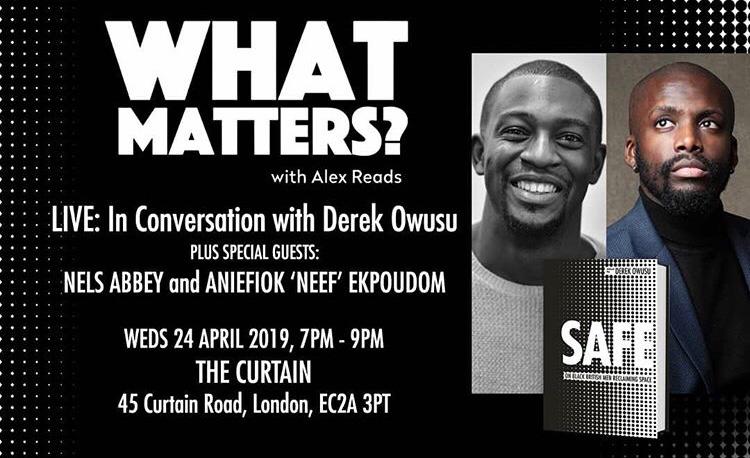
On Wednesday 24th April The Common Sense Network attend a launch event for the ‘What Matters with Alex Reads’ podcast held at The Curtain London in the thick of Shoreditch. The weekly podcast hosted by Alex ‘Reads’ Holmes and produced by Clarissa Pabi, brings together creatives, health experts, thought leaders and writers to discuss their personal journeys, motivations, and how they embrace what matters to them.

The Common Sense Network attended What Matters with Alex Reads live. Source: Instagram

To mark the re-launch of the podcast’s new season, this episode’s conversation around the male black British experience was held live with the former co-host of the highly popular podcast Mostly Lit, Derek Owusu. Owusu is also the editor of a new anthology, SAFE: On Black British Men Reclaiming Space. Alongside Owusu on the night to were other contributors of the SAFE anthology, Nels Abbey, Aniefiok ‘Neef’ Ekpoudom.

What is the Black British Male experience?

Alex Reads, who also contributed to SAFE, kicked off the conversation asking the panel about their experience of being black British men and at what point they realised they were different from their white counterparts.

Nels Abbey touched interestingly on the spectrum of the black British male experience – an idea that the mainstream media seldom considers in it’s portrayal of black men. He said, “On one side you have the princes. The Raheem Sterlings and Chuku Umanna who are highly visible and successful”

“But on the other side you have those who experience the harsher side of being a black British man. The most classic example being Mark Duggan. One thing in common between the princes and the opposite of princes is that we’re all rejected by this society and no matter what side of the spectrum, you’re five minutes away from a wrong interaction and you’re Mark Duggan”

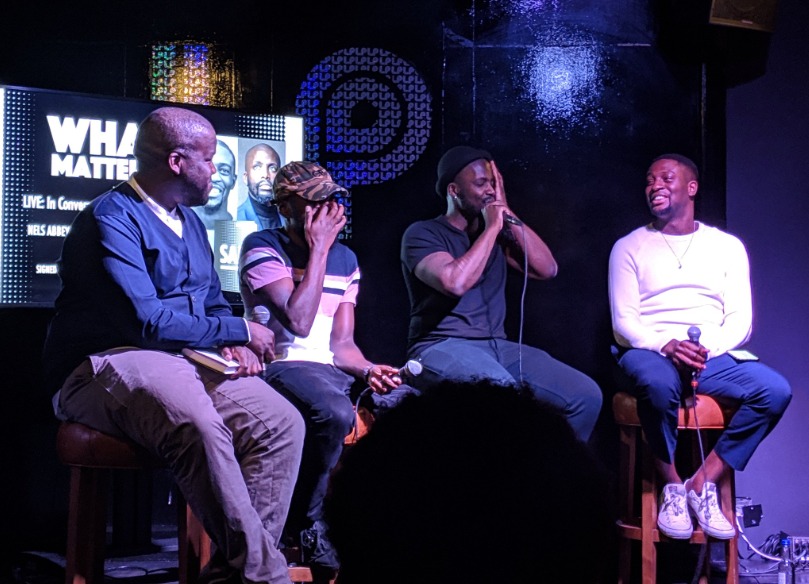
Speakers on the night (left to right): Nels Abbey, Aniefiok ‘Neef’ Ekpoudom, Derek Owusu, Alex ‘Reads’ Holmes

In the midst of Brexit further fuelling conversations around the experience of racism and diversity in the UK, What Matters live provided a much needed opportunity for black British men to take ownership in discussing their individual lives as black British men.

What is SAFE and where did it come from?

SAFE: On Black British Men Reclaiming Space, which was on sale on the night by Beacon Books London, is an anthology that was inspired by Yomi Adegoke, co-author of the highly acclaimed ‘black girl bible’, Slay in Your Lane.

“The book came from a black woman. Yomi asked why there isn’t anything like Slay in Your Lane for black men and suggested I do it”, editor of SAFE, Derek Owusu shared. “I want to get young black boys reading so it made sense for me to do it”.

SAFE explores questions such as where do black men belong in the media and what does it mean to be a black man in Britain today, from the perspective of over 20 of UK’s top journalists, writers, poets and musicians.

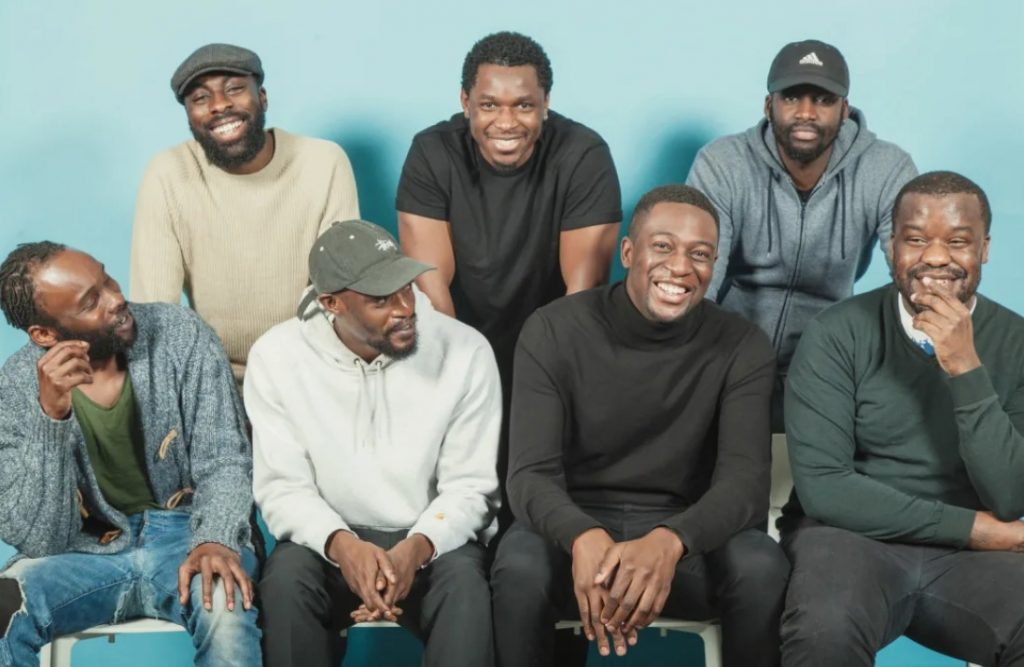
Some of the contributors to SAFE. Source: BuzzFeed UK

One of the essays in the book, by Nels Abbey, looked at who owns, shapes and forms the image of black British men, to which he proposed is defined primarily by those who own and control mainstream media: predominantly the white middle class.

The unidimensional portrayal of black British men in the media further emphasises the significance of SAFE. The panel went on to discuss their hopes for the book and what they what they thought black British men in today’s society actually need.

Aniefiok ‘Neef’ Ekpoudom, one of the contributors to SAFE said, “The real legacy of the book will be seen in the careers that come after it”. He went on to say “There’s great value in having safe spaces for black men to speak openly and honestly about our lives. I could see that my own experience wasn’t being lived in isolation”.

A night of engaging conversation and a lot of laughs was capped off with a Q&A from the audience centred on the future of the black British male experience and the steps that can be made to provide practical help to young black men in the UK.

What Matters with Alex Reads live was a sure success that definitely has me excited for this season of the What Matters podcast available on iTunes and all available platforms!

You can buy the book Safe from all book shops.

Copa90 Sexism Row: A Failure From Start to Finish

The football content site and YouTube channel’s sacking of presenter Poet due to his past sexist tweets has caused a huge stir online, but it didn’t have to be like this.

A 2018 study found that 70% of employers are now scrutinising candidates’ social media history during the hiring process. Social media has become so ingrained in everyday society that it often provides others with the first idea of what makes up our personal ‘brand’. You can no longer afford to be anything less than squeaky clean online. It is a warning we are constantly being reminded of, but the benefit of hindsight is not a luxury afforded by the internet.

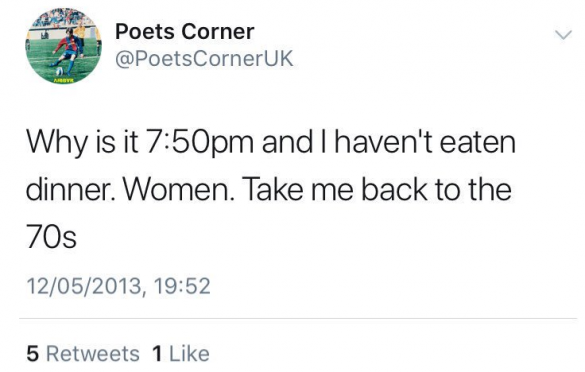
Poet’s 2013 tweet that led to his sacking. Source: Twitter

This is a reality realised by presenter and content creator Poet, who left Copa90 last week after a Football365 published a now deleted article exposing a series of Poet’s sexist tweets from the last eight years. The article was published in response to Copa90 releasing their attempt at an inspiring video in support of women’s football and this summer’s World Cup. This video has also since been removed from YouTube by Copa90, but can still be found here via MSN video. Poet appears multiple times in the video, with commenters feeling it was inappropriate and hypocritical for someone with his history to suddenly be given a platform to champion equality.

https://twitter.com/ballandthecity/status/1117765709390647297

Once the story broke and began circulating online, this unsurprisingly resulted in Poet’s association with Copa90 being ‘reviewed’, not terminated, but with the added caveat that he would not be appearing in any content until further notice. The full statement is below, but it was much of what you would expect. Generalised waffle about how it was at odds with their values, how they had only just come to know of the tweets and that they would be ‘tightening’ their procedures in the future.


Hypocritical from Copa90?

Besides the societal failings that led Poet to think these things in the first place, this was the first failure. Make no mistake, Poet deserved to face considerable punishment for his part in all this. His supporters were quick to reel off the excuses that the tweets were “from years ago” and that he was a reformed character, but this is simply untrue. Poets tweets show a long, drawn out level of misogyny that Twitter user @_BabsJ points out in her excellent blog ‘That Baba Girl’ lasted publicly until as near as 2018. The tweets were unacceptable and you cannot expect to behave as he did, while remaining the public face of an organisation. Yet despite all this, there is still something about Copa90’s response that just doesn’t seem fair.

For starters, there is the claim that Copa90 had only “recently become aware” of the content being posted by Poet on his personal Twitter. If it was the case that this all happened well in the past then this would seem like a fair admission. It is though, difficult to believe that no one at the channel was aware of anything one of their main creators was sharing from last year right back to 2011. What they have done in their statement is try to lay all blame at Poet’s door. This entirely misses the point.

When Poet’s tweets were first shared, it was not simply him who was being called out, but the hypocrisy of the entire organisation. In an era of woke capitalism, Copa90 insisted on publicly making a huge song and dance about their support for women’s football, while failing to acknowledge their own mistakes. These include a 2013 series called ‘The Strip Show’, which involved getting semi-naked women to try on a variety of football shirts. Curiously, none of this was mentioned in their blanket statement, but when pressed on this their response was just to copy and paste the same response over and over.

This raises questions over how serious Copa90 truly are in their pledge to provide a platform for everyone. Yes, actions speak louder than words and they didn’t need to make that video, but the fact they did represents a huge missed opportunity. It could have been a chance for them to admit past failings like ‘The Strip Show’, announce their change of direction and most importantly, reveal a new creative team. In the end, they did only one of these things. With a core fan base of adolescent boys and young men, clearly Copa90 were not prepared to take the inevitable hit that this would bring to their viewing figures; something that is indicative of the final failure.

But how did social media react?

There will be those who disagree with much of this article, there may even be some who feel the need to voice their displeasure, but it is guaranteed not to receive the same level of abuse directed at others online. Why? For the simple fact that it was written by a man. This whole debate had potential to be a nuanced discussion around progress, education and social media, but as soon as the trolls caught wind of a handful of women calling Copa90 out it descended into farce.

https://twitter.com/glennthegeezer/status/1119260013351063552?s=21

What is it about society that allows this underlying hatred of women to thrive online and still exist below the surface? In place of any reasoned thought that women might actually have every right to be offended by Poet and Copa90’s poor behaviour, as always the default response online was to place all blame with the female species for simply existing and having a voice. This is nothing new, but highlights how damaging publishing content like ‘The Strip Show’ to a wide audience can be in the long-run. Ironically, all this circus has done is underline the need for media outlets like Copa90 to run effective campaigns that promote equality and educate their audience.

Once the dust settles, things will undoubtedly progress, but at the time of writing Copa90 are yet to build on their weak initial statement. But by publicly resharing this to every response on Twitter they have made yet another error, as it has been pointed out this leaves women more vulnerable to further abuse. Each one of these mistakes brings us further away from the core message in their original video. This is 2019: support women, strive for equality, celebrate all forms of sport. The Women’s World Cup is the biggest sporting event of the summer and a trophy that England could genuinely win. I for one, can’t wait.

If I’m Betting On British Petroleum, then I’m betting on oil rising – right?

When it comes to investing in commodities like the energy sector in today’s environment, one thing that a lot of people don’t appreciate enough is the importance of understanding what you’re betting on.

When someone thinks the price of oil will rise, to take advantage of this, they start buying British Petroleum shares. Satisfied with their timely acquisition, and chuffed to pieces with how clever they have been to outsmart the market should oil commodity prices rise in future, they’ve actually gambled their capital without understanding the potential implications of such a position.

What if I told you that the West Texas Intermediate and/or Brent Crude aren’t interchangeable bets with petroleum companies?

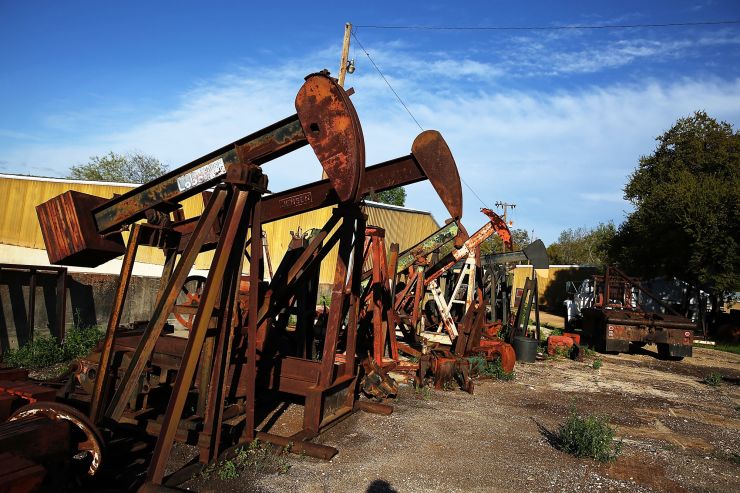
Rusted oil pumps in Texas. Source: CNBC

The trouble with broadly asking questions like “Is now a good time to buy oil stocks?”, is investors aren’t really asking about the stocks in question, but really whether the price of oil is going up.

In this sense, you’re not actually investing in the companies – you’re simply betting on the commodity. Don’t get me wrong, this is a perfectly fine thing to do if you believe you have a differentiated perspective on the macroeconomic factors driving supply and demand in the oil market. But if you really have such conviction in this perspective, there would seem to be a much simpler and cleaner way of expressing this view – namely, buying oil futures.

If you’d like to invest in an energy company, your thesis cannot be centred around the assumption that the price of oil is going up. You need to be able to argue why there is value to be had in your stock even in a “lower for longer” commodity environment, or why it is a relative bargain compared to its peers at today’s prices.

Its main operations may not even be in crude oil. It might well have diversified into renewable technologies or liquid petroleum gases. This would already dampen the correlation between the commodity price and your stock price based off the original assertion.

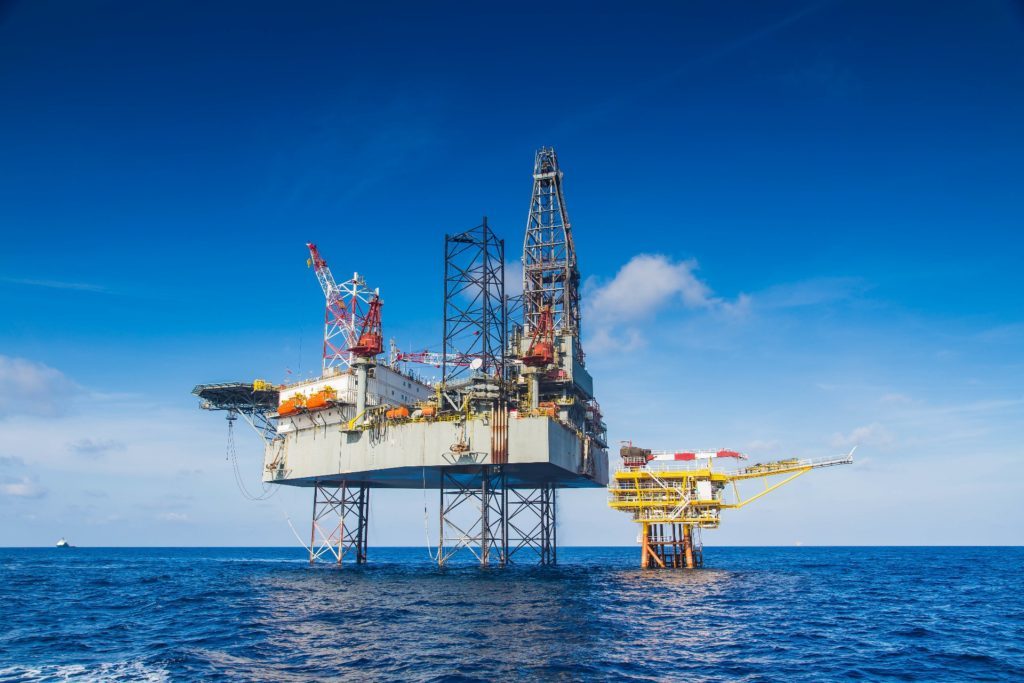
Oil and gas drilling rig work. Source: Lapeze & Johns

Furthermore, in terms of its competitors, what quality reserves does it mine, pump or dig? Does it have new drilling rights, access to advancements in refining capabilities or is it operating with direct authorisation on good terms with the national and local governments that give it exclusive rights to that oil field or gas farm?

Will that be enough to ensure a wide economic moat against its competitors?

Namely, the proposition: “commodity price rising” as the justification for investing in a given stock dealing with that commodity is too makeshift an indicator by itself. Don’t then ask, “Is it a good time to buy oil stocks?” when you really want to know “Is it a good time to buy oil?”. Those questions are quite different but the distinction is easily overlooked.

The Iron Ore Conundrum

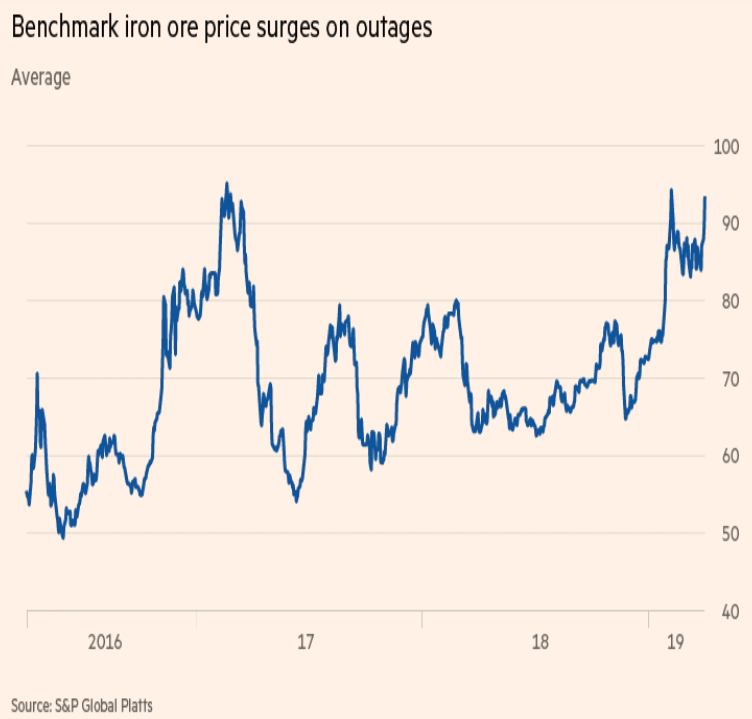
One such example of this disjuncture in logic would be the significantly higher quality of Brazilian Vale S.A’s highly-sought after, high-grade iron ore that Chinese steel mills prefer to maximise steel production from their blast furnaces, as less coke must be used. Before the court order against Vale to stop production at eight tailings dams and the 9 per cent predicted drop in annual output, it produced considerably more high-grade iron ore than Rio Tinto and BHP Group (58 and 62 per cent). If I had thought the price of iron ore would increase because of demand for high-quality steel, and bought into Vale S.A. with the expectation that the value of my investment would rise alongside steel prices, I would be rather disappointed. Iron ore did rise from $65 to $95 (46 per cent) meanwhile Vale SA lost 27 per cent as the share price fell from 15$ to 11$.

Similarly, if you thought after the Vale SA’s dam collapse that iron ore prices would rise globally, then it would have been more prudent to invest in iron futures rather than Vale SA’s competitors Rio Tinto and BHP Group.

There isn’t some universal law that Vale’s misfortunes are a competitors’ gains. Rio Tinto ended up declaring force majeure after the recent cyclone in Australia and BHP reducing guidance, pointing to little spare capacity for high-quality benchmark ore in the market to meet Chinese demand. Environmental curbs in China have hit domestic production of low-quality iron ore, e.g. Heibei province is closing 40 mines in 2019 alone.

In this instance, Chinese steel mills were left with limited, albeit undesirable, options. They could have substituted in lower grade iron ore from Australia’s Rio Tinto or BHP, but this would require more coke input for the conversion to pig iron, generating less efficient and unacceptably higher polluting processing and lower output.

Alternatively, they could have hoped for rising steel prices to offset continuation of more expensive high-quality iron ore, and simultaneously lower production in the meantime to steady costs.

As with all investing, it’s a multifaceted arena of trade offs and unknown variables that aren’t easily controlled for or anticipated.

As always, if you’re trying to actively beat market returns, do your own research. If you think a commodity price is set to rise, ask why a given stock is a better choice than simply the commodity futures market. After all, stocks and commodities are not necessarily the same thing.

British Values and Islam: The LGBT School’s Row

0

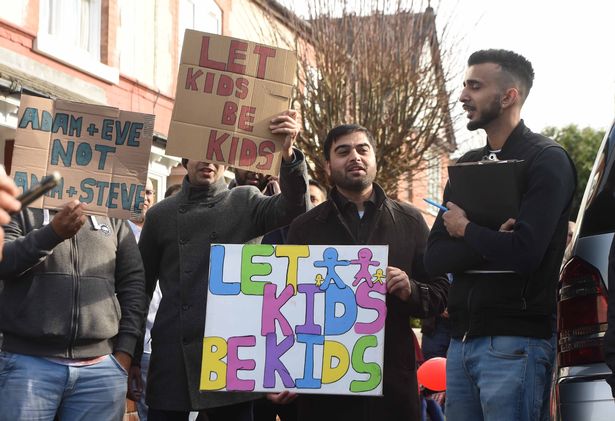
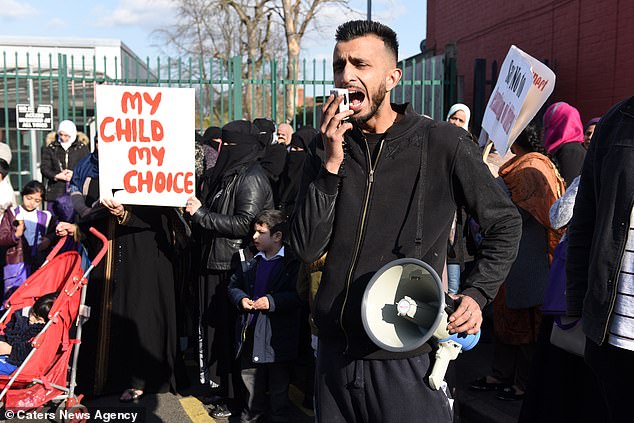
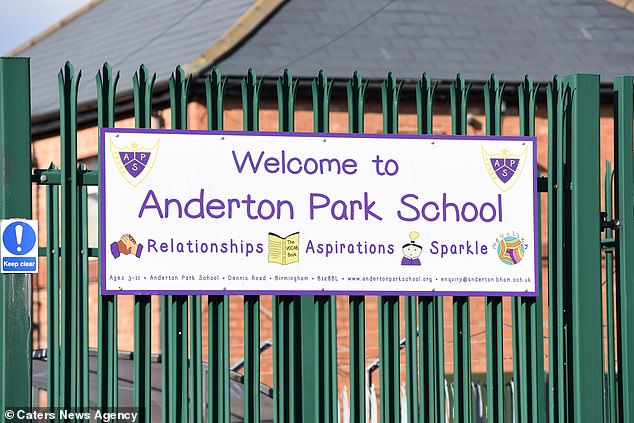
Anderton Primary School in Birmingham has sparked a religious debate as lessons teaching about LGBT rights have been stopped. Protesters outside the school shouted to have control over their children’s education: “stop brainwashing our children”, “homosexuality and Islam do not work hand in hand”.

The Education Secretary Damian Hinds, warns “myths” are being spread about the the content of LGBT lessons under the ‘The No Outsiders Programme’.

‘The No Outsiders programme’ which has brought about the issues runs alongside the relationship and sex education classes. Anderton Primary School which is 80% Muslim has now seen over 600 kids removed from classes by their parents.

Protests outside Anderton Primary School

In a changing world where sexuality and gender identity are hot topics, it continues as the protests against LGBT lessons at Anderton primary school, in Birmingham have continued and they seem they will not stop.

What is the No Outsiders Programme?

Many religions have come under siege from the politics of sexuality and gender, as many non-traditional lifestyles are not promoted in many religions. Many parents believe that the LGBT lessons “promote homosexual and transgender lifestyles to their children”.

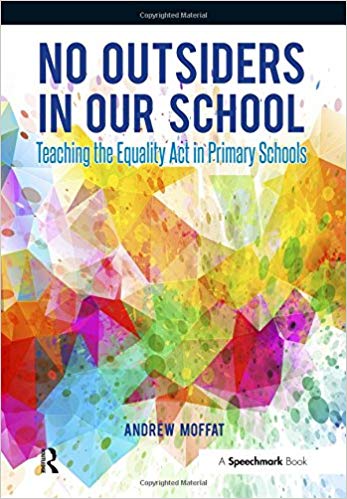
The ‘No outsiders Programme’ is based on a book written by headteacher Andrew Moffat.

Headteacher at Anderton Primary School (Andrew Moffat)

In an attempt to teach equality amongst children in school irrespective of gender, sex, race or religion. It teaches children that there are a variation of families in the UK. This is merely a reality of the diversity of humankind and a tolerance Britain epitomizes.

No outsiders in Our School Teaching the Equality Act In Primary Schools, by Andrew Moffat

Islamophobia is on the rise and this debate feeds the idea that Islam does not work in accordance with Western ideals. It plays into the hands of right wing nationalists who can use this to promote the idea that Islam continues to be an enemy of The West.

Western Values

The core Western values are ones of democracy, freedom and justice can be seen as the bedrock of its civilisation. For practising, liberally informed Muslims, freedom and democratic values common practice to them.

MP Jo Cox said: “While we celebrate our diversity, what surprises me time and time again.. is that we are far more united and have far more in common with each other than things that divide us”.

In an incredibly diverse society, ideas, ideologies and religions are bound to clash. In a see-saw and monopoly on society, we continue to be divided into political tribes. Islam like that of Christianity is deeply socio-political and makes up as a deeply entrenched identity in many people lives.

Islam is derived from the Arabic root “Salema”: peace, purity, submission and obedience. In the religious sense, Islam means submission to the will of God and obedience to His law.

When does ‘peace, purity and submission and obedience’ comes at odds with sexual and gender politics?

Simply because homosexuality is seen as a sin, as reinforced by some Islamic scholars. But this is not the view of all Muslims.

A liberal interpretation of Islam allows for an extension beyond the literal interpretation of Islam to which many other muslims would not adhere to.

Sadiq Khan: The Liberal Muslim

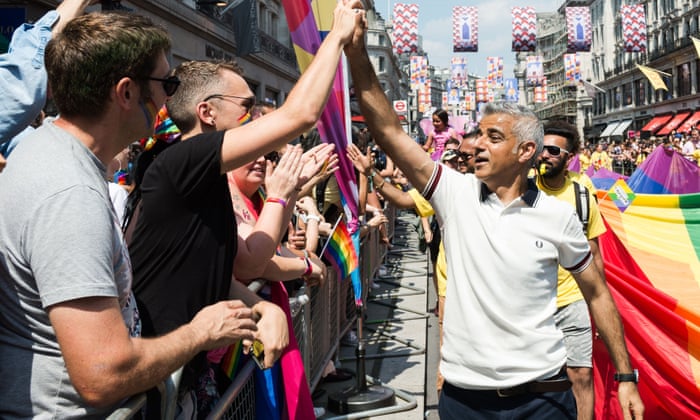
Mayor of London Sadiq Khan at Pride

Current Mayor of London, Sadiq Khan is a perfect representation of a liberally progressive muslim who has supported the rights of the LGBTQ community.

Khan, was the first elected Muslim mayor of London which was a moment captured in progressive history. His support of gay marriage epitomized the evolving progressive nature of British society.

July 2017, Khan hosted LGBT+ community at city hall for the first time in seven years. November 2018 Khan fronted the ‘new ‘It Gets Better’ video for LGBT youth which aimed to promote a positive message about being LGBT+ to young people across the world. He also backed Queer Britain, a project announced back in February 2018, to create “a world-leading LGBTQ+ museum” in London.

Has Khan latched onto a movement grounded in sexuality, gender and identity politics to boost his campaign? Or, is it that Khan is not a true Muslim either supporting gay marriage which is against Islam? Khan is a man who has grown up in a time where the world as we know it is shifting from the tunnel vision we once saw, practiced and lived in.

Khan clearly supports the freedoms and expressions of people and his experience as an ethnic minority and a Muslim I am sure influences his views. He has shown solidarity to the movement for people who are oppressed due to sexuality, and gender identities which is continuing to be brought into the realm of conversation.

Follow in Khan’s footsteps

The row surrounding the LGBTQ lessons in school can serve to fuel Islamophobia which has become a pervasive, stagnant feature in British society. Sadiq Khan proves to be an admirable role models championing a more inclusive and open minded society.

Islam supports a democratic form of governance, whilst simultaneously requires Muslims to “obey those in authority among them” (4:60), any Muslim that openly speaks against the West while living within the freedom is acting deliberately against the recommendations of their religion, as they must “obey the law of the Land”.

Those protesting should obey the law of the land and not pick and choose the Quran to support specific biases. Those parents who are protesting seem to want Islam to have no grey area, only black and white which is a dangerous reduction of the complexity of humans.

Tiger Woods’ Comeback is Complete as he Wins 2019 Masters

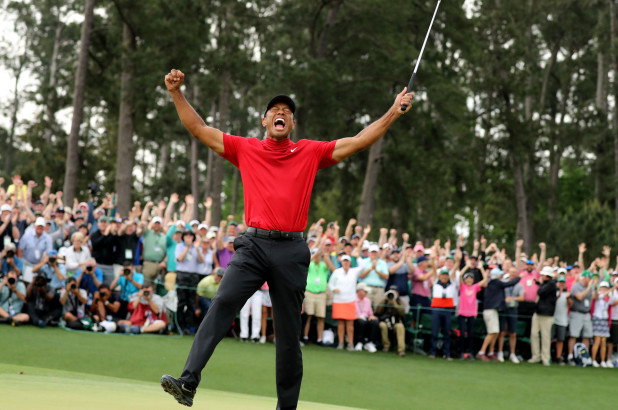
After the public breakdown of his marriage, years plagued by injury and a 2017 arrest on suspicion of drink driving, Woods’ triumph by one stroke is being labelled ‘the greatest comeback in sport’. Coming 14 years after his previous Masters victory, it is a strong claim.

Spare a thought for Xander Schauffele. The 25-year-old American, who is looking for his first major title, found himself momentarily top of the leaderboard at a point during the final round on Sunday. If he had known he would be in that position before the tournament began, I’m sure he would have taken it. Who would have predicted however, that he would lose out by one stroke to a golfing superstar, without a major in 11 years and no Masters title in 14? Schauffele understood the theatre of it all and was especially gracious in defeat, saying how losing to a player he watched as a child was ‘like a dream’.

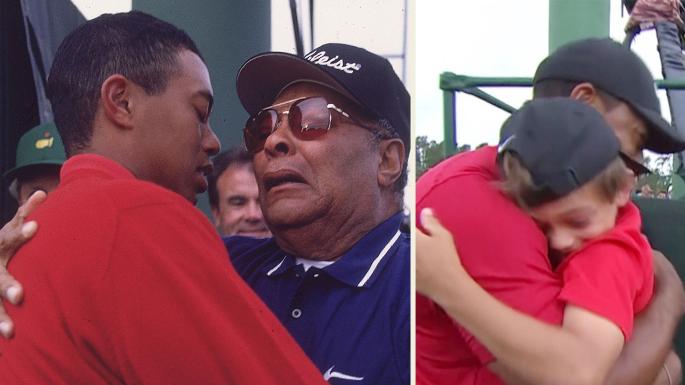
For Woods, Sunday brought a 15th major and fifth Masters title, meaning he is closing in on Jack Nicklaus’ all-time records of 18 and six respectively. Though to boil this down to mere stats and figures would be a great disservice to Woods’ achievement. After an incredibly difficult few years, the first person Woods embraced upon winning was his 10-year-old son Charlie. This is the first time his children have been able to see him for the champion he truly is and some were quick to point out the emotional symmetry of Woods’ first Masters win in 1997, where he ran to his own father.

The two victories, 22 years apart.
Source: The Times Sport

But was this really the greatest comeback, or even the greatest sporting story of all time? Leicester City’s 2015-16 Premier League winning season is often hailed as sport’s greatest underdog story and this view was echoed by Gary Lineker after Sunday’s result. Considering the season the club spent fighting relegation the previous year, it could also be argued that Leicester’s triumph is one of the great comebacks as well.

What Woods’ victory has over Leicester’s, which gives it that comeback ‘winning formula’, is a sense of redemption and a beating of external obstacles. Not just the stories of recurring back injuries and multiple attempts at surgery, but his personal struggles and very public misdemeanours. It is stories like these that assure a comeback’s place in sporting history. Lance Armstrong’s comeback cemented his place as an icon and beacon of sport, and subsequently made his expose as a drugs cheat and confession to doping in 2013 all the more devastating. But it also gives Woods some stiff competition for the title of ‘greatest comeback ever’. Even the former Newcastle United footballer, Jonas Gutierrez, who most outside of English football will not have even heard of, has a good claim that his own brief return is more impressive.

Then there are the greats; Niki Lauda, back on the track just six weeks after a crash and coma, went on to secure runner-up in the Formula 1 World Championship that year. Perhaps most famously is Muhammad Ali, becoming World Heavyweight Champion seven years after his boxing license was suspended due to his refusal to fight in the Vietnam war. In truth though, none of this history should matter in regards to this week’s events.

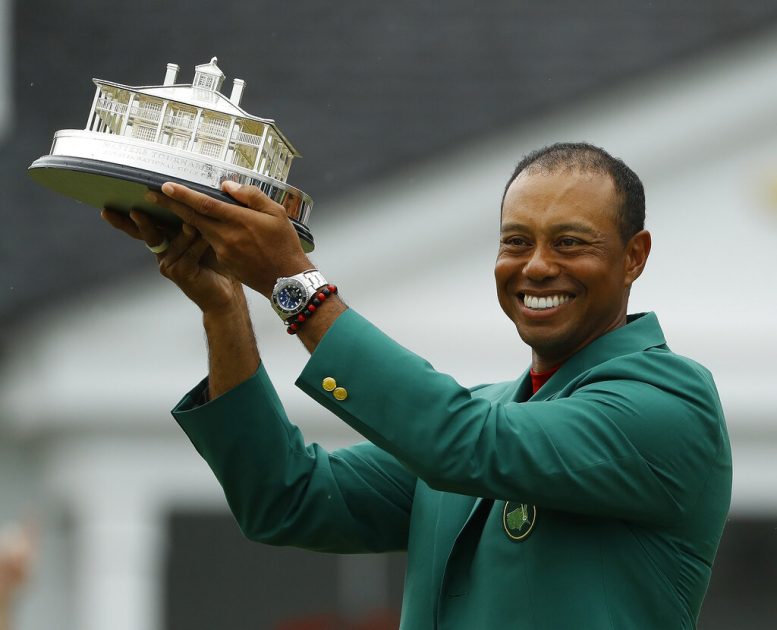
Woods with the trophy and the iconic Augusta ‘green jacket’
Source: AP Photo/Matt Slocum

Any attempt to pigeonhole Woods’ achievement in relation to other sporting greats is futile. It is a remarkable story and one which will undoubtedly stand alone in the sporting pantheon for years to come. With the pressure that comes with a story like this, Woods will now face new scrutiny on whether he can build on this achievement and chase down Nicklaus’ records. With the PGA Championship just around the corner in May, and the US Open to come in June, we might not have to wait long to find out.

NBA Play-offs Round 1: The Story So Far

0

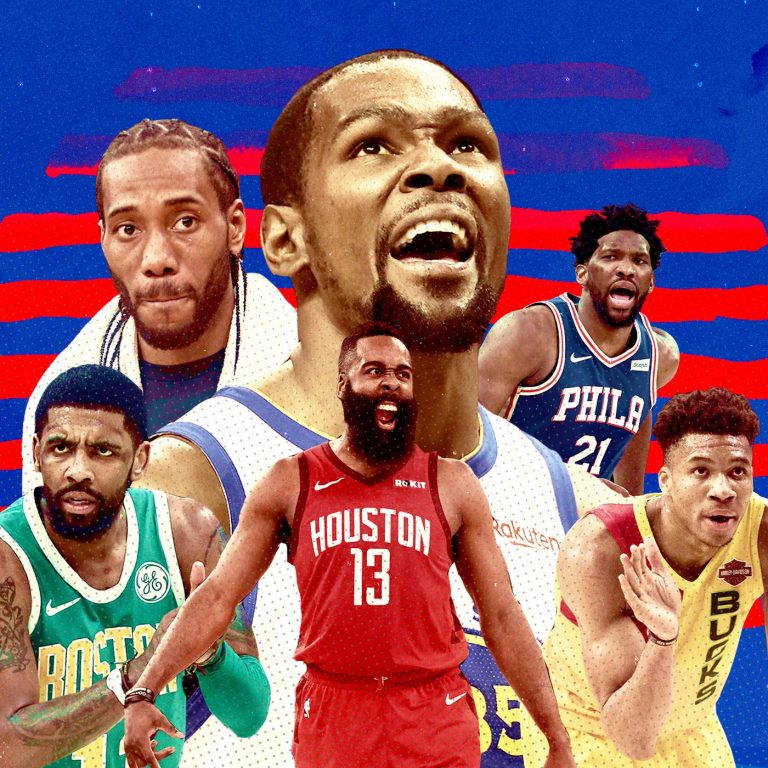
The 2019 NBA playoffs have kicked off and already there looks to be some upsets looming from Game 1. With unlikely results both in the Eastern and Western Conferences surprising fans and pundits alike, its going to be an entertaining first round.

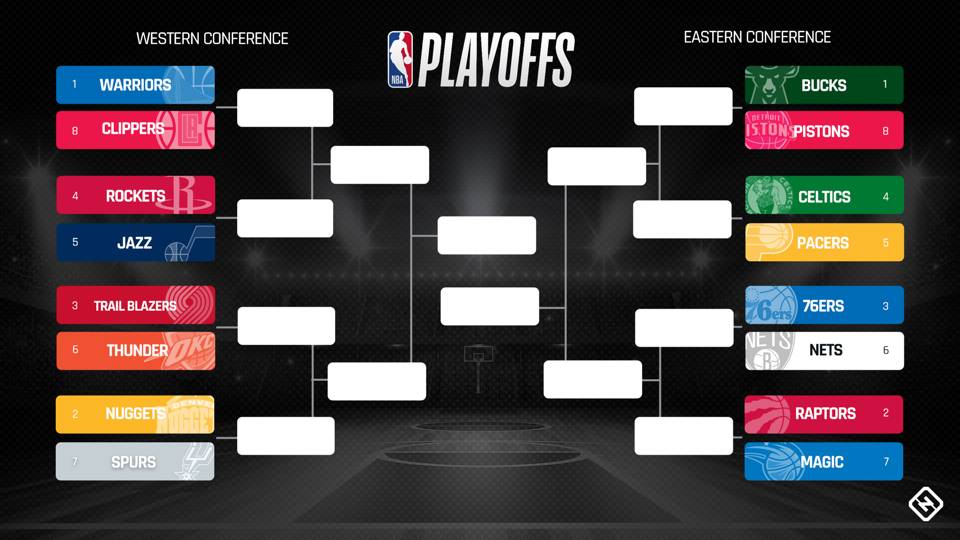
NBA 2019 Play-offs bracket. Source: Sporting News


Philadelphia 76ers vs Brooklyn Nets

The underdog in this game, Brooklyn Nets, won the first game of the series 111-102 to take home court advantage from the Philadelphia 76ers. The Sixers were shocked to lose to a Brooklyn Nets who haven’t been in the playoffs for the last 4 years. With the likes of Embiid, Butler, Reddick, Harris and Simmons, this should have been a straight forward series for Philadelphia.

As in the regular season, Ben Simmon’s lack of shooting ability continues to hinder his team on offence. In addition to this, not honing any formidable post moves is unimpressive for someone at his size and overall capability. D’Angelo Russell was the leading scorer for the Nets with 26 points on his play-off debut and his co-star Dinwiddie helped with 18 points of his own.

Jimmy ‘Buckets’ Butler kept the Sixers in the game with a play-off career high 36 points, but it wasn’t enough alongside Embiid’s 22 points. Off the court, however, Joel Embiid and Amir Johnson were seen on a mobile phone on the Sixers bench. This stirred quite a bit of controversy but it’s been reported that Amir Johnson was checking on his ill daughter.

In game 2, the Sixers will certainly have to step up their offensive performances and be tougher on defence. Ben Simmons will have to step up massively and Tobias Harris will have to pull his weight also. This is a team that’s meant to reach the Eastern Conference Final so they need to start playing like it quickly.


Toronto Raptors vs Orlando Magic

The Toronto Raptors, like the 76ers, also suffered a shock defeat to an Orlando Magic team that also hasn’t been in the playoffs since 2012. With no stand out performances, a collective team effort on defence and offence saw this Magic team dispose of a strong Raptors team. It’s a good sign that a team ranked 8th in defensive ability in the regular season is translating in the playoffs which proved vital down the closing minutes of the game.

DJ Augustine’s 25 points for the Magic and decisive game wining shot aided the 104-101 win against a Raptors team consisting of Kawhi Leonard, Pascal Siakam, Marc Gasol and Kyle Lowry. Lowry failed to notch a single point in the the game having seven shot attempts. He was the only member of his team to not score. Whilst Leonard scored 25 points and Siakem 24 in their loss.

The Raptors will have to regroup for game 2 and be more cohesive in their approach going forward, likewise Kyle Lowry will have to attempt to put the numbers up that he’s capable of. Orlando Magic hope to have another team effort with more offensive output to take a 2-0 lead back home.


Golden State Warriors vs Los Angeles Clippers

The Golden State Warriors took a commanding first win in their series against The Los Angeles Clippers. Even though their performance wasn’t stellar, the star power they possess was enough, winning 121-104. Steph Curry became the all time number one 3 point scorer in the playoffs passing Ray Allen and doing it in a considerably shorter time span.

Scoring 38 points on the night with 15 rebounds and 7 assists, he helped the Warriors cruise to victory but it wasn’t all still waters as Kevin Durant landed himself in a face off with Patrick Beverly that got them both ejected from the game. Durant took the bait that Beverly laid out but Beverly certainly didn’t expect to be ejected as well.

This season has seen an upturn in Durant’s bravado behaviour as the 2x Finals MVP being ejected a total of 19 times this season, second most in the league.

The Warriors will hope to finish this series in a sweep to have ample resting time for a sizzling semi-final conference round against the Houston Rockets. But the Clippers will certainly have something to say about this.


Portland Trail Blazers vs Oklahoma City Thunder

The number 3 seed Portland Trailblazers, took on the number 6 seed, the Oklahoma City Thunders ending in a 104 – 99 for the Blazers. Damian Lillard scored 30 points to Russell’s 24, but Westbrook managed to produce another triple double with 10 rebounds and 10 assists.

Dame’s co star in CJ McCollum managed to put 24 points on the board whilst Westbrook’s co-star Paul George put up 26 points and 10 rebounds. The difference maker was former OKC player Enes Kanter, who had a monster stat line of 20 points, 18 rebounds and 2 assists. OKC had ample attempts to tie the game or even win it but wasted it with 3 shot attempts that didn’t fall for them on the night. The Blazers hope to close their game two to bring them closer to the next round of the playoffs.

Overall there is plenty of opportunity for teams to turn it around a slow playoff start so don’t count anyone out just yet! There could be many surprises in store to come!

Keep up with TCS Sports for more NBA Play-offs news

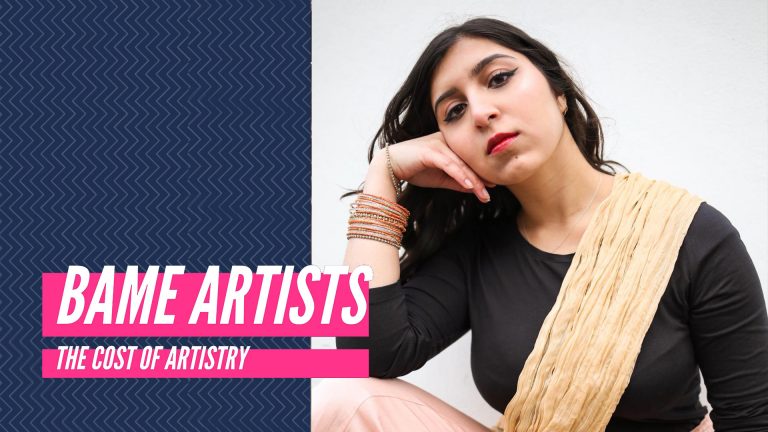
8/10 The Cost of Artistry | Amani Saeed

In a time where crime in our capital is at an all-time high, the narrative we often see in the mainstream media is that people of colour, are using violence to channel their pain.

This is only part of the story. There is a growing group of BAME men and women, using their experiences to inform their art. 

In our 10 part feature, we meet some of these artists. These artists are swimming against the tide, creating a lane for themselves.  They talk to us about the Cost of Artistry.

8/10 meet Amani Saeed

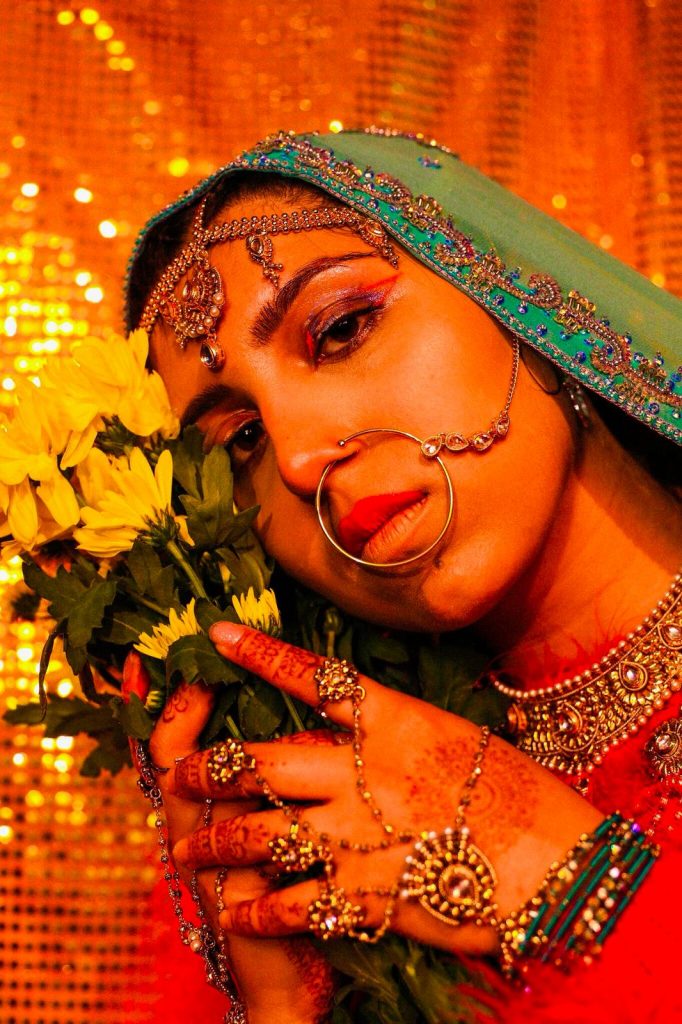
Amani Saeed for HuqThat

When did you discover you had a “talent”? 

When my mum told me so – kidding (kind of)! The first time I realised people liked my work was when I started performing at my local open mic. I was 19 and studying at Exeter, which is a predominantly white institution. It was the year Daesh had come to the forefront of the news with their beheading videos, and I was writing about what it meant to be a Muslim woman living in the wake of that cruelty. The poetry I wrote and performed resonated with the audience to the extent that I started getting booked for shows, doing radio interviews…it was exciting to me that people cared about the ideas I was expressing.

What have you had to sacrifice to nurture your talent? 

Sleep. When you’re working a 9-5 job, if you want to grow as an artist, you have to be deliberate about dedicating time to your craft. That means writing poems on the tube in the morning, doing admin during your lunch break, and using up your annual leave to go on Arvon retreats and do gigs. It means stumbling home at midnight from an open mic knowing you have to be up again in a few hours. None of this is glamorous, or even healthy, but at the moment, it’s what is necessary to keep me growing as an artist. 

I’ve also had to sacrifice my pride in order to grow. A friend gave me a great piece of advice – “if it scares you, you haveto do it.” This means taking calculated risks: performing pieces outside of my comfort zone, at events outside of my comfort zone. And sometimes that means bombing on stage. But you can’t grow from what you don’t learn from—so I fail gladly knowing that every failure is an opportunity to rise.

Who inspires your artistry?

The inspiration for my artistry comes from listening to rap, from artists like Kendrick, Missy, J. Cole, JID, Eve. From their music, I’ve learned the importance of flow, of rhythm, of pacing. Poetry is lyrical, whether it’s on the page or on the stage, so I always want my work to be technically sound. There’s a theatricality to rap that’s also made its way into my performance style. Rap teaches you confidence: to be bold and to trust your tongue.  It also teaches you how to throw your voice—how to slow it down, speed it up, harden it, soften it— so that it holds people’s attention. I find that the way you play your voice can take your audience on a journey as much as the narrative of your poem can. 

What is the biggest misconception people have about poets?

That we’re social justice warriors shouting into idealisms into an echo chamber. Poets are so aware and attuned to the environment they’re in. We’re constantly reacting, whether it’s in response to a news segment from across the Atlantic, or to something happening down the street. 

In an age where digital echo chambers are growing wider, what role do you think poetry can play in this? 

Poetry, especially when it’s performed, has the special power of being able to reach into a chest and touch a heart. It takes big, intellectual, sometimes alien concepts such as racism, sexism, and homophobia, and packages them into something a listener not only can understand, but can careabout. I would even go so far as to say poetry has the ability to bridge the divide between different communities. There is nothing as humbling or as empowering as listening to someone’s story.

Has a poem ever humbled or frightened you? What was it? When did it happen and what did you do afterwards?

Liam McCormick’s show ‘Beast’ scared the hell out of me. It was midnight and he was performing at the end of the Fringe to an audience of 4 people. He’d seen me performing a piece about sexual assault earlier in the evening, and when he was performing his poem about male violence, he didn’t break eye contact with me once. I’ve never felt so outraged or confronted by a poem before. It was frightening and humbling because after a really shouty section, his voice lowered and his eyes dimmed and he said “I am sorry”. It was the apology I never received from my abuser, and I’m grateful for it.

Some poets claim that a poem is like a living creature: once it’s out there is not much you can do to ‘correct’ or ‘improve’ it, while others edit meticulously, not leaving much from the original, draft form. What is your take on it?

To an extent, it depends on the form you’re using. When it comes to spoken word, I change my performance each time; you can’t perform a poem the same way twice because you’re not the same person at each performance. But when it comes to print, it’s like floating Moses out in a basket. That baby is out there and you can’t get it back. And to be honest, whether your poem is out on the page or on the stage, your intention is no longer relevant. You, the writer, had the opportunity to craft what you wanted to say. What becomes important is how the poem is heard and perceived and how it resonates with its audience – it is almost arrogant to impose your own intent on a poem after you publish it, because it is no longer yours. Poetry, like any public creative act, is deeply communal. The minute a poem leaves your hand or your mouth, it belongs to its audience.

How do you define success?

To me, success in poetry is about resonance. Did this poem touch someone’s heart? Did this poem influence someone’s mind? Did this poem make someone think differently about the world, did it comfort them, provoke them? If someone can shrug their shoulders and ask ‘so what?’ after hearing a poem, I consider that poem to have failed.

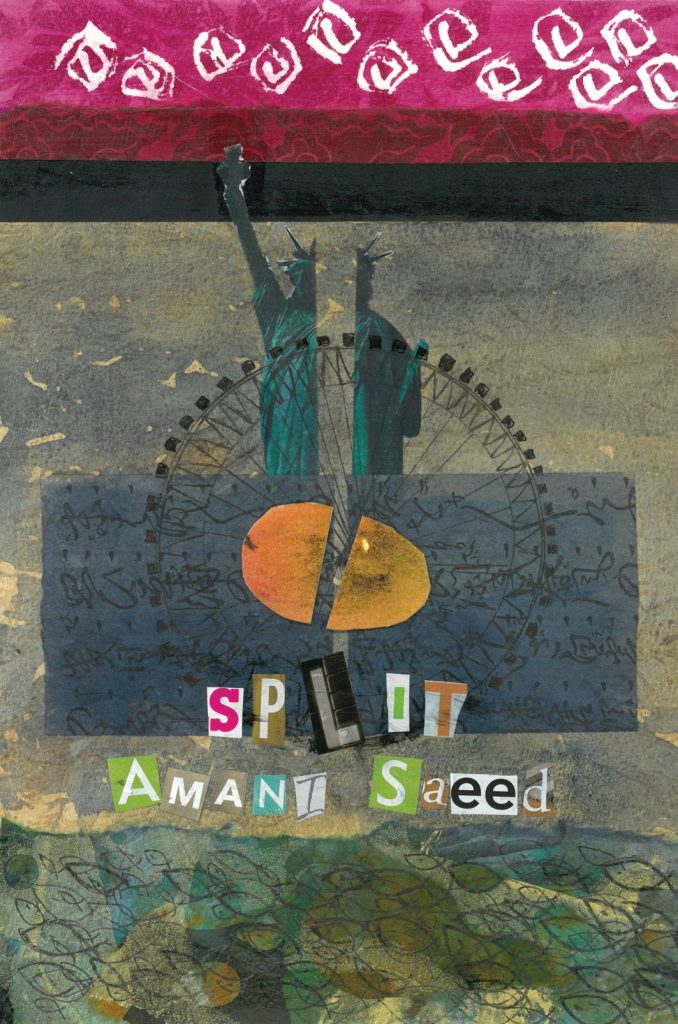
Amani’s collection SPLIT is available in all the major bookstores and via her publisher Burning Eye Books

Do you ever regret sharing your work publicly? Do you trust the reader in a world of instant gratification and instant communication?

No. I’ve published work and then decided in a few years later that I no longer agree with my thoughts, but this is a sign of growth, and not something to regret. I don’t know if it’s a question of ‘trusting’ the reader. People take what they need from poetry. All you can do is write from your heart and publish your work with hope and in good faith. The rest is kismet.

You can buy Amani’s poetry collection SPLIT here

Trump and the US-Mexico Border

Immigration is set to be hot topic for 2020 elections after Trump’s denial of reviving family separation at the border 

CLAREMONT, Calif. — Tuesday saw President Donald Trump putting an end to his administration’s policy of separating families at the border, and a shocking denial that he ever played a role in separating children. With claims that it was actually President Obama who separated children while in office, one has to wonder if Trump’s outright denial of his administration’s highly criticized handling of immigrants caught near the US-Mexico border has something to do with his stance on immigration in the 2020 election.

Donald Trump

“The President made it very clear this week, we’re not rethinking bringing back family separation,” said Mike Pence in an exclusive CNN interview this Thursday. His words seem contradictory to that of senior administration officials, who told CNN that the then-Homeland Security Secretary Kirstjen Nielsen was being propelled by Trump to enforce a “zero-tolerance” immigration policy that was stricter and more widespread. Trump denied this on Tuesday, and Pence supported his public statements stating that Congress was responsible for providing a legislative solution for what he calls an inadequate immigration system.

There are speculations that President Trump’s management shakeup at the Department of Homeland Security is because he aims to make immigration a focal point in the 2020 election. His Tuesday denial of the highly documented involvement of the Trump administration in separating families at the US-Mexico border may also be part of pushing for a focus on immigration policy.

2018 saw the introduction of the Trump administration “zero-tolerance” policy which saw the prosecution of immigrant parents who crossed the border illegally, while their children were held separately at HHS. In a report released on Thursday by the inspector general for the Department of Health and Human Services, it was recorded that there was a spike in immigration family separations beginning in the summer of 2017. 

The separation of families at the US-Mexico border sparked public outcry with people condemning the Trump administration for what was considered an inhumane policy. December 2018 saw the death of 8-year old Guatemalan Felipe Gomez Alonzo in U.S. custody at a New Mexico hospital after “suffering a cough, vomiting and fever” reported, the Associated Press. Alonzo’s death alongside that of 7-year old Jakelin Caal are under investigation.

The administration identified 245 children who had been separated between late June 2018 and early February of this year said The New York Times. Four of those children are under additional review. June 20, 2018 saw Trump put an end of the “zero tolerance” policy with an executive order.

Despite great divisions on the nation’s stance on immigration, Trump unlike many democrats in the 2020 election has arguably provided solutions- namely the wall. Democrats have been said to lack a comprehensive immigration plan, according to Time Magazine. Former Secretary of Housing and Development, Julián Castro has published a detailed immigration proposal. Aside from Castro the Democrats seem to be leaving much to be desired when it comes to immigration policy.

“They’re gonna say they don’t want to separate families, that they don’t want to be as bad as Trump, because they want to be clear they’re not evil” said Jess Morales Rocketto to Time Magazine. Rocketto is the executive director of Care in Action, a part of the organizing team for the 2018 Families Belong Together marches. “But they don’t want to have a conversation about policy, because that will get into things that will alienate voters in Iowa and in South Carolina. By and large the overall feeling is that it is not helpful in gaining new votes.”

Perhaps this is the trick that President Trump has grasped onto, whereas many Democrats have not. Despite conflict in ideas about immigration policy Americans want to be provided with solutions and Trump is giving just that. He has potential 2020 supporters, with the number of Americans stating that immigration was the top problem facing the country increasing from 13% to 21% according to Gallup after mostly exaggerated reports of a migrant “caravan” making its way to the US. Three-quarters of GOP voters during the same period, highlighted illegal immigration as a major concern, compared to only 19% of Democratic-leaning voters. 

Democratic candidates have made proposals pertaining to immigration policy, some may argue that they lack depth or are limited in scope. Recently, Senator Kamala Harris introduced the American Dream Employment Act, which gives young people who qualify under DACA the opportunity to work in the Senate or House of Representatives. Senator Kirsten Gillibrand makes promises to “fix our broken immigration system,” giving no specifics of how she aims to do this on her campaign website. There have also been frequent calls from liberals to “Abolish ICE”, a goal which some democratic candidates have supported. 

“This is a good issue for the Republic base,” said GOP strategist David Winston. “This is a promise he made to them in 2016, which is why he’s coming back to it now.” This presents another issue, Trump’s recent denial of involvement in the separation of families at the US-Mexico border alongside the Department of Homeland Security shakeup sets the precedence for a reignited national conversation about immigration, a conversation that Democrats, according to Time Magazine, may not be prepared or equipped to have.

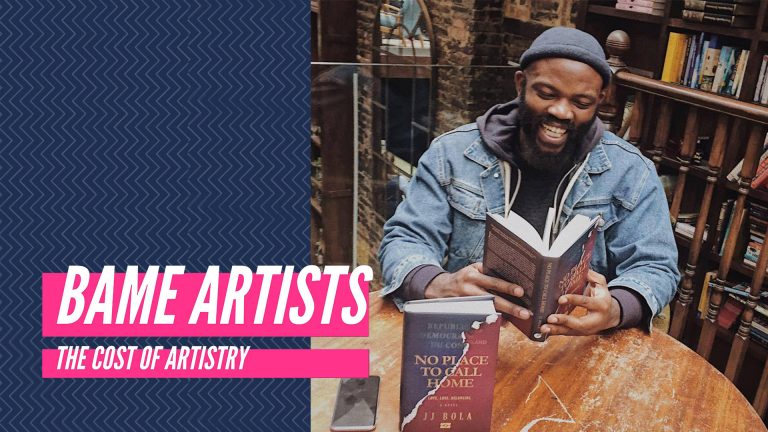
7/10 The Cost of Artistry | JJ Bola

In a time where crime in our capital is at an all-time high, the narrative we often see in the mainstream media is that people of colour, (particularly black men) are using violence to channel their pain.

This is only part of the story. There is a growing group of BAME men and women, using their experiences to inform their art. 

In our 10 part feature, we meet some of these artists. These artists are swimming against the tide, creating a lane for themselves.  They talk to us about the Cost of Artistry.

7/10 meet JJ Bola

When did you discover you had a “talent”? 

When I read a poem at my very first open mic and people gave me feedback. I’m not even sure if that meant I had “talent” but it was the first time anyone had ever read or heard my work and it felt very cathartic and affirming. I kept writing. However, since then, I see talent less and less as something I have, and focus more on what I consider to be crucial, which is endless persistent and stick-to-it-ness. 

What have you had to sacrifice to nurture your talent? 

My time. Although I’m doing what I love, reading and writing, there are also a number of other things that I would love to have tried to dedicate myself to that I know I would not be able to. For instance, I’d love to learn to play the piano so that I could play one of my favourite songs. Perhaps in the future.

Who inspires your artistry?

I’m largely inspired by my life experiences and what is going in the world. I take things that I know or have seen and fly away with it in my imagination. 

What is the biggest misconception people have about poets?

That poets are sad, lonely and boring and only concern themselves with the serious matters of existence. Whilst those may be valid, to a degree, at least for me, it is not absolute. I love a good party. I am adventurous and do things many would not expect me to. 

In an age where digital echo chambers are growing wider, what role do you think poetry can play in this? 

Poetry can teach people how to feel; how to be human again. It can bring us back to ourselves, and listen to each other, rather than just being stuck in the same space shouting. 

JJ’s Tedx talk

Has a poem ever humbled or frightened you? What was it? When did it happen and what did you do afterwards?

Not really humbled or frightened, but some moments have made me cry. I cried whilst listening to David J Pugilist’s poetry performance about police brutality. I cried listening to Anis Mojgani. 

Some poets claim that a poem is like a living creature: once it’s out there is not much you can do to ‘correct’ or ‘improve’ it, while others edit meticulously, not leaving much from the original, draft form. What is your take on it?

I don’t know. It’s neither here nor there for me, a poem is it’s own thing; poets are the vehicles through which it arrives. And it comes and goes and comes and goes and comes and goes, and perhaps, for a moment, we are lucky to read/hear the poem, luckier still to even write it in the first place. 

How do you define success?

The ability to survive the madness that is this existence and the absurdity that is life itself; everyday above ground is a success, and even days beneath it too. 

Do you ever regret sharing your work publicly? Do you trust the reader in a world of instant gratification and instant communication?

No regrets. There is no trust other than the trust that my art, my writing, will find who it needs to find and at the right time they need to find it in.  

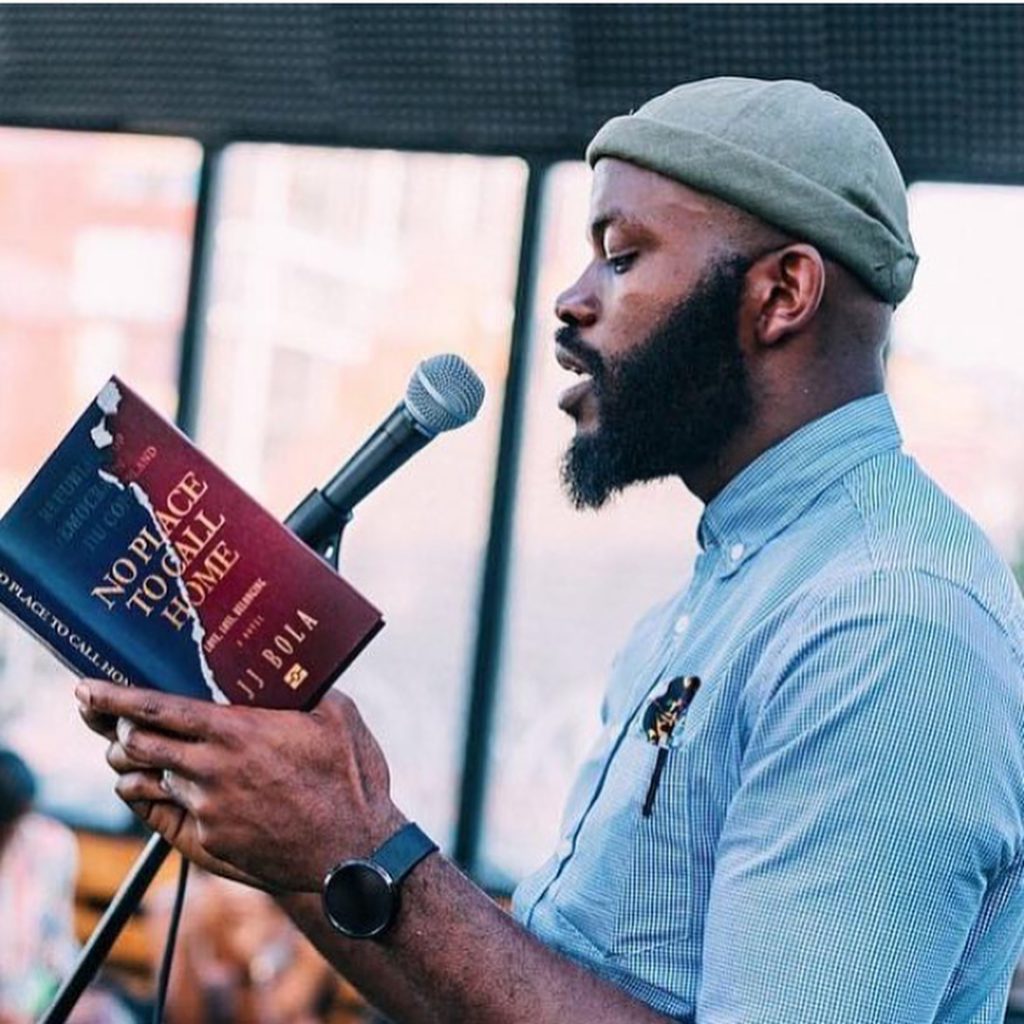
You can buy JJ’s novel No Place to Call Home and his poetry collection Refuge in all book stores, or directly through his publisher, OWN IT!, here: https://ownit.london/shop/

Zion Williamson: The Second Coming of Lebron James?

By Rutvik Perepa

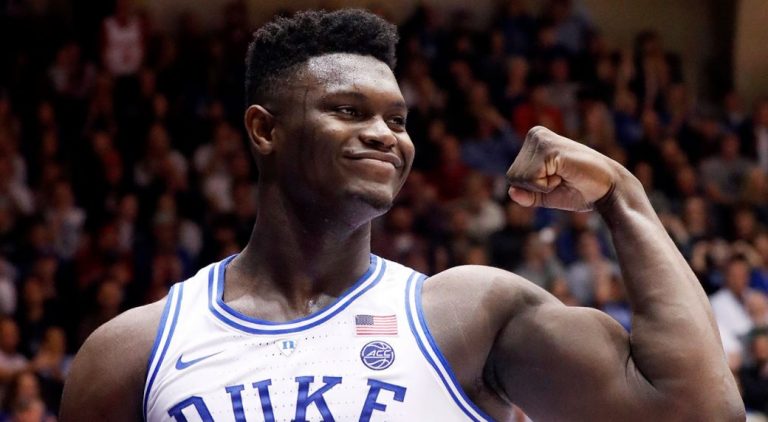
This year’s NCAA Basketball saw one of the most explosive collegiate stars since the likes of Anthony Davis and Blake Griffin. We take a look at the projected number one pick in the 2019 NBA Draft, Zion Williamson, and discuss whether he really will live up to the hype.

Zion was visibly upset, but gave Michigan the credit they deserved in the post-game interview. Williamson then gave a short reflection on the year, summarising that the team culture and the family atmosphere played a big part in the very successful Duke team. He once again showed out with a game-high 24 points and 14 rebounds and said there’s a “high possibility” he has played his final game with the Blue Devils. “Everybody that beats Duke is ready to put that on the wall because that’s the program that (Krzyzewski has) built,” Michigan State coach Tom Izzo said. “I do think we beat arguably the best team in the country, but there’s another game coming up.”

The hype behind Zion Williamson

Zion Williamson was very hyped coming into college from high school owing to his outrageous dunks on YouTube. He has all the highlight reels, but experts doubted his skills until he exploded onto the college basketball scene playing with the Duke Blue Devils under Coach Mike Krzyzewski, who also coaches Team USA Basketball.

Zion, who stands at 6ft7 and 285 lbs is projected to be the number one pick in the 2019 NBA Draft, as agreed by virtually all basketball analysts. He plays both the small forward and power forward position, and with his dominant size and athleticism, Zion has the ability to explode to the rim with an unstoppable force.

In addition to his physical dominance, Zion has excellent passing ability and can even be counted on to play the point guard position. In the ACC Championship game, Williamson led the team with 21 points on 7-11 shooting in a 73–63 win over 12th-ranked Florida. He joined Kevin Durant as the only freshmen in the last 20 years to average at least 25 or more points and 10 rebounds per game during a conference tournament.

Rebounding, passing, scoring, defensive energy and general tenacity with that ‘Competitor Gene’, are Zion’s highest upsides coming into the NBA, especially his defense and obvious skill in creating opportunities to score. He lacks in shooting glaringly but then again, so did superstars like LeBron James coming into the league, it’s a skill that can be worked on.

What is also a questionable transition, is utilizing the 285 lbs of mass to score as effectively and effortlessly as he did in college, but he does make up for that in the initial stages with his willingness to pass the ball.

The race to sign Zion

Zion Williamson is again the most hyped prospect since perhaps Anthony Davis in 2012 and LeBron James in 2003. He is also without question extremely marketable to the point where some analysts have suggested the idea of him possibly receiving a billion dollar lifetime sneaker deal. He will realistically be one of, or even the highest payed rookie in history in terms of a sneaker deal.

Social media has of course drastically fast tracked Zion’s basketball fame and as a result increased his market value. However, no one can question his likability, being described as a massive personality in the locker room and an all-around nice guy on his college campus. It’s clear Zion has a charisma that people are drawn to, and this will work wonders in his business career as well as his basketball one.

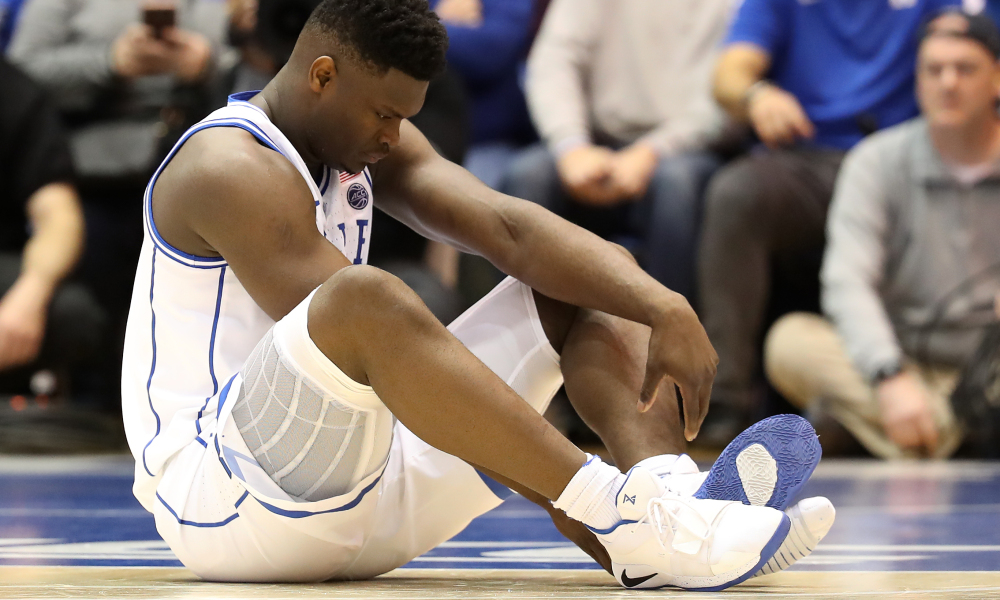
The Nike PG13 explosion issue in a game against arch-rivals, North Carolina Tar Heels, saw Zion big up a knee injury that sent the media into frenzy. Nike main competitors, Adidas, Under Armour, would be pleased to say the least, but the possibility of Zion striking an even larger sum with Nike that includes compensation, is certainly on the table now.

Zion Nike shoe explodes during a game. Source: USA Today

Since Duke crashed out of the NCAA tournament, how Zion Williamson will fare in the NBA has been the discussion in sports studios across America. In collegiate basketball, Zion is truly a man amongst boys, however at NBA level there are countless players with his physical ability and athleticism.

So the question now is: does he have the skill and composure to perform on the new and greater stage that is the NBA. Whatever the case, Zion Williamson will bring a lot of attention to whichever team pairs off with him in the draft. The NBA awaits Zion Williamson with all anticipation and excitement at the prospect that he could be a phenom with the X factor of a Lebron James. At this point however, only time will tell.

Do you think Zion will live up to the hype in the NBA? Check out our live poll on Twitter and let us know what you think!

FA Cup: Manchester City and Watford Make it to The Final

Saturday saw Manchester City edge past Brighton 1-0 in the first Semi-final, before Watford’s scintillating 3-2 comeback victory over Wolves on Sunday. Both teams will now return to Wembley for the FA Cup final on 18th May.

And so, it has all come down to this; Manchester City vs Watford. The oldest cup competition in the world, a process which has involved over 700 teams and started all the way back in July 2018 is now just a game away from being decided for another year. It is a match up that few would have predicted, with Watford’s only ever previous appearance in the final coming way back in 1984. Javi Gracia’s side were not even expected to make it this year, with Wolves pinned as favourites in their Semi-final clash. Manchester City meanwhile, always seemed likely to be at Wembley come May, but will know that many expect them to already have one hand on this trophy.

Pep ‘Quadriola’?

Make no mistake, City were not at their best against Brighton on Saturday afternoon. Yes, they scored a great early goal thanks to a sumptuous pass from Kevin De Bruyne, but Brighton gave a good account of themselves and it was hardly an open and shut case for City. In fact, the Seagulls really should have scored when some last ditch defending from Aymeric Laporte meant that Glenn Murray was somehow unable to turn Shane Duffy’s header into the net.

Yet despite this, City made it over the line, meaning they are still chasing the unprecedented ‘quadruple’ of the League Cup, FA Cup, Premier League and Champions League. A feat that no English team has ever achieved, and no European side since Celtic in 1967. Pep Guardiola has already made clear that he believes winning the quadruple is “almost impossible” and reiterated that fatigue will play a big part in whatever happens next.

This picture will become a little more clear after their midweek Champions League Quarter-final first-leg against Tottenham on Tuesday. City will go into the game knowing that having already secured the League Cup, a place in the FA Cup final and the current title of favourites to win the Premier League they are already well-placed to win some form of treble. If they failed to win the Champions League however, I suspect their Manchester neighbours would have something to say about the level of prestige in this ‘treble’ when compared with their own from 1999. The FA Cup depends on how City perform on the day; the quadruple will be decided over the next month.

Wolves miss out
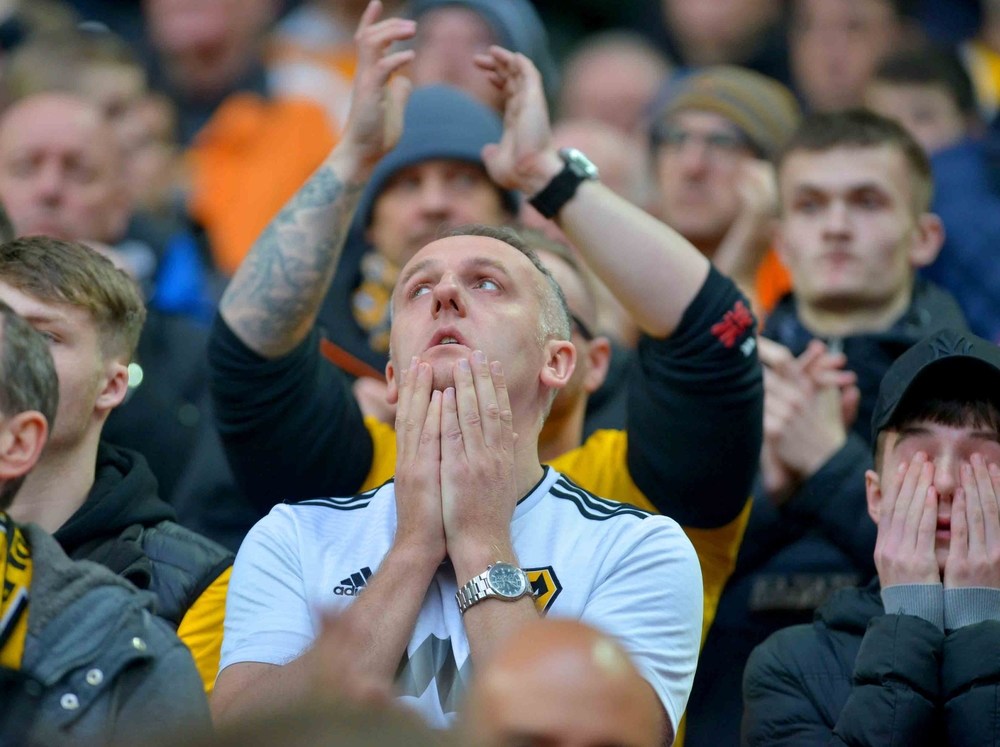
Wolves fans at Wembley
Source: Shropshire Live

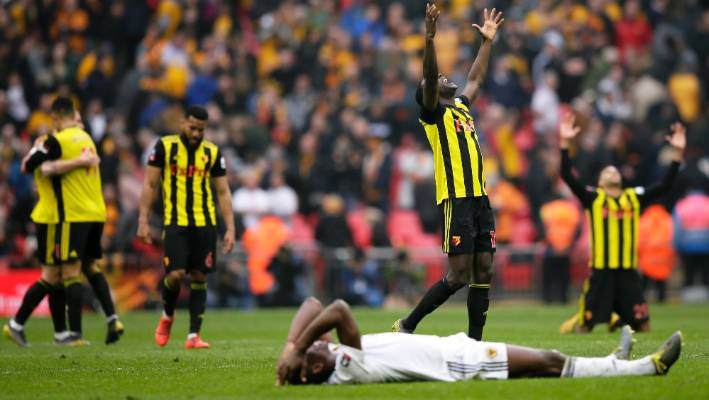
How did they let this slip? Leading 2-0 at Wembley until the 79th minute, most teams would have felt comfortable that they had made it to the final. A combination of nervous defending, a huge shift in momentum and a simply delightful goal from Gerard Deulofeu meant that this was not to be the case for Wolves on Saturday. Watford turned the game around in 15 minutes, with Troy Deeney levelling things up from the spot in the 94th. Then in Extra Time, Deulofeu the substitute, scored a second on the break to bring Watford back to Wembley.

It is a disappointing end to a great season for Wolves, in which they have seemingly become every neutral’s favourite team. This was a chance to cap their great progress and performances with some silverware and a first FA Cup final since 1960. Instead they will be left to focus on the league and remaining the ‘best of rest’ by attempting to secure 7th place. Of course, this would still be a remarkable achievement that could bring European football to Molineux, but Sunday’s result must have been tough to take. For those Wolves-loving neutrals, it’s a shame not to see the enigmatic Nuno Espirito Santo win his first major trophy as manager. Questions must be asked of Nuno after some of his tactical substitutions and the manner of this loss however, but he was honest in his assessment saying:


“We had it and it got away from us”

Source: BBC Sport
Gracia the great
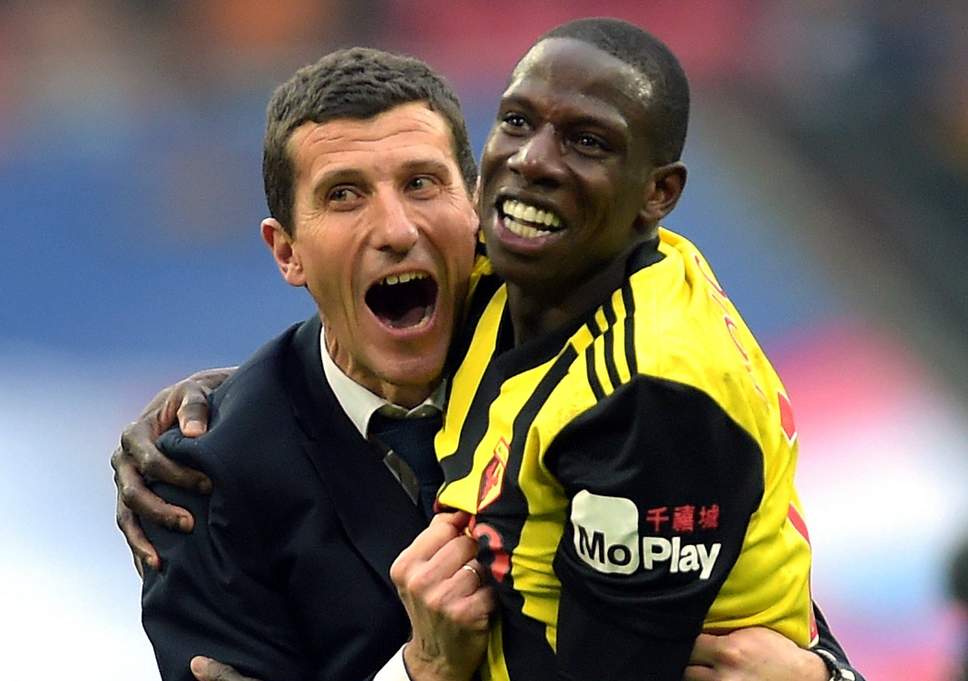
Gracia embraces Doucoure after the final whistle
Source: EPA/The Independent

Although Nuno has received near-consistent praise throughout this season, his opposite number on Sunday, Javi Gracia has been greatly under-appreciated since his appointment. Whilst Nuno is the classically flamboyant, charismatic and energetic presence so often feted by the media, Gracia is more measured and quiet in his approach. This invariably led to criticism last season that he was boring, uninspiring or even ‘effective rather than thrilling’.

Looking at Watford’s results under Gracia last season and just a 26.7% win ratio, perhaps criticism was fair, but his assumed persona definitely played its part in this. Watford were already in decline after the departure of Marco Silva and Gracia had not yet been given the opportunity to make this team his own. Fast-forward a year and you’d be hard pressed to find many fans being critical of his performance this season. Well-placed for a top 10 Premier League finish and even a European place, and now into the FA Cup final. For a club the size of Watford you simply can’t ask for much more than that and he is surely a leading contender for manager of the season. Win the FA Cup and all bets could be off.

When I Get Home, An Enigmatic Exploration Of Solange’s Journey To Herself

0

Two years after the release of A Seat At The Table, Solange dropped When I Get Home. After the widespread critical acclaim and success of her classic album, to say there was high expectations for the follow up would be an understatement. A Seat At The Table explored the lived black experience, exploring themes of prejudice and the intersections of black existence, including ‘F.U.B.U’ and ‘Don’t Touch My Hair’. The album was interlaced with thought provoking interludes featuring her parents, Master P and friends, discussing their own encounters navigating racism. A Seat At The Table allowed for Solange to find her musical home in between genres of psychedelic funk and modern soul, as well as redirecting the narrative from simply “Beyonce’s sister” to “Artist”: “I think any time you truly feel seen, you just feel a certain level of joy”.

When I Get Home however, contrasted heavily against this. It was deeply enigmatic, for both the listener and seemingly, Solange. When I Get Home is a delicate exploration of Solange’s navigation of identity. It is fragmented, experimental and though it may not carry the same replay value that its predecessor did, it is still a deeply personal gaze into Solange as an artist.

A Seat At The Table is as a political album – crafted for her audience. When I Get Home takes us back to Solange’s figurative ‘home’ – within herself. Therefore, it’s understandable why it has provoked such a mixed reaction. Many reviews note on the artistry as being lazy, particularly the repetition on the album. Saw Things I Imagined repeats ‘Saw things I imaged’ 16 times, a song which has also been turned into a meme. In an interview with Clash, Solange explains this exploration of mundane/repetitive lyricism: “Repetition is a really strong way to reinforce these mantras… the first four times I didn’t actually believe it but by the eighth time it’s coming into my body and my spirit”.h

The album also features a 33-minute film released on Apple music, which was directed and edited by Solange. Self described as “Texas Film”, explores a literal journey to Third Ward – her home in Houston, Texas.  Many of the art and sculptures features in the film are also designed by Solange.

When I Get Home is an example of what true artistry should be: personal and crafted with unadulterated, unfiltered freedom. Solange doesn’t conform to music industry expectations; this album isn’t for the consumer, it’s for the artist.

As Solange says in her Clash interview:

“[When I Get Home] feels like a true reflection of who I am, the things I love to listen to, the things that I love to experience… [it is] a snapshot of myself at this present time”.

Should The UK Implement a Paid Period Leave Into Work Policies?

Most women can vividly remember days where we’d be hunched over in pain waiting for the cramps to stop. Unfortunately, despite the feeling of a hundred arrows piercing through our abdomens, the dull and constant ache in our backs and legs that would accompany the stitches and the strong feeling of nausea that would eventually wash through our bodies, we still had to continue with work, classes and our ordinary daily routines. Its not that the agony was not excruciating enough, but because there is nothing in place for us to not be in attendance. We HAVE to work, we HAVE to go to classes, because we knew that what we were going through would not be a viable excuse for us to take any time off.

Periods. Yes, I said it. PERIODS. A stigma has been attached to what is natural for 50% of the world’s population for far too long. Some of us go through simple and short menstrual cycles whereas others dread the days coming up to what seems like a period of pain. Until recently, at least in the western world, women in the workplace would be reduced to being in pain and not be able to escape it. We’ve been stuck inside the confines of the work environment or would have to take off on sick days.

However, slowly and surely we have been witnessing a gradual change which has been set out to make being a women slightly easier. Paid. Period. Leave. 

On 25thMarch 2017 Italy’s parliament considered implementing a law that would put into effect companies allowing females days off if they suffer painful periods as “Menstrual leave”. Last year they followed through with this idea and now Italy is the first country in Europe who’s policy requires employers to offer a paid period leave for a couple days to women. Albeit, they are far from being the first. This policy has already existed in Japan since 1947, in some provinces in China, Korea and Indonesia. Currently, Nike, a sportswear giant company is the only known international company to implement this kind of leave into their code of conduct worldwide. And a bit more closer to home, the UK establishment Coexist (Bristol based) a community interest company, is the first and only known establishment to introduce menstrual leave since 2016. Some require doctors’ notes whereas others are automatically given leave if they choose to take it.

Nike Logo

But why hadn’t we heard about in before in the news? Why don’t, despite being offered the break, many women in China take up the opportunity to rest? Is this a breakthrough policy, is it time for all women to rejoice or does it risk causing the gap between men and women in the working world to increase tenfold?

Most importantly, should the UK implement a paid period leave into work policies? It is a question which has recently been disputed in discussion groups across the country.

Improvement Of Productivity 

Women not being in pain at work may be beneficial to the workplace in terms of productivity, despite the lack of attendance. This is due to the fact that while in discomfort, in general, work tends to become a harder task and therefore may take longer and just like working while sick, efficiency of work is put at risk. 

Time outside of the workplace doesn’t necessarily mean that less work will be done. Being able to work from home (which may or may not be considered as a complete “leave” – bear with me) may encourage a more relaxed environment and more efficient work will be carried out. If that alternative isn’t possible, similar to some establishments that have put the period policy into play, work can be redistributed and reorganised in a way that the time at work can be used more efficiently and the same amount of work can be produced. It is all up to the workplace to make this a possibility.

Equity Over Equality

A policy like this one respects that women are different to men and so require a slightly different type of code especially when concerning women’s bodies, the integral part which makes men and women different. This policy, instead of punishing women for their natural bodily processes shows that they are not only valued in their places of work but are also equal to men, in that the law is being crafted to suit both sexes.

As someone who personally suffers from dysmenorrhea (also known as extremely painful periods). I would triumph if I knew I was entitled to spend some of these agonising hours at home. On the other hand, I cannot deny the fact that I, amongst many other people, can foresee the issues that it may cause.

Employers Reluctance To Hire Women 

It is a known fact that before the days of protection of women in the workplace, ladies could easily be turned down by an employer due to many reasons but most likely the excuse that the ‘likelihood’ of a women becoming pregnant could interrupt and cause delays at work which, in turn, would cost them money. Since then, this kind of sexism is forbidden (although of course still practised in some places) and policies such as 90% paid maternity leave (and paternity leave, no men weren’t forgotten about) for six months in the UK (and further if required at a smaller pay) have been implemented.

However, it must be acknowledged that while it is illegal, this could be used as an excuse for employers to not employ women as they could end up working less days and in turn working less but still costing the employers the same. This punishes women for being women.

Reinforces Stereotypes

Most, if not all women have been or heard another being undermined by male counterparts on the subject of menstrual cycles. Are you on your period? Is it your time of month? Comments like this are sort to render women as a feeble sex, controlled by PMS induced emotions and weaker because of them. The workplace greatly mimics a school-ground environment and for that reason words spread like wild fires across the offices and desks right up to the chit chats by the coffee machine in the kitchen area. Of course we should not be swayed by other people’s opinions and judgements but we must remember that men are much more prevalent in the workplace, especially in corporate environments. Are we ready to fight against judgement in the workplace, in a place where we are trying to decrease gaps between sexes?

In China, as earlier discussed, the leave exists in some places however many women do not take up on that offer due to feeling as they themselves would cause disruptions at work. Further across the world periods still persists on the taboo side of conversation and discussing such issues with an employer may feel daunting. 

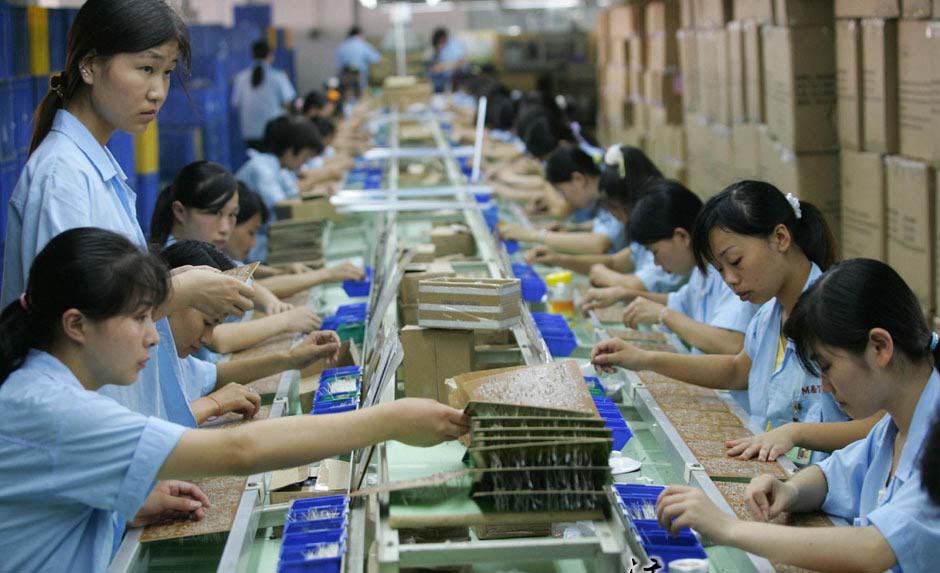
Chinese women working in a factory

All in all, I am completely for paid period leave, a leave that I believe will not only help women who dread going into work whilst suffering in pain but also work establishment that will know that they work towards creating a healthy work environment which takes individual differences into consideration.

In addition, on a sly note, we all are aware that if men felt even a ounce of what (some) women had to go through during their monthly cycle, paid period leave would have been woven into the system decades ago.

In a world where we are battling for equity in the working world, can women afford to have something which undermines their ability to work as well as men? If we don’t, doesn’t it say something about the way the working world works for men and not women if policies aren’t implemented for women. Men and women are different and so cannot be subject to the same exact laws! Whether or not this leave becomes a reality in the UK and possibly other parts of the world is up to us and the conversation is very necessary. 

Should we incorporate a paid period leave? join in on our twitter poll below.