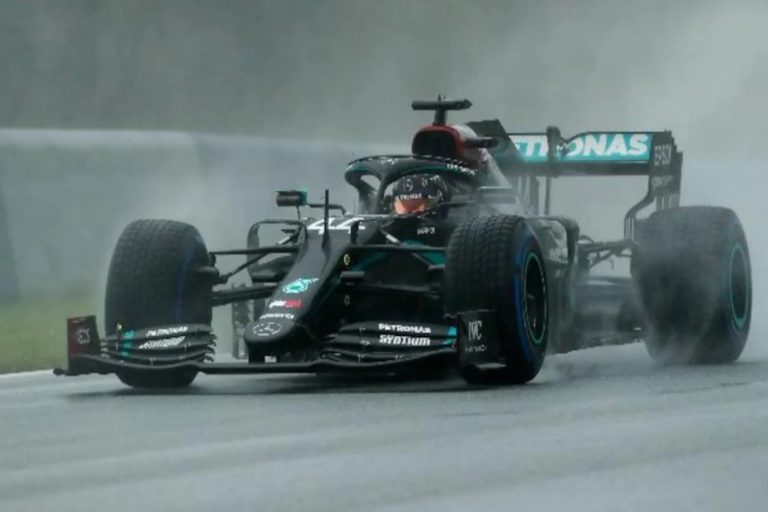
Lewis Hamilton is no stranger to success over the course of his F1 and racing careers. Hamilton began karting in 1993 at the age of 8. Its been noted that his father had to work 4 jobs to support little Hamilton’s racing career growing up.
Hamilton is one of Britain’s finest sportsmen and arguably F1’s greatest driver, ever. He started his F1 career in 2007 and a year later won his first World championship. Now he’s looking to make it his 7th.
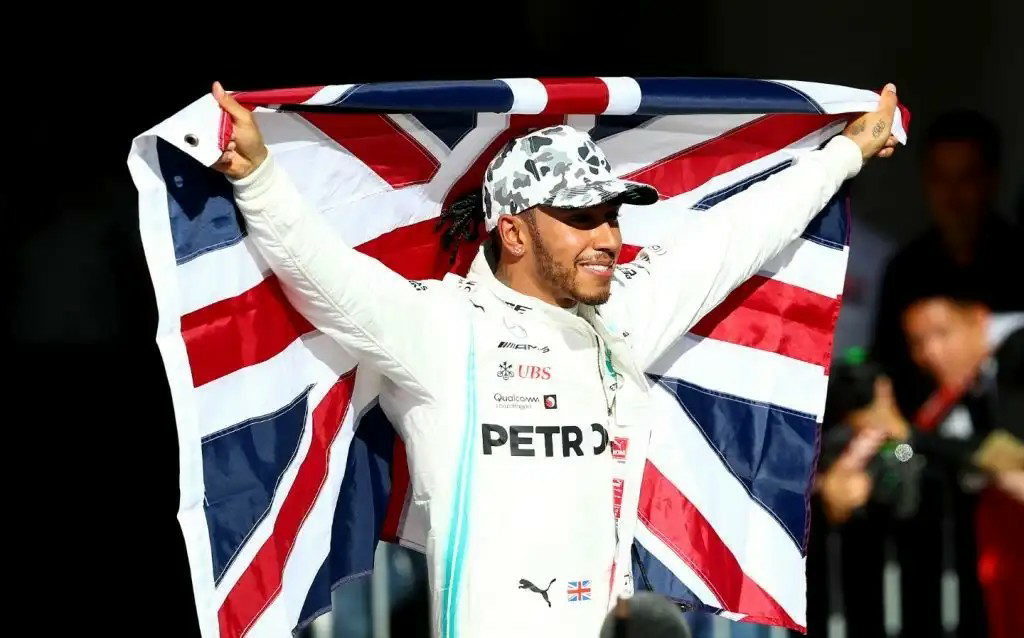
Lewis Hamilton celebrating his several wins and Championships in F1:Source//: The Sunday Times
Recently Hamilton became the record holder in terms of race wins. A record perviously held by Michael Schumacher. Its fair to say he’s in good company.
HE’S DONE IT!
Lewis Hamilton wins his 92nd F1 Grand Prix, breaking Michael Schumacher’s all-time record 🏆 pic.twitter.com/XWLQLpYoJO
However his recent comments after his Emilia-Romagna GP win has left fans wondering if he’ll be racing with Mercedes next year or in F1 at all.
There is speculation that after his 7th win he’ll most likely take a year out and start again when the new regulations of F1 come into effect in 2022. As it currently stands he hasn’t signed on his new contract with Mercedes so he will he a free agent when he returns to Formula 1 racing.
Hamilton and Mercedes have had a brilliant relationship, competition wise, but with the Mercedes boss Toto Wolff not sure whether he himself will continue on, Hamilton’s future is all up in the air.
Besides sport, Hamilton has been very vocal on the side of social change. With a large platform, he has always felt the need to speak up for the quieter or unheard voices – whether it’s the Black Lives Matter campaign or #EndSARS. We must not forget, that he himself is an outlier in F1, being one of the few black drivers or personnel in the sport, he is accustomed to being treated differently.
Even when he had beaten the F1 racing record other drivers made remarks dismissing his talent and factoring his car, rather than Hamilton’s skill, as a reason for winning.
Lando Norris says he messaged Lewis Hamilton to apologise for his "stupid" comments about the Mercedes driver's #F1 win record after the Portuguese GPhttps://t.co/qWl7Fo23Lx
Hamilton could have easily allowed the struggles facing minorities to be someone else’s problem and bask in the glory and admiration of his wins, but he chose the path that felt right for him.
Lewis Hamilton is truly at the top of his game and has taken the F1 scene by storm. His dominance will not be easily forgotten and he has cemented his place within F1 history.
The question is now what will Lewis Hamilton do? Will he continue to make stands and speak up even if he retires?
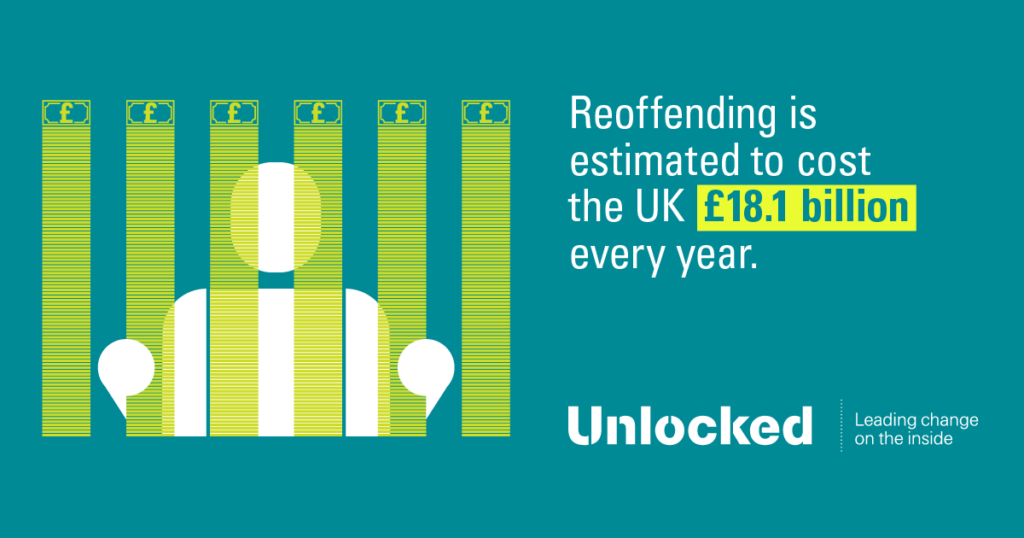
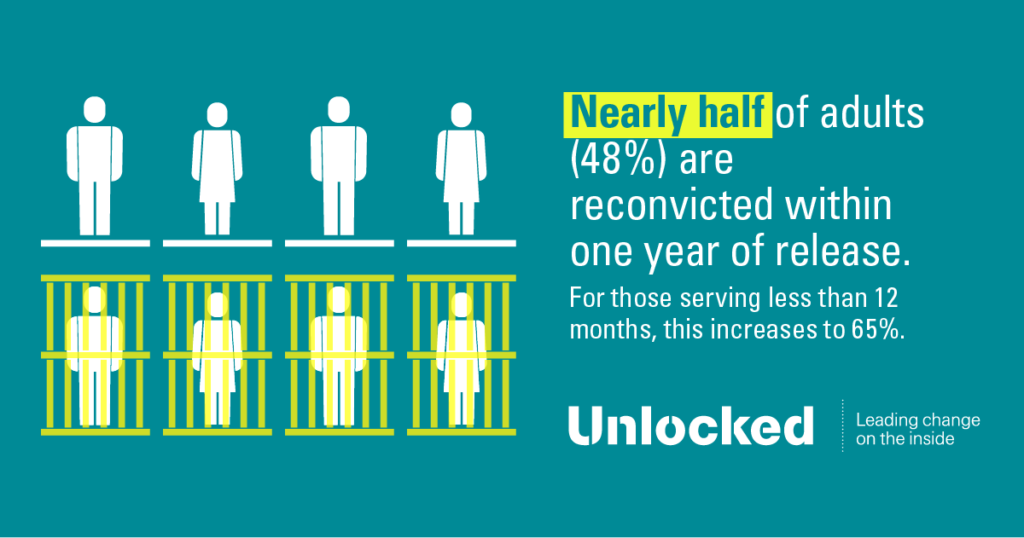
Since David Cameron’s 2016 prison overhaul, the issue of re-offending in the UK has failed to secure serious media attention. Given that recidivism is sapping billions from our economy, the extent of the dilemma is misunderstood and solutions are infrequently discussed. Deconstructing the rationale behind rehabilitation and understanding the standpoint of criminals is an effective way of uprooting social, political, and cultural complications associated with consistent re-offending. Throughout this 3-part series, we will explore how this can be done.
Source: Unlocked Graduates
The Problem
In the words of Christopher Zoukis, “all the studies and all the research in the field of criminology affirm that prison education is the least expensive and most effective solution to overcrowding and strain on the budget caused by recidivism.”
Zoukis’ commentary on education in prisons unearths the cardinal connection between re-offending and positive psychological triggers. When provided with physical and emotional tools, such as pastoral support and structure, inmates are likely to become more psychologically driven to accomplish personal milestones.
Establishing these habits in the cell and inculcating this notion of personal growth into the minds of vulnerable individuals, is the gateway to reducing re-offending. However, re-wiring an inmate’s thought process to facilitate their re-assimilation back into society is easier said than done and the key to this gateway is support. The question is whether prisoners in the UK are receiving the necessary guidance and care needed to make these crucial psychological changes?
Examples
A case in point is Halden prison, in Norway. The ethos that drives the institution’s day-to-day activities is that everyone on the inside will soon be on the outside. The holding ‘cells’ are spacious, complete with a TV, communal kitchens, large ensuite bathrooms and a plethora of activities and training courses, including graphic design, mechanics, music composition and many more.
Though the facility may not be considered a realistic solution beyond the Scandinavian countries, it illustrates the effect of reformative encouragement on rates of re-offending. Norway boasts the lowest rate of recidivism in the world at a mere 20%. After emulating its successful strategy, North Dakota has also since lowered its rate of recidivism to 13%.
When contrasted with prisons that offer considerably less positive redirection, such as facilities in El Salvador, the difference is stark. Not only is reoffending a serious issue, but the need for rehabilitation is clear from the callous living conditions that foster frequent violent outbursts. This patent lack of corrective action can be seen from the number of religious conversions – prisoners cling to the only source of community and counselling available to them, faith.
So, back-pedalling to the query posed earlier: are prisoners in the UK receiving the necessary guidance and care needed to make these crucial psychological changes? The answer is: no. More prison officers are needed to provide pastoral support as affirmed by the following dire statistics.
Source: Unlocked Graduates
People in the public sector
Amid the economic destruction left in the wake of the pandemic, the public sector is likely to bear the brunt of the fiscal fallout. The condition of prisons is, therefore, also predicted to suffer as leaders divert funds into stabilising the economy. Reducing re-offending and encouraging the growth of rehabilitation in UK prisons can offset the damage to prisons and prisoners by making an economically beneficial long term impact.
Unlocked Graduates could be part of the solution. It is an organisation that helps produce this impact and aims to encourage change in the system by recruiting top graduates to work on the frontline in prisons.
An example of how pastoral support from prison officers and educational tools can rehabilitate mindsets.
Unlocked’s two-year programme allows students to complete a fully-funded masters degree, provides opportunities to make a real difference and rewards participants for their efforts.
The issue of re-offending is often ignored but needs to be addressed urgently, mobilising people into the public sector is how we can achieve this. To find out more about how you can lead this change through Unlocked Graduates’ two-year programme clickhere. To find out more about the perks of being involved and participate in Unlocked’s online competition click here.
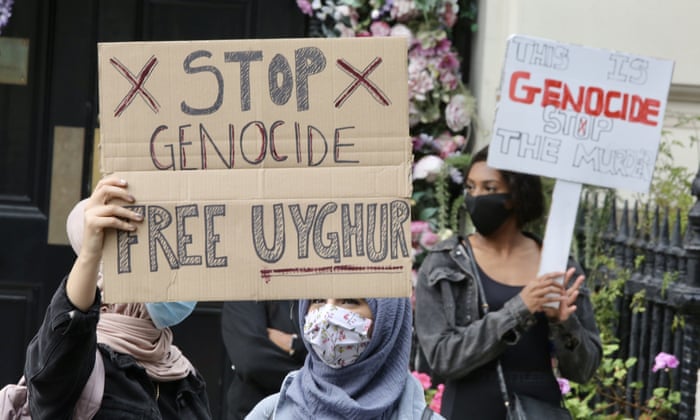
The British government continues to maintain its line that it will only support genocide designations decided by judicial process. If this is truly the reason for their delay in condemning China’s persecution of the Uyghurs, why have no government figures voiced support for the several ongoing cases intended to investigate this very matter?
In his Eighteenth Brumaire, Karl Marx wrote how, when attempting to study a new language, one always begins by translating it back into the tongue they already know. Likewise, many of us approach current events armed with the vocabulary of history we have studied or experienced. It was, therefore, unsurprising, given recent European history, that a Jewish News frontpage mid-July gave China’s long-standing abuse of its Uyghur population centre-stage. The raw memory of the Holocaust was revived, not for the first time, as chilling images of 13 tonnes of hair allegedly removed from Uyghur detainees being imported into the US were revealed.
Since 2017, over a million Uyghurs and members of other Turkic Muslim minorities have disappeared into a vast network of “re-education” camps in the far west region of Xinjiang. Detainees are subjected to political indoctrination, forced to renounce their religion and culture and, in many instances subjected to torture, rape, and forced sterilisation and abortion. Thousands of mosques and shrines, including protected sites, have been damaged or demolished 2016. In Hotan in 2018 a historic graveyard was desecrated and converted into a car park. Around 50% of Uyghur households are “paired” with a Party member who can enter the house at any time of the day to monitor & inform on families. As Newcastle University expert Joanne Smith Finley told AP earlier this year, “It’s not immediate, shocking, mass-killing on the spot type genocide, but slow, painful, creeping genocide…These are direct means of genetically reducing the Uyghur population.” To quote American author Zig Ziglar, “The first step in solving a problem is to recognise that it does exist,” and as of yet the British government have done little to this end.
In a Westminster Hall petition debate on Monday, October 12th, former Conservative Party Leader Iain Duncan Smith implored his fellow MPs to vote for clause 68 of the Trade Bill, recently added by the House of Lords. Given the long-running ineptitude of a UN Human Rights council chocked full of some of the most deplorable governments in human history- the latest of which is the People’s Republic itself- this clause would ensure a concrete legal avenue for Britain to halt trade with states partaking in genocide. However, we appear to be a long way off from a moment in which the British government will acknowledge the situation in Xinjiang as genocide.
It is curious then, that the one question that arose consistently throughout the parliamentary debate was not whether there was a case for condemning China’s increasingly genocidal behaviour, but why the government continues to drag its feet over designating it as such and acting accordingly. Minister for Asia Nigel Adams merely reinforced the government’s line that “whether genocide has occurred is a matter for judicial decision”.
An independent tribunal in London scheduled for 2021 will investigate whether the Chinese government’s treatment of the Uyghur population legally constitute genocide. Convened by top human rights lawyer Sir Geoffrey Nice QC, the tribunal is expected to reveal new evidence and testimony. However, the tribunal does not have government backing, and it is not clear whether it will its conclusion will have any impact on policy. Moreover, 2021 is a long time away in political terms. Much ground may have been lost before then. Moreover, in Monday’s debate, Rushanara Ali MP lamented how the UK government continues refusing to back an ongoing international Court of Justice case on the question of China’s abuses in Xinjiang.
The drawing-up of Magnitsky-style sanctions against individuals connected to the regime in Belarus were announced on 24 September and imposed 5 days later. Of course, the elephant in the room is money. China is the UK’s third-largest import source. In the last week of April, the UK imported over 22 million pieces of PPE and more than 1000 ventilators to the NHS from China. As with the disturbing images of hair seized at the American border, the facts of China’s economic prowess is uncomfortable- it reminds us that to a certain extent we are complicit. Yet, as individuals, we can only go so far in influencing supply chains. China had already pumped 1 trillion dollars into its Belt & Road initiative, fuelling a “hear no evil, speak no evil” attitude even from devout Muslim nations such as Pakistan who would be expected to pressure of the safety of their Uyghur cousins.
If any swift and impactful change is to be made, the British government must follow the US’ footsteps in pursuing Magnitsky-style sanctions immediately. The Commons must vote in favour of clause 68. The government must back domestic and international attempts to denounce the situation in Xinjiang for what it is: genocide in the making.
Georgia is an associate writer for Foundation for Uyghur Freedom. Follow them on Instagram @foundation4uyghurfreedom.
Yet another attack in France has made it evidently clear that freedom of press and freedom of speech are under attack. The only way to preserve these rights are to exercise them. However, there are parallels in tactics from both terrorists and the ‘woke’ mob to silence those with whom they disagree – which are arguably two sides of the same coin.
Less than two weeks after Paty’s beheading, France has found itself at the centre of what seems to be a war between disgruntled, offended terrorists and freedom of the press. It will be interesting to see France’s reaction to these attacks, as it has wider ramifications for Western society and freedom of the press. Yet there is a distinct, deafening silence from many on the left regarding these attacks, and a noticeable similarity in tactics from both terrorists and the ‘woke’ mob to silence those they disagree with, or are offended by.
Since the previous article, France has suffered yet another beheading on its soil. Three people were killed during a knife attack inside the Notre Dame Basilica church in Nice; a man (who was the sexton of the church) and two women (one of whom was decapitated). The suspect – named Brahim by the police – acted alone. Police shot Brahim, detained him and sought medical support, and he is alive. The Telegraph reports that Nice’s mayor, Christian Estrosi, has confirmed that the incident is being treated as a terrorist attack. In a quote, he said, “we have two people killed in the church… and a third person was in a bar facing the church where she had taken refuge. Enough is enough…. We have to remove this Islamo-fascism from our territory.”
Armed police enter the Notre Dame Basilica church in Nice after a knife attack that killed three people, one of whom was decapitated. Source: The Telegraph
It’s important to recognize that tactics being employed by these terrorists all come from the idea that their beliefs and worldview are untouchable, and that nobody has the right to criticize, ridicule or otherwise offend said belief. The basic premise is, “what I believe is right, and if you criticize or make fun of it, I have grounds to hurt you in some way.” Human history has shown that fascism has mostly come from the far right, usually manifested in the form of authoritarian ultra-nationalism, characterized by dictatorial power and the forcible suppression of opposition. Leaders such as Mussolini and Hitler were two such fascists.
Nice’s mayor described the attack as ‘Islamo-fascism’, which is a two-part word, meaning fascism in the name of Islam. However, the reason behind fascism is not important; in all its forms, it shares the same fundamental principle – the idea that any one opinion, belief or worldview takes precedence over others, and offending said opinion is grounds to cause harm to another person, is incompatible with the premise of freedom of speech and expression. The two cannot coexist.
With this being said, there is a distinct similarity between fascist tactics and the ‘woke’ mob. The premise of ‘think like me or I’ll hurt you’ is more common in Western society than we’d like to think; in fact, it could be argued that the idea of ‘cancel culture’ – defined as “withdrawing support for public figures and companies after saying or doing something objectionable or offensive” – is simply a less violent form of fascism. Usually, the phrase ‘cancel culture’ is used in the context of freedom of speech and online shaming, but could also be applied to a wider cultural status quo.
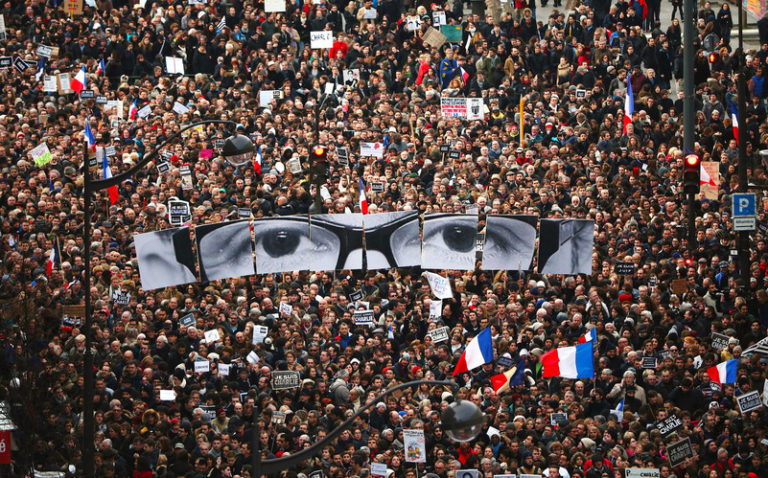
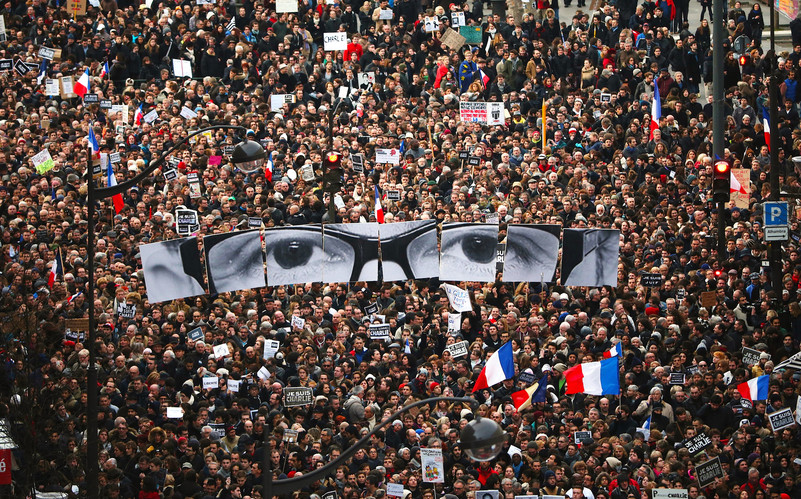
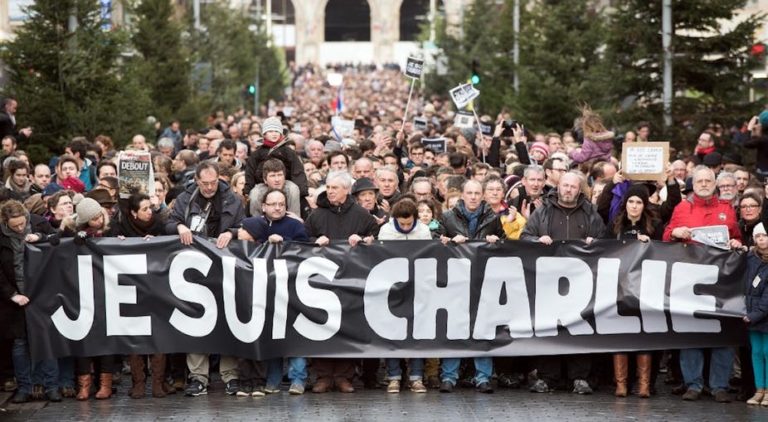
A march in France, defending freedom of speech. Photo credit: Ben Ledbetter, euobserver.com
People seem to have become very tribal in their nature and how they interact with each other. Whilst it’s important to acknowledge and celebrate the fact that discrimination is generally frowned upon in modern society, at times it feels as though it’s forced and not voluntary. There is a climate that makes people more scared of the consequences of discrimination rather than not discriminating of their own volition, based upon moral values. It’s a kind of negative reinforcement. The motivation to be a good person no longer comes from moral values but from consequences of ‘stepping out of line’, so to speak. In this context, people can’t – and more importantly, shouldn’t – be blackmailed into doing the right thing.
Has the left created a hierarchy of subjectivity? Are there some things – or some people – that are worse to say or offend than others? It would seem this way. There have been cases which demonstrate selective outrage by the left, and it shows that to them, abuse and discrimination is perfectly acceptable as long as it does not offend people whom they agree or identify with. An example of this includes a video circulating online, where a Black Lives Matter protestor hurls verbal abuse towards police officers, including racially abusing a black officer, calling him a ‘coon-ass black man’. Don’t BLM claim to be against all forms of racism, including racist language? If this is the case, then why was it acceptable for this protestor to racially abuse a black man? Where was the outrage from the left? Does him being a police officer suddenly make him ‘less’ black? Had the races been reversed, and a white protestor called a black officer the n-word, there would be uproar.
Protester yells at the police line:
“Fuck you, fuck you, fuck you, fuck you, fuck you you coon ass black man, fuck you, fuck every black person out here fuck all y’all!” pic.twitter.com/I5bCLY7TMP
WARNING: STRONG LANGUAGE. A Black Lives Matter protestor hurls insults at the police, including a racial slur to a black officer (second video).
Regarding the Islamist terrorist attacks in France, the silence is deafening from the left. Fascism and its manifestation (previously employed by the far-right) and tactics, are slowly entering the left’s core beliefs. Freedom of press and expression is historically a liberal policy, yet most people today who stand up for free speech (and stand with Charlie Hebdo) are conservatives and centrists. Why is this? What changed? What happened along the way? When did the left decide that some lives were worth more than others? It could be argued that this is simply a result of identity politics and intersectionality (adopted by many on the left); ideologies which many consider to be more divisive than unifying. There are groups of people that are ‘okay’ to offend and ‘not okay’ to offend. If a person in a group which the left views to be ‘marginalised’ attacks a person not in a marginalised group, excuses are made. In some cases, psychological gaslighting is deployed; the attempt to blame the victim for their own demise.
With free press, everybody is allowed to have an opinion; with state-controlled press, only one viewpoint is available. It could be argued that it’s a form of brainwashing. Terrorists and the ‘woke’ mob agree on one thing: only one worldview is acceptable, and disagreement is grounds for harm in some way. Whilst terrorists will kill you (sometimes in a particularly barbaric fashion), the ‘woke’ mob will hurl abuse, call for someone to be sacked from their job and have their livelihood taken away, and even go so far as to dox them (publish private and sensitive information about an individual to the public for malicious intent). They are simply two sides of the same coin.
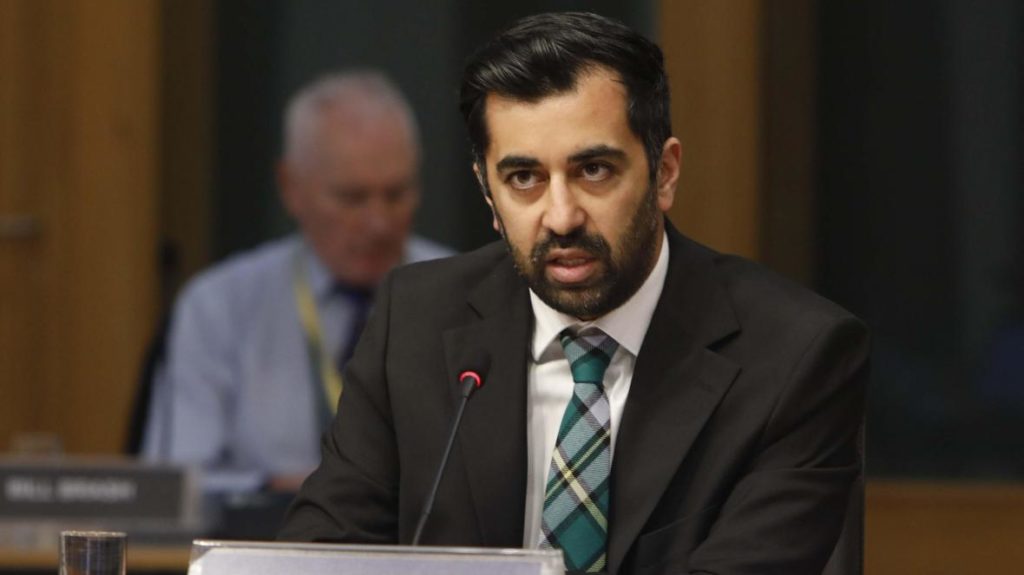
Even at a legislative level, there is cause for concern about the attempted curtailment of speech. Humza Yousaf, Justice Minister for Scotland, has said publicly that conversations in the privacy of one’s home that could ‘incite hatred’ must be prosecuted. Politicians are now calling for draconian control as to what one says in the privacy of their own home. Such a law could easily be abused, twisted and manipulated, based upon what one group of people deem to be ‘hateful’. This goes beyond freedom of the press, and instead infringes on our own civil liberties. It’s one thing to try and control what people can say publicly, but a line has been crossed when our privacy is at stake. We must fight this if we truly value our freedoms and democracy.
Humza Yousaf has called for conversations at home ‘that incite hatred’ must be prosecuted. Photo credit: Andrew Cowan, The Times
History has shown that the curtailment of speech and mass censorship never ends well. Those who do not learn from history are doomed to repeat it.
Samuel Paty was beheaded for showing satirical cartoons. It was a tragedy, but unfortunately not the first time an attack like this has happened on French soil. We must defend freedom of speech at all costs and stand up against bigots, or risk undermining a fundamental aspect of Western society.
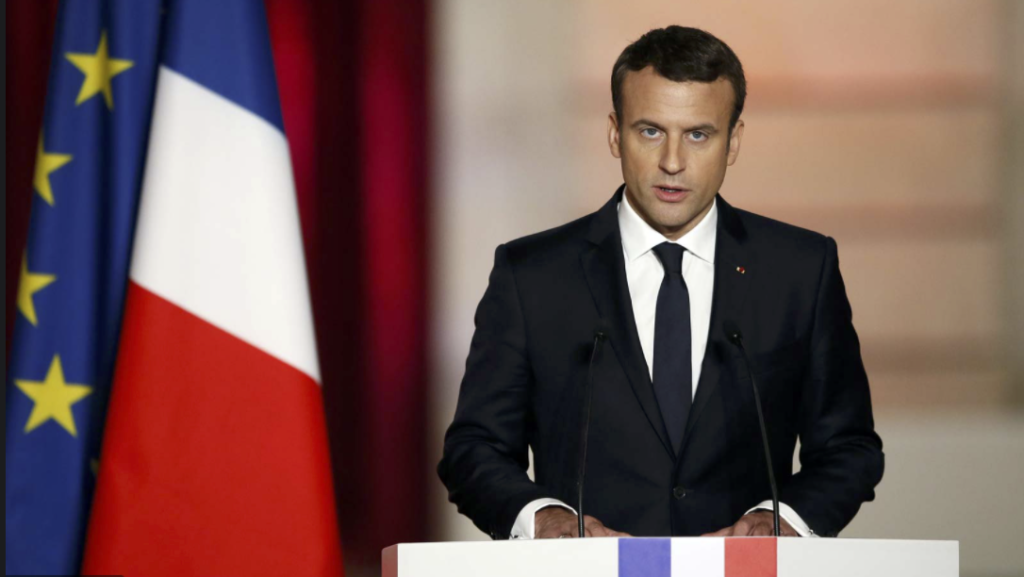
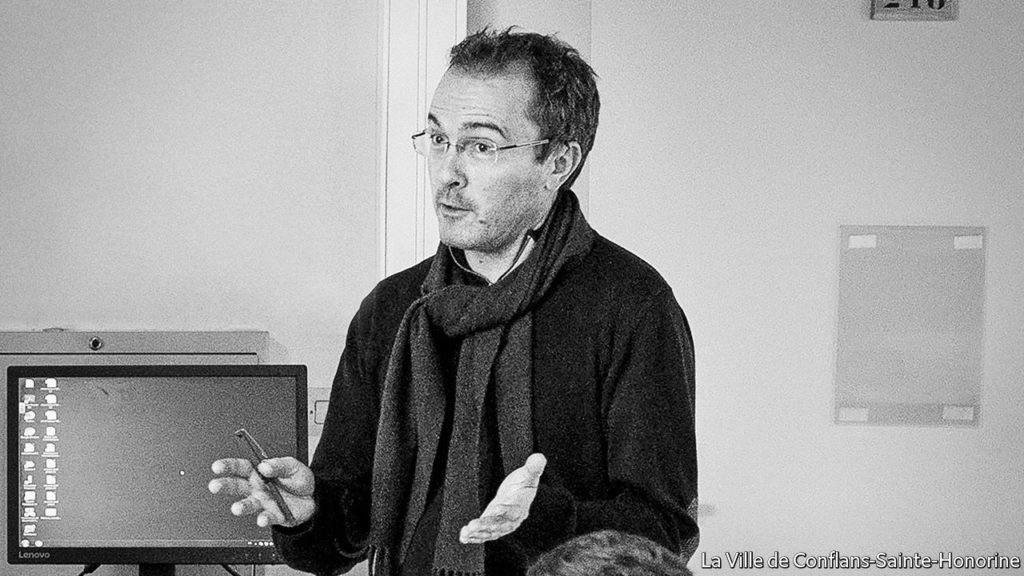
In October 2020, Samuel Paty, a French middle-school teacher, taught a class about freedom of expression. During the lesson, he showed his students a Charlie Hebdo satirical cartoon involving the Islamic prophet Muhammad. A week and a half after this class, Paty was beheaded near the school in which he taught. The perpetrator, Abdoullakh Anzorov, was later confronted and shot by the police. Anzorov even had the audacity to upload a photograph of Paty’s severed head on Twitter with the caption, “I executed one of your hellhounds who dared to belittle Muhammad…”. French President Emmanuel Macron described the incident as “a typical Islamist terrorist attack”, and Charlie Hebdo released a statement expressing its “horror and revolt”.
At face value, this should shock and disgust people around the world (and it has); however, this is not the first time that such an attack has taken place in France. In 2015, Charlie Hebdo released a satirical cartoon (the same one that Paty showed in class). As a result, two Islamist gunmen forced their way into their headquarters and opened fire, slaughtering twelve people. One of the gunmen was reported to have shouted: “the Prophet is avenged”. In both cases, the suspects made it clear that the deaths were due to people ridiculing and mocking Muhammad, an important figure in Islam. It sets a dangerous precedent when insulting Muhammad leads to death, and raises questions as to how world governments will react to incidents that involve ‘hate’ speech.
France President Emmanuel Macron described the incident as “a typical Islamist terrorist attack”. Photo credit: Britannica, Shutterstock
There are two things to consider regarding freedom of speech. One is the idea of what free speech is and who decides what hate speech is and isn’t, and the other is the deafening silence from the left and their selective outrage. The latter of the two will be discussed in a follow-up to this article, and the former will be discussed in this one. Regarding free speech, one must first recognise what free speech is. Freedom of expression is recognised as a human right under Article 19 of the Universal Declaration of Human Rights (UDHR) and is also acknowledged in the majority of international human rights legislation, in the International Covenant on Civil and Political Rights (ICCPR). Article 19 states: ‘everyone shall have the right to freedom of expression; regardless of frontiers, either orally, in writing or in print, in the form of art, or through any other media of his choice.”
There are boundaries to this definition, to allow for reasonable limitations such as slander, copyright infringement and the right to privacy. Even so, the sentiment is very clear; people have the right to speak and express themselves freely. The issue arises when we realise that freedom of speech and expression cannot always be recognised as being absolute and that there are mitigating factors to consider. Further on in Article 19, it states that the exercise of these rights can be ‘subject to certain restrictions’, or for ‘public order, health and morals”. It is clear that there are nuances to consider, and rightfully so. The million-dollar question is, who decides where the boundaries of freedom of expression begin and end?
Samuel Paty, the teacher murdered for showing Charlie Hebdo’s satirical drawings of the Prophet Muhammad. Photo credit: economist.com
This is an important question to ask, as it is a fundamental aspect of Western society. The group of people who have the authority to determine this hold a lot of power, perhaps disproportionately so. The idea of what is hateful is incredibly subjective, as we are individuals with our own likes and dislikes. There might be a certain type of comedy that will entertain one person and disgust another. Nobody likes or dislikes everything, and as individuals, we have the right to choose that for ourselves. The issue with the idea of ‘hate speech’ is that there is an absolute determination as to what constitutes as ‘hateful’, thereby infringing on an individual’s rights to express said ‘hate speech’. Such a law could easily be twisted and manipulated to conform to one person or group’s worldview. If the standard becomes their worldview, the logical conclusion would be mass censorship and a monolithic way of thinking. Cases such as Charlie Hebdo and Samuel Paty demonstrate that there are people who believe that their beliefs and worldview are above criticism, scrutiny and ridicule; a false and fraudulent belief. No ideology, religion or organization has the right to not be commented on, or to not be challenged, or not to be laughed at. This is the basic premise of freedom of expression.
To determine where freedom of speech begins and ends grants the decision-maker a lot of power. This is arguably why those on the left are pushing for ideologies such as communism, socialism and Marxism, in which power is consolidated to a handful on individuals who make decisions on behalf of the population. Everything would be state-controlled, and freedom of the press would be virtually non-existent. This is not unlike China’s current communist state, where all digital software is state-controlled. It does seem as though it is a competition between groups which society deems to be ‘marginalised’. There is a constant need to ‘one-up’ each other. Every group claims to have suffered the worst historically, which justifies a contemporary power grab as restitution.
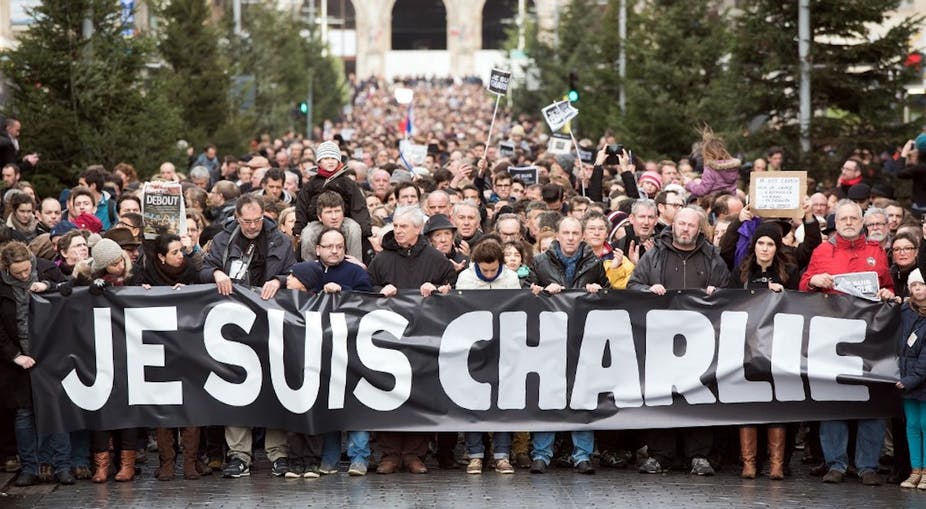
A Je Suis Charlie (I am Charlie) protest in Lille, northern France, 2015. Photo credit: Denis Charlet/AFP/theconversation.com
If any group were to win this ‘competition’, dubbed ‘the victim Olympics’ online, their next step would be to reshape the definition of hate speech to suit their goals. It would now become an offence to speak out against the particular group of people in power, effectively making them untouchable; not unlike dictatorships throughout human history. There are already figures on the left that support this; Black Lives Matter co-founder Patrisse Cullors identified herself and her organizers as ‘trained Marxists’. In the case of the Islamists in both cases in France, they have gone one step further and are now attempting to make their beliefs untouchable by killing those who ridicule it. It’s a form of blackmail: ‘if you speak about us in a bad way, we will kill you’. This is undeniable bigotry, at its core, and we must fight it at all costs or risk losing our freedoms.
This is a human rights issue. To make a law – any law – that protects one group of people over others is to undermine freedom of speech itself. A person does not have to condone satirical, offensive media (such as the Charlie Hebdo Mohammad cartoons), but they must also recognise that the right to publish such a cartoon must be protected at all costs. There are many reasons why certain language or symbols should not be used; good character and respect for your fellow human being are two that come to mind. However, one of those reasons should not be for fear of your life, which unfortunately was the case in France in 2020 and 2015. The fundamental definitions of ‘hate speech’ and ‘freedom of speech’ cannot logically co-exist. Either we as a society believe in freedom of speech for all – emphasis on ALL – or we don’t.
Power corrupts, and absolute power corrupts absolutely.
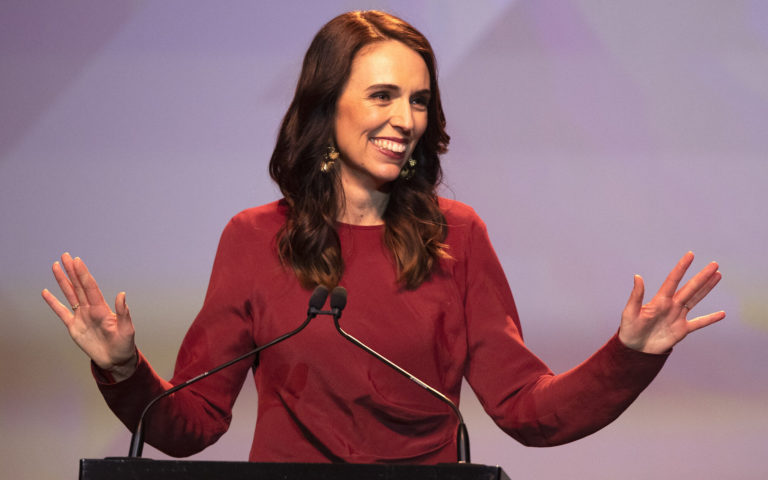
New Zealand’s elections last week saw a landslide for the Labour Party despite their proportional voting system that “wouldn’t work”. Jacinda Ardern’s popularity may have been the contributing factor in bridging the divide. She also succeeded in removing the xenophobic and populist New Zealand First from 9 seats to zero. Why has she been so successful where Jeremy Corbyn was not?
UK Labour’s defeat wasn’t just bad. The party was annihilated, with the worst showing in a general election since before WWII. Jacinda Ardern’s win was the biggest Labour share of the vote in more than 70 years. These are unprecedented times we live in, and our political opposition can little afford to be complacent in their organisation to mobilise an effective and credible alternative.
The Jacinda Appeal
Jacinda mixed both caring and compassion with practical, clearly envisioned, achievable economic solutions. The Economist ran a profile on her stating that her “quest for universal popularity and acclaim meant she toned down a significant part of her otherwise socialist rhetoric.”
She was accordingly rewarded for being sensible and avoiding the identity nonsense that trapped UK Labour. It appears that she tried to become a consensus-based leader, bringing the country together rather than divide it.
In a time in which political polarisation is the worst we have seen in decades in the Western world, Jacinda stood unwavering against this tide of hatred and indifference. People are fed up, and they are voting with their feet to show it.
Despite her administrative failures with KiwiBuild, Capital Gains tax U-turn and the Auckland Regional Fuel Tax debacle; Jacinda pulled 50% of the popular vote.
She was able to communicate an overall vision and embody the politics of inclusion New Zealanders appreciate and can relate to. As Zareh Ghazarian, senior lecturer in politics and international relations at Monash University, Melbourne proposed, “Ardern’s approach could be a lesson for other leaders seeking to maximize their support base.”
UK Labour 2019 Defeat
UK Labour’s whitewash had little to do with the Tories, and more to do with their preoccupation with non-starter issues, their indulgent self-righteousness, underestimating their rivals and dismissing their traditional voting base. Running a campaign on woolly immigration policy on an island that voted 52% to “take back control” of their borders is bizarre. The Tories didn’t run a strong campaign by any stretch, and accordingly, didn’t see significant increases in votes. The Labour party share was what fell. It was their election to lose. Their failure to take a clear stance on Brexit left them looking indecisive and unreliable.
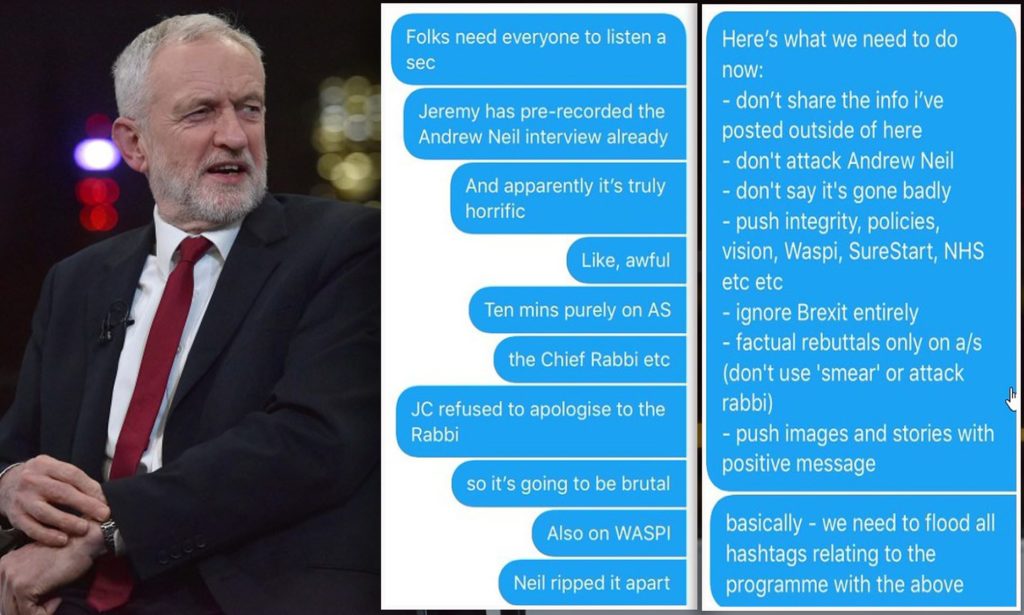
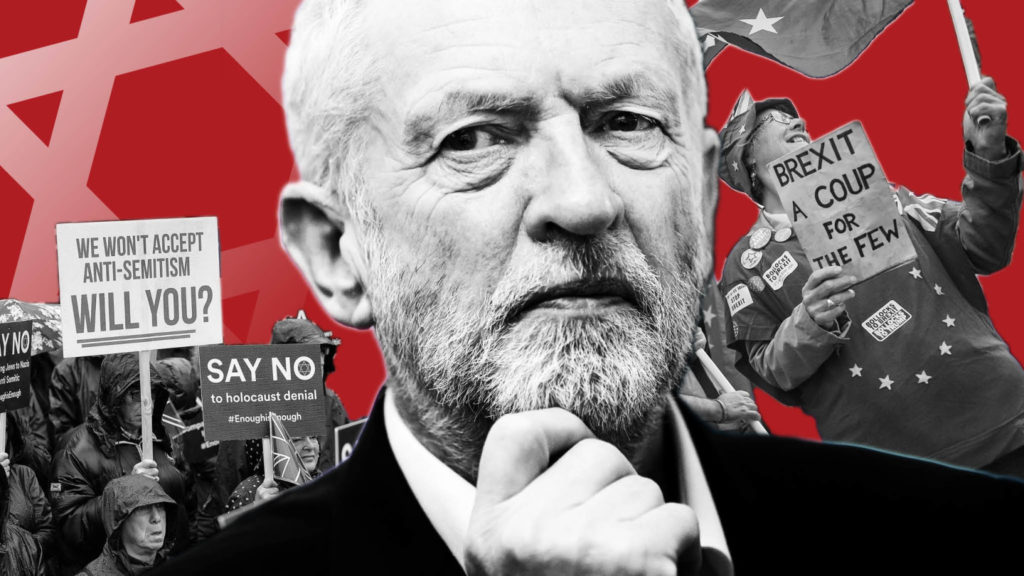
Even Corbyn fans knew he was a liability, here seen covering up his Andrew O’Neill anti-Semitic apologist blunders // Alamy
Jacinda Ardern presented socially inclusive policies for Kiwis but was swift to ditch them in favour of more consensus-based choices that could bring the country together. Her format was one of a competent social democracy – closer to Tony Blair than those of Corbyn or Starmer.
Corbyn’s “appeal” has done lasting cultural damage. Left wing socialism, like Marxism, had its chance – and failed miserably. The working classes of Britain today know they can work for more now than in the past. Corbyn’s humourless, doctrinaire, divisive socialism went out with the fall of the USSR. The British public may not approve of runaway capitalism either. But they know quite well there are just not enough “rich” enemies to pay for all the socialist ideals. They know they are themselves part of the “rich” now and will have to pay for it all in taxes, inefficiency and greyness. Nor were the 52% of the voting public going to deliver a majority government for a party rhetoric that declared them thick and uneducated for voting for Brexit because they didn’t have degrees.
Labour made a fatal error in presenting their own morally superior ideals as those needs of the British public. All that “we are the only party who can sympathise” for the ill, lame, unemployed, minorities, [insert oppressed identity here]; came across as insincere and contributed to their rejection. Their heartland voters felt patronised. The dramatic irony of the Labour Party is their mandate finally rang true. They managed, at long last, to empower and politicise the working class, just not in their favour.
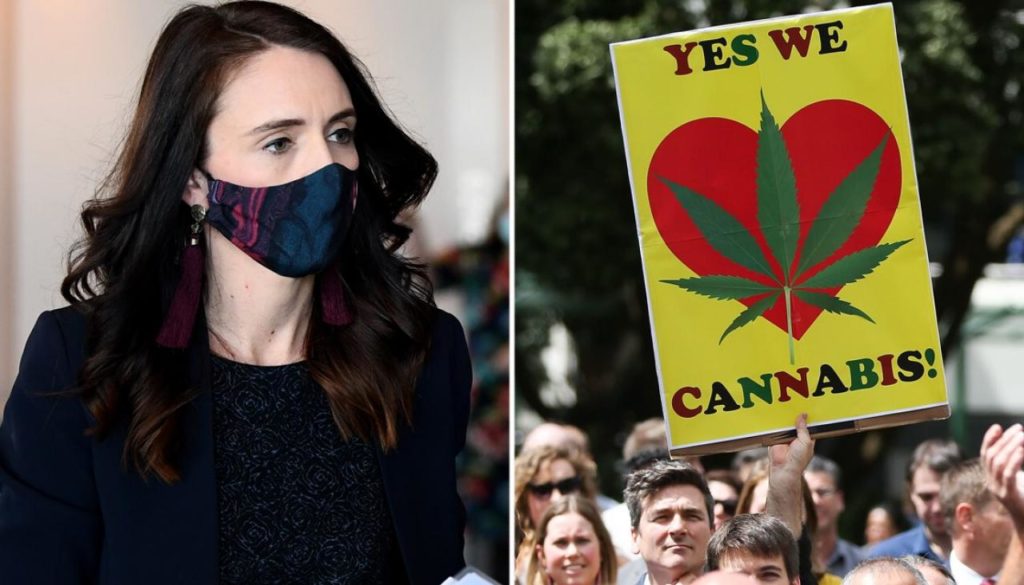
Jacinda Ardern took the opposite approach, trying to appear a person for the people. As seen by her pledge to put cannabis legalisation to the popular vote and openly declaring she uses marijuana in the election debate made her relatable to the average Kiwi voter. Not just another self-righteous, snobby politician dictating how we should live. People have had enough of paternalistic “do as I say, not as I do” style of running. Besides been considered highly competent, well-liked with strong leadership skills; she also comes across as down-to-earth and empathetic. Even the previous Prime Minister Sir John Key, from the now main opposition party and by principle a political “foe”, recently commented on her “faultless” communication skills during the COVID-19 pandemic.
Lady for the people – Ardern pledged to put Cannabis to the vote // Getty
Labour voters have evolved while Labour went backwards
If Labour had better policies, wasn’t fuelling such hatred, distanced itself from terrorist sympathising and anti-Semitism and actually put the needs of the British people first – they would have won. Their preoccupation discussing world issues and grandstanding their holier than thou attitude didn’t resonate with voters as Jacinda’s middle-ground approach enable her to capture both minds and hearts across the political divide.
UK Labour had their own Jacinda’s but they have been ousted and marginalised by the Corbynistas by now. Abuse, coup d’états and frustrating their candidates to the point of resignation, UK Labour 2019 wouldn’t be able to recognise or tolerate someone like her in its present form. Lucinda Berger had the Jacinda charm and sensibilities but wasn’t palatable being a centre-left, a Jew and a woman.
She, along with all the talent led a brain drain of centre-left from the party benches. While Corbyn was leader, they lost many quality people. Tristram Hunt was tipped for the leadership but left to become Director of the V&A. Chukka Umunna, also a potential Labour leader, resigned in February last year with The Independent Group (Change UK) alongside Lucinda Berger. Andy Burnham lost to Corbyn to become Labour leader in 2015, so ending any hopes for a centrist government.
The party was infiltrated by hard-left activists who shouldn’t really have been there at all. Even the influx of less militant new blood still advocate a largely redundant socialist agenda.
Failure to address key issues and moral grandstanding wasn’t appreciated by the British public // Getty
Up and down the UK, Boris Johnson was not popular. He couldn’t even secure a convincing win within his own party of 100,000 members. His Brexit negotiation blunders were not doing him any favours. But he had a vision, however vague, where Labour did not.
The UK is a modern capitalist country, fully integrated into the world economy. You cannot start pledging to nationalise industries. We tried that in the 70s and it failed miserably.
UK election recipe: apply brute force in a vague direction // Getty Images
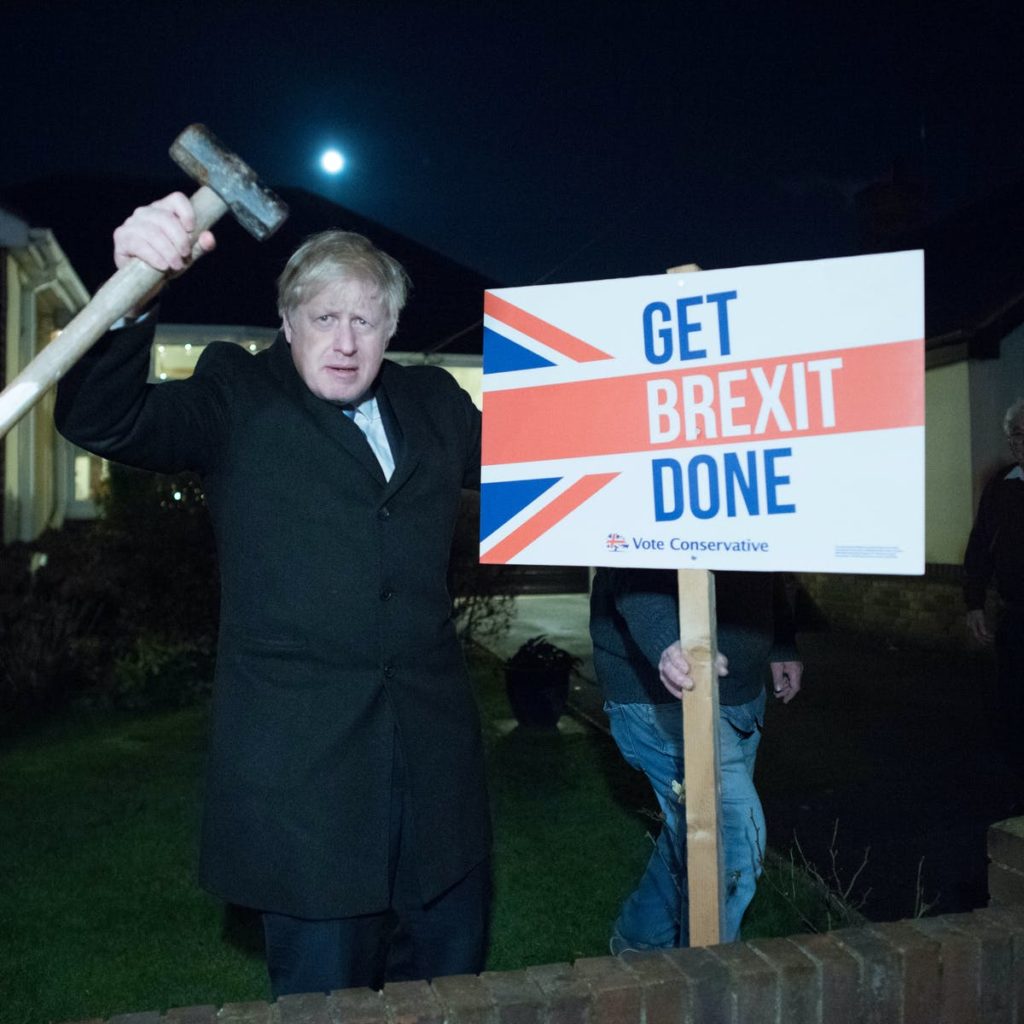
Boris managed to focus our attentions on Brexit to “Get it Done”, attempting, albeit feebly, to move beyond the divisiveness rife in modern politics. Keir Starmer or the future Labour leaders have to realise Britain wants a moderate centre-left or right government that functions. We simply won’t buy into pipe dreams and we stopped believing in fairies a long time ago.
The call for a European super league just does not seem to go away.
Like a ball that doesn’t lose its bounce, a band that maintains its elasticity, the breakaway league idea is back,
Backed by football’s international governing body Fifa and banking giants JP Morgan, this time it comes as a greater animal.
Why does the argument never stop?
What does a club making big money want? Not just more money, but the ability to dictate how that money is spent. Under the new super league proposals the big clubs would get the best of both worlds.
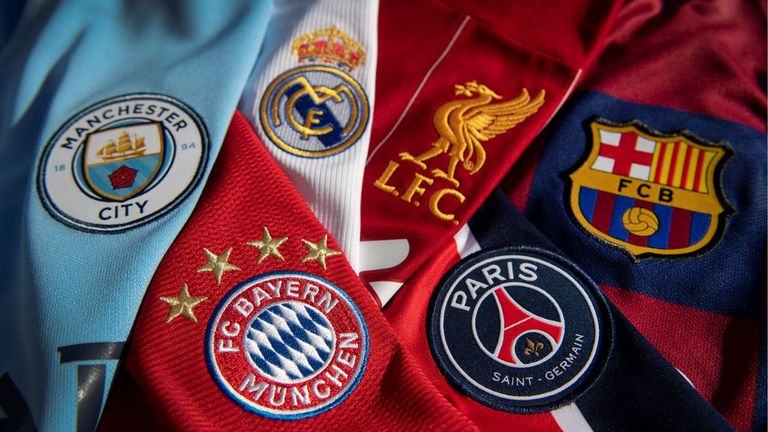
Beyond the jurisdiction of their national governing bodies (and seemingly UEFA as well), it seems like they’re hoping to create an unattainable group for the elite. It would comprise of 16/18 teams, playing each other twice & then moving into a playoff format with the top 8 sides (similar to the NBA). Matches are predicted to be played midweek, which would be in direct competition with the Champions League, whereas weekend matches would be at odds with domestic league matches.
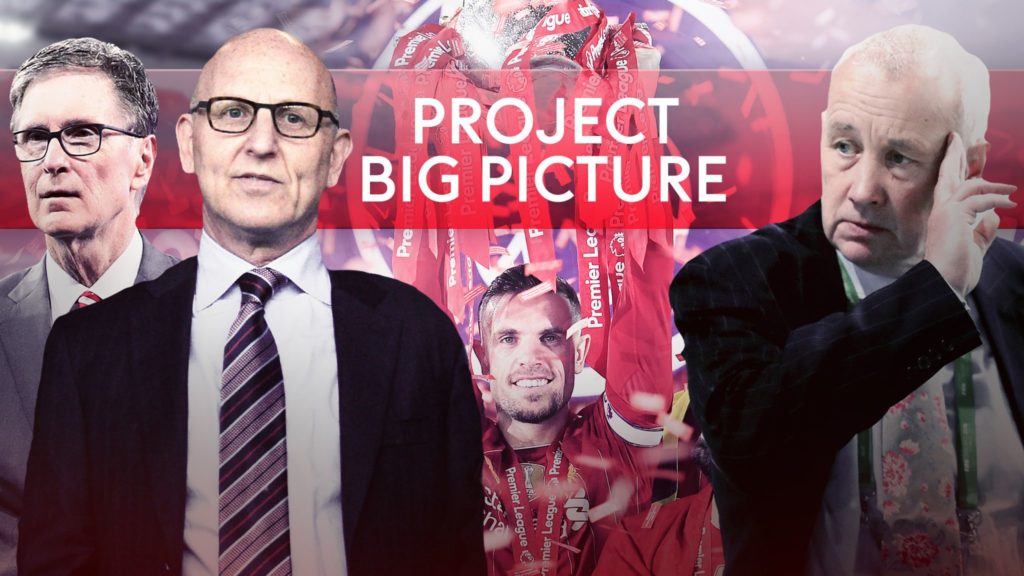
For the big clubs from the Premier League, it is definitely another power play, maybe it was the plan all along and ‘Project Big Picture’ was the decoy whilst the finances were sourced for the major plan.
A European Super league would most certainly weaken every major league in Europe and the Champions League in one move.
The European Premier League’s will ultimately make the UEFA Champions League obsolete, what’s the Champions League without the champions?
This competition is positioning itself as a threat to proper and fair competition, with the “founding fathers” subject to earn a joining fee potentially in the hundreds of millions. The disparity between these clubs and the remnants of domestic clubs will widen to arguably unassailable distance due to the lack of international appeal deriving from the other clubs in the various respective leagues.
For Liverpool and Manchester United it looks like Big Picture was a smokescreen for what they really wanted.
What’s the odds of it happening and potential consequences?
Fans, coaches and former players alike have stated their disapproval of a super league, with fears of it could destroy the game.
Many more have voiced their displeasure on social media including the likes of Gary Neville and Luis Figo, both former Champions League winners have expressing their concerns at the proposal.
.@GNev2 says the idea of a European Premier League is "another wound for football" and criticised the timing of talks during a pandemic as "obscene".
The ‘Rethink, Reskill, Reboot’ series of posters – featuring Fatima, a ballet dancer – sparked outrage after it suggested she quit her job to work elsewhere. It raises two major issues; whether or not the arts industry has value, and if the government should decide what constitutes as a job or not. It should concern all workers, as it shows how quickly the government might abandon them to protect its own interests.
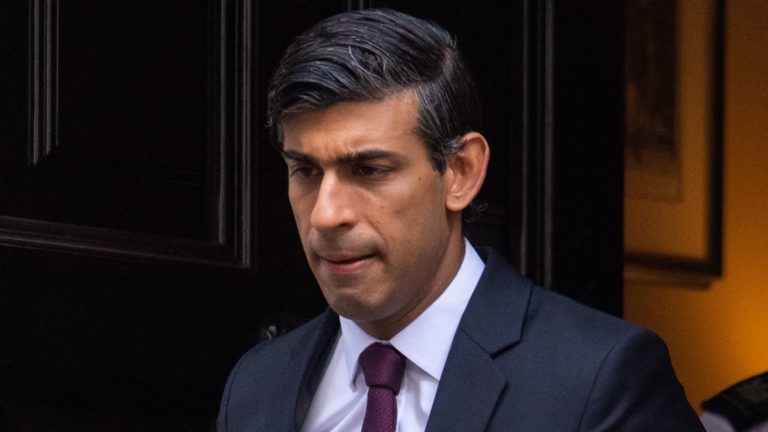
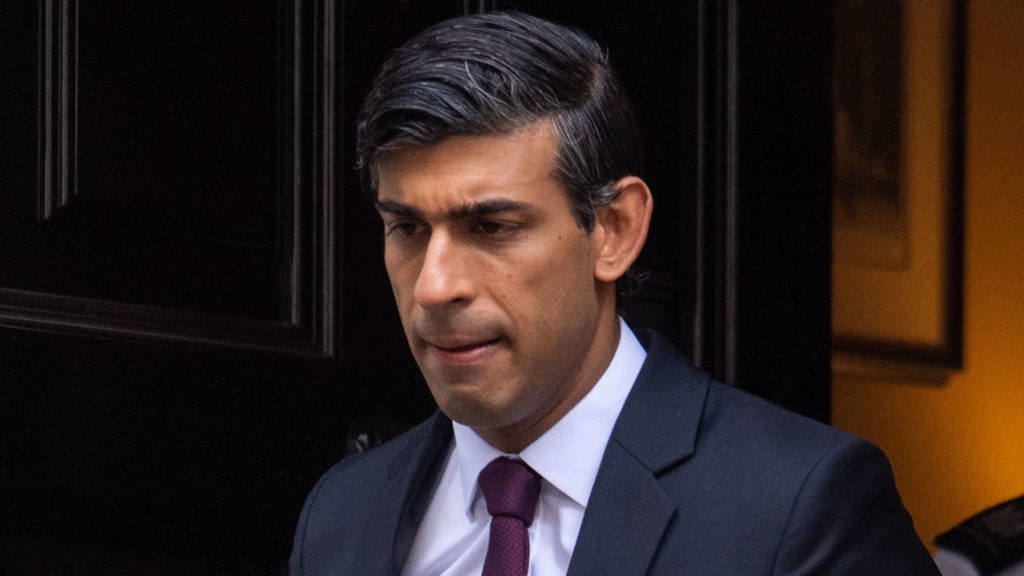
‘Rethink. Reskill. Reboot.’ That was the slogan for a 2019 Government-backed Cyber-First campaign. It was intended to promote cyber security jobs, suggesting that a ballet dancer called Fatima could – and should – retrain in a STEM field. It recently resurfaced this month, amid the detrimental effect that Covid-19 has had on the arts industry. #Fatima was trending on Twitter, where the poster was parodied and ridiculed by those in the arts sector. Such was the scale of the backlash, that Culture Secretary Oliver Dowden had to intervene, calling the poster ‘crass’. Earlier in October, Chancellor Rishi Sunak appeared to suggest that musicians and others who work in the arts should retrain and find other work, however he insisted that he was speaking about all workers, not just the arts sector. He said “Can things happen in exactly the way they did? No. But everyone is having to find ways to adapt and adjust to the new reality”. Whilst this may be a reasonable comment at face value, there is a underlying implication of the devaluation of the arts industry by the government, which should concern not only those in the arts sector, but future voters who will have to evaluate which political party values their profession enough for it to not be considered expendable by the government.
Chancellor Rishi Sunak came under fire for suggesting that those in the arts sector should retrain in other industries. Photo credit: Sky News
There are two issues here. One concerns the arts industry itself, and whether or not it has value; it does, tremendously so, and the government should realise this. The other issue is the idea that the government – or any organisation of authority – is in a position to determine which jobs are valuable or not. Starting with the former, it is wrong for the government to imply or suggest that arts professionals are not as valuable as those working in other sectors. The arts sector is an extremely valuable and vital part of British society. According to Arts Council England, the arts and culture industry contributes over £10 billion a year to the economy, with over 360,000 employed in the sector, and has grown by £390 million in one year (2019). In addition to this, it is reported that this industry has overtaken agriculture in terms of contribution to the economy.
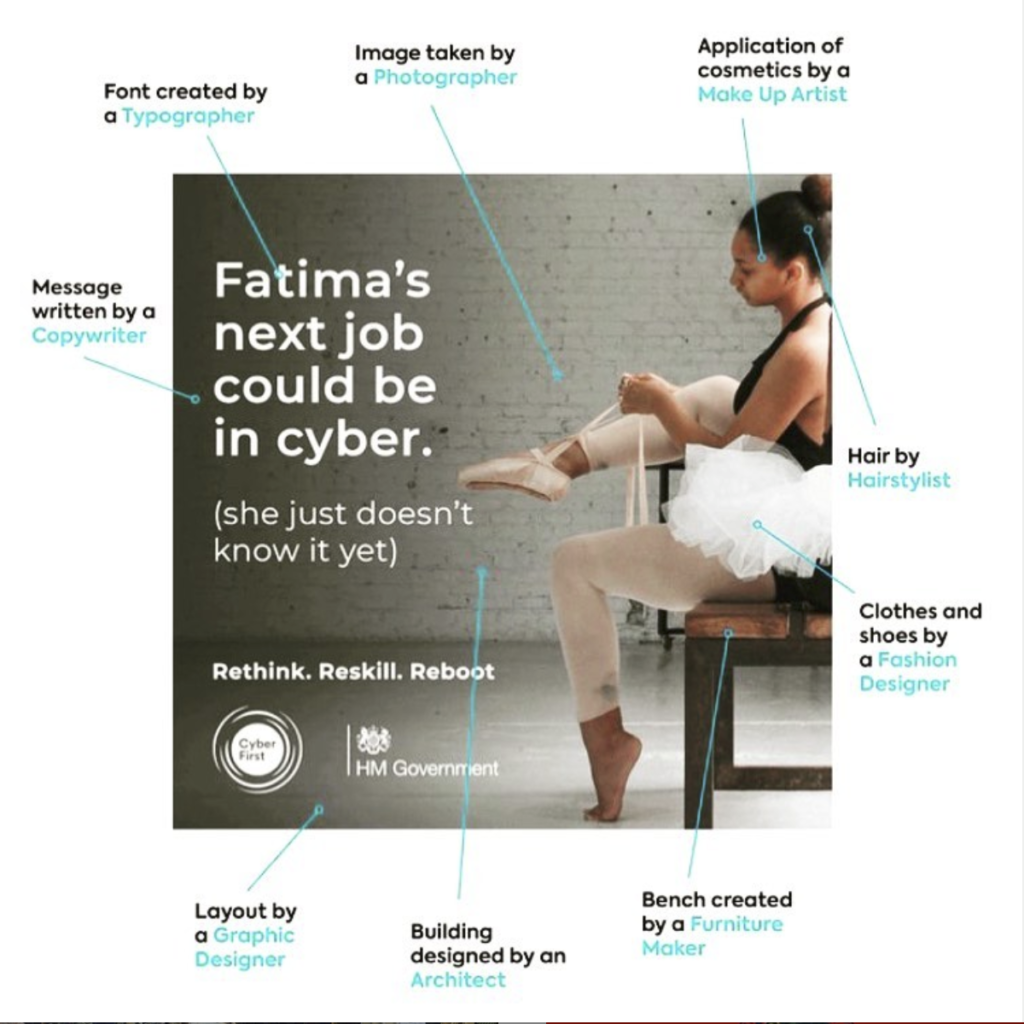
Ironically, the viral poster itself is as a result of the arts industry. Every aspect of the poster was as a result of an arts professional. The photograph of Fatima? A photographer. Her make-up? A make-up artist. Her outfit? A fashion designer. Her hair style? A hairstylist. The ‘rethink, reskill, reboot’ slogan? A copywriter. The font of the message? A typographer. Layout and design of the poster itself? A graphic designer. The government itself benefits from the arts sector, but uses the industry to discourage those who wish to pursue a career in that industry? How does this make any sense? Is the government not aware of the irony, and the bitter taste that their fraudulence leaves in the mouths of arts professionals? Does it not realise the need for the arts sector, or worse; is it arrogant enough to assume that the arts are only necessary when it benefits them?
An edited version of the controversial poster, pointing out the work that goes into designing an advert. Photo credit: buro247.com
Following this train of thought, one must take a look at the aforementioned latter issue; whether or the government has the authority to determine which jobs are valuable and which aren’t. It sets a dangerous precedent for workers in all sectors, because it sends a message that the government is more concerned about its own interests, rather than the population it’s supposed to manage and protect. There is a suggestion that the public sector is more valuable than other sectors, and that the state’s interests and affairs take precedence over other industries. Evidence of this is shown in the advert itself. It focused on Fatima, a ballet dancer, and stated that she might have to retrain in IT. This shows that the government does not consider ballet to be a career that is ‘good enough’ to work in. There is a callous, cruel and patronising tone to the message, implying that this industry isn’t worth much because the government doesn’t benefit from it.
It begs the question; if it wasn’t ballet, what other craft would the government use to demonstrate and imply its apparent inferiority? Why did the government not use another art form instead of IT to suggest a career change? Why else would the government promote IT in its poster? Would the government benefit from ballet dancing as a craft? No, it wouldn’t. It would be difficult to imagine a full-time public servant working in that craft. Would the government benefit from IT professionals? Yes, it probably would. Therefore, it would seem that in the government’s eyes, jobs become more valuable based upon whether or not they can benefit. This is extremely arrogant. What makes working for the government more valuable than the private sector or freelance work? Does the government think so highly of itself, that it feels it can create a hierarchy of ‘valuable’ jobs based upon their narrow-minded worldview?
Even so, fortunately it’s not all bad news. In July 2020, the Department for Digital, Culture, Media and Sport announced a huge one-off rescue package for the arts industry, worth £1.57 billion. Culture Secretary Oliver Dowden said, “our arts and culture are the soul of our nation. They make our country great and are the lynchpin of our world-beating and fast-growing creative industries”. Whilst this will come as great news to arts professionals, one must also consider that the government has introduced schemes to help other industries also. An example of this is the hospitality industry; VAT paid on takeaway or eat-in food and non-alcoholic drinks was reduced from 20% to 5% until January 2021, and the hugely successful ‘Eat Out to Help Out’ scheme (50% discounted food up to the value of £10 per person) helped to smooth out demand in restaurants. Arts professionals should not take the financial package at face value; they are not the only ones to benefit from the government’s schemes and therefore should not consider themselves to be any more or less valuable than any other industry.
The arts industry contributes £10 billion a year to the economy. Photo credit: Arts Council England
It could be argued that the government’s approach and attitude towards the arts sector was mistimed and insensitive. There are also opposing narratives that imply an element of truth to the posters; Covid is here to stay, at least for the near future, and people WILL have to adapt to survive. Even so, it does leave a sour taste in the mouths of arts professionals, and should send a message to all workers; when extreme situations arise, the government will prioritise. Any job will be at risk, and if that means you get left behind, so be it. Your industry may not be as valuable as you think it is. The government is not your friend; loyal to nobody.
It has been a little over a week since Project Big Picture was made public knowledge and got everyone talking. One thing for sure is, everyone has had their say on certain proposals that made headlines, from the Premier League, to FIFA representatives and even the UK government, it has certainly been a table-shaker: one that the English game has needed.
The proposal has been scrapped, but maybe it is the time for the professional football pyramid in this country to be refreshed.
From the Premier League all the way to the National League North & South.
The game needs a refresh
The initial proposal for the Premier League thirty years ago was for an 18-team league, which was rejected at the time and they proceeded with the 22-team and 42-match regular season format.
It has now been twenty-five years since the league was trimmed to its current size of twenty and now the conversation has arisen again to trim it further.
Leaked last week, proposals were released about the revamped Premier League to much controversy, especially the cut from 20 to 18 and the ‘special status’ category for the Big 6 and three other longest serving clubs
It is worth noting that there were a number of proposals from Big Picture that benefited the travelling fans, the abolishment of the EFL Cup would have meant mid-week matches became less of a regular occurrence.
Fans deserve to come out for high quality games, not high quantity. The end of a glorified cup which has turned into no more than a sponsorship opportunity for the FA and the place for the big sides to play their kids can only be positive.
Plan for the people
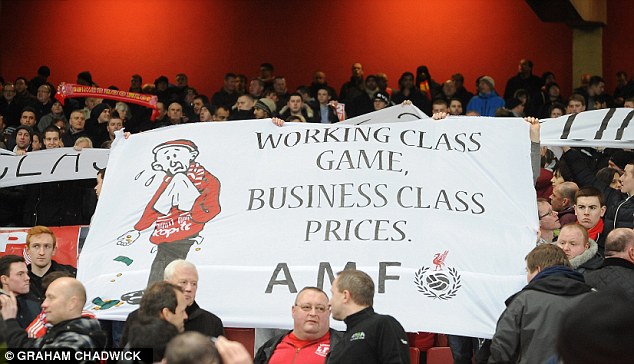
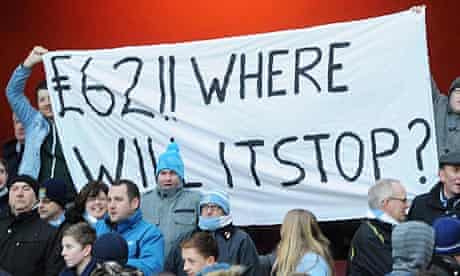
Away fans have long been the losers in the collective chase for ticket revenue by clubs. It’s coming up to nearly eight years since the iconic “£62 a ticket” banner was plastered across newspapers across the country (despite it also being confiscated in the stadium shortly after its appearance).
December 2012 saw the
Project Big Picture’s proposal of capping away ticket prices at £20 with subsidised travel is a step in the right direction of bringing the game back to being an experience for the everyday man with a normal salary. This might even lead to a season ticket price cap which would be welcomed by fans across the country.
Moving forward
Proposals like these have a plethora of stakeholders, from players to managers, executives to owners, but one that cannot be forgotten (despite their current absence right now) are the fans.
Perhaps everybody was too quick to dismiss Project Big Picture, all it needed were a few tweaks and perhaps it could have been the first step to reconnecting punters back to the game they love.
Last weekend’s thrilling Merseyside Derby saw the defensive phenom injured by a reckless tackle from Everton and England number one, Jordan Pickford.
Pickford is a player who’s been likened to an ‘accident waiting to happen’ for every brilliant save he pulls off a catastrophic blunder follows.
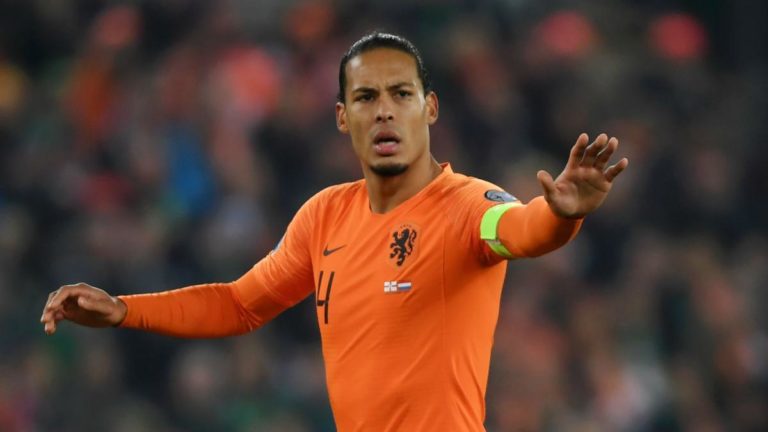
In this instance, the unfortunate victim of his blunder was Virgil Van Dijk. A rash challenge on Van Dijk that didn’t even receive a yellow card due to VAR ruling Van Dijk offside before the challenge was made.
"He could have easily been sent off."
"I'm very surprised it's just been forgotten about?"
Jordan Pickford's challenge on Virgil van Dijk did not look good 😬
It is fair to say that his injury is a massive blow to Liverpool and the Netherlands. For Liverpool, this blows the title race wide open.
Van Dijk steadied the ship for the defensively fragile Liverpool and his absence could allow creeping errors back into the squad which can cost Liverpool vital points.
The challenge wasn’t pretty and anyone that watched the replay could instantly tell this was bad news.
Van Dijk is touted as one of the best defenders in the world and within the last 2 years, he certainly had the CV to back it up. From a Champions League winner, the first Barclays Premier League winner for Liverpool and a runner up for the Nations Cup for the Netherlands he is no stranger to success. In all those campaigns he has been a pivotal player in tightening the defence.
Individually he is smart, tactically aware, strong, passes the ball well and carries enough pace to deter any mercurial threat.
In partnerships, he’s able to snuff out danger but also cover for any of his defensive partner’s mistakes.
Everton goalkeeper Jordan Pickford going in for a reckless challenge against Virgil Van Dijk : Source//: Getty Images
Liverpool will have to buy another centre back in the January transfer window with Van Dijk’s injury set to keep him sidelined for a while. Unfortunately, whoever they can buy at won’t be good enough to fill his shoes.
Before his injury, Virgil van Dijk had played every minute of league football under Jurgen Klopp since January 2018. pic.twitter.com/qZYvyEJIPR
The Premier League is in a volatile state right now with the big teams not performing to the standards we expect so the league is up for grabs.
As for the Netherlands, they have lost their captain and leader. Virgil Van Dijk is a massive figure in that dressing room and provides seniority for the players in a National Team that is rebuilding and trying to find its identity. It is going to be very hard to replace him.
Although they have De Ligt and De Vrij at their disposal alongside Daley Blind it probably won’t be enough for the Euro’s next year.
Coupled with Frank De Boer who isn’t a very promising manager the defensive frailties that the Netherlands have surely will exacerbate now.
Both teams will have to rally together to fill in for a massive Van Dijk sized hole. Only time will tell of who can weather the storm.
I should start this article with some confessions. I’m one of the many Africans in the Diaspora who prior to this moment had almost given up on Nigeria. Unconvinced that things could change, we had come to accept that Nigeria’s governance of smoke and mirrors was destined to stay the same and that equality would always be a chimaera. I had come to accept that Nigeria’s chronic and institutional malaise which had bred years and years of youth apathy and youth disillusionment was the new normal. When I was young boy, I would stay on the phone untill the early hours of the night talking to my close friend Samuel Cole, a banker now, about how I would go back to Nigeria and change things up. How I would make it more just and fair. It saddens me to admit that I abandoned that dream. Regretfully, I had become cynical.
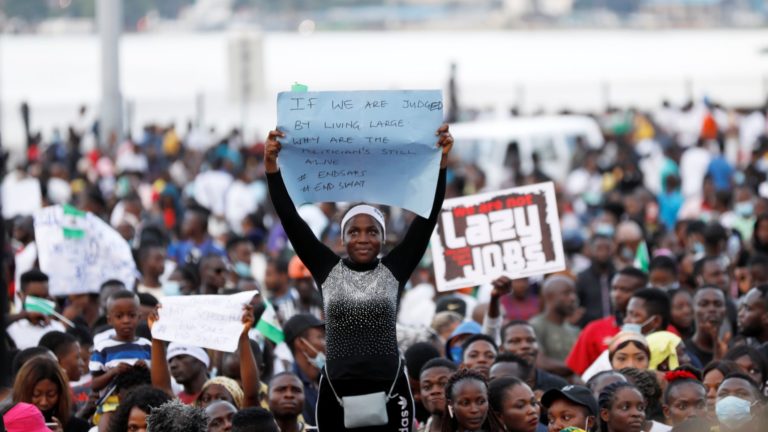
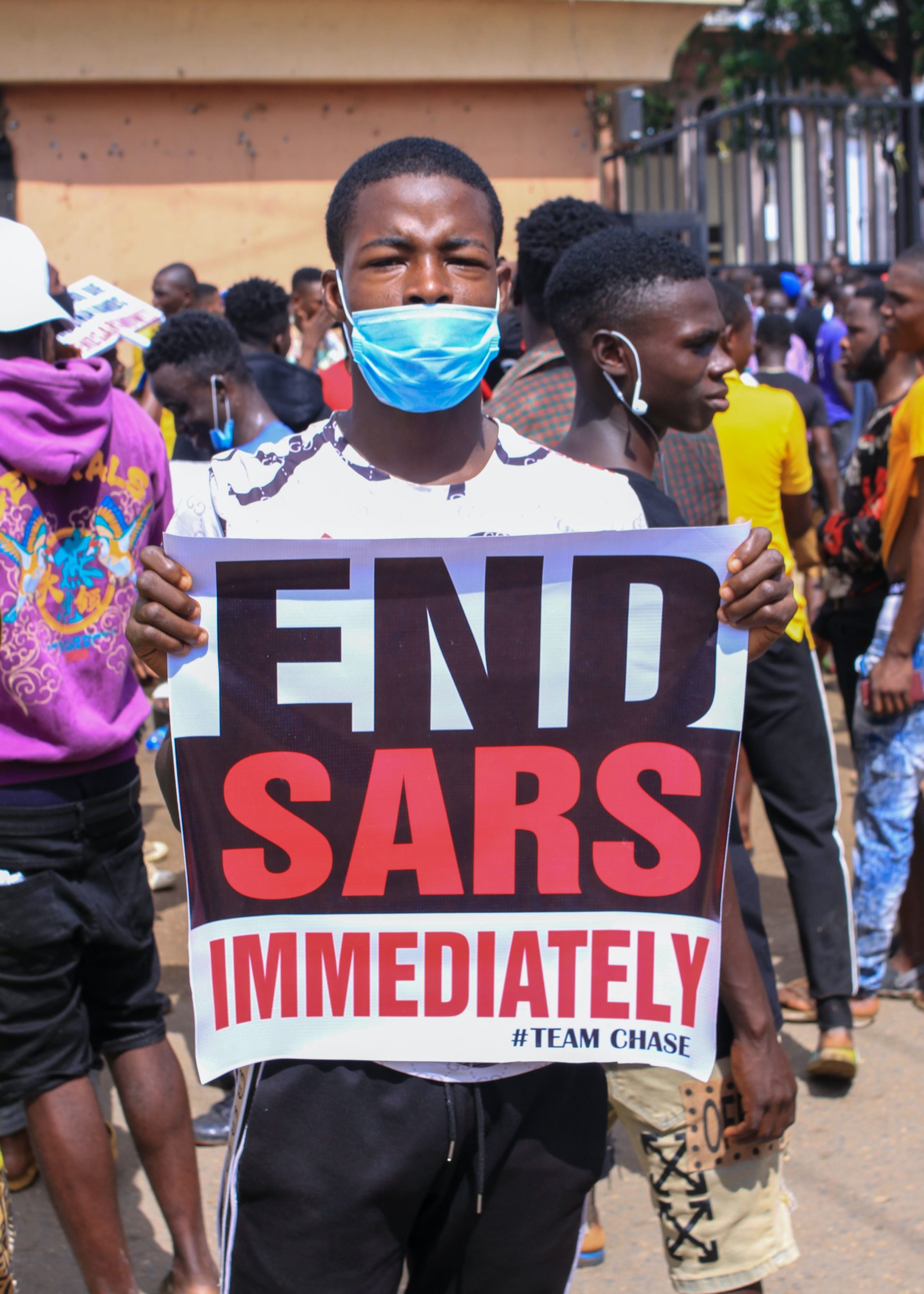
However, I’m convinced that the #EndSARS movement is far more than what we think it is. I want to charge members of the Nigerian diaspora to wake up, seize this moment and lend support to the movement.
What is #EndSARS about?
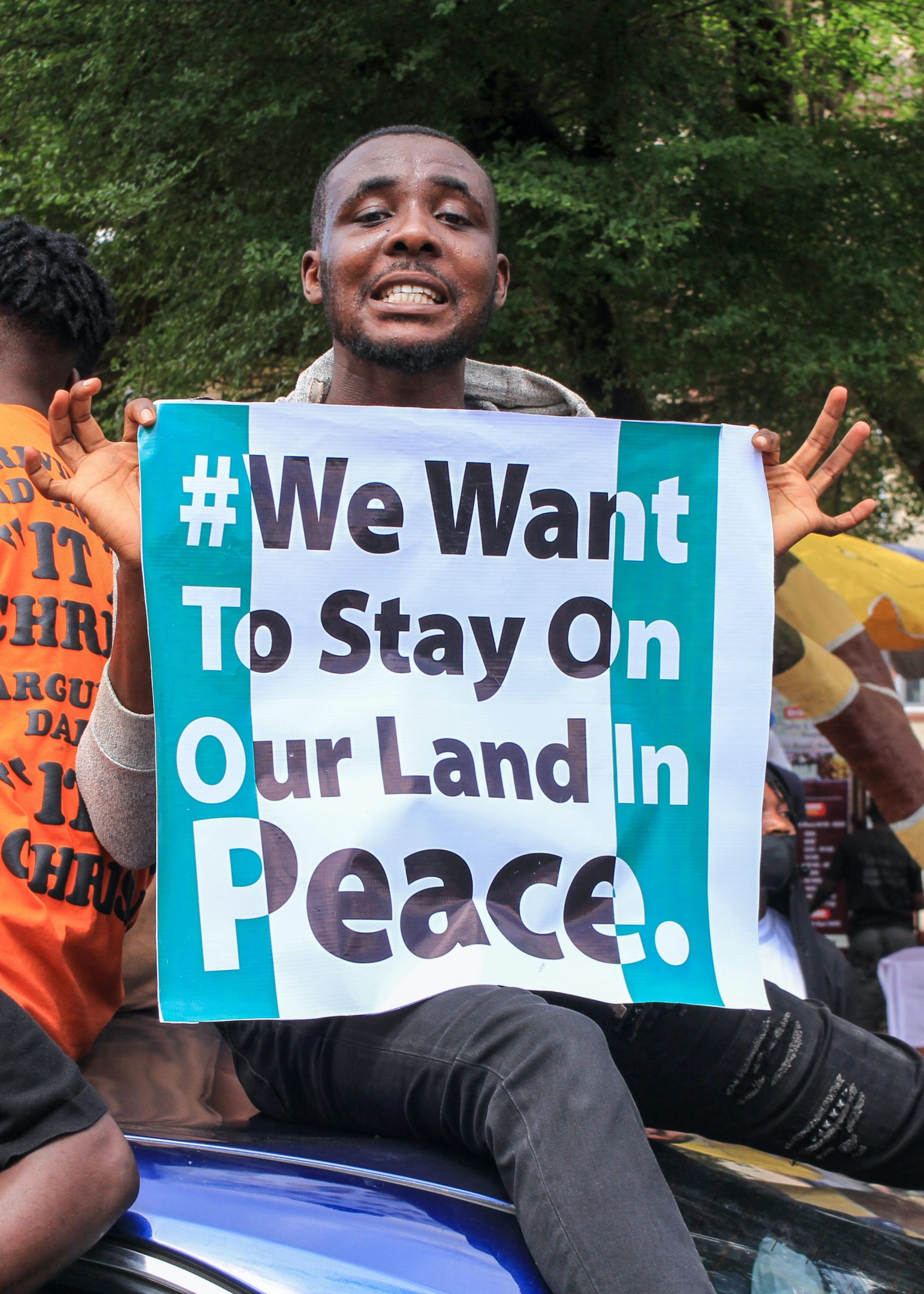
Nigerians have been protesting for years against police brutality, however over the last two weeks, an outpouring of support for Nigerian protesters has played out on Twitter, with various hashtags, predominantly #EndSARS. In a few weeks, the movement has garnered international attention as social media posts and local TV coverage showed people take to the streets in several towns and cities in the West African country. There were also reports on Sunday that a march was on its way from Marble Arch in the English capital to the Nigerian High Commission.
It’s part of a new global campaign against a branch of Nigeria’s police called the Special Anti Robbery Squad (SARS), which has even drawn the backing of the likes of Twitter founder Jack Dorsey, Star Wars actor John Boyega, US rapper Kanye West, and footballers Mesut Ozil and Marcus Rashford. So, what is SARS?
SARS was set up in 1984 to tackle a growing problem of people stealing from each other using force in Nigeria. Supporters say it initially succeeded, but critics say it has been linked to the deaths of people it has investigated. Since the 1990s, rights groups like Amnesty International have documented a series of allegations involving the unit, which campaigners say have worsened in recent years.
One of SARS’ alleged victims told Amnesty he was arrested in 2017 after being accused of stealing a laptop, but was then held for 40 days and tortured before he was brought before a court.
The 23-year-old, Miracle, said: “They started using all manner of items to beat me, including machetes, sticks, inflicting me with all kinds of injuries. One of the officers used an exhaust pipe to hit me on my teeth, breaking my teeth. I was left on that hanger for more than three hours.”
Another, 24-year-old Sunday Bang, was allegedly held in detention in 2018 for five weeks, where he suffered bone fractures and other injuries due to torture and other ill treatment after being accused of robbery.Many other Nigerians have been killed, according to human rights groups.
When Nigerian diaspora youth see #EndSARS on social media, it may be tempting, through a cynical lens, to see another half-baked social media movement which will fizzle out as gen Z’ers with short attention spans move on to something else. It will be tempting to ignore the hashtags and scroll past videos. What does more unrest in Nigeria add to our lives? Even-though we are inundated with pictures and videos, some very graphic, the problem still seems far away and so very distant. To see the #EndSARS movement though this lens would be to grossly misunderstand this particular cultural moment. Young people in Nigeria are attempting to shift the zeitgeist in Nigeria and are willing to risk everything to do so.
Whilst we may see very visible #EndSARS campaigns across our social media feeds, what isn’t so visible is the plethora of campaigns that are latent in this one. Below the #EndSARS movement is a campaign to end food insecurity, a thorn in Nigeria’s side for many years. Below #EndSARS is a campaign to poor health care and unsatisfactory education and so many more movements. For a long time, social mobility in Nigeria has been a pipe dream. The rich have gotten richer as at the middle class disappears and poverty increases. Below #EndSARS is a campaign about meaningful social mobility, where the rules are enforced and hard work actually begets success.
The #EndSARS movement is a gateway to many more movements that will be birthed in a country that may actually shake off its institutional impassivity. Nigerian youth want a new normal. They are demanding change, with energy and momentum on their side. We in the diaspora must lend our support at this crucial time. We have to see more than meets the eye.
This is the beginning of meaningful change in Nigeria and it’s going to take a village. The Nigerian diaspora can no longer simply go to Nigeria for #DirtyDecember parties and keep silent whilst the country is attempting to shed old skins and embrace the new. We cannot keep up enjoying the culture from afar, downloading music, watching Nigerian films but squinting our eyes at the injustice that engulfs the country.
Nigerians all around the world must speak up and must not relent.
Crystal Palace and the Premier League correctly anticipated the negative impact that Black Lives Matter could have on their image and business, and decided to distance themselves. However, they are not the only organisations that realise this. Entertainment companies will have a choice to make, as people will choose with their wallets.
Following on from my previous article, it’s clear that Arsenal cannot claim to be apolitical when it has acted in a manner that suggests otherwise. Supported by the Premier League (PL), Arsenal proudly supported the Black Lives Matter (BLM) movement whilst distancing themselves from Mesut Ozil’s comments, going so far as to release a statement. Hector Bellerin received no such treatment despite sharing his own political opinion, which was much more opinionated than Ozil’s. The reasons why Arsenal chose to be selective are debatable, but it does leave a bad taste in the mouths of Arsenal supporters. Of course, Arsenal is not the only PL club to support the BLM movement; Crystal Palace also did so and initially echoed the collective idea that BLM stands solely for racial equality (it does not; refer to previous article). However Crystal Palace, unlike Arsenal, recognised that the BLM movement might not be as genuine as it seemed, which led the PL itself to make certain decisions.
Sergeant Matt Ratana was shot dead in Croydon, south London, in September 2020. Photo credit: Neil Donohue, BBC News
Last month, Sergeant Matt Ratana was fatally shot in Croydon, south London, sparking a national outcry at the blatant disrespect that criminals have for law enforcement. As a sign of respect, Crystal Palace held a minute’s silence before their PL match against Everton. A touch of class from the club. However, just like Arsenal and other clubs, Crystal Palace also have Black Lives Matter banners over empty seats. It could be argued that BLM and its supporters have had a major role to play in the increasingly hostile attitude towards the police and law enforcement. As mentioned in the previous article, prominent BLM activists wish to defund the police, which arguably helps to foster an environment and attitude that is not in the police’s favour, in turn emboldening criminals. It is clear that BLM does not support the police and law enforcement. How then, can Crystal Palace continue to display BLM banners at Selhurst Park? How can they honour a police officer who BLM would mercilessly persecute if they had their own way? This seems illogical and hypocritical.
However, in their defence, Palace did release a statement regarding BLM. It reads “As people will have seen from our first home game, we have placed banners over our seated areas at Selhurst Park that read: BLACK LIVES MATTER. We stand proudly alongside members of the BAME community, our players and employees, and behind the ideals and ethos of “black lives matter”. However, we would like to make clear that we do not endorse any pressure group or body that carries the same term in its name, and we strongly believe that organisations should not use this important force for change and positivity to push their own political agendas. We want to be part of a world that is fair, inclusive and open to all. As an organisation, we recognise that we need to do more, and we will do more to contribute towards this goal.” If Crystal Palace wish not to get involved in ‘political agendas’, then they should remove the BLM banners. BLM have never stood purely for the equal rights of black people since its very inception. You cannot pick and choose which parts of a movement you wish to follow. Either you follow it in its entirety, or you don’t follow at all.
Crystal Palace winger Wilfried Zaha, in a Premier League match against Aston Villa. Photo credit: Catherine Ivill/Getty Images
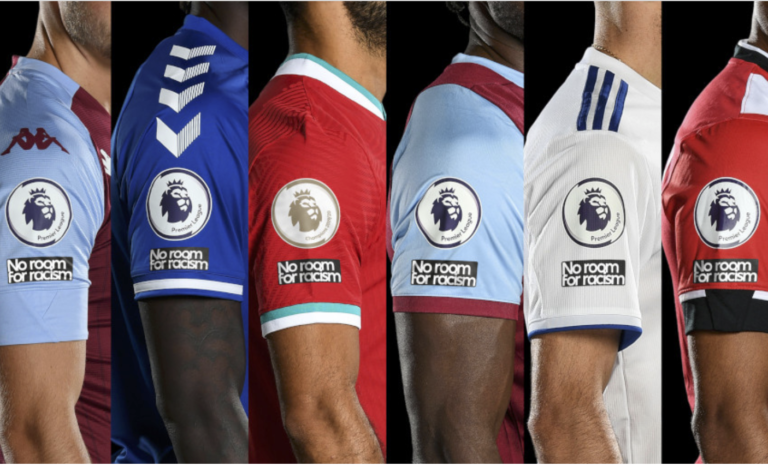
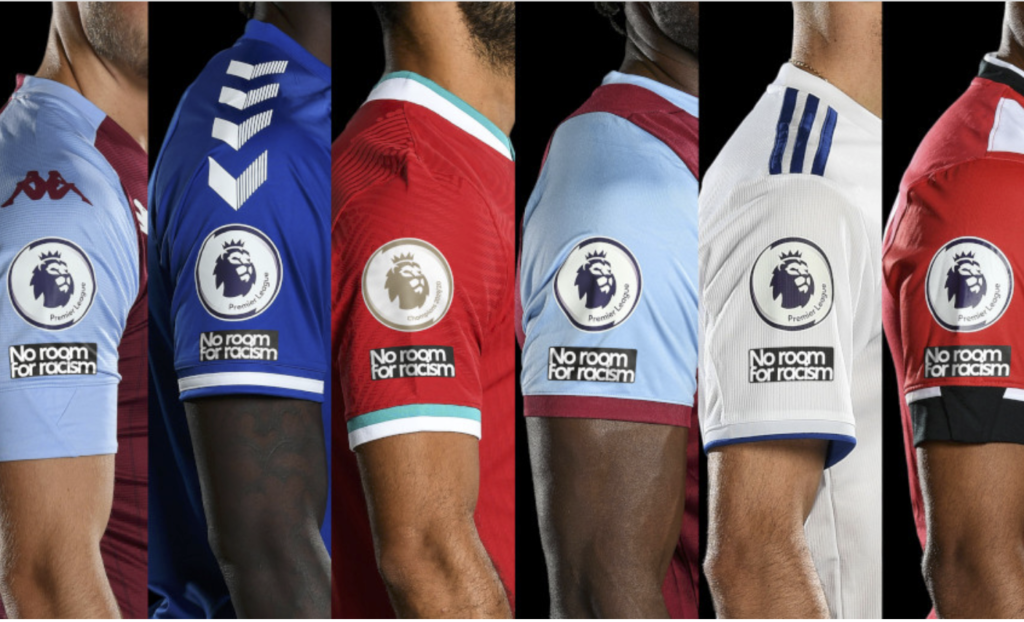
Thankfully, the PL seemed to also recognize that the BLM movement isn’t as innocent as it seems to be. The PL replaced the BLM slogan with the ‘No Room for Racism’ badge, which will be worn by the players just below the PL logo on their sleeves, at the beginning of the 20/21 season. According to a report by the Guardian, policies endorsed by BLM (including defunding the police) “proved uncomfortable for the league”. PL chief executive Richard Masters said “we’re drawing a clear distinction between a moral cause and a political movement”. The aforementioned statement by Masters is a clear recognition and acknowledgment of the BLM movement as a political force, not merely a moral cause. It vindicates those who wish to not align themselves with the movement due to this very reason, and forces those who insist on viewing it as purely a moral issue to rethink their choices. Such is the influence of BLM in modern society, that one could be fooled into thinking that the PL is making the wrong move by dissociating themselves from the movement, but this could not be further from the truth. It is possible to view the subject of racism through a non-BLM lens; the movement does not – and more importantly should not – have a monopoly on the way people view racism. We are not slaves or subservient to it; rather, we are individuals with our own experiences and perspective, capable of reason and logic.
Unfortunately for movements like BLM, they have no faces and therefore no accountability. They can be a force for good and for bad. People are more than happy to be selective as long as it benefits them. If the movement does something laudable, people are more than willing to support it. If the opposite is true, people abandon it. The PL recognized that the BLM movement is being used as a Trojan horse for more sinister agendas, under the guise of racial equality, and decided to cut ties with it as soon as possible. As the median net worth of an average PL club is worth in excess of £290 million, and the ‘Big Six’ clubs (Arsenal, Liverpool, Manchester United, Manchester City, Tottenham Hotspur and Chelsea) collectively worth £11 billion (as of the 18/19 season), it was clear that the PL had its financial interests to protect, especially as the public become increasingly disillusioned with the movement. It’s unfortunate that the PL concerns itself mainly with finances, but that is simply the reality of the situation.
The Premier League has introduced its ‘No Room for Racism’ patch for the 20/21 season. Photo credit: Liverpool Football Club
It will be interesting to see how this plays out across other forms of entertainment and media. Since dance group Diversity’s controversial performance (inspired by George Floyd’s death), Britain’s Got Talent (BGT) ratings have dropped significantly, to a series low of eight million viewers. Almost immediately after the performance aired, viewing figures fell by 500,000 and sparked 15,00 Ofcom complaints, the second-most complained about programme in its history. ITV, Ofcom and BGT all defended the performance, but it left a bad taste in the mouth of viewers. Ratings for the National Football League in the United States have experienced a similar impact, with the season kickoff game between the Houston Texans and Kansas City Chiefs having a 13% drop in viewership, amid support for BLM, kneeling of athletes and a perceived lack of respect for the American flag.
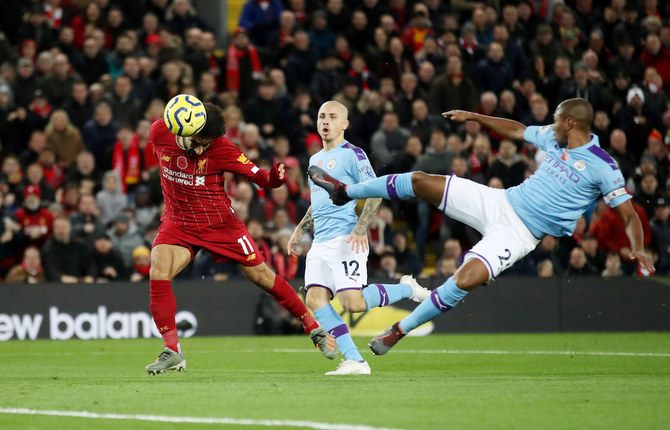
Forward Mohamed Salah scores Liverpool’s 2nd goal against Manchester City at Anfield in a 3-1 victory. Photo credit: Reuters, Arab News
To many (perhaps the silent majority), BLM is more divisive than unifying, and companies (including the PL) will eventually have a choice to make: continue to allow their stars to publicly support BLM and experience ratings (and therefore finances) drop, or make a stand to protect their interests. If people feel uncomfortable with a decision, they will simply vote with their wallets. Whilst it is unfortunate that it comes down to money yet again, it’s often a good way to make sure that people’s voices are heard and accounted for. When livelihoods and money are at risk, action is taken. An unfortunate state of affairs, but also a harsh reality.
This week Juventus and Portugal Superstar Cristiano Ronaldo was added to the list of high profile football players and managers who have tested positive for COVID-19.
The 35-year-old Ronaldo certainly didn’t help himself as evident in an Instagram post showing the Portugal team having dinner with no social distancing in place.
However, what seems to be happening is that asymptomatic players are passing it on to other players.
Since there are no visible symptoms in some individuals who have COVID-19 it brings to attention the lack of precaution teams are taking to stop the spread.
Even with regular testing for players at the top level, a culture shift mirroring the societal change everyday people have had to go through hasn’t been enacted.
This falls on the world governing bodies of football, and to put it bluntly, FIFA and UEFA haven’t been tough enough on safety protocols.
There are hardly any fans in stadiums around the world yet players are still acting like everything is normal and since their environment isn’t as controlled as the NBA it leaves room for error.
The NBA ‘bubble’ had 0 positive COVID-19 tests during the four months it ran.
League matches and playoff games were played in a safe and controlled environment called the ‘bubble’ at Disney Land, Florida.
This strategy ordained up by commissioner Adam Silver meant that nobody could enter or exit the authorised boundaries of the bubble.
Including tonight, the NBA played 172 games over three months and had ZERO positive coronavirus tests. pic.twitter.com/2HoWO4JvES
Everything that the players needed was designed for their safety, They had separate rooms and were not allowed to socialise with other players when not training or playing.
The bubble also came with on-site chefs to cook for them every day and they even built a make-shift barbershop.
Anyone that was found breaking the bubble was kicked out immediately like the Houston Rockets’ Daniel House.
It has been a huge success, to say the least. The NBA is one of the most forward-thinking sports organisations in regards to sports performance and using science to help them make decisions.
The Premier League has been a league with a few number of positive COVID-19 cases – Source://Skysports
Football is a more global sport so regulations are harder to implement. One could say that FIFA and UEFA have forgotten that the world is still dealing with a pandemic and that the Champions League and international fixtures should not have gone ahead this year.
Since many of the elite competitions require international travel it is harder to regulate rules and laws in different countries. Likewise, unlike basketball, football teams are much larger and it can be virtually impossible to implement a ‘bubble’ control method.
FIFA & UEFA are hinging on clubs following common-sense rules alongside their respective governmental rules in each nation and as such the series of cases can and have been randomly popping up.
Even a physical specimen like Ronaldo has shown that this virus can and will catch you if you’re not careful. Luckily, he’s feeling fine and is asymptomatic.
The rest of the Portugal team tested negative, if they had to self isolate for 14 days that would have been a massive blow to several Premier League teams such as Wolves, Manchester United and Manchester City.
The truth is, this year should have been the year international football was postponed until the world had gotten to grips with a pandemic.
However, there’s TV money to make, debts to be paid and sponsors to be appeased and it seems like the product (the players) will have to bear the brunt of the consequences.
Arsenal F.C. claim they wish to be an apolitical organisation. However, comments made by midfielder Mesut Ozil have caused Arsenal to act in ways that seem to be conflicting with their own policies. It leaves a bad taste in the mouth of some Arsenal supportersand raises questions as to whether or not finances and reputation take precedence over human rights and freedom of speech.
Arsenal are a Premier League club. They have a passionate and loyal fanbase, and are one of the most respected clubs in English football. Despite their on-field mediocrity in recent years, Arsenal have still managed to win four FA Cups since 2014, with their last triumph over Chelsea securing their record 14th title. It certainly gave Arsenal fans something to celebrate after a lacklustre season, with their Europa League dreams dashed and their lowest league finish in over two decades. Football is something that people value. It takes their mind away from the struggles of day-to-day life and gives them something to look forward to during the weekend. Unfortunately, there have been recent events that question whether Arsenal or the Premier League itself are as apolitical as they portray themselves to be.
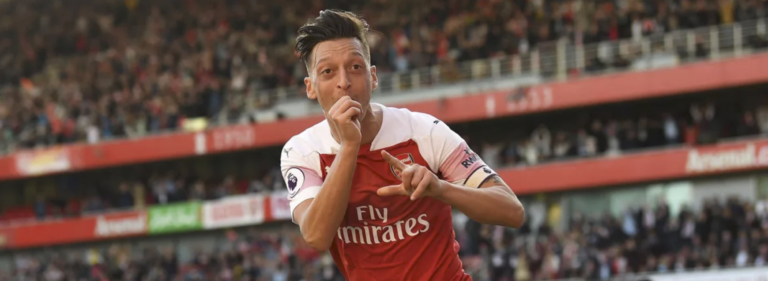
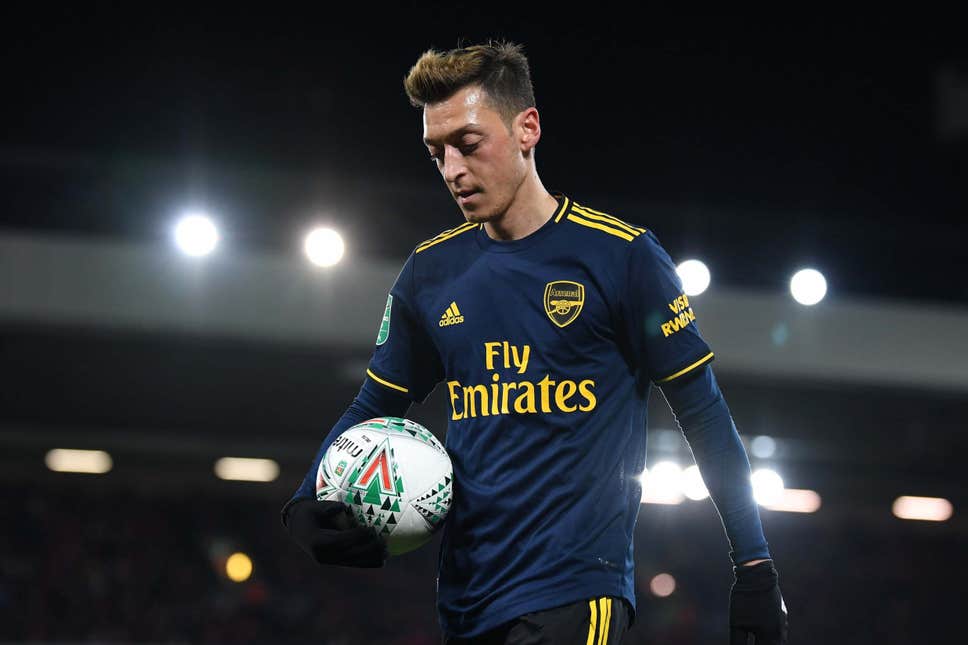
Mesut Ozil, in a League Cup match against Liverpool. Photo credit: Getty Images
In 2019, midfielder Mesut Ozil, a Muslim of Turkish heritage and German nationality, publicly spoke out over China’s alleged persecution of Uighur Muslims. He said, in a quote on Twitter, “[In China] Qurans are burned, mosques were closed down, Islamic theological schools, madrasas were banned, religious scholars were killed one by one. Despite this, Muslims stay silent.” These claims seem to be highly legitimate. Several human rights groups have reported that up to a million people from this community have been detained in high-security ‘re-education’ camps in Xinjiang, in the North-West region. China has consistently denied this, and claim that people are being educated in ‘vocational training centres’ to push back against violent religious extremism. There is footage of this, with subjects kneeling and blindfolded with their heads shaved. It may remind some of similar scenes in Nazi Germany, where Jewish people were also led onto trains heading for ‘camps’ in a similar manner.
Arsenal were quick to distance themselves from Ozil’s comments. In a statement, they said “Arsenal Football Club must make a clear statement here: All the content published [by Ozil] is Ozil’s personal opinion. As a football club, Arsenal has always adhered to the principle of not involving politics”. Further evidence of the club’s desire to remain apolitical can be found in a 2014 interview with legendary former manager Arsene Wenger. When asked about the relationship between politics and sport, Wenger said “political influence, which has always played a big part in the game… we have to keep it out as much as possible.” As the then-manager of Arsenal, Wenger had an enormous influence over the club, its policies and affairs, and even after his retirement his legacy is still prevalent. Wenger did, however, defend Ozil’s right to freedom of speech.
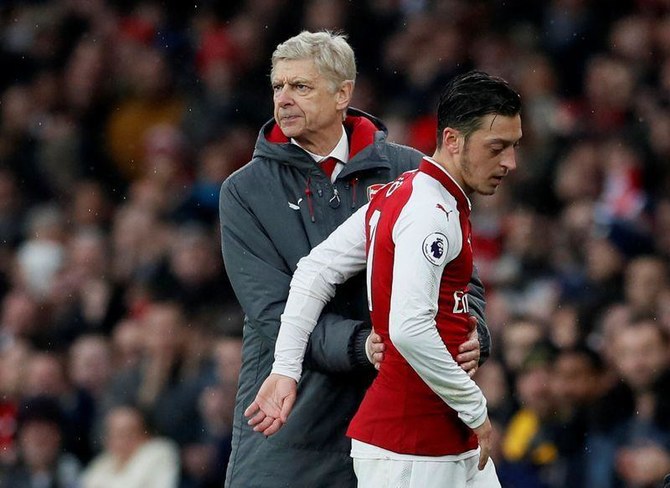
Former Arsenal manager Arsene Wenger, and Mesut Ozil at Emirates Stadium. Photo credit: Reuters
However, in 2020 this does not seem to be the case. Since the death of George Floyd in the United States, sportspeople around the world have been ‘taking the knee’ in support of the Black Lives Matter (BLM) movement, and the Premier League is no exception. Indeed, since the restart of the league, players have almost universally decided that taking the knee is the right thing to do. In place of the fans’, many clubs including Arsenal, have proudly displayed BLM banners over their seats. The players wore shirts that had ‘Black Lives Matter’ printed on the back in place of their names. There was a clear and obvious support for the movement by the Premier League and Arsenal. This is in stark contrast to Arsenal’s previous comments and sentiments about wishing to stay away from politics. It is naïve, if not arrogant, to believe that the BLM movement is not political. When you consider what BLM actually stand for, it is impossible to argue otherwise.
BLM co-founder Patrisse Cullors, in a resurfaced video from 2015, described herself and her fellow organizers as “trained Marxists”. She said, “we are trained Marxists. We are super versed on… ideological theories… and I think that what we really tried to do is build a movement that could be utilized by many, many black folk”. This is a reference to Marxism, a left-wing ideology which believes in social transformation by any means necessary. There is a underlying implication of force and violence there, and judging by the chaos in certain areas of the US in the name of BLM, it’s not a surprise why. In addition to this, not only have several BLM activists called for the defunding and eradication of the police force, they were also calling for the dismantlement of the nuclear family (removed quietly from their website a few weeks ago).
Sasha Johnson, of Oxford University, has called for a black militia to be established in the UK, and will attempt to establish a black-only political party called ‘Taking the Initiative’, which will exclude those who are white. With all this overwhelming evidence, how could anybody possibly believe that BLM is apolitical, when the very founders of the movement take their inspiration from the founder of Marxism?
Sasha Johnson, of Oxford University, has called for a black militia. Photo credit: Oxford Community Action
Yet Arsenal believes that BLM is apolitical, despite all evidence to the contrary. Arsenal must think that the movement, at its core, is totally about racial equality and therefore transcends its political manifestation. In the FA Cup final against Chelsea, the players wore shirts with BLM, next to the NHS symbol (in reference to the nurses and doctors during Covid) and the Head’s Up symbol (about mental health awareness). The latter two are apolitical, laudable causes which people should support. They have no political affiliation, and have faces and people you can hold accountable. Had Arsenal researched BLM, they would have known that the organisation isn’t as innocent as they desperately make it out to be. Arguably, it’s a reflection of mainstream media’s deliberate attempt to make BLM apolitical; to portray it as a harmless, innocent cause (like supporting the NHS and Head’s Up) which would have ultimately made it exempt from criticism, disagreement and scrutiny.
Some would argue that Arsenal’s situation is purely a PR issue. This is questionable, because Ozil is not the only Arsenal player to have expressed a political opinion. That same year, defender Hector Bellerin encouraged young people to vote in the general election, and tweeted “#FuckBoris”. Despite this Arsenal did not release any statements and distance themselves from his comments, in the way that they did with Ozil. Why? Both statements were political, but only one was ‘bad’ enough for Arsenal to make a statement about. This is despite Bellerin’s comments being purely opinionated, yet Ozil’s was more serious and actually had evidence to back up his claims. Is it because criticising another country in general is bad, or is to do specifically with China? Perhaps the UK does not wish to get involved in a cold war with China, as it is with the US at the moment? Perhaps it’s a financial one, as China pays close to £700 million per season for Premier League TV rights?
Arsenal defender Hector Bellerin. Photo credit: These Football Times
There is a plethora of reasons. The ‘No Room for Racism’ patch is a much more inclusive slogan, free of political influence unlike BLM. In any case, not only does it leave a bad taste in the mouths of some Arsenal supporters, it also shows how hypocritical clubs can be when finances and reputation are at stake.