Home Blog Page 32

An interview with James Lindsay: Part 1

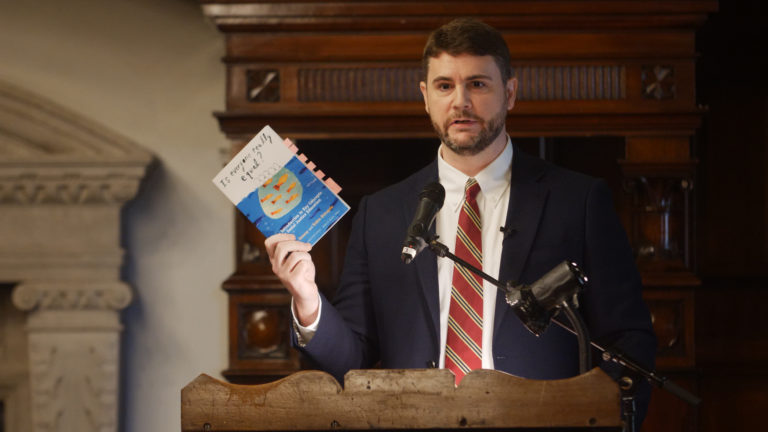
James Lindsay is an American-born author, mathematician, and political commentator. He has written six books spanning a range of subjects including religion, the philosophy of science and postmodern theory. He is the co-founder of New Discourses and currently promoting his new book “Cynical Theories: How Activist Scholarship Made Everything about Race, Gender, and Identity–And Why This Harms Everybody” co-authored with British Academic and Areo Founder Helen Pluckrose. 

TCS writer Georgia L. Gilholy recently sat down (virtually) to talk with him about his latest projects, and the current climate in academic and politics in America and beyond. Here is part 1 of 2, of their discussion:

GLG: In 2018 you, along with your colleagues Peter Boghossian and Helen Pluckrose shot into the public eye for your roles at the heart of the “Grievance Studies Affair”. Could you explain what this affair entailed? What were the ramifications?

JL: The intention was to cast the public’s eye towards the scholarship and say ”wait a minute something’s wrong there”. Beginning in October 2017, we submitted around 20 papers to the highest-ranking journals. Many of the papers now are quite famous for what they did. So rehashing that again and again maybe it is an old story. But we, of course, had the ridiculous dog park paper with inspecting of dog genitals and concluding that we can learn something about rape culture this way and that the solution to rape culture is to train men the way that we train dogs to derive. We deliberately rewrote a chapter of Hitler’s “Mein Kampf” with intersectional feminist jargon, claiming that solidarity was what was needed. It’s the chapter where he explains what would be needed for this movement, which went on to become the Nazi party. What kind of sacrifices would need to be made? What kind of values could the enemies wear?

And we just transliterated that and added scholarship that was taken up by a feminist social work journal which has its own extra little bit of scandal. We had a paper there and there are several, of course. But one other paper that really bears mentioning where we argue that social justice type scholarship should not be criticised and cannot be ethically criticised using humour. So you’re not allowed to make fun of social justice with social justice is allowed to make fun of you. And this paper was very enthusiastically taken over by the leading feminist philosophy journal, Hypatia. And moreover, the last part of the paper literally included a criticism of the project. We were saying that writing academic hoaxes would be one of the most severe infractions against this rule. So we made the argument against our own work from their perspective and got one of their journals to accept it with the title of the paper being on “The Joke’s on You”.

I was proud of that!

So, as for the ramifications, it’s hard to say.

I mean, it wasn’t pleasant. And we got a lot of publicity, obviously, if you like that kind of thing. I guess that’s good. But it didn’t seem to do much, at least not within academia. It stirred up some controversy. I’m told that there’s a very quiet base of support within academia. It’s bigger than I expected.

So what we did really showed something important. But because of the culture and academia being so repressive to anything that goes against these ideas, nothing much happened. The journals themselves decided they were going to vet the authors more closely and which is not to actually improve their academic standards.

So they did exactly the wrong thing. They accused us of being too aggressive or of being white men. And the other being a white woman. And terrible that it was they tried to downplay it and claim that we didn’t do our due diligence. We didn’t have a control group. We didn’t have this. We didn’t do that. You know, little detail that’s not actually relevant to what we’re attempting to do in the first place.

GLG: Also, given that they accepted those papers without those research standards in the first place, surely they ought to admit that the humiliation is still on them?

JL: Exactly. Anyway, So not much happened, although time will tell. I predicted at the time that it would take two to three years minimum before the academy would lurch into action around it.

And there are just now beginning to appear academic papers that are grappling with what we did, which means about two years out of the academy, starting to pay attention to it. Now, of course, everything’s a little bit different after society decided to rapidly and radically change in June. And as I think I’ve indicated, our claims rather substantially. So I don’t know what the future holds, but so far, not much has happened. The academy has more or less doubled down and put its head in the sand. And that’s where it stands. 
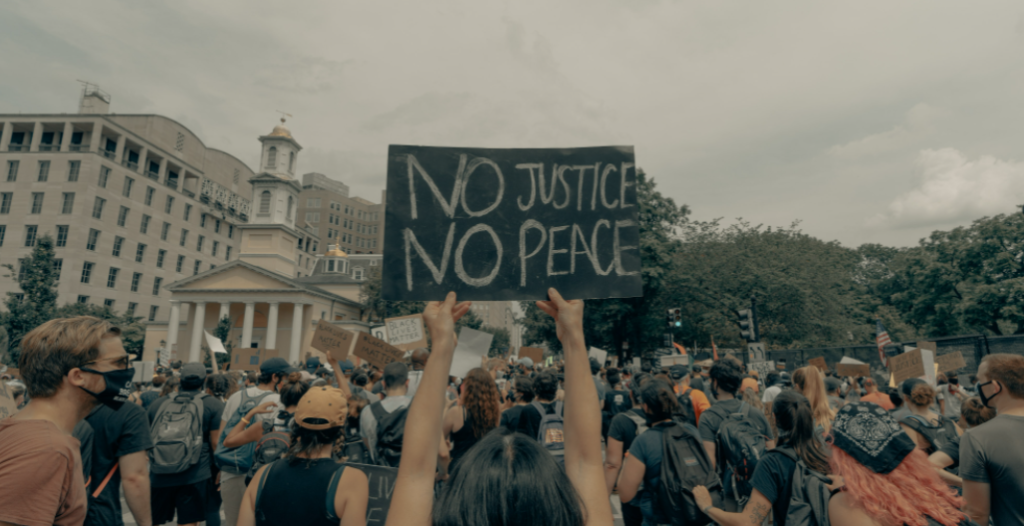
SOURCE: UNSPLASH

GLG: As someone who studies in a humanities department, I’ve definitely experienced many of these issues. I started at university in 2016 and I haven’t seen much positive change. Maybe one plus side of what is happening with the economy right now is that it could force universities to maybe narrow down what they’re actually doing at some point. But I think it really depends. And there are these people that have that kind of ideology ingrained. They’re in a position where they didn’t really get to these opinions through reason or logic, so those tools can’t really be put to use to make them change their minds either.

Could you define critical social justice theory in layman’s terms? How does it exhibit itself in contemporary political discourse? 

JL: Layman’s terms are hard. But I will reiterate that it is the combination of three things that have been mixed into a very specific kind of activism and activism that come Lacerda that it causes. That activism that comes out of academia and it is informed by and legitimised by these academic theories. And of course, that then gets out into the public and does its own thing, you know, kind of wildly and organically as activists and young people and people in social media take it up and let it mutate into an organic social ways that tend to happen. So those three elements are something that is actually called social justice, which I would normally indicate with a lower case S and J as opposed to a justice movement, which I tend to capitalise the S and J for the movement.

It makes us a self with critical theory and I’m listing these in chronological order that they evolved in our society. Social justice actually stems back to the I think even into the I have to remember the exact dates, but I think it goes back into the 18th century. It started with just with priests who had the idea. So it started in a religious context that we should make society fairer. Critical theory evolved in the 1920s. Going forward as a means to try to explain why the Marxist revolutions didn’t take place as Marx had predicted, and to shift the analysis from economics to culture to try to figure out why they didn’t occur, and b how to make them occur by a changing culture, rather than screwing around with trying to just wake up a proletariat that didn’t want to be working up. And then the third is postmodernism, which is a very complicated and messy thing that touches lots of aspects of thought and art and pretty much everything.

So we very specifically see various tenets that came up. Within the French school, postmodern social philosophy, particularly, although its many thinkers as fans, a lot of different ideas, particularly you have the three French thinkers, Michel Foucault, Jacques Derrida and Jacques Lacan. So in going to layman’s terms, what happened in the 80s and 90s as you had this weird academic theory of postmodernism that sort of just taken root in English departments, got called “fashionable nonsense” later for good reason, and it was burning itself out. Meanwhile, you had the activists who had led the civil rights movements and liberal contingents among them. So we’re talking, you know, the civil rights movement as it was called in the United States. We’re also talking about liberal feminism and the second wave primarily.

And we’re also talking about the gay pride and gay rights movements with the marriage equality movement as it moved forward in the present even decade. I guess those things were primarily finished winning their legal battles. They were moved into social battles and the liberal contingents of them were becoming more and more satisfied that they could achieve their goals and kind of dropped the activism. While the more radical activists obviously were not so keen to drop what they considered to be those single most important aspects of their activism. And so they actually were talking about the same kinds of ideas.

Now, in terms of social justice, and then they used post-modern tools to start making their arguments. So those three things came together into a single movement in the early 1990s. That has now evolved into this very bizarre, very self-certain, almost religious movement that we see today calling itself social justice. If you read in their literature, you occasionally find authors like Robin D’Angelo, who is very famous now and awesome sensory writing that it’s best not to call it social justice should be called the critical social justice instead. And they even argue that people call it social justice to try to reclaim its true commitments.

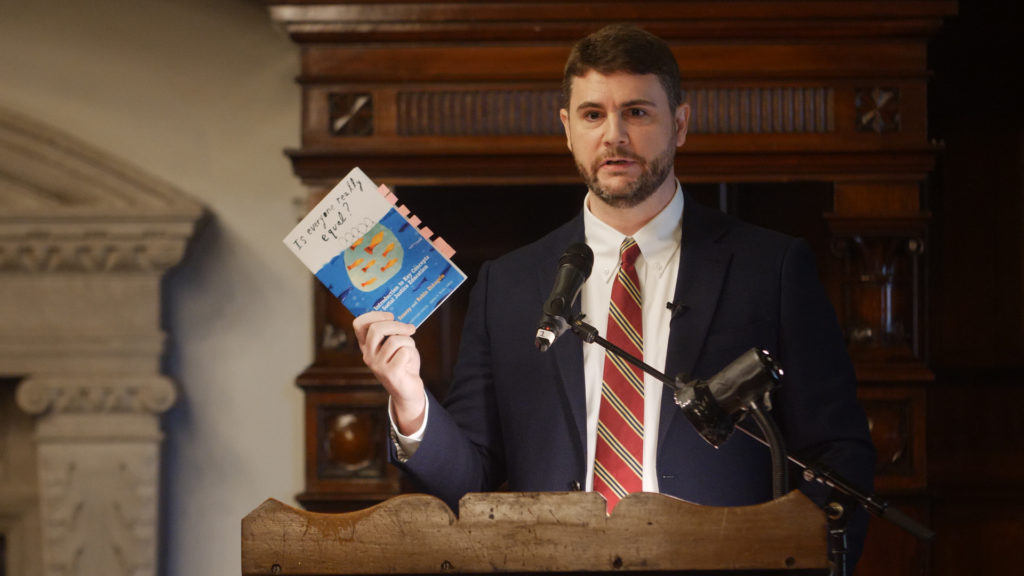
But this is something very different. It, in fact, relies on critical theory and it uses postmodern tools. So they’re very, very clear. Anybody who wants to can read this genealogy of the movement explicitly in their book titled Is Everyone Really Equal? First Edition came out in 2012. So it’s now become very concrete, very clear, very, very simplified. It’s no longer just fashionable nonsense. It’s very activist driven and factual nonsense. So that doesn’t really give you a layman’s explanation of the layman’s explanation of the critical social justice movement is is that the various ideas in the neo-Marxist school of critical theory and the weird postmodern philosophy where people played around with words in funny ways, got packaged up and useful for activists who wanted to talk about fairness and equality using very rigid ideas of identity politics. And so they became the tools for doing a new kind of identity politics that seeks justice, whatever that’s supposed to mean, rather than individual justice. 
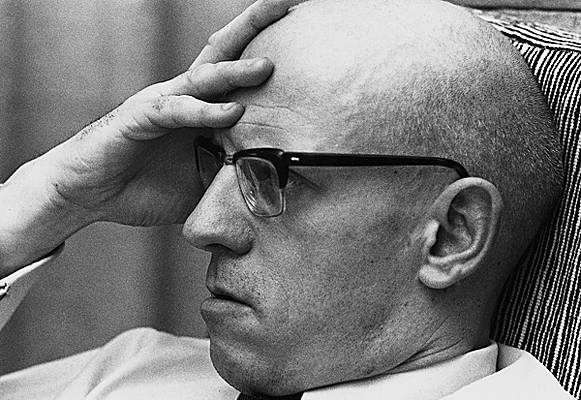
Michel Foucault I SOURCE: Open Culture

GLG: That was an excellent explanation in terms of the genealogy of the philosophy itself, and how it exhibits itself in the political sphere currently. A lot of time when you talk about these issues with friends or family, they kind of dismiss them as just a fringe minority of cloistered academics with no real influence, who simply shouldn’t be entertained and then they will go away. But I think especially in the past year or even in the past few months, really, we’ve seen this kind of erupt even more than it previously had into the political realm, which affects normal people. I mean, obviously, in the U.S., you have a presidential election coming up. There is definitely the potential for some of these things to influence or are already influencing policy proposals. Trump-ism, for example, is to an extent a reaction against these radical leftist theories. These theories are seeping into not just adult political discourse, but the education of young adults and children. A few days ago, you tweeted a section from a new mandatory policy in Californian schools. Could you summarise what these new proposals were, and why they are a dangerous choice for the educational system?

JL: Yeah, another complicated thing. This is actually happening in a number of states, California was just the most recent example. Washington already was starting to do it. New York is doing a similar thing. From what I understand, I’ve only read in detail parts of the Washington parts of the California policies. So the California ethnic studies program is now mandatory. I think it’s for all public schools. I don’t think, you know, private schools. If they did, the way that they would do it is by requiring certain levels of certification from schools to be accredited or something. Testing for the students, but. The program seeks to instil a very radical way of thinking about especially history, but all almost all of the other subjects will be touched by this. In fact, they don’t even refer to what they want to talk about. They refer to it as her story, I guess, mostly at the time. Female H.E.R. But then they thought that that goes too far into the binary. So it’s now HXRSTORY. 

So I see where I can go and back in, and that is not pronounced woman that is pronounced WOMXN. And yeah, it was like an animal story with an axis is still pronounced “herstory“. They’re just making stuff up. Is that how it works? They also say that the ethnic studies program is X disciplinary where X I don’t think it probably sidled Heinies means cross-disciplinary and it also probably means X like a variable in algebra, as they seem to like to do because it refers to interdisciplinary trans-disciplinary on disciplinary dialogue. Ways to not have rigorous methodology is what it boils down to. My favourite is, um, disciplinary. So there’ll be no discipline applied to the teaching whatsoever. It primarily wants to teach history in a way that’s going to be…I don’t know if it will import the 1619 project directly, but it will be consonant with that. It would be consonant with Howard Zinn’s very critical “People’s History of the United States. So the objective will be to tell the history of the United States, for example, or the world in a way that critical theorists believe is our power structures were created and how they’re maintained. When you see in the ethnic studies applied to literature, it’ll be a study of how power structures are perpetuated in literature and the choices of what people read, whether it’s out of that so-called Western canon or whether it’s, you know, the lifting up of marginalised voices where you be allowed to read books that contain racially prejudicial, prejudicial language, even though they’re telling the story of a racially prejudicial time.

Will you be able to cite white authors on Shakespeare? Probably not. there will be this just bending of literature and English classes away from using the usual canon. They may even draw off of the idea that standardised grammar or dialect of English is somehow racist. And so there’ll be no correct way to spell things.

GLG: Who can disagree when it gets into subjects like mathematics?

JL: I did not see what the California program is using for mathematics. I did see what the Washington program is using for mathematics. And it is explicitly to use mathematics as a vehicle to set up discussions about social justice, relevant topics. So you see math being used for us or to liberate people from oppression instead of learning, say basic algebra. Let’s write an essay about that and then discuss it in class. How statistics can be used to support or manipulate statistics to our advantage.

These programs are not teaching kids what the world is about, they are teaching them how to be mad about it. To put it as plainly as possible. It is an education in grievance is what it is, rather than an education and practical skills that are necessary for navigating the world in a modern advanced economy. And so not only are you intellectually crippling students by not teaching them something critically your learned skills, but you’re also teaching them to be socially aggrieved about things that they don’t actually agree about and misunderstand things in a way that makes them mad at their society with the critical theories goal is to make people dissatisfied with the state of their society and those systems and institutions that define it. And so that they will want to revolt against them and overthrow them. I mean, I don’t know how. I think it just to say what it explains why it’s a bad idea to most normal people.

GLG: I mean, when I was in school, I would have loved to be able to write an essay for maths because I suck at maths. But, erm these decisions are not great for, you know, the fabric of society. We need to have people who can do basic mathematics! Yeah. I mean, I think in the 1920s had a run rate, like a seminal essay about truth in politics. And she talks about how factual truths and doesn’t like historical philosophical truths are, you know, always prone to personal manipulation, etc. Such about. She kind of goes on about how like scientific facts, mathematic proofs are not so much prone to distortion for political gain. But I think that she might’ve updated her essay. She’s been living now. But also, I think that it does kind of also then maybe prove her point because it’s like that. They’re not actually letting people do do the mathematics or the scientific proofs that kind of just change and get into something different entirely. Which is kind of the story of social justice on definitions of things set up.

JL: I actually am one of those, I guess, fairly rare people who hold up the truth as rather sacred. And so I’m motivated by the troops. I have trained myself through most of my life to try to defer to the truth, even when it’s uncomfortable for myself. And I think that the truth matters. And so when I see things that are actively distorting the truths and then when I see that they’re doing so on topics that really matter, like, I do think that there are problems with racism.

I do think that there are problems with sexism and misogyny. I do think that there are problems with the treatment of sexual minorities. I think that there are difficult questions around issues like the trans issue that need thoughtful, careful, ethical discussion and debate.

So when I see a movement that’s not at all interested in the truths and that is seemingly to be patently unfair, I can’t really be comfortable with it. And so the broad motivation for me to have gotten interested in this is that I care about the topics that it wants to talk about badly. I think that those topics deserve to be talked about well. But when people start to say this is the only correct way and they shout down any criticism or opposition, that’s when all of a sudden I become very concerned and want to speak up about it. And that’s exactly what has been happening here.

You know, anybody who says, well, let’s try to come out to say the trans issue and specific from a liberal perspective, a rational liberal perspective that defers to science as much as possible, whatever the relevant sciences are. And when that gets yelled at as being transferred back and said that it’s not allowed to be used, that’s a problem. When we start talking about the issues around race and whether it’s finding equity around race. Are the disparities such that we need to take actions to intervene? Fine, let’s have a discussion about that. But then when I say as it happens, white people come to the table and say, well, this is my experience, this is what I see. This is what’s happening in my life. And they say, shut up. Your story has been told, which is a direct quote that I run into quite early on in my book.

That’s when, you know, it’s badly off the rails of trying to solve problems. So if we just focus on Evergreen[state college] for a second, if there was genuinely a problem with racism at Evergreen, which I consider to be unlikely, then there will be some students, I’m sure being young people who are jerks at times that use race insensitive ways or intentionally malicious ways. 

 But when you say, well, what’s the evidence? What does the racism look like? Let’s get it clear. So let’s try to understand what it is, exactly how it manifests, and then start looking for workable solutions. And they say asking for evidence is more proof of racism. We’re just right. That’s no longer a path toward solving the problems. And so that’s what motivates me, is that I think that any and all problems seem to be solved, that the only way to solve our problems is fairly ruthless honesty about them.
James Lindsay SOURCE: newdiscourses.com

GLG: Yes, I think when it comes to approaching these issues, a lot of the time nowadays, the division, if you’re in a group of people, often isn’t between, oh, this person votes a right-wing party and this person votes a left-wing party. Often the people who will find more common ground are the people who are willing to be reasonable and discuss evidence whether or not, you know, certain discussions wind up underpinning their own opinion. Then there are the people who could correspond to the far left or the far right. But obviously, you know, with young people nowadays, it’s mostly more radical left ideologies. But personally, I see also a lot of the far-right nonsense online. Maybe because it is so taboo, you don’t see them as vocal in person. When you encounter people who are either far-right or far-left- although overwhelmingly I have encountered the far-left in person, they don’t think that they have to explain why. I mean, you trying to have a debate and you have a different opinion and they say, well, you know, it’s not my job to educate you, blah, blah, blah, and it’s just impossible to have a discussion or a productive relationship with the person. So your New Discourses project, which you, I believe started in the wake of the grievance studies affair it’s subtitled “Perceiving the light of objective truth”. Sounds racist to me in subjective darkness. And your piece like videos, of course, criticizing critical statement, criticizing critical social justice. So what are the project’s main objectives and why did you choose to dedicate yourself to it in the wake of what happened in 2018? 

JL: So the objectives that president discourses are plain clearly to build a bridge between this weird academic theory and the activism that’s inspiring or justifying and what people already understand. And then to stand up for us, the tag line indicates to stand up for the belief in objective truths and the value of objective truth. And remind people that it is not only OK, but it is it is intellectually and morally superior to value the attempt to be as objective as possible with our standards and our knowledge production and teaching so as to stand up for those things. 

The reason that the way that it follows from what we did in 2018 is the same as the way that the book Cynical Theories, which just came out, also follows from that. So what happened in twenty eighteen was obviously we had dug deeply into their scholars to write. Those papers were fairly deeply, as deeply as you can in a short time period. We are conversant in the actual scholarship. We also saw for ourselves how bad the scholarship is, how alarming much scholarship is in the culture that’s producing it forces that. And so we came public. Obviously, we got a lot of attention when the story broke. And then we became international spokespeople for the problem, like more or less immediately. And so Helen and I decided that, OK, we’ve now shown that there is a problem. And now we need to get into the deep nitty-gritty of how it works. And so she and I started to take the research we had done to do the papers, and we extended it to write cynical theory.

With the laborious paper-writing project behind us, we wanted to collect our thoughts and our notes and our assessment of historical roots, at least through the postmodern aspect, a little bit into the critical theory aspect and use that to write simple theories, a summary of what we’re learning as to where this stuff came from. 

 Well, a book is a static thing. And recognizing that we have lots of information, lots of knowledge that could not make it in the book because it’s also a limited thing. A book is given a word count. And you can exceed it by a little bit, apparently, because we did! And that’s it. That’s all you get to say in the book doesn’t change. The book is now an artefact of the moment it was published. And it doesn’t change. Will, a Web site is different. 

 A Website gives you the ability to continue to put out new material, whether it’s in article form or video form and audio. You have lots of flexibility, lots of opportunities to do different things, to communicate more about the problem.

 In particular, I really got interested in understanding the first sort out the use of language. That’s what led me to write a social justice encyclopedia on new discourses, which I’m still working on. Of course, I’ve been slowed down by the madness of the past two months, three months almost now, because of people’s demanding to understand so quickly that I no longer have the luxury to go quietly, research and explain on my own time. But I wanted to explain the language and I wanted to dove into the intellectual history of it and explain that in a kind of encyclopedia format. And then the others aspects of the discourse to see your articles, podcasts, the videos and so on are just sort of my ability to explain or publish other people explaining various aspects of what we’re learning while we study this material from the perspective of trying to stand up for objective truth against this kind of radically subjective term that we’ve seen with the scholarship. 

GLG: Could you give me just an idea or an example of one of the times that is a word that people use in everyday life, but it’s been there’s also a social justice definition. So when normal people encounter people talking about it, maybe they don’t really understand why there’s a different definition. 

JL: All right. So, yeah, that’s one of the main things that the and one of the, I guess, three or four main things that the encyclopedia is trying to do, but it in particular, it wants to explore these terms that have more than one meaning. Probably the one we could name lots and lots of terms that have more than one meaning between social justice. It’s their kind of worldview and in lexicon versus everybody else’s. Just to list a few off the top of my head. 

We can pick one of these to dig deeper into words like racism, abuse and anti-racism and diversity, inclusion, social justice itself, critical fascism. All of these words and many others have more than one definition that’s more specific within social justice terminology than it is within the average everyday lexicon. I don’t know, maybe racism is the best one to talk about because it’s so easy to understand the difference. So most of us understand racism, maybe a bit vaguely, but as the idea of it somebodies do, we would use somebodies race as a reason to discriminate against them or be prejudiced against them or to judge them by stereotypes associated with that race, or if you get really strict about it, to hold up some race or races as superior while others are inferior. So this is sort of the definition of racism that most of us accept. And we also see it as a matter of individual belief or intention. So, you know, me saying I think could be racist if I intended to do a racist thing in the world when I say it, or I might have racist beliefs about certain groups or something like that. So we see it as beliefs or intentions or with specific actions attached to the intentions.

This critical social justice does not see racism this way at all. It sees racism as a system and it is a system literally of everything. It is a system that touches institutions. It is a system that touches the law. It is a system that touches knowledge, language, the way we think about things, cultural patterns. It is everything that happens. And it is seen as a system that is described in the critical race literature as the ordinary state of affairs in our societies. It’s not aberrational, they say. It is the ordinary state of affairs and it has a certain permanence to it. And it is an idea of a system of power that’s upheld and how we speak about things, how we think about things, what we consider to be legitimate knowledge, legitimate methodologies, legitimate ways to order society down to ideas like loyalty, reliability, punctuality, productivity, civility. 

 All of these things are given as examples of white supremacy culture within critical social justice. And so it’s racist according to this systemic way of thinking about it, to uphold any of those ideas. If you believe in being on time, you’re actually being racist. According to this systemic way of thinking about it, this is the way that the most important thing for people to understand about the way social justice, the ideology of political social justice thinks about racism is that they look to see if there are any statistical differences in outcomes. And if there is racism is in the systemic, vague sense that nobody can understand racism is somehow the culprit that led to those differences in outcomes.

That’s how they think about racism. So if we look at test scores on average and we see that races that are considered are being privileged over others have average scores that are higher than even one race that’s considered to be less privileged or oppressed, by the way, that they’ve outlined the theories than racism must have been the cause for that. There’s no other possible explanation. It can’t be any other thing. If you say. But wait a minute. If you actually just control for the variable of economic class and they turn around and say, well, economic classes have differences in outcome because of racism. So racism is still a cause. And if you point out and say that, well, this particular minority group, if we will, are nonwhite- which is very specific about how I actually think about the world- outperforms white people. 

The Truth About Critical Methods: James Lindsay

They say that that that this is actually still somehow a system of racism. Those people are engaged in some different kind of privilege and that maybe they’re a model minority, maybe defying into the dominant system and they’re still upholding the system. So the system rewards them. And so everything that. Somehow racism and this is actually they have this completely different understanding of what racism is, how racism operates. So no longer is racism a matter of action, intention and belief. But racism is a matter of who you are. You are a racist. If you’ve ever said or thought a racist thing or a racially insensitive thing. You are a racist. If you’ve ever done something that contributed even inadvertently to disparate outcomes by race, then you’re a racist and those things could be even made up. For example, if we look at the concept of microaggressions, which is also within their literature, we want to dove into what microaggressions are or anything.

But this came from a scholar named Derald Wing Sue, a critical race scholar. And then the idea originated from a plane trip that he was on and he and another minority individual were on the aircraft before takeoff. And the flight attendant came and said to both of them: “There’s a weight imbalance on the plane. People in these seats need to move the plane to balance out the weight so we can take off safely.” And this person and Derald Sue decided that they were asked us to move because of our race. And the flight attendant said no. In fact, we asked you to move because you were in the relevant seats. Whoever had been in those seats, it still would have been the thing. And they’re the ones who said, well, it doesn’t matter what the real reason is. It is perceived as racist because racial minorities were the ones who were asked to move. This upholds a system of racism. This was a microaggression. You need to apologise. And that’s where the concept came from. That’s how they think about race and racism. So this person, this flight attendant has now inadvertently become racist. And because that person is racist at all. That person is a racist. So the person becomes racist. The action becomes racist. They are irredeemable.

The institution becomes racist. The policy becomes racist. “Racist” becomes an essential part of one’s character. The theory explains that everybody who is complicit in or benefits from a system of racial power as they define these things is complicit in racism and is therefore racist. So all white people by default are racist. All racial minorities who perform well in an allegedly white society for white culture must be buying into prejudice and therefore upholding racism. So, therefore, they are racist. This is actually a gigantic departure from the very individual way of thinking about racism that most of us have that, you know, maybe somebody has racist beliefs, maybe and they can wrestle with those.

Maybe they act upon them and maybe they don’t. They’ve done racist actions. And those things can be named for what they are and they can be dealt with. This is actions take undertaken by an individual or beliefs held by an individual and therefore intervened upon under. Rational discussion or adjudications of law or whatever else, depending on where you are. Now we’ve shifted to “No, it’s all within the system”. So we have decided that the entire system itself has to change. And that’s the only way to get rid of racism. And again, the assumption is racism is ordinary in society. And it has a certain permanence to it. It’s very difficult to make it go away. And the only way to possibly get rid of it would be to completely unmake the existing system and replace it with a new anti actively anti-racist system that does not allow for what is perceived to be racism to be tolerated or even manifested in any way whatsoever. 

Look out for part 2 of this conversation coming soon.
It’s manslaughter, but feels like murder. Why?

Breonna Taylor was murdered. Or was she?

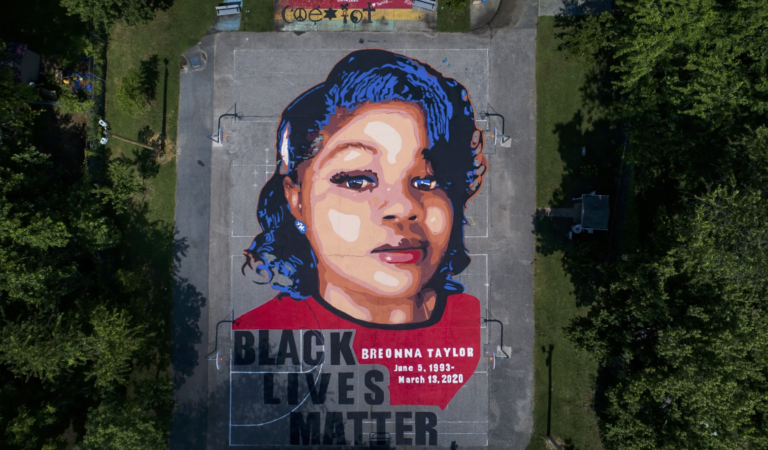
These are the questions that I ask myself constantly when I think about this particular case. The tragic death of Breonna Taylor has sparked international fury, and in conjunction with the Black Lives Matter movement, has also started debates as to what the police’s role is in modern society. Some believe that the police are needed more than ever before, especially in certain areas with higher levels of crime. Others believe that the police should be defunded and their budget should be redistributed towards fixing the issues that cause crime in the first place, so as to make the idea of policing obsolete. I have also noticed a distinct lack of respect for law enforcement, following the fatal shooting of an officer in Croydon, south London in September. In any case, it has certainly made me wrestle with my conscience, and made me recognise more than ever before that this isn’t a black and white issue (pun not intended).

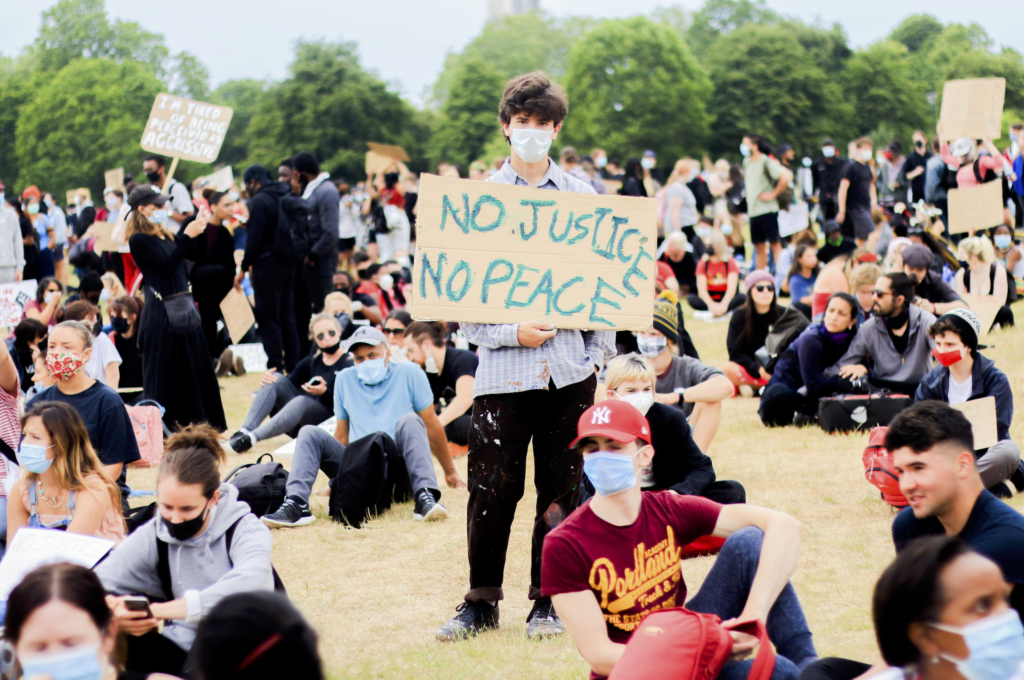
A protestor against police brutality in Hyde Park, London, UK. Photo credit: Aaron Fenton-Hewitt

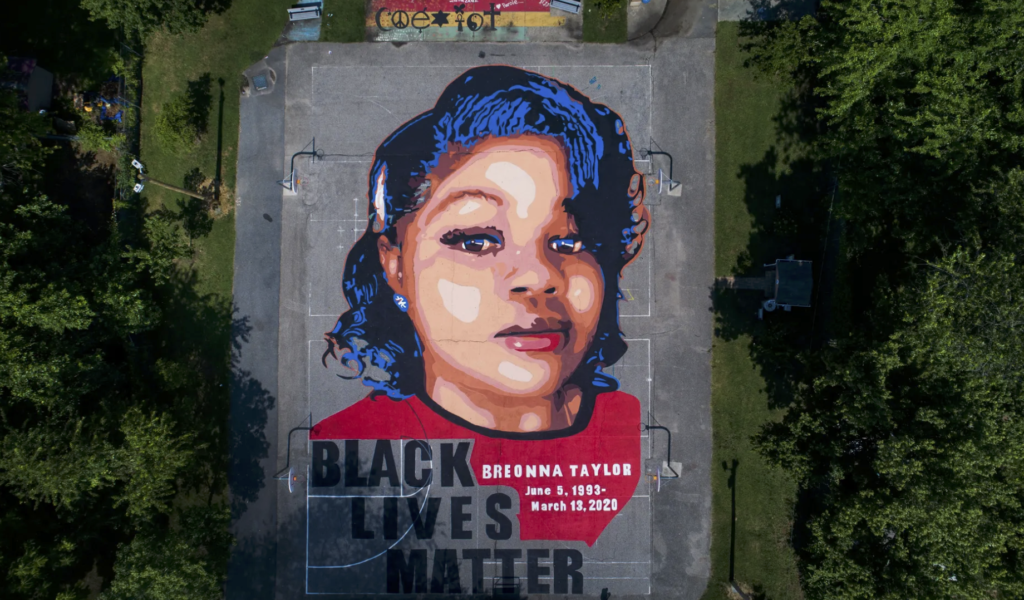
Taylor, an emergency worker, was hit by eight bullets as officers executed a no-knock warrant at her house for a narcotics investigation, related to her ex-boyfriend Jamarcus Glover, a convicted drug dealer. Glover was the prime target of the police and was arrested on the night of Taylor’s death. Police believed that Glover was using Taylor’s address to mail drugs from. When the police used a battering ram to enter the apartment, Taylor and her then-boyfriend, Kenneth Walker, believed that intruders were breaking in and fired a warning shot. The bullet hit an officer and the police returned fire, with 32 shots being fired. Taylor was struck eight times and died at the scene. There were no drugs found in her apartment, and Glover is later arrested at another location.

The city of Louisville, Kentucky, reached a record $12 million settlement with her family. According to US law, the definition of manslaughter and murder is culpability and intent. The Cornell Law School refers to U.S. Code 1112, which states that “manslaughter is the unlawful killing of a human being without malice”. This is different from U.S. Code 1111, which defines murder as “the unlawful killing of a human being with malice aforethought. Every murder…. perpetrated from a premeditated design unlawfully and maliciously to effect the death of any human being….  is murder in the first degree”. There is a clear difference between the two definitions, legally at least. The differences in punishment if convicted are substantial; five to ten years for manslaughter, but upwards of twenty years to life for murder and in some cases, even the death penalty.

A mural of Breonna Taylor in Maryland, USA. Photo credit: Jim Lo Scalzo, the Guardian

However, it’s harder to determine whether or not Taylor’s death constitutes as manslaughter because this involved the police. The most common procedure that officers stick by is that their use of force must be ‘objectively reasonable’. In layman’s terms, the officer must have a reasonable belief in that moment that they, a colleague or bystander were about to be harmed. That procedure is extremely subjective and has come under fierce criticism from the public, as ‘reasonable’ is a very flexible term and could be easily twisted to be in favour of the officer, even if hindsight suggests they were not in danger.

Putting the Taylor tragedy in the context of the law and a moral basis is not an easy thing to do. Legality and morality are not mutually exclusive. Just because something is legal doesn’t make it moral, and vice versa. As humans, we try to make the two be as close together as possible, but it doesn’t always work. At the time of writing, officer Brett Hankison, who was involved in this case, has been charged with “wanton endangerment”, as he allegedly fired into a neighbour’s apartment during the raid. Under Kentucky law, wanton endangerment means to “show an extreme indifference to the value of human life”, which constitutes a five-year sentence for each count. Mr Hankison was charged with three. The hard fact of the matter is that Walker shot first and injured an officer, which is illegal. Officers can then make the argument that this was a ‘reasonable’ cause to return fire. Case closed, right? Well, not exactly. There are nuances to consider. Prosecutors also have discretion whether or not to charge officers. Some prosecutors work quite closely with police, which people say could lead to favourable treatment. It’s legal, but morally questionable. The likelihood is, they won’t be charged if the shooting is deemed as justified. But is it justified? Walker fired one warning shot. One. A single bullet. Does that single bullet justify the 32 that were returned? Where does ‘reasonable’ end and ‘excessive’ begin? Is ‘excessive’ even relevant in the context of a drug raid? Does firing one shot forfeit your life?

All these questions and more make me more conflicted as time goes on. The legal side of me says, “yes, it’s justified, he shot first”, whilst the other side says “he wasn’t justified, no excuse for the death”. There’s also the idea of cause and effect; Taylor had been previously in a relationship with Glover and therefore the police concluded that she might have been part of his drug trade. Even after they ended the relationship, they still had a friendship. Rightly or wrongly, this could simply be a case of ‘guilty by association’; the company that you keep will have an effect on the way you are treated or viewed, in this case fatally. Taylor got herself involved with a drug dealer, and with that came consequences that should have affected him only. Trouble and conflict have a way of following criminals and their loved ones. Mud sticks. I wish it didn’t, but it does.

I feel as if the tragedy of her death was exactly that; a tragedy. To blame her for her own death is to disrespect and gaslight her, but to disregard the choices she made is a serious misnomer. Do I believe she was murdered? No, there is no evidence of intent to kill her to suggest that, but the officers must be questioned.

For me, it’s manslaughter, but it feels like a murder. It’s a tragedy, but it feels like a crime even though it isn’t. My mind should be at ease, but it isn’t.

Why Black America is TIRED

People in dismay over Breonna Taylor decsion. Credit : Darron Cummings

The deaths of George Floyd and Jacob Blake were the straws that broke the camel’s back. Black people are tired of unfair and unjust practices in the criminal justice system and people defending them. Tired of the criminal record of victims being questioned. The criminal justice system frustrates so many Black Americans today because the statistics alarmingly show that Black people are overrepresented in the criminal justice system.

This year further proved that the justice system was not designed to protect Black Americans and it targets them in an unjust way. On one hand, some would say the criminal justice system is broken, on the other hand, some would say the criminal justice system was doing just what it was meant to do after slavery. To keep Black men and women in a new form of slavery.

After Slavery…

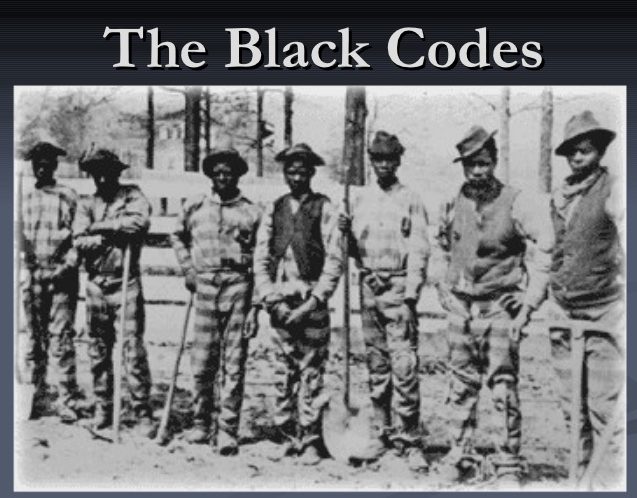
Black Codes invoked in the Southern states turned ex slaves into prisoners. credit: urban views

To understand the practice of mass incarceration and the brutality of black Americans, we have to take a look at life after slavery.

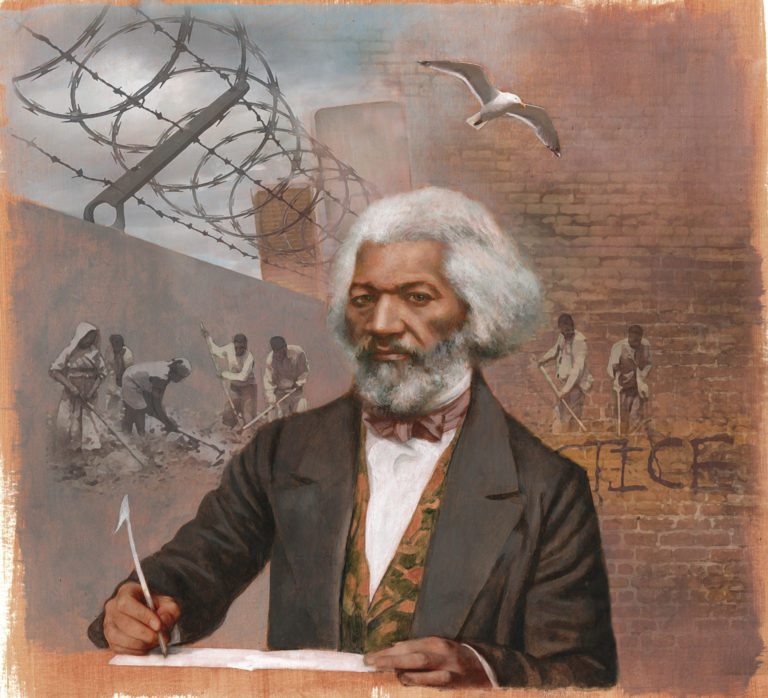
Slave owners invoked the control of slaves through brutal punishment and fear, which continued even after slaves were technically considered free. Shortly after the ratification of the 13th amendment, the laws that once governed slavery were replaced by Black Codes.

These codes led to the imprisonment of unprecedented numbers of Black men, women, and children who were then returned to slavery-like conditions in prisons. During slavery black people were viewed as three-fifths of a person, this new system turned black people into criminals before they could think about committing a crime.

Statistics

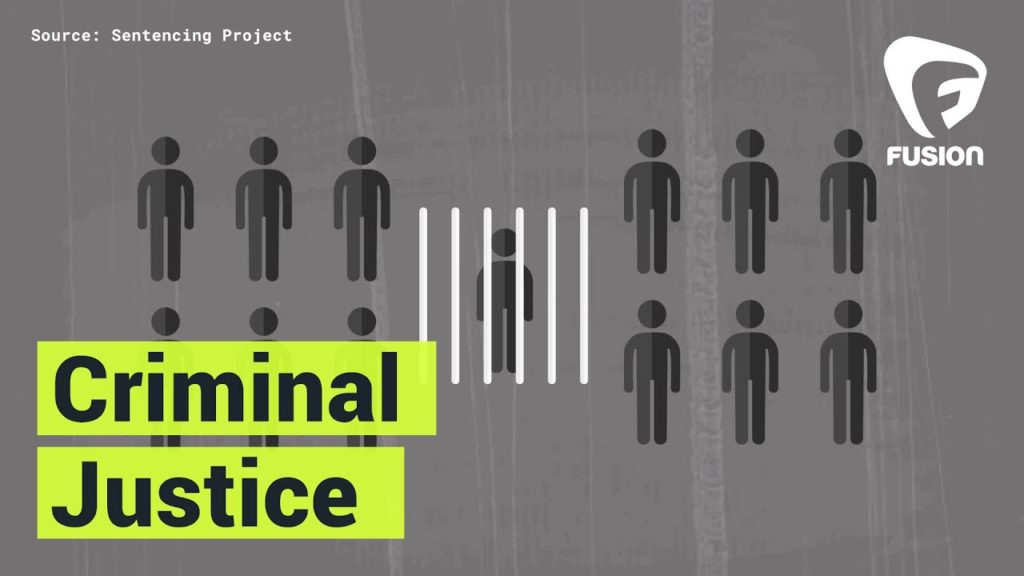
1 in 3 black men will go to prison Credit: Fusion

Today, the United States has one of the highest rates of incarceration than any other nation. There are more than 2.2 million people inside United States prisons, with more than 4.5 million on probation.

Black Americans represent a little less than 13 percent of the American population but double in incarceration. 1 out of 3 black men are expected to go to prison and Black Americans are killed at a much higher rate than White Americans.

While half of people shot and killed by police are indeed white, the numbers are disproportionate amongst Black Americans. Communities of color are disproportionately victims of crime and continually show prevalent bias in the criminal justice system.

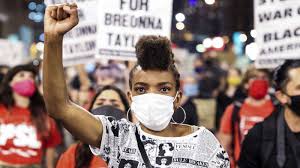
Protest for Breonna Taylor Credit: ABC News

When people say, “Black Lives Matter”, it is not to say Black people are superior or are the supreme race. It is literally saying black people matter because for centuries it was shown that black people do not. When a Black person is either beaten or killed, their criminal record is questioned. He or she must have done something to provoke the actions to them right?. For some people, regardless if the police officer was wrong, it is always the black person’s fault for getting shot or beaten.

Black America is tired. Tired of constantly having to defend basic human rights. Tired of having to constantly talk to their children about how to handle driving, walking and sitting while black. Tired of being a constant target as soon as they step out of the door. Tired. A person’s criminal background should not matter when they are the victim of police brutality.

The police are not judge, jury, or executioner, and do not have the right to act as such. Black Americans like every citizen in the United States should have proper due process in the justice system, but it seems that is asking for too much. 

Why we shouldn’t be surprised by Twitter’s racially-biased algorithm

This last weekend a number of Twitter users ran an experiment with images containing the faces of white and black people. When these images were uploaded onto Twitter, the Twitter algorithms had zoomed in on the white faces for previews. These experiments were controlled for size, background colour and any other variable that could affect the image cropping algorithm.

The Beginning

Colin Madland; a university manager based in Vancouver notices that the head of his colleague was vanishing anytime the colleague was using a virtual background. He then took to Twitter in an attempt to troubleshoot the problem, however, he noticed that the Twitter image preview always shows his face despite switching the order of the images.

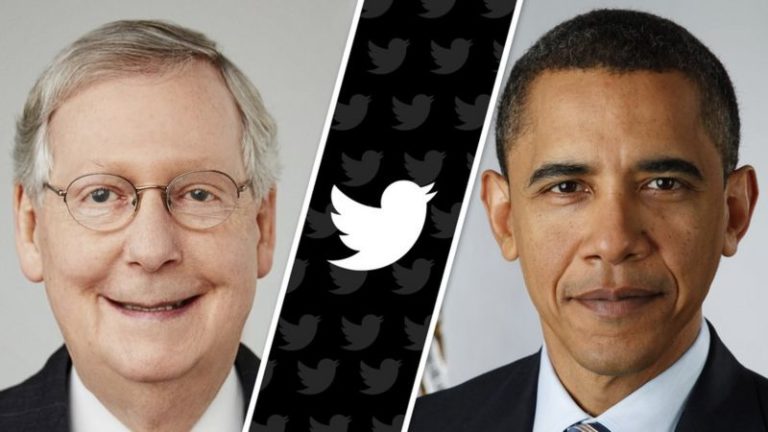
This led to experiments by many people on Twitter to see if there is racial bias in Twitter’s image cropping algorithm. The experiments included Barack Obama, Senator Mitch McConnell and even fictional character Carl and Lenny – the results of the experiments were that darker people, images and characters were cropped out of the preview and lighter people, images and characters were included in the preview irrespective of their positioning in the image.

More than just an experiment

This experiment is just the latest story in the racially biased algorithms saga. What is especially concerning is that fact the algorithms are being used at an increasing rate to make decisions that affect our lives. Here are some examples of these decisions:

Technology isn’t biased, the inputs are

One thing that I want to drive home is that technology isn’t biased. Your computer wouldn’t open an application without some sort of input. An automated dispenser wouldn’t dispense soap unless its taught how to recognise a hand. Face recognition technology wouldn’t deem a black man as a threat unless its inputs has some sort of bias embedded into the algorithm.

You may be asking “how can we get rid of these biases?”

Well, the good news is that removing biases in programmes and algorithms is actually pretty easy… the bad news? The bad news is that is not as easy to remove biases from people. People write the algorithms that we are becoming more reliant on to make decisions and unfortunately, biased algorithms are easier to fix than biased people.

A quick glance into Twitter’s diversity and inclusion report in 2019 will show you why I am not surprised by these events. If your leadership and technical workforce lack diversity, there will be biases in the work produced; whether that will be gender, sex or racial. Twitter’s latest cropping algorithm serves as another reminder as to why the tech sector should be more diverse.

“Survival” – a young artist’s critique of the world

We take a look at a track birthed amid the tumultuous year that is 2020…

2020 is a year that will never be forgotten. Political and social tensions have amplified, and we have seen tragedy as the world is facing one of its biggest health care crises.  People with creative art forms have found a way to address and express this – Michael Personne is one of them.

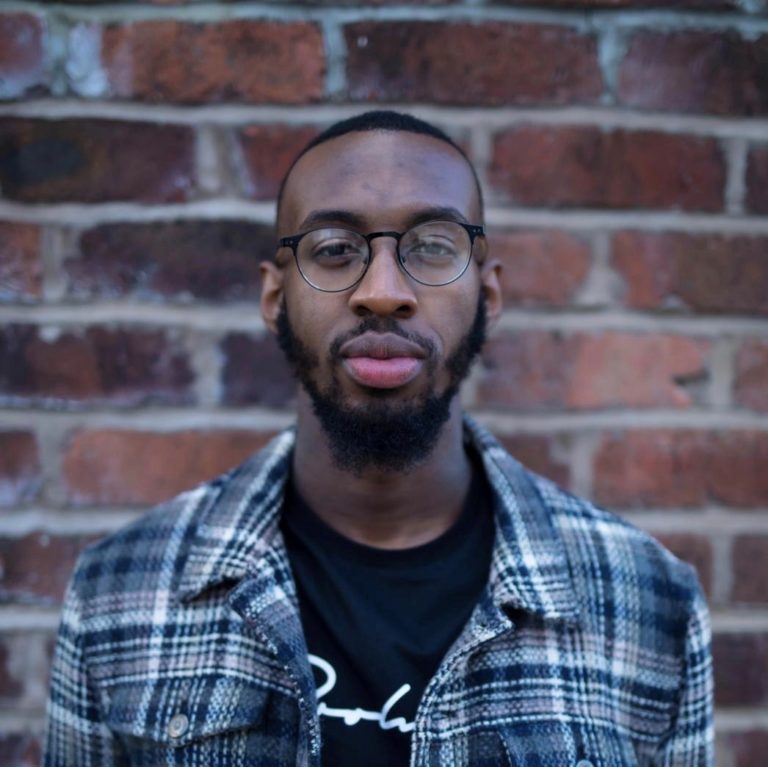
He is a young, black Hip-Hop artist from Birmingham whose latest single “Survival” aims to explain his perspective and experience of the world to listeners. He describes his sound as a combination of “clever lyricism”, and the track’s aim is to challenge the way he is seen by others, marginalised, and in some cases excluded. Although it seems somewhat personal, when listening to the track, you cannot help but think that he is alluding to and addressing bigger issues within the world.

Artist Michael Personne explains his creative process

“Survival” has a backing track that can only be described as a fusion of jazz and R & B, which makes the track easy on the ear, and it is to be a part of a larger project that Michael Personne is releasing in 2021.

The first verse is intriguing:

“Rule number one is adaptation for survival, conformity taught through admiration of our idols. Individualism prohibited for Michael, use of imagination considered suicidal. Authoritarianism designed to control my barbarianism – and those who conform to the norm are considered superior to us all like arayanism.

“You see they see me as a rebel with a cause, with an attitude that the Devil would endorse, a felon just because my cerebellum is divorced from the echoes that are bellowed by their deafening reports.”

The content of the song and the backing track is quite juxtaposing – the lyrics describe passionate and painful experiences, yet the music track, which uses smooth and relaxing instrumentals and sounds, certainly says the opposite. This may be because of the fact that his musical influences include Kendrick Lamar and Lupe Fiasco & SabaI. Musically I believe that the track had more room to grow, such as a change in tempo, flow or instruments – but it still works.

When I listened to this for the first time, it reminded me of the stories of  brutality and discrimination that we have heard this year – such as the deaths of George Floyd and Breonna Taylor, and the hundreds of thousands of people  who continuously work to raise awareness and provide change.  Michael Personne perfectly sums this up when he sings:

“In this jungle, the number one aim survival, authorities on the hunt tryna’ aim their rifles. Survival is vital but my life’s at risk – they draw for their rifles, they can’t fight with fists, but I’ll forever endure, I’ll never conform, the raw unedited form is all I’m able to give.”

Fellow artist Davecreates also features on this track, and he seemingly explores this notion of “Survival” from a racial standpoint.

He says: “Look into my iris and you’ll see more than survival… born on the same team but now they pitch us as rivals. Generational cycles, he told me ‘wave your hands’ and now he’s waving his rifle. I push my hands together, father I’m a perfect disciple, life feels like a court case with more haste than taught, but my hand’s on the bible.”

The biblical, political and social metaphors within “Survival” provides a deeper listening experience causing you to think upon things you may have ignored before – almost, like when Jesus taught parables in the Bible.

If you enjoy listening to music that makes you ponder and addresses the current climate – then Michael Personne has penned the perfect track to make you do just that.

The track is available for download on all major music platforms.

Alex Scott is here to stay

140 caps at international level, 7x Women’s Super League winner, 7x FA Cup winner and a UEFA Cup (now re-branded UEFA Champions League) match winner in a quadruple winning season.

All these accolades coupled with a degree in Sports Journalism & Broadcasting should qualify you for top jobs football punditry right?

Not if you’re Alex Scott according to some.

Last week rumours circled that Alex Scott MBE will be replacing Sue Barker at the end of the year on BBC’s “Question of Sport”. Although the public body have denied reports of it vehemently, in what would be her biggest role yet, along with her role as a Sky Sports pundit, the rumour mill truly went into full swing.

Abuse wherever she’s gone

Scott has been on the end of abuse from the day she first went into sports punditry on Sky Sports. Were they offended by the quality of her analysis? Were they offended by her hue? Were they offended by the fact that she was female?

Maybe all the above, but after showing her worth on Sky Sports Super Sunday weekends and great work on the BBC’s coverage of the World Cup, you’d think she had proved she was worthy of any role she gets, but clearly a lot of people are upset, offended or unwilling to accept that she’s changing the face of sports presenting one institution at a time.

Social media went into meltdown when the QoS rumours hit the net. Both optimists and trolls simultaneously flooded the timeline.

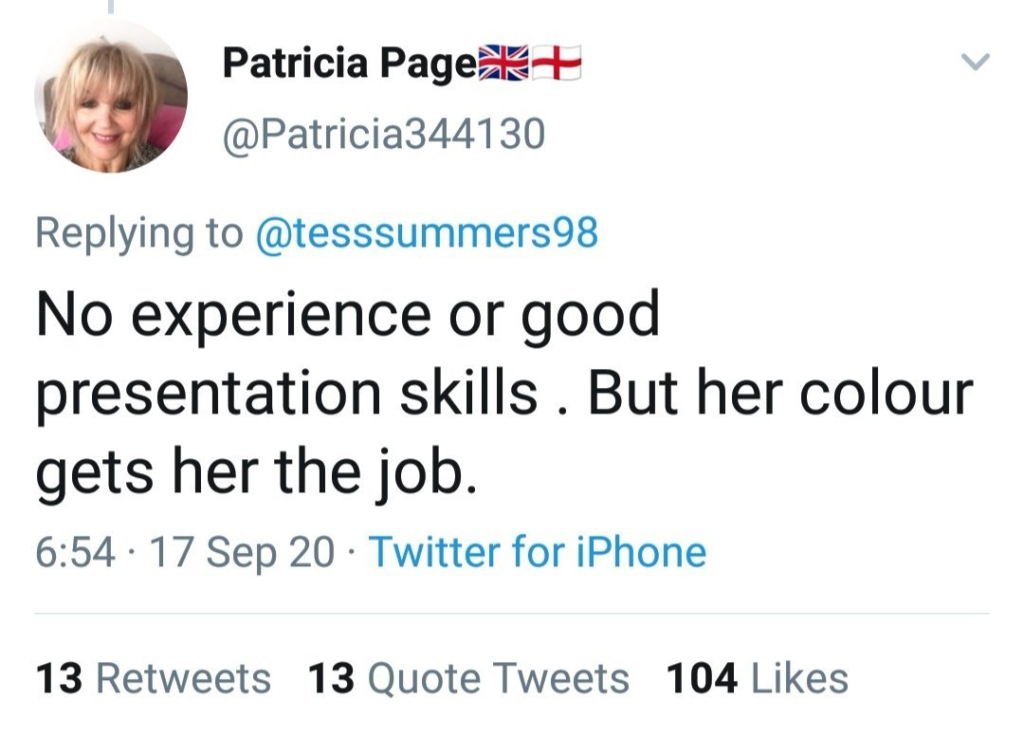
With tweets ranging from “woke agenda” insinuations to box-ticking assumptions, completely disregarding her professional football career, degree and prior experience.

More than “just an average sportswoman”

Her list of honours as a professional trounces that of most English professional footballers (to put it nicely, only a small handful of players have a comparable honours list). In addition to this, she is the ambassador of the UK’s first women’s football academy, aptly named the Alex Scott Academy in partnership with Puma.

Change is inevitable across generations, there will never be universal approval, this just isn’t the first time

In 2020, the fact that there is still distinguishing between pundits and female pundits implies that they are inferior, which could not be any further from the truth, as highlighted by Micah Richards below:

Change is apart of life. There was a time Sue Barker was not exactly everyone’s cup of tea, but over 25 years later, here we are with a sense of de ja vu.

Disapproval is inevitable, but like her profile, Alex Scott is still set to rise.

Can we trust Elon Musk’s Neuralink?

0

As jerky valuations on Wall Street signal another week of tanking tech shares, Elon Musk’s eccentric AI endeavours captivate the attention of the world once more. On the 28th of August, Musk’s neurotechnology start-up, Neuralink, demonstrated how it would merge human consciousness with technology by live-testing its most recent prototype on Gertrude – a common farm-bred pig. The dystopian ‘brain implant’ device has prompted concerns that invasive technology will trigger a transcendence into a Black Mirror-inspired reality. Contrary to such outlandish theories, Neuralink technology is unlikely to spark the advent of a Kafkaesque era of life. The technology can, however, prove to be destructive in other ways that may still warrant ample concern.

The Link

The Neuralink device, a brain-machine interface, uses biomimetic decoding to potentially treat neurological conditions such as Parkinson’s disease. It is also capable of potentially restoring movement in paralysed patients through robotic prosthesis – all controlled by a single 0.9-inch brain chip. Musk’s vision for the technology entails an allegedly ‘non-intrusive’ operation in which the chip’s slender electrodes will be sewn into sensitive brain tissue by an automated surgical robot in a one-hour procedure that causes ‘no noticeable bleeding or neural damage.’

Irrespective of the theoretical benefits Neuralink offers the world’s handicapped population, the prospect of undergoing a chancy computerised operation is terrifying. Not only is the implantation mechanism a source of consternation, but the power to tap into vast amounts of neural data is also a worrying notion. Although it is highly improbable that the technology can harvest thoughts, memories and feelings, Neuralink may alternatively provide access to information connected to the types of stimuli that trigger specific nervous-system responses. Information of this nature has unprecedented value in today’s data driven economy.

The value of data

Data is a sought-after commodity used to train AI algorithms, create targeted advertisements, plan business strategies and much more. Commoditised personal data collection has fuelled the success of many corporate enterprises whilst simultaneously leading to some of the most notorious data breaches in history, such as Cambridge Analytica. As Musk teeters on the brink of launching possibly one of the most successful biotech products in history, personal privacy is at peril. Though legislation exists to regulate the transfer of personal data, such as the General Data Protection Regulations (GDPR), it is unclear whether data sourced from the Neuralink device falls within the purview of such laws.

The EU has also recently authorised new powers to be used against technology monopolies. The mandate permits the exclusion of large tech groups from the single market altogether if they fail to comply with the methods prescribed to ensure that information on users is gathered consensually. Neuralink’s ability to amass cosmic amounts of intimate data, combined with the creeping distrust towards thriving tech companies, may cause internal struggles and perhaps consolidate festering fears amongst consumers.

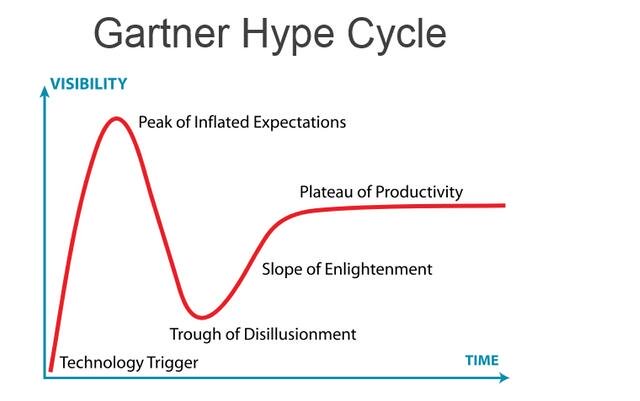
Yet consumers may not initially be all that perturbed when it comes to the exploitation of data. The technology’s nightmarish sci-fi potentiality poses more of a threat to its commercial success. By way of human nature, consumers will always doubt whether new technologies like Neuralink are viable and effective. Similar mistrustful attitudes surged following the launch of commercial space travel and active technologies, such as Blockchain, that have since passed the ‘peak of inflated expectations’ on the Hype Cycle. Neuralink’s novelty is the root of all misgivings surrounding its functionality. Despite Musk’s ‘three little pigs demo’ the likelihood of the technology working on humans is still disputed.  

The Garter Hype Cycle illustrates the different stages new technologies pass through before they allow users to make productive gains. Once the technology passes the ‘peak of inflated expectations’ it is on the road to becoming somewhat mainstream. Source: diamandis.com.

Novelty

However, this so-called novelty can also be challenged. Neuralink devices are not too different from micro-chip technology recently launched in Sweden. The Swedish chip is typically inserted into the skin just above the thumb using a syringe. It centralises personal information, including emergency contact details, social media profiles, identity cards and documentation, health records, bank details and much more. All the information can be accessed by swiping the chipped thumb against a digital reader. Though the benefits of Sweden’s micro-chip technology cannot rival the potential medical breakthroughs Neuralink’s brain interface proffers, conceptually both devices are very alike. The success of Sweden’s thumb micro-chips could foreshow widespread acceptance for Neuralink’s considerably more invasive product.

Proponents of Musk’s Neuralink will inevitably argue that the technology’s ability to provide treatment for untreatable medical conditions far outweighs the risk it poses. Even if the technology does deliver in terms of functionality and safety, the potential siphoning of personal data remains a conceivable danger. The value of data in today’s day and age is grossly underestimated; it forms the substructure of our economy and both subconsciously and consciously informs our spending habits as consumers, influences our thought process, and shapes our choices via targeted advertising. The consequences associated with allowing access to neural patterns that so precisely predict how we respond to the content we consume, the food we eat, and the people we interact with, may not seem significant. But it is.

Providing an opportunity for corporates to utilise our data by supporting ideas like the Neuralink brain-chip will alter our material reality – not in the fantastical futuristic way that many of us currently perceive, but in a much more subtle yet equally profound manner. The question left to answer is if the medical silver-lining is worth sacrificing control over personal information. Should we allow conglomerates to construct our expectations by misusing our personal information and enable them to tailor our reactions to the world for commercial gain?

Black people in America should not vote in this election

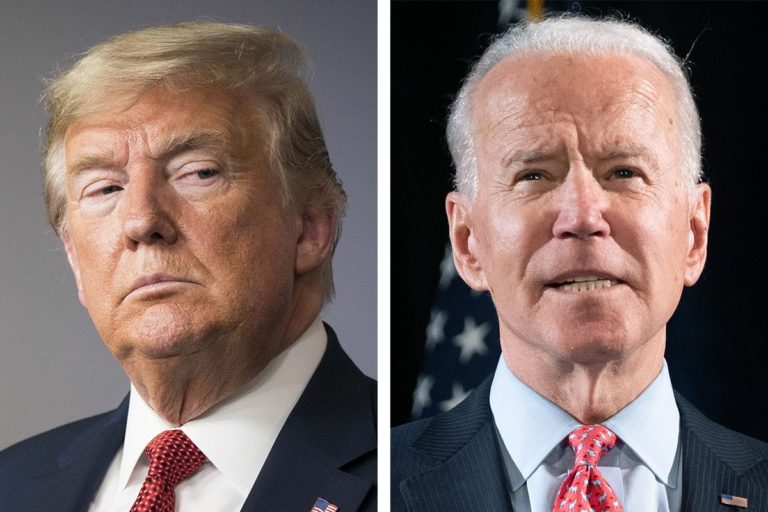
November’s US election will be the closest in history. The tight race between Democratic party leader Joe Biden and Republican President Donald Trump has made obtaining the Black vote a crucial part of Biden’s campaign. As a result, many senior black figures within the Democratic Party have called for African Americans to turn out for Biden, as they’d done for Obama. Despite this, many within the black community are not convinced that Biden can bring the much-needed change for them. So in this election, potentially, the most powerful thing African American voters can do is not vote at all.

The African American reverence for the Democrat Party has made the ‘black vote’ politically irrelevant. 

Since 1970, the percentage of African Americans that have voted for the Democrats has never fallen below 82%. This is higher than any other ethnic group. The black community’s total allegiance to the Democratic Party has a double whammy effect.

Firstly, because over 80% of African Americans will always vote Democrat, Republican Presidential candidates view the black vote as unattainable and therefore not worth pursuing. The effort required for a Republican to obtain a small fraction of the African American vote is so large that, sensible campaign strategists often advise focusing on other minority groups instead. Consequently, Republican candidates can double down on policies, namely drug enforcement, that disproportionately hurt the African American community with minimal consequences.

The second effect is that the reverence that African Americans have for the Democrats means that the Democratic Party does not have to work hard to get the Black vote. All the party needs to do to get the black vote is to offer an emotional argument, as opposed to creating stable plans to help the black community. 

Take Obama’s two election campaigns. During his campaign and time in office, Obama proposed and introduced policy programmes that helped minority groups such as the LGBTQ+ community. These policies include the Hate Crimes Prevention Act, the Repealing of the Don’t Ask, Don’t Tell law, and the ending of the defence of Marriage Act which defined marriage as only between a man and woman. Indeed, these policies are progressive and help groups often neglected in American. However, a serious question needs to be asked. Throughout Obama’s 8 years in office, he proposed or introduced a insignificant amount of policies that solely helped the black community. Despite this shortfalling, Obama was able to get 95% of the black vote in 2008 and 93% of the black vote in 2012. He was able to do this by appealing to black people’s emotions. The United States had never elected a Black President before, so by offering them the opportunity to put a black man in charge, the black community took it without asking any questions. 

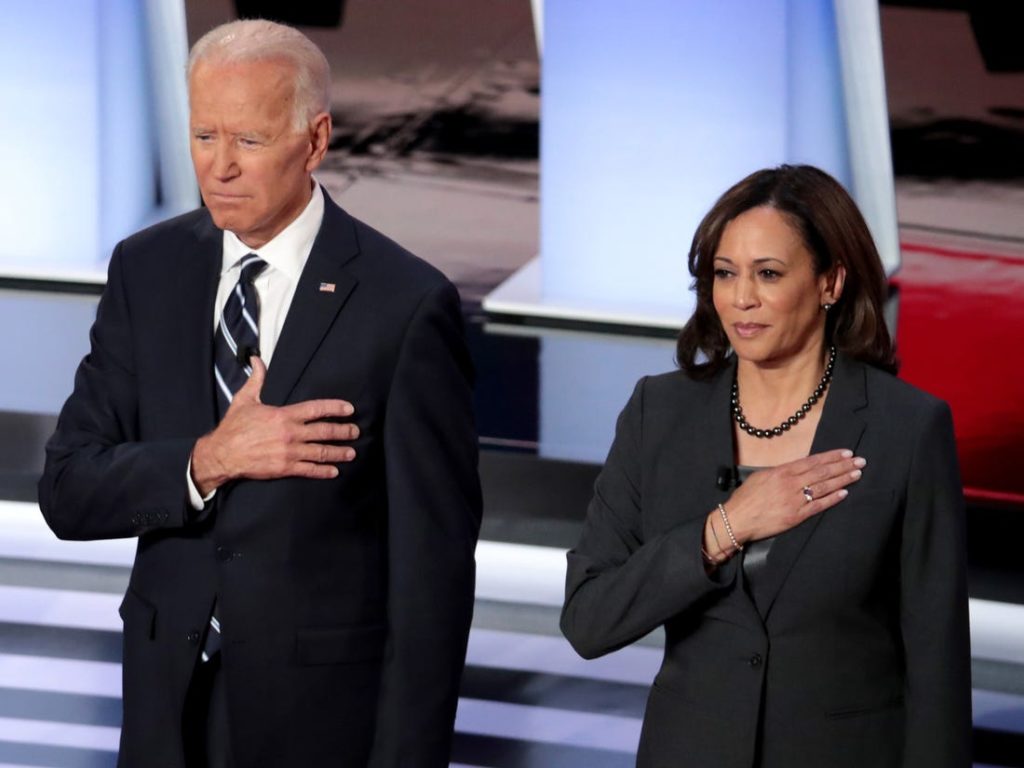
Joe Biden and Kamala Harris Source: Business Insider

Today, Democrats are attempting to do the same thing again. Instead of offering concrete proposals like a plan to stop police brutality, Biden is offering the same emotional argument Obama did. By selecting Kamala Harris as his running mate, he is allowing Black America to elect the first African American women into the white house.

History has shown us that there is a positive correlation between economic power and political power. The wealthier a group in society is the more political rights and freedoms they will enjoy. Take, for example, the industrial revolution. Pre-industrial revolution, political rights such as voting were reserved to wealthy white aristocrats who owned large sums of land. It wasn’t until the industrial revolution created an affluent middle class of property and business owners that the franchise was extended to include them. Furthermore, the contribution of working-class men in WWI and women in WW2 lead to a further expansion of the franchise to have everyone. Simply, political power and freedoms are only realised when a particular group in society becomes economically valuable. 

Therefore, it is no surprise that white men have the most political power when you consider the fact that white Americans enjoy 6.7 times more wealth than their black American counterparts. Thus, instead of the African American, hoping that a politician will save them, they should focus their efforts on generational wealth and improving the wealth of the black community.

Getting rid of Trump is not an achievement for Black America.

The economic and social problems that African Americans have would still exist regardless of who was in the white house. If Hilary Clinton had won the 2016 election George Floyd and Breonna Taylor would still have been wrongfully killed by law enforcement. Hence, it is immature to think that getting rid of Trump because of his openly racist comments and replacing him with somebody else will change anything.

An abstention will send a more vital message.

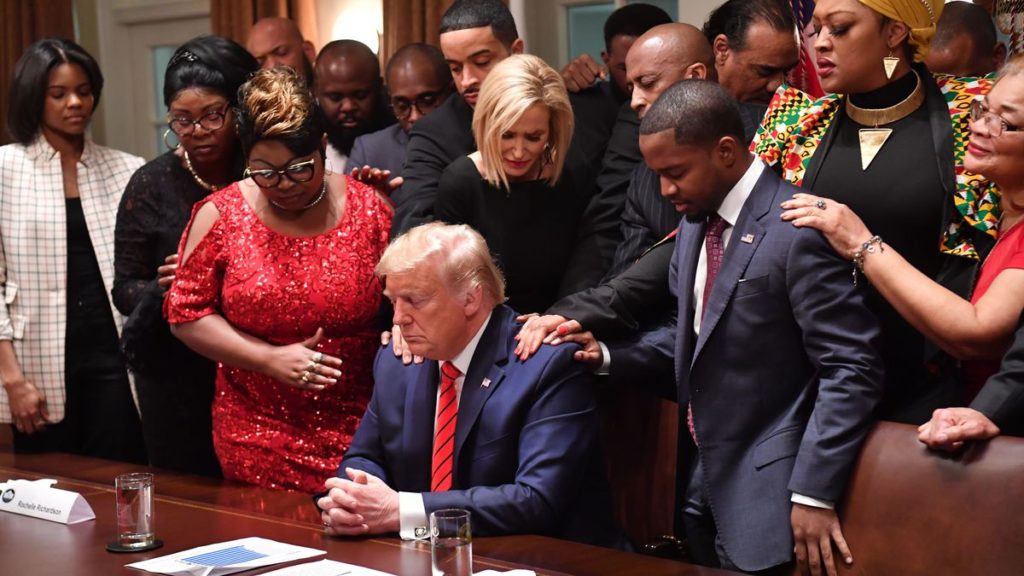
President Trump stands in a prayer circle with prominent black supporters in the White House on February 27, 2020.
 Nicholas Kamm/AFP via Getty Images

Given all the reasons mentioned above, the most powerful thing Black people can do in this election is not to vote at all. The impact that black abstention from the political process will have will send a massive message to both parties. Republicans will see it as an opportunity to secure a new voting base and will attempt to create a policy programme for African Americans. The Democrat party will also have to change. Once the black community shows them emotional arguments will not get them to the ballot box, the Democrats will have no choice but to offer a tangible policy programme to help African Americans.

The solution to inequalities and oppression experienced by black people in the United States is to stop voting for Democrat and Republican politicians until they start offering concrete solutions. The best way to force these two parties into providing more to the black community is to form a political union, in which the black community elects leaders. These elected leaders will then meet with both parties and offer the black vote to the candidates that provide the most to the black community.

We need transparency from the Police

Given the recent goings-on in America, and here in the UK, regarding police brutality and a seeming lack of compassion from public authorities for minorities, I decided to look into the nature of the relationship between public authorities and the people. It seems to me that there are a number of feedback loops that help sustain and widen this seemingly never-ending divide. In this article, I try to shed light on a few.

If there’s anything I have to say on this issue it’s that we do need more cooperation. Understandably, that’s not as easy as it sounds. If the answer is to break barriers down then the obvious questions that follow from that are of course “Well, which barriers? and what, or who is placing them there in the first place?”. I for sure cannot answer all of those questions – I don’t know all of them or even some of them for that matter.  But, I do have pretty good reason to believe the lack of trust is one, if not the first barrier, which we need topple – and will require a combined effort do so. I will get back to how I think we can do that at the end of this article. For now, please read a summary of what I came to realize whilst looking into these issues.

First and foremost, there is a growing lack of trust for the police within the British people. Black people distrust the police the most, compared to all other ethnic groups (GOV.UK), and the three most important factors, influencing whether a group trusts or doesn’t trust the police, seem to be quality of contact, the degree to which police are seen to treat everyone fairly, and quality of action. Generally, it can be said that people perceive the police to be dealing with matters that do not matter to their communities. It follows that this perception brings frustration as people infer from it that the police either do not care for or are not listening to their voices – They do not believe that the police are on their side. Knowing this, alongside the data which shows that police tend to believe in stereotypes of other people, is troubling.

For example, if many of the police take popular stereotypes about the black community to be true, such as having a proclivity for violence, gangs, and being anti-public authority then they are far more likely to behave with prejudice when interacting with members of this community. This contributes to the poor quality of contact and feelings of disrespect, and unfair treatment, felt within the black community, furthering their distrust and lack of confidence in the police.

It seems, to me, that the negative perceptions of black people, experienced by the police, lead to prejudice which then propagates the negative perceptions of the police, by black people leading to more apprehension and a general lack of the willingness to cooperate, analogously propagating the police’s perceptions. It’s a cycle.

Black lives matter protest, London. (Source: Unsplash)

I strongly believe trust and rapport are of such significance here. The most alarming negative externality of this damaged relationship between the people and the police is the reduction in crimes being reported. A reduction in crimes reported means a reduction in crimes solved and criminals apprehended. Analogously, this means a reduction in the risk of committing a crime and, consequently, more crime being committed – if you accept that a reduction in crimes reported is also indicative of an increase in criminal matters being dealt with outside of public authority, then that is even more frightening. The pressure to deal with injustices, coupled with no reliable authority to deal with it for you, may result in people putting theirs and others’ lives & safety at risk in order to resolve these issues. 

As I mentioned in the beginning, I think that building trust is the first step towards pulling these two sides (of really of the same coin) together. Trust is a key part of all relationships. Furthermore, I think we could all agree that trust requires at least a degree of transparency and accountability. Accountability because I need to be able to judge whether or not you’re upholding your end of the bargain and transparency (or you could say visibility) because, well, I need to be able see whatever it is before I can hold you accountable for it.

 (source: mediapart)

I think that once that basic degree of trust has been established we can then move towards collaboration and participation. Communities should have a say in the decisions made regarding the safety and betterment of their communities. The engagement between public authorities and minorities is terrifyingly low. How can you strive to help communities you’ve never even met, and aren’t even willing to? It’s like a doctor trying to help a patient without asking them what’s wrong. I think that by calling on the public for help, the police can more effectively allocate resources to the areas that need them most, but that if the public doesn’t trust them and cannot see them, well, they’re essentially calling from an unknown number – it’s likely to go unanswered.

Okori S. Lewis Mccalla is an award-winning Digital Designer from Bristol. Believing that technology and intelligent design will benefit society, his ethos is “engineering change”. Okori was awarded the Ben Martin Apprentice Award in 2020 for his work in art & tech. Okori was also made a Social Capital Network Scholar in 2020, a programme funded by Google. Okori is also a keen artist and director. In 2019, Okori was made BBC New creative having his debut short film A Fashion Show, which aired on BBC Four and BBC-Iplayer. With a bachelors in Marketing from Lord Ashcroft International Business School, Okori is passionate about communication and the obligation institutions and corporations have to spread the right message

A Left-wing BBC is an Insult to British people

Electing Tim Davie as the new head of the BBC is a controversial move. The BBC has failed in its balancing act between generating niche content and mainstream entertainment for millions of viewers. No 10 is threatening to scrap the license fee because the Beeb has consistently failed to uphold impartiality. License fee payers are dropping like flies as they don’t feel their views or interests are represented.

Right-wing comics were 13 times more likely to be gagged than left-wing figures. Cognitive diversity is lacking, despite 7% of the whole population being privately educated, some 70% of current affairs journalists were; compared with 26% of the law and medical school attendees.

Mr Davie will be taking a large pay-cut for the job, on top of turning down running the even better-remunerated Premier League. His first step is to restore comedy and remove the left, liberal political correctness dominating it. This came from the Prime Minister’s message to stop this “cringing embarrassment about our culture” (sic), after BBC Last Night of the Proms organisers decided to change ‘Rule, Britannia’ or at least have it instrumental only.

Boo Britannia, crippling embarrassment and shame about our culture // Getty

Younger viewers switched to streaming Netflix and Amazon anyway, leaving the older, more dedicated viewers largely alienated. Meanwhile, woke Twitter mobs have forced paranoid Beeb Commissioners to “no-platform” right-wing content, out of fear of reprisals from upsetting fragile sensibilities. Right-wing content is written off as potentially ‘racist’ and we get another Nish Kumar gig. This “Cancel Culture” has left the politicians, such as Trump and Boris, taking the role of the comedians in society when we would all rather more sensible politicians and more outrageous comedians.

Question Time’s panel has been heavily weighted to the Left, with panels all left-wing bar one token participant. The audiences too, with exposes that it is far easier to get on the show if you have left-wing leanings.

The public deserved to know about events like the Rotherham paedophile ring surrounding exclusively Pakistani men and 1400 young white girls groomed and raped, while the BBC muted coverage because it didn’t fit the agenda. The immigrant ‘children’ scandal broke after many of the children turned out to be grown, men. The BBC failed to report this after pushing a decisive agenda to get them admitted to the UK in the first place.

We now see the same with Brexit once again. Internet news is dismissed as “gutter press” and the general public input as “fake news”, while chronically underreporting prominent societal issues. It isn’t surprising it has lost the confidence and trust of the masses it no longer represents. They simply stopped listening to their social and educational superiors and hence we got Brexit and over in America, Trump.

BBC news logo // BBC News

The insult to the public has gone far enough. With the internet blowing open the Upper-Middle Class stranglehold and us learning the truth about many forbidden things like Jimmy Saville, they are understandably appalled.

Tim has a tough job ahead of him to reconcile both Downing Street and the public. In an organisation that is dominated by “privilege guilt syndrome” of privately educated students all dancing to the same tune, opening genuine diversity of opinion may prove impossible.

If the BBC continues to fail to convince the ordinary masses that the liberal elite are not virtue-signalling, out of touch, fools and hypocrites; then its future is in jeopardy. We need reporting that doesn’t only criticise English nationalism, only attack racism by whites, only decry sectarian and religious violence of Jews against Muslims or Protestants against Catholics.

Davie needs to get away from the Beeb’s obsession with physical “diversity” so long as the gay, black-Asian Muslim woman partakes in the same generic values of the institution as a distraction from genuine diversity of opinion.

We need proportionate airing of the failings, faults and iniquities of disadvantaged groups and cultural minorities. Right now, we are dishonest about social class and race to the extent we largely pretend they don’t exist. Instead, attributing their problems merely to “poverty” as the bourgeoise serve up as a ready-made excuse for society to not take responsibility or change.

Finally, the trustworthiness of the BBC is trashed in the eyes of the public considerably less stupid than the privately educated media can accept. Somehow, they have forgotten about common sense or personal experiences that do not need a private education and can trump political correctness propaganda every time. It invokes insult to their intelligence and they will not put up with it much longer.

Against a prevailing backdrop where facing up to truths is regarded as socially irresponsible, lies, distortion, suppression and deceit have become moral guiding principles. Whether it be in comedy, sitcoms or newscast; the perversion is breath-taking, but passes without so much as a raised eyebrow at the BBC.

Nevertheless, such social goods are hard fought, and easily destroyed. Let’s hope Mr Davie understands the gravity of the situation.

Why Covid Restrictions Are Like Britain’s Old 2 MPH Speed Limits

Life in Sweden went on largely as normal while other countries enforced strict quarantine measures. They have been successful in drawing a balance between the perils of social restrictions and the threat of Covid-19 that was both rational and measured to prevent their reaction being a classic case of the cure being worse than the disease.

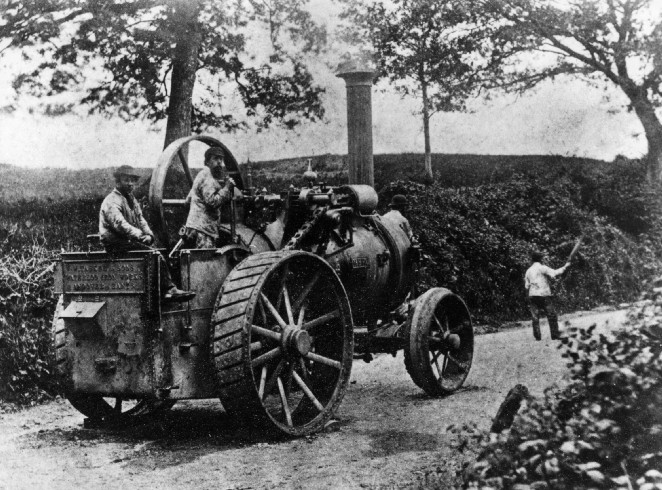
A similar precedent occurred in 1860s-90s England with the first motorised vehicles, “horseless carriages”, hitting Britain’s roads. Out of irrational fear over the dangers they posed, we set the speed limits to 2 MPH. It took some 30 years before campaigners forced society to wake up and realise any benefits conferred by cars were rendered useless by the protective measures in place.

Just as we were living in collective denial back then, quarantines and exacerbated fear over the threat Covid-19 poses us, have left us in a similar position today.

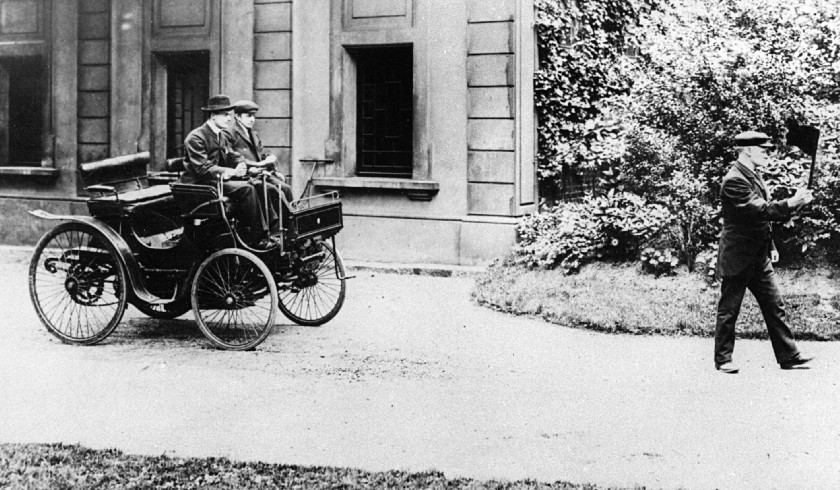
Person walking in front of the first cars bearing the red flag / National Motor Museum // Getty

Red Flag Laws

The “Locomotive Acts” 1865 were aimed to keep roads safe for horses, horse-drawn carriages and pedestrians. The speed limit was set at 2 mph within towns, 4 mph outside and a person had to walk in front of the vehicle waving a red flag at all times, earnings the restrictions the nickname “red flag laws.”

Some laws made sense in 1865, it wasn’t until 1896 that they were relaxed. Drivers had to post their name and address on the vehicle, stop if anyone with a horse was coming the opposite way and still travel at walking speed.

It was an old law applied to new technology removing the benefits it offered. In England, it stifled progress, killing off the automobile market for a time. Who would risk investing where there was no obvious benefit besides prestige? Until John Henry Knight fought the Red Flag Act, often through civil disobedience. In 1895, he built a vehicle to attract police attention and raise public awareness. The judge who eventually overturned the Acts saw reason that any benefits from having mechanised vehicles to travel quicker were lost in the irrationality of forcing them to go slowly.

Abiding by the 2 MPH town speed limits 1890s / National Motor Museum // Getty

The restrictions showed a profound lack of understanding and irrational fear over technological change and our patent unwillingness to adapt to the future.

Let the Government decide

Today, we are faced today with a society cowering in its boots looking to our government to save us and prescribe solutions to all our problems. We accept paternalism for an 8-year-old trying to buy fireworks or alcohol and accept the moral case for policymakers to use their coercive power to steer our choices towards what they believe best protect the interests of the general public. Whether this is smoking, overeating or recreational drug use on the basis for the presumption that the individual is not always the right person to decide what is in their own best interests.

 With the current Coronavirus restrictions, it is also crucial that any intervention is properly evidence-based. Nudges or mandates to curb infections need to be run by experts and not the politicians as recent history is littered with examples of harmful unintended consequences where policymakers follow the whims of the crowd mentality rather than making the hard, but responsible decisions on our behalf. Sweden listened to her experts and has come away relatively unscathed. Britain’s middle ground response is counterproductive as shown by encouraging a return to public spaces with Eat/Drink Out To Help Out August and then in September criticising young people for the rise in cases.

Nationwide lockdowns have caused unprecedented shrinkage to the UK economy, costing jobs, livelihoods, lower wellbeing, lost time and opportunities and a hidden mental health crisis. The restrictions were justified initially, but as the responses of countries like Sweden have shown, the cost of lockdowns just as red flags and walking speed limits for our first cars outweigh the benefits these “safety measures” provided.

Sweden’s response was based on expert recommendations, led by Anders Tegnell. While they failed in protecting elderly homes, they have continued life as normal and have one of the lower casualty rates. Meanwhile, they have been vilified in the international press for their recklessness, despite a government policy that empowered experts over politicians.

Fear

We are living in fear. Lack of knowledge and media hype made us worried about our own and our families’ safeties. We are still cowering in the shadows and probably will be for 1-2 years of our lives. Many of us are slowly heading toward financial ruin. All for a virus with a 0.1% fatality rate in under-70s. And, this was during the height of the pandemic when we did not know about all the other treatment options to preserve life. This is likely to be significantly lower now that we know how to treat it, and our elderly and high-risk populations are socially distancing until a viable vaccine. So, we are left with the rest of society in self-destruct risking many more lives from everything else we conveniently forgot about in the meantime and the tens of thousands who will die from the economy shrinking on top.

At this juncture, despite lockdown, rapid medical mobilisation, social distancing and hygiene measures; infections do not seem to be under control. Restrictions have their own associated challenges, whether preventing medical operations, check-ups, isolation harming mental health, job losses, stress, suicides and so on. It is a Catch-22 wherein we need to also appreciate how our responses will impact our lives in a world that has to move beyond Covid-19. There is an old saying every adversity is an opportunity too. This is no exception.

Human life > Economy

The issue at stake in England is not personal liberties or the economy, but collective perseverance to preserve human life and functioning healthcare systems. Britain has a strong tradition of civic responsibility and willingly committed to the joint effort. There is not really a priority beyond human life since there is not an “economy” that exists without it. Pragmatic concerns about not re-opening society sooner will undoubtedly continue to press against the need for safeguarding life.

As the Lockdown Poem competition gave us Julie Sheldon’s “Some of Us”, what we can do is persevere…

“All of us can choose to spend
Our days in fear and dread…..BUT
All of us can choose to plan
For better days ahead”

Why slavery really ended

Monday was America’s Labor Day to emphasise the dignity of labour. Although different to union strikes in 1894 that inspired the holiday, America’s Civil War “General Strike” offered a powerful example when the law prioritises property over people. England was forced to reckon with this dilemma many decades before, but what really caused slavery to be abolished in 1833, some 30 years earlier than in the Land of the Free and Home of the Brave?

We are told colonisation was not of any major economic benefit to Britain, but a benevolent act to civilise the world. A YouGov poll in 2014 found 59% respondents thought the British Empire was something to be proud of. We are told the slave trade was, of course, Islamic. The British, simply the middlemen. Not to forget Britain stopped it with the Abolition Act of 1833, paying a substantial sum in compensation to slave owners to facilitate this. Was slavery going to inevitably end because it wasn’t a financially viable system having already laid the foundations for a more efficient system of industrialisation, or was it the moral awakening of a truly global superpower throwing its weight behind abolition?

World map of slave trade – not an exclusively Atlantic phenomenon // United Nations

Abolition, emancipation and manumission

The Slavery Abolition Act of 1833 formally freed 800,000 Africans who were then the legal property of Britain’s slave owners. Less well publicised were clauses within to compensate the 46,000 slave owners £20 million by the British taxpayer for the loss of their “property”, representing 40% of the government expenditure for 1834. A modern equivalent of £17 billion. Besides the slaves and their descendants receiving nothing, they were also compelled to provide 45 hours unpaid labour each week for their former masters for four years after their liberation. This meant the enslaved paid part of the bill for their own manumission alongside their future generations paying off the interest on the debt undertaken by the British government.

Slavery benefits to Britain

From 1607 to 1807, about 2.5 million slaves passed through Britain. Loose estimates put the value of a slave at £100 in 1807, with half dying, unsold, lost or escaped, rendering £50 per slave. This leaves £125 million, equivalent of £610 billion in today’s money, making the trade worth £3.05 billion a year.

There were certain costs involved, not least purchasing them from the African slave kingdoms, who in turn, purchased them from African dealers. The currency ‘bars’ were not always accepted. Ships and crews were expensive. The profits went on products from the Americas. Many ships were lost to piracy, went rogue, or lost to rough weather or navigational error. They took a long time to complete the ‘Atlantic triangle’. The UK government and its taxpayers policed the seas via their general taxation, with the Royal Navy’s West Africa Squadron costing more to upkeep than the profits from 200 years of the slave trade. Of the British slave trade, a third of revenues, some £183 billion went toward British goods and services. Over 200 years, £915 million, sufficient to make a fair few individuals very rich, keep ports and supporting industries busy. But for the incalculable cost to human life and dignity, there really wasn’t all that much to show for it.

Foundations for Industrialisation

Caribbean academic, Eric Williams, published ‘Capitalism and Slavery’ in 1944 in which he argued the slave trade was critical to get the industrial revolution off the ground. For instance, James Watts invention of the steam engine was financed by plantation owners. He suggested slavery was abolished primarily in the 1830s, not because of our moral awakening, but because it was no longer economically advantageous. The margins between buying African slaves against what they could be sold for in the Americas was no longer profitable by 1800. It only lasted as long as it did because of subsidisation by the British taxpayer and the alternative incomes raised around the Empire.

The historian, David Richardson, concluded the slave trade made up 1% of domestic investment in Britain. While economic historian Stanley Engerman argued that at its highest, giving the benefit of the doubt to Williams’ figures, that the West Indian plantations contributed at most 5% to British national product in any given year.

If industrialisation made Britain wealthy, and not the slave trade, can we say the slave trade was vital to the industrial revolution in the same way as the colonial extraction of colonies facilitated the industrialisation of the world? India’s trade surplus financed the invasion of China in the 1840s, suppressing uprisings in Sudan, Boers, India itself in 1857, the Zulus and countless other pursuits to force the world to trade on Britain’s own terms.

Other players

Germany played the briefest of roles in colonialism and slavery, yet industrialised successfully. Portugal was the pre-eminent slave exporter over a longer period than Britain, yet entered a slow economic and political decline 150 years prior to Abolition. Spain, whom profited from both slavery and vast gold and silver shipments, barely industrialised at all until technological transfer from elsewhere. The Ottoman Empire had a fully fledged slave economy for half a millennium, all without having their own industrial revolution. It appears denying vast swathes of your population the ability to hone their own skillsets or earn their keep prevents them from meaningful participation in consumption or growth. The real accruals appear to be to individuals, rather than the state and its average citizen. The British state paid the costs of associated wars and security, and the costs of Abolition, taking on a vast loan on which the interest was finally paid off only recently.

As the case of the Ottomans and Germany has shown, the wealth built was less to do with slavery that has dated back through every known society to 5,000 B.C.E. And yet, only in a small snapshot of this 7,000 years have certain nations developed as the West did. This would support industrialisation as the foundation for modern wealth creation, albeit the mercantilist slavery seems to have laid the foundations for this.

Britain’s stately homes built on proceeds of slavery and extraction // British Country Homes

The possibility to begin the end to slavery was only achieved by a superpower that ‘dominated’ the whole world. Before then, no other society had the influence to drive such a change in the course of history. Within a few decades, a prevailing universal condition since the Neolithic times had reversed course to the extent that the mere sight of British sailors in foreign slave market ports would create a rebellion. Despite this, it took 100 years and the might of all the Western nations to end slavery globally. This took enormous time, money and effort to attempt to end slavery globally without any profit for Britain. It were only made possible by the power, influence and scope of the Empire, without which, it is quite possible slavery would remain commonplace today. And not because they foresaw the gross economic inefficiencies of slavery against liberated individuals partaking in free markets, but because it was the right thing to do.

We need to talk about Manchester City’s quest for world domination

Champions League semi-finalists RB Leipzig are the most hated club in Germany.

Established in 2009 through the purchase of SSV Markranstädt by famous energy drinks company Red Bull, they are the first club which a majority isn’t owned by the fans.

Other club’s fans view the team as lacking authenticity and an example of the bleak future of the soulless corporate wasteland football is to become.

However, there is a football conglomerate that has been quietly created right under the nose of the most lucrative league in world football, without a peep from fans and associations alike.

Manchester City are the cornerstone of City Football Group (CFG), a conglomerate established in 2014 by the club owners.

With a name like that, how many clubs do you think they have a stake in: two, three, maybe five? Try this…

TEN!

Yes, ten clubs are associated with The Blues’ parent CFG, whether it be wholly owned or they are partial stakeholders of clubs in ten countries across five continents, following the acquisition of Troyes AC, which confirmed earlier this month.

Of course informal feeder clubs to larger clubs exist (e.g. Beveren for Arsenal, Vitesse for Chelsea, or Royal Antwerp for Man United), but what Red Bull and CFG are up to is something totally different.

CFG is comprised of the Abu Dhabi Group who own Manchester City, an American private equity firm called Silver Lake and two large firms in China, one of whom is state-sponsored.

With £170m spent on the academy and a further billion pounds invested, the structure is there for the long term success of Manchester City and the CFG.

Its headquarters in England, is the base point from where their success flows. However, what has been created globally, is a bases for continental growth, domination and influence.

Especially with their strategy of targeting locations with social, economic and commercial value to be generated. All to increase the profile of football in those nations leaving CFG primed to nudge audiences who watch the Premier League to watch CFG backed teams in their own country.

The original visionary of the concept was Ferran Soriano, the former Vice President and General Manager of Barçelona who oversaw the commercial expansion of the Catalan club. This also coincided with a period of dominance on the pitch thanks to Barcelona’s golden generation of Xavi, Iniesta, Busquets and Messi just to name a few.

The goal looks like world domination, and so long as Manchester City keeps winning the potential is there to make it happen.

The silence of the powers that be such as FIFA, may imply they’re happy to see the increase in football participation in nations not commonly associated with ‘The Beautiful Game’.

All I can say is, watch this space, something is brewing.

Candace Owens is RIGHT

A Twitter spat between Candace Owens and Cardi B has saturated the political and entertainment sphere for weeks now.

On 6th September 2020, Candace Owens made scathing remarks about Cardi B whilst appearing on The Ben Shapiro Show.

She then tweeted “Since most black people didn’t have to admit @benshapiro was 100% correct about @iamcardib and how her music and platform contributes to the disintegration of black culture and values…here you go.”

Cardi B responded: “You wanna know why joe gotta talk to me Candice cause I have the #1 song & yet my sister can’t go to the beach in the Hampton’s wit out trump supporters harassing cause they were by themselves & Santa Claus was harassing my sis GF all because they are a Afro/Hispanic gay couple.”

Cardi B has 14.1 million followers on twitter compared to Owens 2.6 million, millions have been exposed to their argument, thus propelling them into the spotlight.

Owens is infamously hated by large parts of the Black community who see her as symbolic of the diversion away from the hive mindset in the Black American community. The Black community typically thinks in a monolith and assumes there is predominantly only one right way to vote, think, act and feel.

Owens in 2019 created the movement ” BLEXIT: The movement encouraging black voters to question the status quo”. to move away from the “Democratic plantation”. The status quo politically in America is one where Blacks vote for The Democratic Party.

Cardi B hits back at conservative commentator Candace Owens over her  criticism of Joe Biden interview | NME
(Left) Cardi B , (right) Candace Owens Source:NME.com

“Black voters appear to be an almost monolithically Democratic bloc. In 2016, black Americans cast 24 per cent of Democratic primary votes — the largest share ever. And in the general election, 89 per cent of black voters supported Democratic nominee Hillary Clinton.”

The black vote is crucial and utterly pivotal to winning elections, Joe Biden recognises this and with his previous statement in May that if you vote for current president Donald Trump where he said to a black host “ain’t black.” Ultimately this screams to the notion of how Democrat leaders view black voters, unintelligent, assumptive and without political education. This needs to change.

Cardi B Talks Police Brutality, COVID-19, and the 2020 Election with Joe  Biden | ELLE - YouTube
(Top) Cardi B Joe Biden (Bottom)

On Monday 17th August Joe Biden was interviewed by Cardi B which leads us to another question; why do entertainers interview political figures? Joe Biden is in the presidential race and requires a challenge not a token feature with a well-renowned rapper, she is not what black America needs right now. It was strategic, they used culture to pacify black America, This highlights the culture of entertainment, whereas politics affects people lives, it has real-life consequences which will not be presented, explained or challenged well by an entertainer who has no political knowledge. Joe Biden could have and should have been interviewed someone who can challenge him.

Trump says 'not involved' in Republican efforts to help Kanye West contest  presidential election | South China Morning Post
(Left) Kanye West and (Right) Donald Trump Source:nbcnews.com

Interestingly Owens did not have the same reaction when she supported Kanye West who has some equally deplorable lyrics such as Kanye West “I’m a sick f**k, I like a quick f**k, I like my d**k sucked.” Owens has drawn the moral line at where someone agrees with her politics with is disingenuous, but also it is morally inconsistent and it should apply irrespective if Kayne or Cardi B align with her politically.

Typically Candace Owens words are not very digestible to the mainstream black thought, and I find myself agreeing with her this time. Joe Biden deserves genuine questions that force people to think, and in another breath what I see here is the argument between two black women, is this still not reminiscent of divide and conquer? As prominent black women perhaps they could come together and find a solution that empowers the black community through politics and entertainment.