Home Blog Page 87

Corbyn, Jeremy Corbyn – Secret Agent?

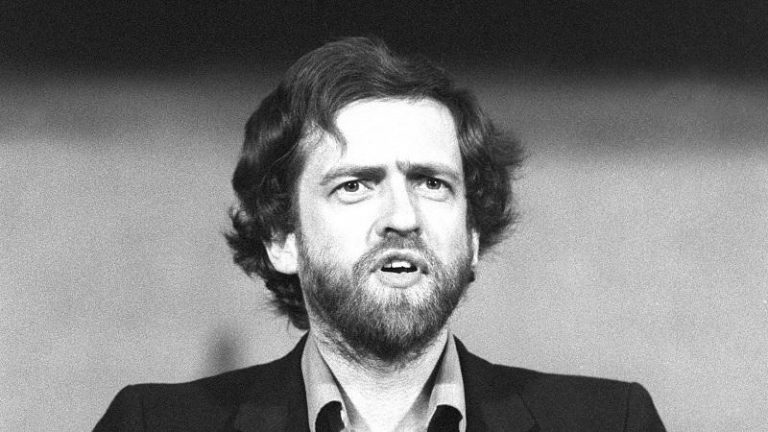
On Thursday morning The Sun published startling allegations against Labour leader Jeremy Corbyn, claiming he made contact with a Czechoslovakian spy in the 1980s. According to the article, Corbyn met Lt. Jan Dymic at least three times in 1986, with two of those meetings at the House of Commons. In these meetings, Corbyn is supposedly providing information to Dymic about the arrest of an East German spy by MI5. The paper also claims to have documents in which Corbyn is listed as official source by Czech authorities, and is even given his own nickname, ‘COB’.

A Labour spokesperson has strongly denied the allegations, calling them an “entirely false and ridiculous smear”. He went on to state that while Corbyn, along with many other MPs, held meetings with diplomatic staff from various countries, he has never knowingly met with a spy, nor anyone called Jan Dymic.
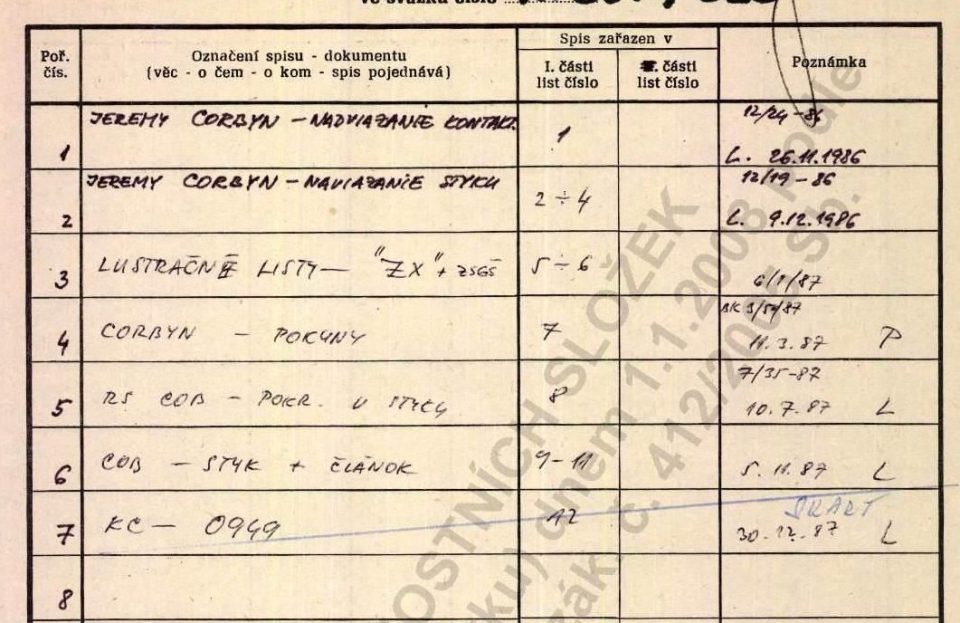
A Czechoslovakian file obtained by The Sun outlining supposed meetings with Corbyn (Source: The Sun)

It is important to remember that these allegations have the potential to be particularly damaging to Corbyn by tying him to left-wing extremism. Czechoslovakia was of course a communist country, and a member of the Warsaw pact, with close ties to the Soviet Union. Evidence of collusion between Corbyn and Czechoslovakian agents would further fuel criticisms levelled at the Labour leader by those accusing him of being a far-left radical with links to authoritarian regimes. This is a weakness that Corbyn’s political rivals have taken advantage of before, one which has certainly set back his popularity among older voters with strong memories of the Cold War and the ideological struggle it entailed.

However, in the long run this story is unlikely to have much traction, particularly with Labour-leaning voters, when its explosive allegations are unpacked. It is definitely plausible that Corbyn met with a Czechoslovakian spy, yet if this is the case it would almost certainly have been one posing as diplomatic staff. As the Labour party statement pointed out, it was not uncommon for MPs to meet diplomatic staff, and there would likely have been no way to know the background of these so-called diplomats for sure.
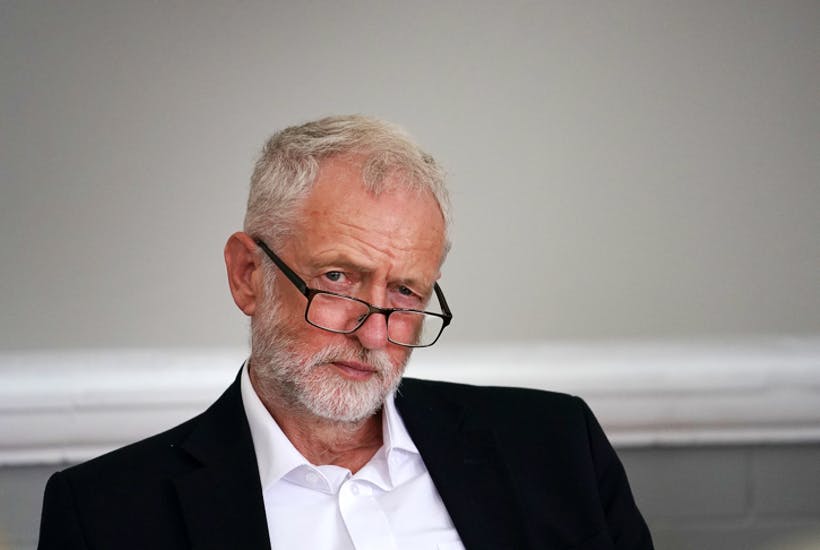
Jeremy Corbyn’s office has responded angrily to the allegations (Source: The Spectator)

It is also hard to imagine what useful information Corbyn could possibly have given a foreign agent. He was a left-wing backbencher who had only recently been elected, representing a party that had long been in opposition. We must ask how and why anyone with important and sensitive information about national security would share it with him of all people. Indeed, The Sun’s article states the information he provided on the arrest of the East German spy was through an article he showed them from the Sunday People newspaper – hardly giving away state secrets. Among the other revelations levelled against him in this story is the Czechoslovakian report’s description of Corbyn’s views as – hold on to your hats – “negative towards USA, as well as the current politics of the Conservative government”, at a time when Ronald Reagan and Margaret Thatcher were at the peaks of their respective political careers. You probably didn’t need a secret dossier to work out Corbyn wasn’t a fan of theirs.

There may be a case to be made that Corbyn was naïve to hold these meetings at all. As some have pointed out, meeting any embassy staff below the position of ambassador, particularly from countries with an uneasy relationship with the UK, ran the risk of being caught out. This may prove to be valid, depending on whether more information about the nature of these meetings comes to light. Yet the point is that at present all this story will do is make those already hostile to Corbyn become even more so. While failing to unsettle his supporters. In such a strongly polarised country as the UK is at present, it will take more than vague rumblings of espionage to sway the Labour-sympathetic electorate.

In Honour of the Political Gaffe

There really is nothing like having a good laugh at a politician’s expense. A large portion of their job includes having to be on their best and most respectable behaviour at all times, in order to win people’s support, whilst constantly in the public eye. Yet this just means their mistakes (and subsequent attempts to backtrack from them) are all the more amusing, and can remind us that deep down, they can be idiots like the rest of us.

However, in the age of President Donald Trump, the glorious art of the political gaffe has sadly become an increasingly rare thing. Ironically, this is because he makes so many mistakes, and acts with such a lack of decorum so often, that we have all become completely desensitised to them. He doesn’t worry about the mask of professionalism slipping, because it was never really there in the first place. So the following list of political errors highlights how much has changed in what we have come to expect from our politicians since Trump took power. But mostly it just gives us a good chuckle.


Neil Kinnock – “We’re alright!”

Holding a massive festival-style rally celebrating your party and its leading members in the days following an election victory would be cringeworthy enough. Neil Kinnock’s Labour party, though, decided to hold their big election party before the actual election in 1992. What was presumably expected to drum up support and make the party seem like a credible government in the final days before the vote was widely mocked for its premature triumphalism. This was best summed up by Neil Kinnock bellowing “We’re alright!” (or “well alright” depending on who you ask) at a confused audience, like a tipsy dad trying his rock star act on karaoke night. The rest is history as Labour ended up losing to the Conservatives and staying out of power for another five years.

Howard Dean – the scream

Despite being the frontrunner for the Democratic nomination in 2004, Howard Dean had just suffered a disappointing third-place defeat in the first primary in Iowa. After this setback, he reassured his supporters that together they would travel around the country, fighting back and winning. He listed all the states they would visit, until his speech reached a climax as he promised to go to Washington D.C. to take back the White House. So far, so good. But then, inexplicably: “YAAAAaaaahhh”. An unsettling cross between a roar and a squeal, it made him the party’s laughing stock – safe to say he did not win the Democratic nomination that year.

Gordon Brown – bigoted woman

This is by far the most excruciating mistake of the bunch. Try to put yourself in Gordon Brown’s shoes here – imagine trying to respectfully listen to a woman complain about immigrants when you strongly disagree with her but can’t say so, then grumbling about her while your microphone is still on, having the footage played back to you on live TV, and finally having to go back to apologise to the enraged woman. As well as being horribly cringeworthy in itself, it was another career blow to an already unpopular Prime Minister, and losing working-class voters like Gillian Duffy, the woman in question, ended up costing him his job within a month of the scandal.

Rahul Gandhi – ‘potato factory’

On the surface, India’s Rahul Gandhi has it all going for him. He is the beneficiary of good looks, a world-class education and most importantly, is part of a dynasty that includes several Prime Ministers, such as Jawarharlal Nehru and Indira Gandhi. Yet one minor issue stands in his way: he clearly doesn’t want to be there. Despite being essentially the leader of the opposition in India, he doesn’t seem particularly bothered about politics, and makes plenty of careless, high-profile mistakes. One of the best of many such mistakes is his apology to his audience during a speech that “you all are demanding a potato factory in your area, but you should understand I am an opposition leader. I cannot open a potato factory.” Expect to see potato factories spring up all over the country if he gets in at the next election, then.

Memes abounded after Rahul Gandhi’s ‘potato factory’ comment (Source: whatsappstuffs.in)
Dan Quayle – potato(e)

Gandhi will be relieved to hear that his is not even the most infamous potato-based gaffe on this list. That dubious honour goes to former US Vice President Dan Quayle, who, during an election campaign, convinced a 12-year-old that his correct spelling of ‘potato’ was wrong, and needed an ‘e’ on the end. He later claimed he was relying on cards provided by the school, which he questioned but decided not to challenge, as though having a Vice President who lacks the confidence to know whether he can actually spell potato correctly is that much better than one who just can’t spell it. At least Trump in the same situation would have the conviction to follow it through, and argue that his is the right spelling and that the English dictionary’s version is fake news.

Angela Merkel – Berlin in Russia

At a time of instability in Europe, many see Merkel as a safe pair of hands. She has been Germany’s chancellor for over 12 years, and has developed a reputation for quietly and determinedly getting things done without any real drama or controversy – yet this video is a great reminder that no matter how much prestige or respect you accrue while in power, you can always make a pillock of yourself by having no idea where your country is on a map, to the delight of giggling teenagers.

John Redwood – Welsh national anthem

We’ve all been in that situation where you don’t know the words to a song you should, whether it be through missing a hymnbook in church or not knowing Africa by Toto as well as everyone else seems to in a nightclub. Not knowing the Welsh national anthem when you’re the Welsh Secretary is definitely worse than either of these, but in any case, trying to mime lyrics you clearly don’t know just doesn’t work. It has never worked and it never will, John Redwood.

https://www.youtube.com/watch?v=GzBq0n8dxFQ

Jeb Bush – whole 2016 campaign

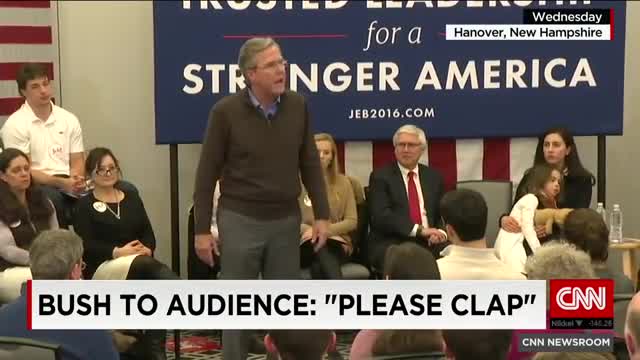
Last, but certainly not least, we have John Ellis Bush Sr. It’s very easy to forget that at one point Jeb Bush was supposedly a Republican frontrunner for the 2016 election, one who would surely beat outsiders like Donald Trump. Yet his campaign’s trajectory was the exact opposite of Trump’s. If Trump was a ‘Teflon man’, with no scandal ever sticking to him, Jeb was a Velcro man. Strictly speaking he never did anything wrong, particularly compared to Trump’s antics, but a succession of minor yet bizarre and embarrassing mistakes turned him from a credible candidate with significant political experience into a tragic figure of almost Shakespearean proportions. Whether it was his regular mauling by Trump in TV debates, getting kicked out of a venue half way through making a speech, or having to ask his audience to clap him, it seemed as though not only was his campaign futile, but he was fully aware it was. The video below, in which Jeb fully embraces the hopelessness of it all, sums up perfectly why, particularly in the age of the scandal-proof politician, we may never see his like again.

Does America need another Kennedy?

If you thought the Clintons were a dynasty, think again. They pale in comparison to the family that has provided a president, five other members of Congress and two US ambassadors, among many other things. Their most famous son is considered one of the most high-profile presidents of all time, whose life and death are common knowledge not just in the USA but throughout the world, and the very invocation of whose name is shot through with meaning and poignancy (as Dan Quayle learned the hard way in the video below).

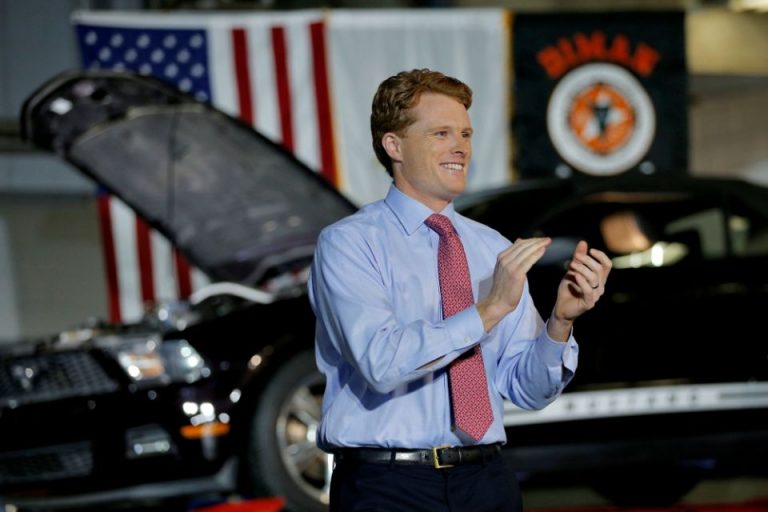
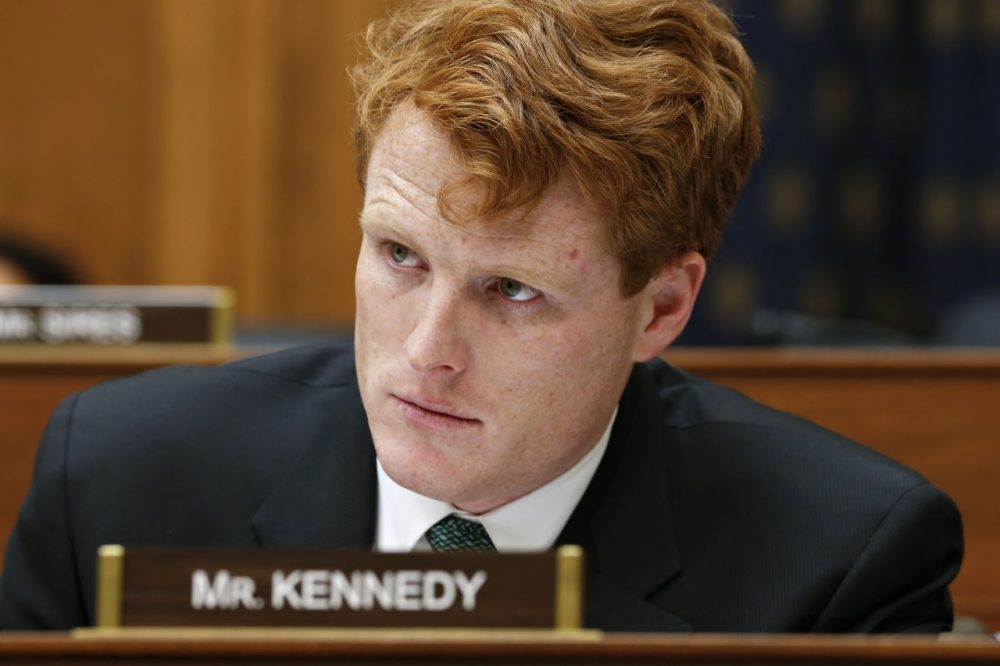
Now, the first of a new generation of Kennedys, the grandson of Bobby and great-nephew of John F., has entered the political scene. Joe Kennedy III was chosen by Democratic leaders Nancy Pelosi and Chuck Schumer to give the party’s official response to Trump’s State of the Union address. In his speech, Kennedy put forward a strong message criticising the Republicans’ rhetoric of making ‘trade-offs’ between different communities, doing harm to some in order to help others, essentially pitting Americans against one another. His vision of the Democratic alternative to this state of affairs, of “choosing both” instead of favouring one side over another will have gone down well among the party’s faithful.

Under normal circumstances, the young Kennedy would certainly be destined for success. He is charismatic, put in a strong performance for his first major showing at a national level, and has the most household of names to remind people of his political pedigree. However, the politics of the last few years has been marked by a sudden move away from a political elite, one which is epitomised by powerful families whose influence spans decades. Hillary Clinton and her shock defeat in 2016 are one example of this, while another is the Greek tragedy of Jeb Bush’s 2016 campaign, memorable only for its utter hopelessness. In these anti-elitist times, a family name like Kennedy’s can prove to be a millstone around the neck for a young political career, loaded as it is with connotations of privilege and advantage. Much onus will be on Kennedy to prove he is not in any kind of elitist bubble, and can relate to the interests and concerns of ordinary voters.

Joe Kennedy III, whose surname still precedes him in American politics (Source: AP)


Despite all this, don’t bet against Kennedy having a long and successful political career – your average dynast, he is not. He currently chairs the Congressional Transgender Equality Taskforce, and invited a transgender veteran as his guest to his State of the Union response in order to protest Trump’s ban on transgender soldiers enlisting in the US military. He has also gained attention for his various international works, such as helping to organise tour guides into effective unions in order to push for higher wages, and serving as an ‘Anti-Poverty Consultant’ to the president of Timor-Leste. If he can continue to show such apparent passion for individual causes and concerns, he may well win over many voters as he rises through the political system.

All this assumes, though, that he wants to rise at all. Since his address, he has told the ‘Off-Message’ podcast that he has no intention of running for the White House any time soon, joking that he would only get directly involved in the 2020 race as Oprah Winfrey’s Vice-Presidential candidate. Instead, perhaps sensibly, he suggested that the leading figures from all factions of his party should run in a “big, messy primary” so that the party can start to work out its ideological standpoint again. Yet even if he does not take centre stage straight away, you get the feeling Joe Kennedy III will be around, waiting to choose his moment.

The New Samsung Galaxy

by Jireh Antwi

Samsung’s next flagship phone and probably the most anticipated phone of 2018 is coming soon. The S9 and S9+ is nearly here.

With a rumoured camera upgrade having a dual camera similar to the Samsung Note 8 And iPhoneX, an improvement in low light shots provided by sensors with variable apertures, the new phone also comes with a new colour palette of Lilac Purple and Coral Blue. AND it still retains its headphone jack unlike the new Apple iPhone.

The predecessor of the S9, the S8 so far has been a fantastic and useful phone for the modern consumer, and a huge success for Samsung, being one of the first to be Bezel-less and featuring all screen to edge display. The S9 is expected to have a 5.77-inch display compared to the 5.8-inch display of the S8, nonetheless the reduction in size will surely be made up for in other aspects.

There have been leaks on the new Samsung S9 with reports showing features that the IPhoneX doesn’t have. Whilst the iPhoneX was a top standard performance phone, it is to be believed the S9 will be the new forerunner.

Samsung will only build or as their phrasing it reimagines on the S8 rather than a complete overhaul with the addition of having Android 8.0 as its operating system from the offset and equipping it with Bixby AI.

Unfortunately the concept of the bendable dual screen isn’t yet here on this S9 model but I’m sure Samsung will be on the forefront to make it happen.

Samsung is hoping to release a phone that will be sure to turn heads, a concept like this.

Announcements for the phone will be given at the Mobile World Congress on February 25. With the phone being rumoured to be released early March. Our sources tell us that the new phone is NOT going to be called the S9. Has Samsung found a way to beat Apple on the phone numbering system? iPhone X may have to watch its back. For more updates, be sure to keep checking out the TCS website.


Jireh is a Microbiology and Molecular Biology graduate from the Manchester Metropolitan University.  He has a passion for various different sports, scientific discovery and trainer brands.

The Berlin Wall Has Now Been Down Longer than it was Up, yet European Cities Remain Divided by Walls

By Ruth Foster.

The Berlin Wall has now been down for longer than it was up – 10,318 days, or 28 years, two months and 28 days.

The wall between East and West Berlin divided the city both ideologically and physically from 1961 to 1989. For many, the images of the wall’s destruction symbolized the triumph of Western capitalist values over those in the communist East, with German Chancellor Angela Merkel declaring in 2014 that it was a “yearning for freedom” that brought down the wall. However, 10,318 days on, the wall continues to create divide both physically and ideologically in the US and Europe.

Men hammering down the wall in 1989 (Photo: Alexandra Avakian www.smithsonianmag.com)

The symbolism of the collapse of the Berlin Wall has been given a privileged position in the collective consciousness of Europeans. Today, Berlin is a city celebrated for its international outlook, liberalism, and freedom, with remnants of the wall throughout the city acting as reminders of how ideological differences can justify the repression of such freedom.

In contrast to this, in June 2015 Donald Trump launched his campaign for the White House with the promise to build “a great, great wall” along America’s southern border with Mexico. Since then, “build the wall” chants and calls for stronger border security have become synonymous with Trump’s presidency. The conflicting rhetoric of the celebration of freedom that brought down the Berlin Wall with Trump’s campaign promise reflects both the triumph and failure of security policies in modern times. Despite the lessons learnt from the fall of the Berlin Wall, cities in Europe remain divided today along ideological and ethnic lines.

Part of Trump’s election campaign was the promise of a wall separating Mexico which he claimed he would make them pay. (Image CNN)

Here are two examples of divided cities that remain in Europe:

Nicosia, Cyprus
Widely reported as “the world’s last divided capital city”, Nicosia was originally divided into Greek and Turkish Cypriot quarters with the Green Line in 1963 following intercommunal violence between the two communities. The United Nations Buffer Zone in Cyprus was extended following a ceasefire in 1974, and continues to be patrolled by the United Nations Peacekeeping Force in Cyprus. The island of Cyprus itself is divided into Cyprus and North Cyprus, with the latter being recognised by Turkey as the Turkish Republic of Northern Cyprus, (TRNC) and the former being recognised internationally as Greek Cyprus. Despite the efforts of grassroots peace groups across the island, recent UN-backed peace talks between Greek- and Turkish-Cypriot delegates in Switzerland last year collapsed.

Turkish Cypriots consider there to be a boarder necessitating passport control when crossing from one side to the other (Image: BBC)

Belfast, Northern Ireland
Despite the signing of the Good Friday Agreement in 1998, a total of 99 different security barriers continue to separate Catholic and Protestant communities in Belfast. CAIN defines these barriers – ironically called ‘peace lines’ or ‘peace walls’ – as physical barriers constructed of concrete, stone, and/ or steel which represent “the most visible form of the ‘sectarian interfaces’ between the two main communities in Northern Ireland. These barriers originated in 1969 as defence mechanisms between the two communities, and were intended to be a temporary measure of control. However since 1998 only one barrier has been removed, with research conducted since the Northern Irish peace process indicating that young people who have grown up with the barriers are less likely to support their removal.

Peace wall separating Catholic and Protestant Belfast west (Image: Belfast Telegraph)


Ruth is a final year undergraduate student at the University of Edinburgh, originally from Northern Ireland. Her aim in life is to try and make the world a little bit better and care about the right things, which includes (but is in no way limited to) storytelling, politics, culture, and coffee.

Twitter: @fosttweets

Justin Timberlake: Super Bowl Fail

Justin Timberlake has been under constant fire since the Golden Globe awards. He was seen to be supporting the Time’s Up initiative, although he’s in a current Woody Allen movie: a man accused of sexually assaulting his adoptive daughter when she was just seven.

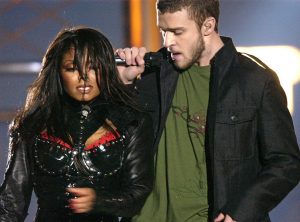
Then came the Super Bowl. The last time Justin Timberlake performed at the Super Bowl was in 2004 alongside Janet Jackson. The performance ended with him singing the iconic “have you naked by the end of this song” line and then exposing Janet’s breast in what has since been dubbed a “wardrobe malfunction” (one that, some argue, put a halt on Janet’s career for years).

Justin Timberlake and Janet Jackson during the 2004 Super Bowl halftime show.

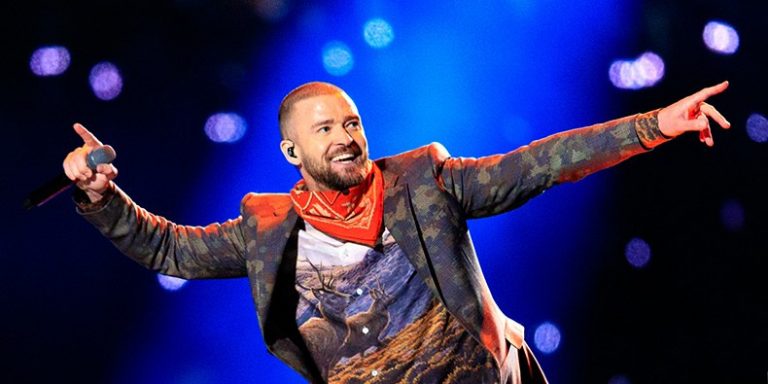
 So it was a shock to most of us to see JT invited back to perform 14 years later. Justin’s performance shocked many: it was not the redemption we had all been hoping for, but instead featured bad lip synching, low microphone quality and a Prince tribute that was hit and miss.

The performance, which has been likened to karaoke by Trevor Noah, was almost painful to watch. It started with JT pretending to be a band leader and ended with an awkward fan selfie. The vocals and microphones weren’t the only things causing confusion, as the mismatched backing dancers didn’t seem to fit in anywhere either.

Amidst all this confusion, JT went a step further and gave us a tribute to Prince, who passed away in 2016. Prince was from Minnesota and so it was, at face value, a commendable attempt to pay tribute to the iconic singer. But seeing as though Prince and JT had never liked one another, the tribute seemed faker than him pretending to sing in the first place. Adding insult to injury, JT included a video of Prince performing and turned it into a duet of the two of them while he played and sang from a piano.

Prince appeared post-humously alongside JT via projected footage of his iconic half-time show at the Super Bowl in 2007

This becomes exponentially more distasteful when recalling that Prince had been vocal about the fact that, when he died, he did not want to be brought back as any kind of holographic image. He went as far as to label it ‘demonic’. Clearly, JT wasn’t bothered by Prince’s demands.

On top of that, Timberlake’s new album, ‘Man of the Woods’, has been absolutely ripped apart by critics. It’s safe to say JT has not enjoyed the best start to 2018.

Having said that, the half-time show was an entertaining spectacle, as it always is, and the band played superbly.

The performance can be watched here:

Kylie Jenner Baby… News?

20 year old Kylie Jenner, the youngest of the Kardashian/Jenner clan, has revealed that she gave birth to a baby girl on 1 February.

Whilst this may have been the first public announcement, fans of the influencer had been hinting at a pregnancy with her boyfriend, rapper Travis Scott, for months.

Kylie went from being known for showing off her body and outfits on Instagram to being seen only in baggy outfits to not being seen at all, choosing to only take selfies in angles that never quite showed her stomach.

View this post on Instagram

♥️

A post shared by Kylie ? (@kyliejenner) on

Some fans even went as far as to speculate that a pact had been made between the sisters, seeing as three of them were pregnant at the same time. Kim Kardashian was having her third child via surrogate, Khloe later announced that she was pregnant and now with Kylie confirming the birth of her daughter it has led some to believe that there may have been some truth to the rumour after all.

As Kylie made her announcement on Instagram, she also released a video documenting her pregnancy. It received mixed responses, but for the most part it seemed to have people shedding tears of joy as they were invited to share in Kylie’s experience.

There are, of course  many people who don’t agree with the reality star’s choice to hide her pregnancy from the world. Others applauded her decision, recognising that it as a wise choice that others in her position may not have thought to make.

Matching tattoos- Travis Scott
Matching tattoos – Kylie Jenner


As Kylie and Travis are yet to reveal the name of their child, the fans are back to speculating. The idea that most seem to share is that the baby may be named ‘Butterfly’ due to the pairs matching tattoos and the fact that they noticed a butterfly necklace and butterfly decorations in the video.

The video, ‘To Our Daughter’, can be watched here:

What would another ‘grand coalition’ mean for Germany?

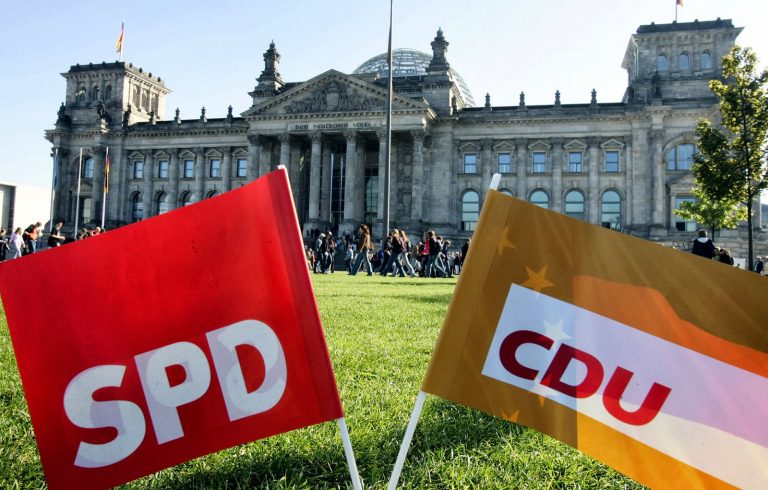
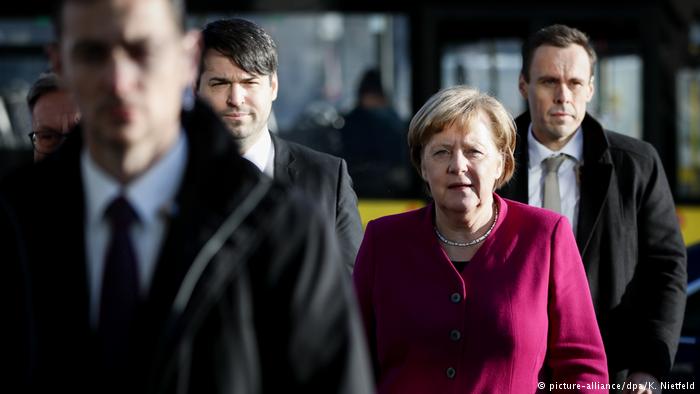
Germany’s two leading parties, the Christian Democrats (CDU) and the Social Democrats (SPD), are currently in talks to unite in another grand coalition to put an end to the country’s continuing political instability. Carsten Schneider, a negotiator for the SPD, said a deal between the two parties was ‘90-95% completed’, with both sides hoping to have concluded it by Tuesday evening. Even at this stage, however, key issues continue to divide the parties, with the SPD pushing for significant reforms in healthcare and labour policy while the CDU, led by Chancellor Angela Merkel, advocates the status quo.


German Chancellor Angela Merkel arriving for the final day of talks on Tuesday (Source: Picture-alliance)

Even if a satisfactory deal is reached, the SPD must then put a vote to its membership on whether to accept it. This may prove a significant hurdle to overcome before a government can be formed, as the party’s youth wing ardently opposes any union with the CDU and will likely campaign for members to vote against any final deal. Many party members are wary of the electoral effects of joining another grand coalition, having suffered significant losses at the 2017 federal elections following a four-year term alongside the CDU in government. Even party leader Martin Schulz appeared to have been against the idea, having stated after the election that the SPD would enter the new parliament as an opposition party, before having an apparent change of heart. If the SPD fails to approve the deal, then, Merkel will be forced either to lead a minority government or to hold new elections.

If a deal does go ahead with party approval, and a grand coalition is formed, the country as a whole is likely to benefit, at least in the short term. The coalition will likely have a majority of around 90 seats, and should thus be able to pass the legislation agreed upon by the deal without much threat of parliamentary defeat. The government will also be able to present a more coherent and united front at the domestic and international levels, which is particularly important at such a crucial juncture for the future of European politics, with the ongoing Brexit negotiations and the continuing rise of Euroscepticism in a number of EU nations.

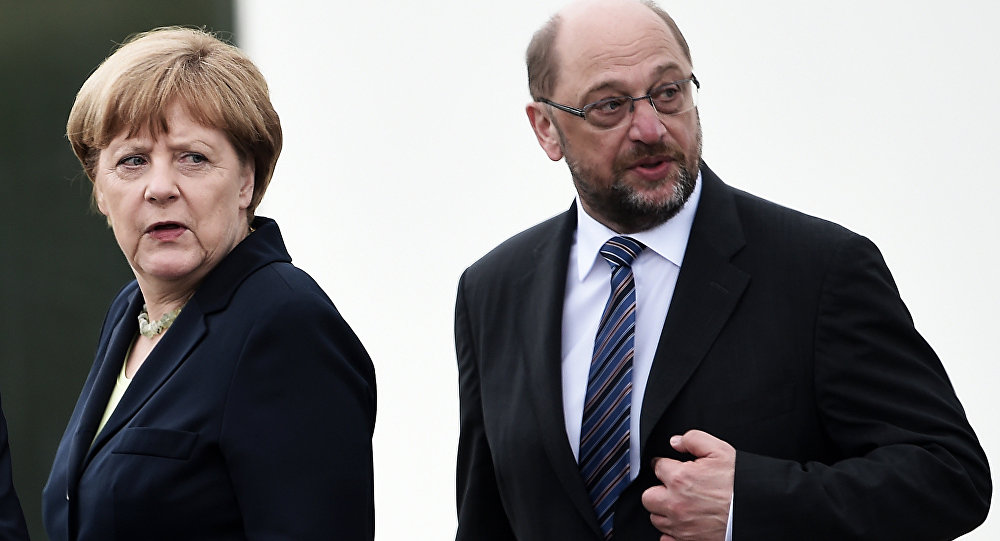
Merkel with SPD counterpart Martin Schulz (Source: AFP)

However, in the long run, both parties may suffer from entering this alliance. If the federal elections last year are anything to go by, grand coalitions such as this do not benefit the parties involved, with both the CDU and the SPD suffering significant losses to the benefit of smaller parties. Satisfaction with government performance is a key factor in deciding government support, so when both main parties are members of a government, those who are dissatisfied with the government turn to outsiders when casting their vote. Traditionally minor parties, becoming the main opposition to government in absence of a larger party performing that role, can expect to make major gains from those who disapprove of the government. In this case, we may expect to see increased support for Alternative for Germany (AfD) on the right, the Free Democrats (FDP) in the centre, and The Left (unsurprisingly) on the left. Ironically, the two main parties choosing to keep power concentrated between themselves may move Germany towards a more multi-party system.

Irish abortion referendum to be held in May

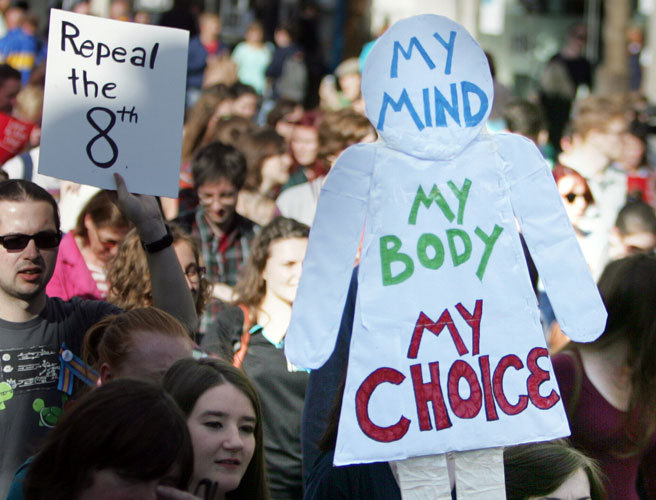
Irish Prime Minister Leo Varadkar announced this week that a referendum on repealing the Eighth Amendment to the country’s Constitution will take place in May. The Amendment, which purports to give ‘equal status’ to a mother and her unborn child, means in practice that abortion is only permitted in case of risk to a mother’s life, but not in cases of rape or severe foetal abnormality. Varadkar also confirmed that he would be campaigning for the Eighth Amendment to be repealed, and for the introduction of a new medical regime allowing terminations until the twelfth week of pregnancy.

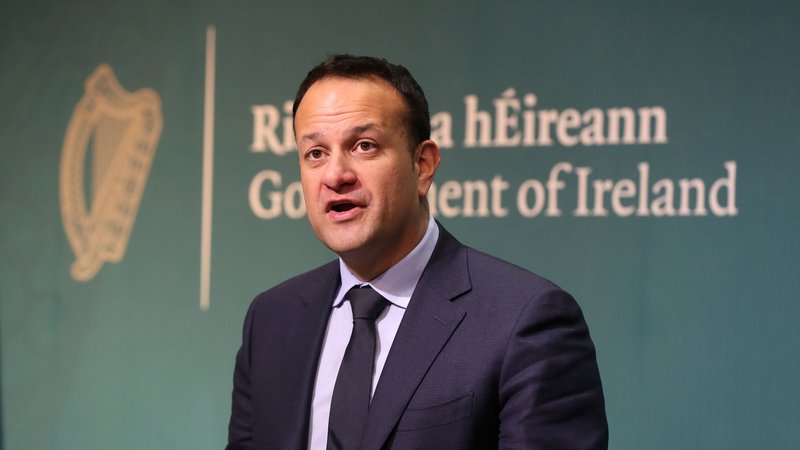
Prime Minister Leo Varadkar announcing the date of the referendum (Source: RTE)

Cabinet Ministers, most of whom hail from the centrist Fine Gael party, voted unanimously to allow Irish voters to have their first say on abortion since 1983. At that referendum, an overwhelming 67% of voters backed the introduction of the Eighth Amendment which then banned abortion even when the mother’s life was at risk. But Varadkar pointed out that this means no Irish citizen under the age of 52 has had a say on the matter, including the Prime Minister himself, who was four at the time of the vote.

Indeed, early polls have suggested that Irish voters lean towards repealing the Amendment and permitting abortion. An Irish Times/Ipsos MRBI poll published last week suggests those in favour of changing the constitution lead those who oppose it by 56% to 29%. Unsurprisingly, the most significant divide in terms of demographics comes with age, with 74% of people aged 18-24 in favour of repealing the Eighth Amendment, but only 36% of over-65’s expressing the same view. There is little evidence, though, of a sex-based divide, with male and female voters supporting the constitutional change by margins of 25% and 28% respectively.

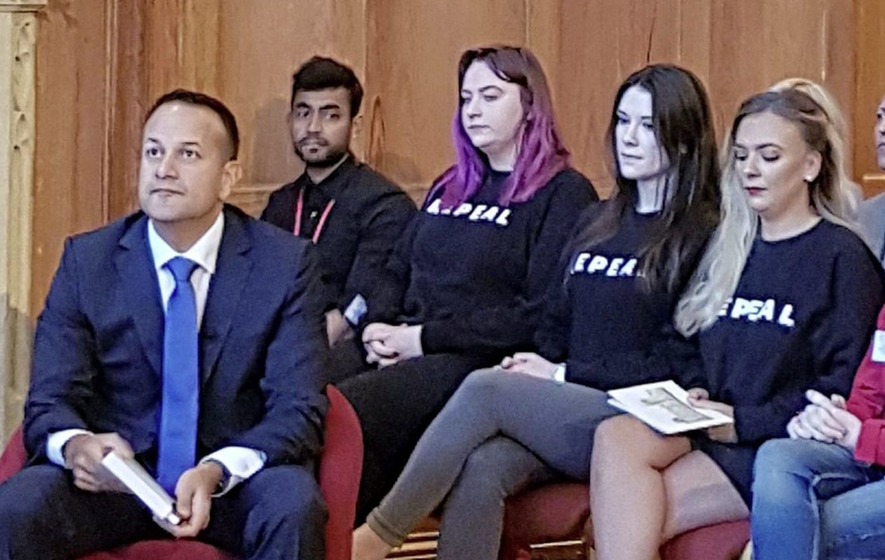
Students with ‘Repeal’ jumpers sit behind Varadkar as he conducts an interview at Queen’s University Belfast (Source: The Irish News)

It looks likely, then, that the vote will come down to an overall stand-off between older, more religious voters with generally conservative views, and younger, progressive-minded and more sceptical voters. Indeed, this referendum may serve as an indicator of the continuing influence of the Catholic Church in the country. In recent years more and more people have turned away from the Church in the wake of child abuse scandals, and many of its general teachings on personal morality appear less relevant to a country that voted heavily in favour of gay marriage in 2015, and now has an openly gay Prime Minister in Varadkar. A victory for the repeal side would prove another blow to the strongly anti-abortion institution of Catholicism.

Yet what should be most central to Ireland’s ultimate decision is the question of whether the country’s attitudes to women’s rights have changed since the last referendum. In the years since 1983, strong evidence of the negative effects of the strict abortion laws have begun to cause a shift in opinion on this issue. Thousands of Irish women attempt to travel to the UK every year in order to have an abortion, including a 14-year-old rape victim who was prevented from doing so by the government in 1992. In addition, drugs to induce abortions, illegal in Ireland, have been widespread in recent years.

In line with this evidence, the argument will be made by the pro-repeal side that abortions already exist in Ireland, and that a vote to repeal the Eighth amendment would simply ensure women are able to do so in a safer and less distressing environment. If such an argument can win over undecided voters who choose to place their concern for the wellbeing of women over their religious doctrines, then May’s vote may offer a significant turning point in a country where liberalising abortion laws has been nearly unthinkable.

Has Migration Disconnected “Third Culture Kids” from their Native Counterpart?

By Jamie Aira Agbuya.

As a Third Culture Kid (TCK) myself, I felt compelled to write about this topic and research the apparent disconnect between TCKs and their native homeland in exploration of my own identity and own detachment to my native homeland.

According to sociologist David C. Pollock, a Third Culture Kid is a person who has spent a significant part of his or her developmental years outside the parent’s culture.

The TCK frequently builds relationships to all of the cultures, while not having full ownership in any. Although elements from each culture may be assimilated into the TCKs life experience, and the sense of belonging to others of similar background.

As a TCK, based on my experiences in life, I’d have to say that I definitely resonate with Pollock. I spent a significant part of my developmental years outside of my parent’s culture, and each culture I have been immersed in has in some way helped contribute to my identity.

At first, TCKs were children of expatriates including: missionaries, military personnel, diplomats, and businessmen. Today, however, migration and globalisation have significantly increased, and so many families now live abroad due to a range of reasons, e.g. parents of TCKs from economically less-developed countries wanting a better upbringing and better opportunities for their children.

There are many types of TCKs, some being:

· Traditional TCKs – Children who move into another culture with parents due to a parent’s career choice

· Bi/multi-cultural/and/or bi/multi-racial children – Children born to parents from at least two cultures or races

· Children of immigrants – Children whose parents have made a permanent move to a new country where they were not originally citizens

· Children of refugees – Children whose parents are living outside their original country or place due to difficult circumstances such as war, violence, famine, or natural disasters

· Children of minorities – Children whose parents are from a racial or ethnic group which is not part of the majority or ethnicity of the country in which they live

Although being a TCK has many benefits, such as being immersed in different cultures, it does have adverse effects. One being a struggle of identity. A significant amount of people around the world commonly struggle with their identity at some point in their lives, however, TCKs are predominantly affected by it. For example; I was born in the Philippines, but I grew up in the UK. This has largely affected me because I did not grow up immersed in Filipino culture as a native kid would. As a consequence, I struggle to understand and speak the language, and I struggle to find some form of connection to this country I am supposed to call ‘home’.

Where are we ‘from’?

What is identity?

According to Epstein (1978), identity “represents the process by which the person seeks to integrate his/her various statuses and roles, as well as his/her diverse experiences, into a coherent image of self”. We are all looking for identity, but trying to figure out our individual identity is one of the biggest tasks we have. Adolescents find it harder to answer the question as some may become overwhelmed by the task of identity development. TCKs in particular would find it more difficult as most already go through identity crisis at a younger age.

When we have been immersed in a particular culture long enough to internalise its behaviours and assumptions behind them, we have an almost intuitive sense of what is right, humorous, appropriate, or offensive in any particular situation. Being “in the know” gives us a sense of stability, deep security and belonging.

In the opinion of Nieto (1999), “Culture consists of the values, traditions, social and political relationships, and worldview created, shared, and transformed by a group of people bound together by a common history, geographic location, language, social class, and/or religion.”

When people migrate to another country as adults, they experience culture shock and need a period of adjustment. This is because their value system, sense of identity, and the establishment of core relationships with family and friends have already developed in their home culture. Their basic sense of who they are and where they belong are already intact. However, children and adolescents who move among different cultures are doing so before they have formed their own personal and cultural identity. This is where migration has disconnected Third Culture Kids from their native culture. TCKs tend to grow up in a culture where their personal and cultural identity are formed through different cultures and identities they come across outside of their native culture.

Interestingly, TCKs tend to have more in common with one another, regardless of nationality, than they do with non-TCKs from their own country. Most of my friends are TCKs, and I can unequivocally say that most of us aren’t as connected to our native counterparts as we’d like. Although there are probably TCKs out there who are greatly immersed in their native culture, there are many who are definitely disconnected.


Jamie Aira Agbuya was born in the Philippines and is of Filipino, Spanish and French descent. She is currently studying American Studies at Swansea University. She writes poetry, short stories, plays and is currently a contributor for TCS. Follow her on twitter @jamieaira

NFL Superbowl 52

By Jireh Antwi.

Where and What time

New England Patriots vs the Philadelphia Eagles – This Sunday February 4th at 23:30 GMT at the Minnesota Vikings U.S Bank Stadium in Minneapolis for Superbowl LII (52).

The Get to know

Tom Brady the New England Patriots historic quarterback, arguably one of the greatest of all time, 5-time Superbowl winner, could be making it 6 this year. Last year’s Superbowl, it seemed all was lost for the Patriots when the Atlanta Falcons ran away with a 21-3 score in the second quarter and what looked like Tom Brady being prepared by social media to be a new meme.

However, he showed everyone what he can do and who he is, ending the game in a 34-28 win and adding a 5th title to his resume. Even with his hand injury in the AFC championship game against the Jacksonville Jaguars, he still guided his team to victory with 2 touchdowns overall, although it looked to be a blow out at the start game in the Jaguars favour. Let’s see if he can retain the Super bowl title and put in a spectacle for the world to see.

The Philadelphia Eagles dominated the Vikings in the NFC Championship game beating them 38-7, they were at 15 wins and 3 losses in the season so far and the Patriots likewise had 15 wins and 3 losses all the way to the final match. If the Eagles win, it will be the first time they have won the Lombardi Trophy with 2 appearances previously, whilst the New England Patriots will be adding to their dynasty and another one in the book for head coach Bill Belichick making it 8 Superbowl appearances for him in his reign with the Pats.

Eagles have lost their number 1 quarterback Carson Wentz who played tremendously and was in for a shot for the seasons MVP award with Nick Coles filling in that role having made 78% off his passes for 352 yards and 3 touchdowns and no interceptions. The chance for the Eagles to win would come from their deep defensive line and hopefully being able to put pressure on a 40-year-old Tom Brady. The Eagles and Patriots have met before in the Superbowl in 2004 with a close game, Patriots just edging 24-21 in the 4th quarter.

Eagles and Patriots members on the opening night of the Superbowl week.

Half-Time Performance

Justin Timberlake is headlining the Pepsi half-time performance show this year, let’s hope there isn’t another controversy similar to the last time with Janet Jackson. With Justin dropping new music this year, he will be looking to put on a spectacle to thrust himself to his usual best self.

The anticipated adverts and trailers for movies and products are also something to look out for! Already, Doritos and Mountain Dew have released an iconic one featuring Busta Rhymes, Peter Dinklage, Morgan Freeman and Missy Elliot. You can watch that here:

The Patriots will be sure to be the favourites to win, but I’m sure most of America will be rooting for the Eagles in this uphill task. You’ll be able to watch the game and the lead up to the game on BBC1.


Jireh is a Microbiology and Molecular Biology graduate from the Manchester Metropolitan University. He has a passion for various sports, scientific discovery and trainer brands.

Twitter: @Ray_G95

Trump’s un-Trumpian address

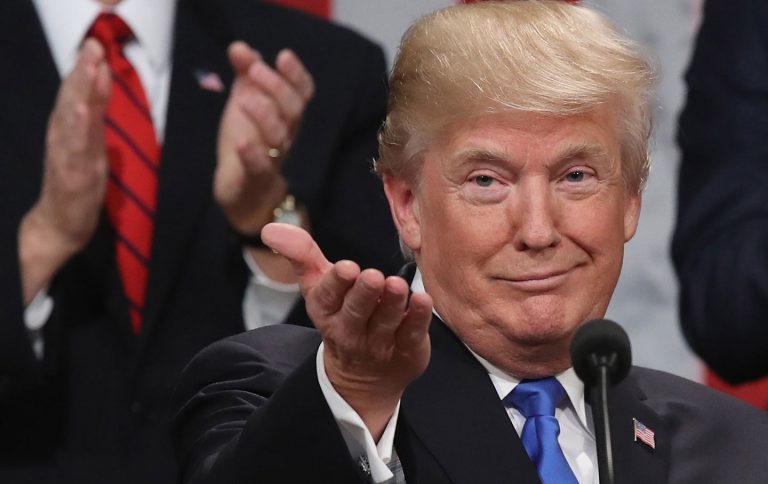
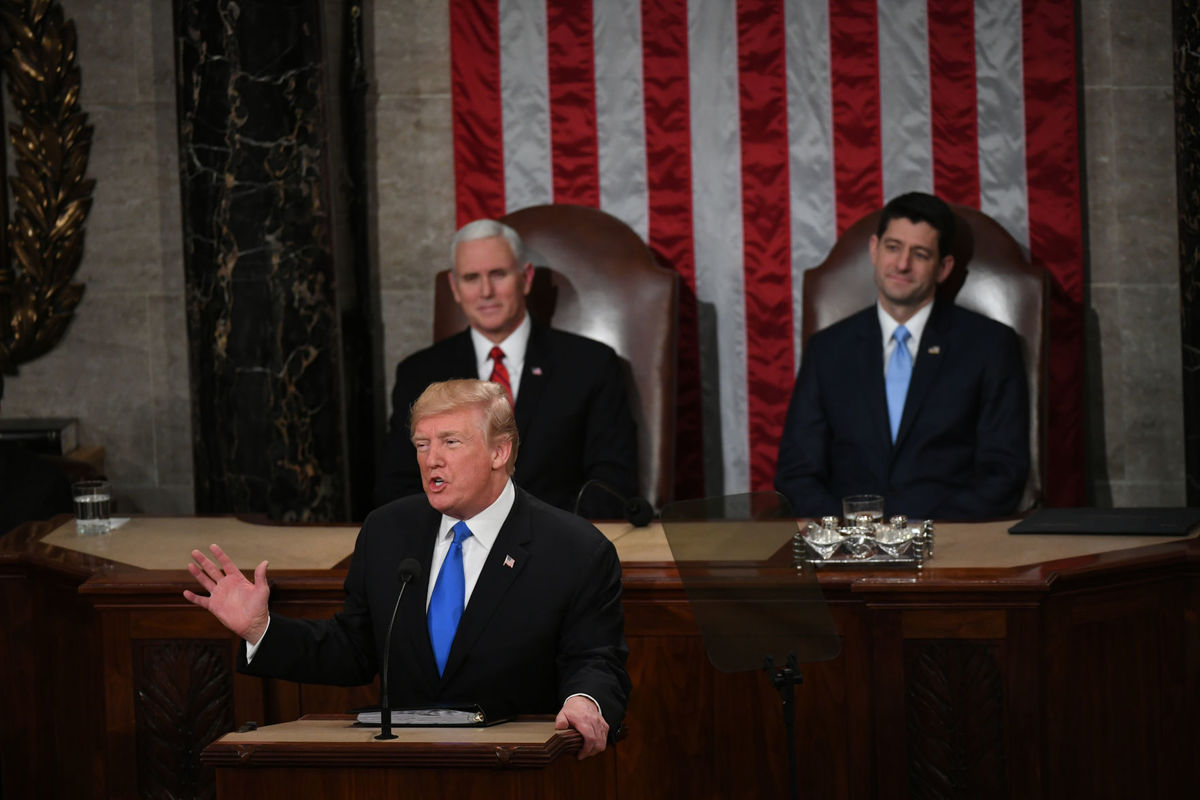
As is tradition at a State of the Union address, Vice President Mike Pence and Speaker of the House Paul Ryan were seated behind Donald Trump as he spoke to the nation. While Pence looked on proudly during the speech, Ryan’s expression was somewhat harder to decipher. If a slight detection of bemusement at Trump could be seen on his face at certain points, this would be perfectly understandable. Not because it was a bad speech, but precisely because it wasn’t.

Trump, flanked by Mike Pence and Paul Ryan (Source: The Washington Post)

Trump’s approach to the State of the Union was positively un-Trumpian. He appeared humble, often drawing attention to the achievements of others where in previous speeches the focus has been squarely on himself and his own accomplishments. Even the legislation Trump has passed in areas such as tax reform and health insurance were hailed as ‘our’ successes, despite his previous attempts to take complete credit for them.

He stuck to the script, and talked about policy and patriotism, without any rambling segways on ‘Crooked Hillary’ and her emails, or the FBI and its ‘witch hunt’. For sure, he continued to push his hard-right themes, particularly on immigration, but seemed to express them in terms of compassion rather than anger and spite. Nowhere was this truer than when he acknowledged the families of victims of gang violence, making the point that cutting immigration would prevent such violence from reoccurring. Using a tragedy for political point-scoring maybe, but we should not underestimate the traction it had with viewers.

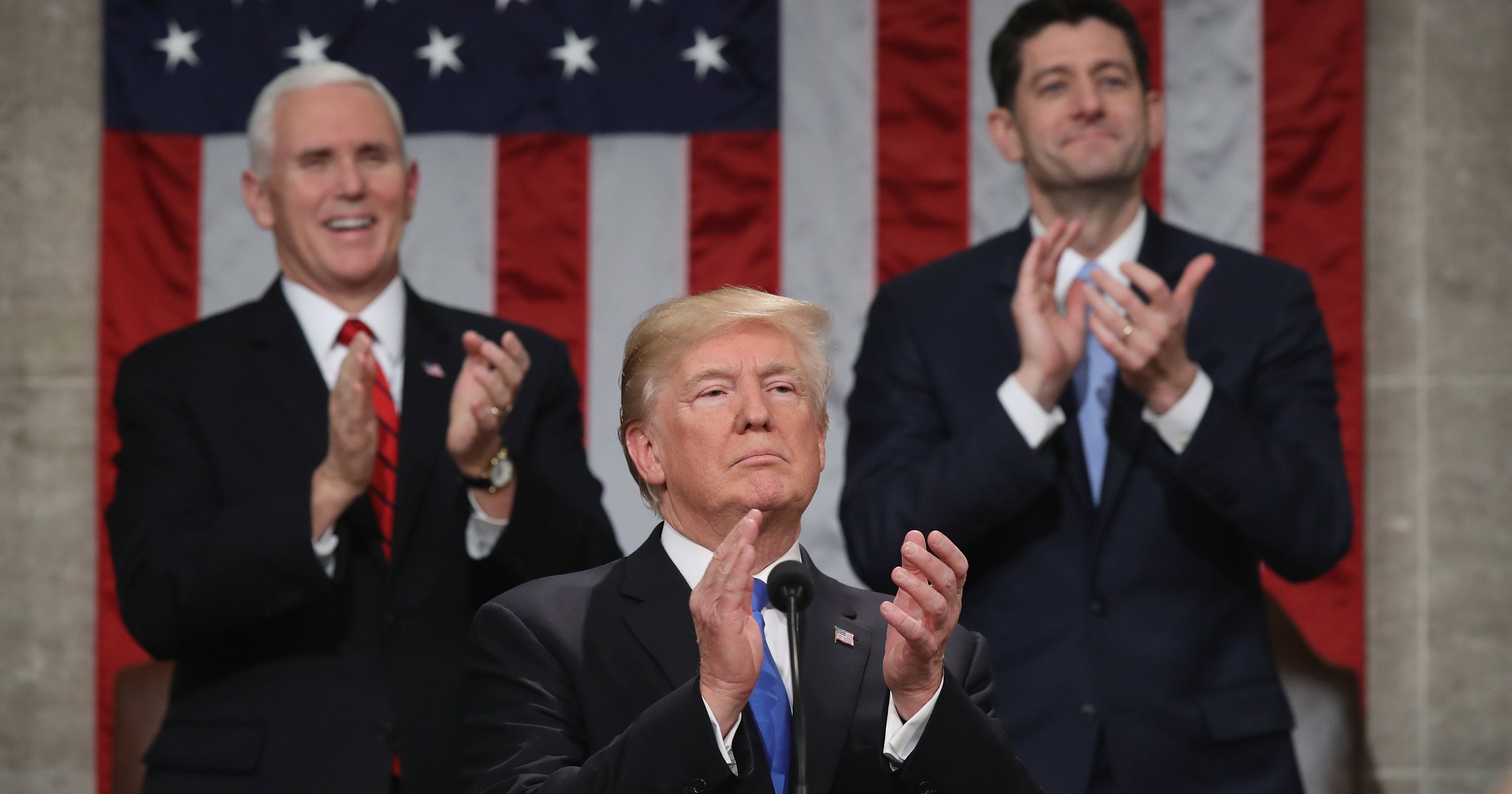
All of which will leave more establishment Republicans tearing their hair out as to why he doesn’t perform like this all the time. The speech certainly was not devoid of Trump’s own odd idiosyncrasies, the most notable being his irritating habit of clapping directly into the microphone at various stages during the speech, his hands slapping together gratingly like two wet mackerels on the back of a bumpy trawler. Yet on the whole he seemed a different, more mature and sensitive Trump. Much of the GOP must feel that if he were to carry on like this, he could make – whisper it quietly – a halfway decent politician.


Trump clapping himself, directly into the microphone (Source: USA Today)

Will he carry on like this, though? It seems at best unlikely. The State of the Union address can be something of a political open goal for presidents. The grand setting and teleprompted speech can project decorum onto even the most outlandish of figures, and the fact that almost any statement will be fanatically applauded by huge swathes of the audience can only make a president look good. But it is hard to conceive of Trump sticking to his more statesmanlike persona in other contexts. He seems incapable of controlling his stream of late-night tweets, his 280 characters usually filled with rage and self-aggrandisement rather than compassion and modesty. Already, he has made the arrogant and apparently inaccurate boast that viewing figures for his address were record-breaking.

Most of his speeches in the coming months will likely be at campaign-style rallies, where his wayward, shoot-from-the-hip oratory will go down a treat among a sycophantic crowd lapping up his every word, while alienating more moderate voters. The new State of the Union Trump we saw on Tuesday night may have been far more effective than the usual ‘I am a genius’ Trump, but it will probably only go to show Republicans what they are missing.

BREAKING: Rohingya Mass Graves Discovered in Burma – History will Never Forgive us for the Rohingya Genocide

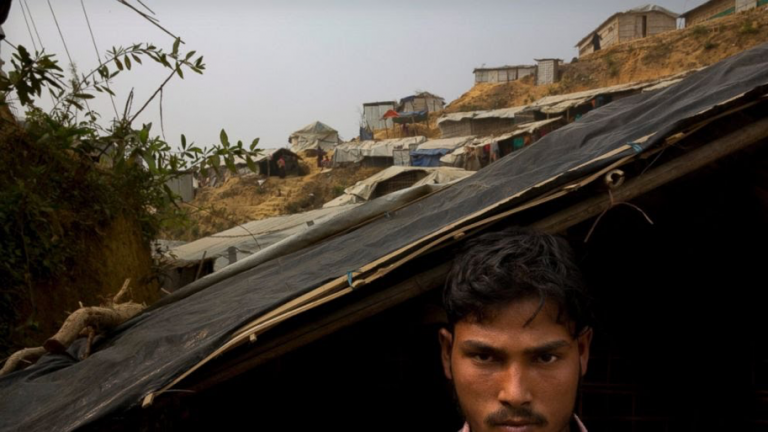
Associated Press (AP) broke news earlier this morning, confirming the existence of 5 previously unreported mass graves in Burma. For sometime western media had been unable to report emphatically on an organised military extermination of Rohingya people in the Burmese village of Gu Dar Pyin. The government vehemently denied that this attack on Rohingya civilians ever took place. That is until AP broke the news that evidence of the mass burial of victims of this atrocity as well as four others have been found.

The graves, confirmed by AP through eyewitness testimonies of two dozen Rohingya survivors in Bangladesh and their time-stamped videos are bearing testimony against the Burmese government’s insistence that it is not targeting civilians but also strengthening growing global worries that the situation in Burma is more than mere ethnic violence but government-sanctioned genocide.
“This is one of the worst emergencies I’ve been involved in. On my first day four people died, and that’s really shocking to me, even though I’m a hardened old doctor” says Dr Ian Cross of Médicins Sans Frontièrs (Doctors without borders or MSF).

If you’ve bought The Economist or The Week lately you might have seen the promotional material from the lauded development charity where this quote was taken:

Promotional Material for Médicins Sans Frontiers (Credit: Muhammad Oleolo).

Tonally, this message has been diluted several degrees so as to be non-polarising. MSF, UNICEF, the World Food Program and Others, while necessarily having to make apolitical statements to do the work they are doing for the Rohingya, are not accurately signposting the nature of the disaster.

To speak of this issue as a crisis of humanitarian concern, while true, is not the actual message. An ethnic group is being specifically targeted through violence (something that MSF has maintained is the cause of the crisis) which has fuelled a wave of refugees; malnourished and stateless.

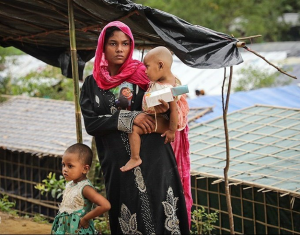
Rohingya woman with children in refugee camp in 2017 (Credit: Seyyed Mahmoud Hosseini, Tasnim News Agency).

The discovery of these mass graves is not only a red flag but a call to action. It is a clear indication of attempts to exterminate a population. It gives lie to the myth that Burma is simply hunting terrorists.

Twitter user claiming that Rohingya discrimination is justified in order to curb extremism (evidence of extremism and wahhabi links not provided).

It may seem unnecessary to be caught in semantics while people are being slaughtered but the slaughter is made possible by an international community still perceiving this issue the same way as they would treat a mudslide or a drought. This is targeted ethnic cleansing the likes of which we have yet to see this decade; a spade ought to be called a spade in such situations.

Genocides of the past were possible through the passivity of the international community. Here are some things you can do right now to mitigate the damage being done:

Donate to Doctors Without Borders http://www.doctorswithoutborders.org/rohingya-refugee-crisis

Donate to the World Food Program http://m.wfp.org/news/news-release/wfp-concerned-about-high-malnutrition-rates-among-rohingya-refugees-cox’s-bazar

Urge Parliament to vote in imposing financial sanctions on Burma https://petition.parliament.uk/petitions/200224

Urge Parliament to suspend UK training of the Burmese Military https://petition.parliament.uk/petitions/200089

This list is not exhaustive and one can suspect that this catastrophic event is going to have to draw on the power of social media more than any in recent memory.

Our failure as an international community, especially those of us tasked with reporting the truth, to challenge Burma for these crimes against humanity will not be looked at favourably by history.

UKIP and Henry Bolton: A Love-Hate Story

To say Henry Bolton faces an uphill battle to save his political career would be a colossal understatement. The UKIP leader of four months has so far resisted deafening calls from within his own party to resign in the wake of the discovery of racist messages about Prince Harry’s fiancée Meghan Markle, sent on social media by his girlfriend, Jo Marney. His failure to stand down, even despite later being pictured dining with Marney, whom he had supposedly broken up with, and stating that they could later get back together, sparked a series of resignations among his frontbench, and a unanimous vote of no confidence passed against him in the party’s National Executive Committee.


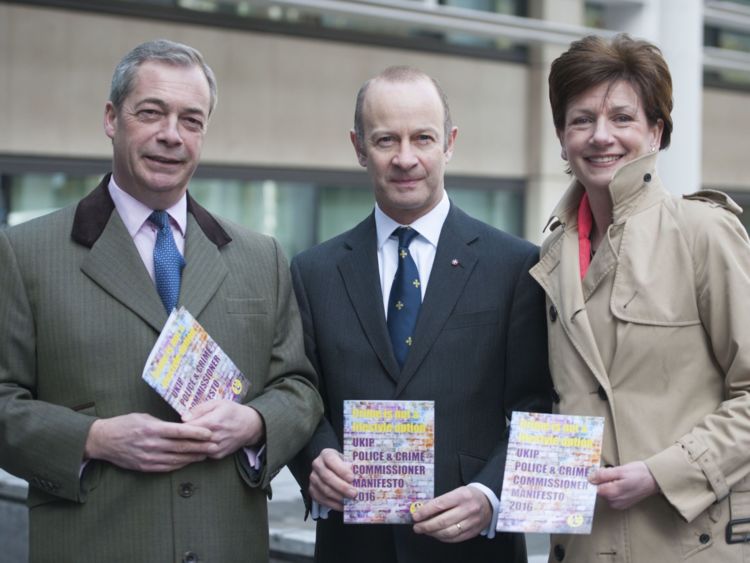
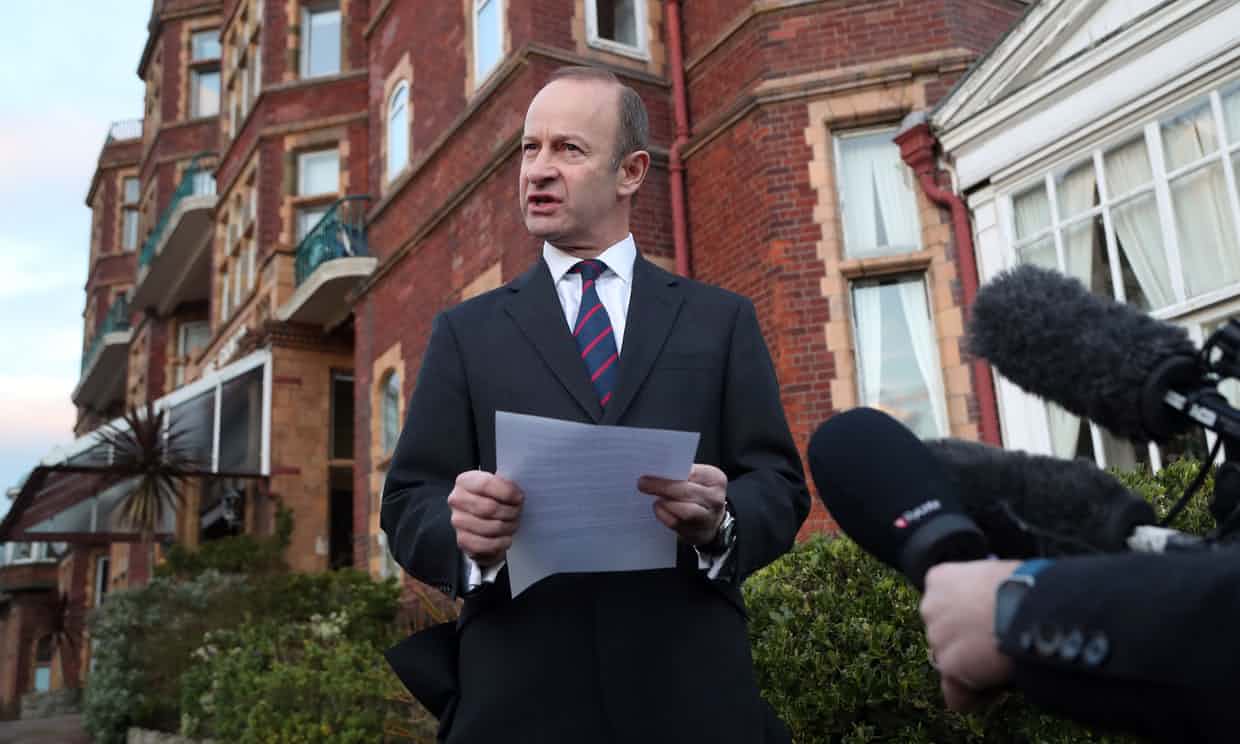
UKIP’s under-fire leader Henry Bolton (Source: The Guardian)

This all begs the question of what he really expects can happen from here – is there any conceivable way to turn this around? At the moment he is a leader who has become hugely unpopular with his party, a party which has in turn become hugely unpopular with the public as a whole. In this sense, he resembles less a captain going down with his sinking ship than one shipwrecked on the sea floor, still trying to hopelessly row his way to dry land while being weighed down by a big racist anchor.

Despite not sending any similar messages himself that are known of, if he stands any chance of retaining his position as UKIP leader through a leadership challenge, he will have to convincingly answer questions of why someone who expresses the views Marney has is worth associating with at all, let alone starting a relationship with. Even if he miraculously survives as leader, this scandal is unlikely to help him win over new voters. Perhaps he thinks the British public will be inspired by this far-right version of Romeo and Juliet: star crossed lovers torn apart by vicious outsiders for no other reason than one of them having very racist views. Surely though, there is no way back for Bolton from now on.


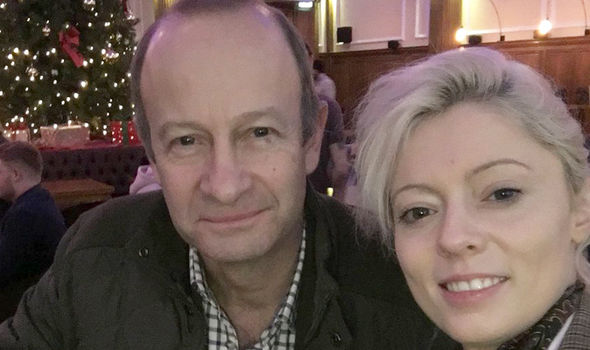
Bolton with Jo Marney, the source of all the controversy (Source: Daily Express)

Looking at the bigger picture, this whole sorry episode speaks volumes about UKIP as well as Bolton. For all their protestations to the contrary, the sequence of events that have transpired in UKIP since Brexit have outed it essentially a single-issue party. When it had all the apparent injustices of an all-powerful, corrupt European elite to rail against, the party generally did a good job of staying united and convincing people of their argument.

Yet, in an ironic twist of fate, getting exactly what they wanted has led to their ruin. Following the vote to leave the EU, the one thing binding together the party’s motley crew of everyone from soft Tories to neo-fascists to your borderline racist uncle who lives in Kent, disappeared literally overnight. Remaining members of various viewpoints have struggled with one another since 2016 over the ideological direction the party should take. The Bolton controversy sums up this search for UKIP’s post-Brexit soul well, with bitter infighting between leading members of the party over the use of overtly far-right rhetoric. Whether Bolton stays or goes (though the latter is surely a heavy favourite), the party needs to work out where it stands, or face being consigned to history as a Brexit one-hit wonder.