Home Blog Page 26

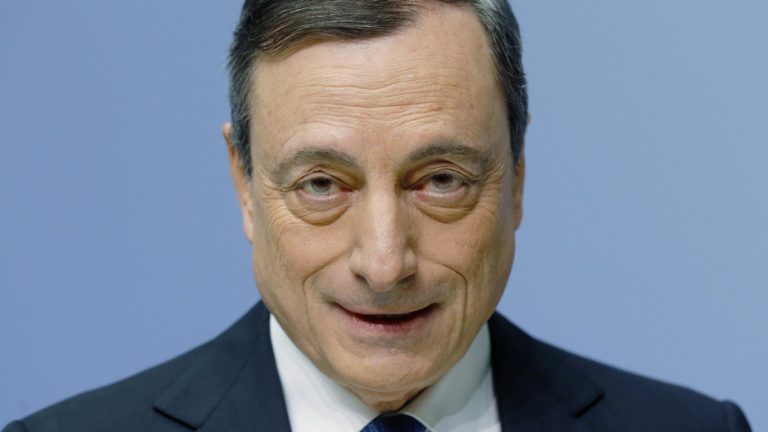
A snapshot of Italy’s new Prime Minister: Mario Draghi

It has largely gone unnoticed but Italy has formed a new government – again – with a new leader at the helm, Mario Draghi. This time, the Italians have been forced into a multi party coalition led by a technocrat who will look to restore confidence in the Italian economy amid a pandemic. Given the spotlight on “Super Mario”, we consider how he might approach the most important question: how to save an ailing economy.

The Facts

Italy was forced to turn to former Head of the European Central Bank, Mario Draghi, for fresh leadership following the former government’s collapse – in mid-January – after former Prime Minister Matteo Renzi withdrew support over the country’s economic recovery plans.

The Italians looking to bring stability to a tumultuous political environment have turned to Draghi who has well loved for his work across Europe’s financial sector.

As the former Head of the ECB – Draghi championed policies that promoted the Euro.

Draghi was officially sworn on 13 February and enjoys broad political support. It remains to be seen how long he can keep the coalition government together and if it will succeed.

Mario Draghi’s opening statement as Prime Minister: “Unity is not an option; unity is a duty,” resonated with Italians who afforded him a majority of Italy’s largest parties (bar Fratelli d’Italia) and 61% public support. He has brought the snake-pit of Italian politics radical left and hard-right to his table, bearing witness to the drawing power of “Super Mario”, the man who saved the Euro. Stocks soared, and investors flocked to bond auctions slashing Italy’s borrowing costs. Just when all seemed lost, Italy appears to have conjured another miracle. Draghi vowed to do “whatever it takes” in July 2012’s hot days to preserve the embattled euro. Back then, his words were enough, and his elaborate bond-buying programme unnecessary. Italy, however, needs more than rhetoric. Her pre-crisis GDP won’t recover until 2023 atop pathologies of slow growth, low productivity, high debt, and lack of leadership having burned through 6 PM’s in a decade, without the people electing one since 2008.

He has brought the snake-pit of Italian politics radical left and hard-right to his table, bearing witness to the drawing power of “Super Mario”, the man who saved the Euro

Italy remains largely ungovernable, with too many parties and vested interests. Mario Monti replaced Berlusconi in 2011, but lasted only 18 months in office, and his pension reforms were watered down. The perspectives are skewed as everybody is too dependent on a bloated government and kickbacks. Monti’s much needed tax hikes and public spending cuts were met with fierce opposition. Meanwhile, Berlusconi’s lack of fiscal prudence meant he avoided the media scrutiny.

Draghi won’t solve Italy’s problems, but he may introduce structural reform and better EU North-South relations. His credentials as former President of ECB for 8 years and Governor of Bank of Italy are fortuitous for Italy on the verge of receiving their €188 billion share of the EU Covid Recovery Fund.

Mario Draghi sworn in as Prime Minister | Bloomberg Quicktake

Conveniently, Paolo Gentiloni, the EU Commissioner charged with overseeing the recovery plans, is a former Italian PM, and understands Italy’s roadblocks to reform. Draghi’s majority, expertise and public trust will expedite confidence in the EU Commission in their funding assessments.

15 of 24 cabinet seats are for politicians, the rest technocrats, such as advanced robotics physicist Robert Cingolani running the ecological transition super-ministry in charge of 37% of the EU funds. The room for technocrats will enable appointments that keep Draghi’s allies in charge of the recovery fund to focus on and execute good policy without being too preoccupied with political machinations.

Draghi has promised to speed up vaccination, overhaul income tax, reform judiciary, public administration and narrow one of Europe’s widest gender pay gaps. These will please Brussels, as Draghi’s reforms differ from Conte’s spending (Italy has huge debt). Draghi’s Premiership may see a unified Italy with more EU influence, contribute to policy reform and successfully deliver the EU Covid funding to Italy.

Italy, however, needs more than rhetoric. Her pre-crisis GDP won’t recover until 2023 atop pathologies of slow growth, low productivity, high debt, and lack of leadership having burned through 6 PM’s in a decade, without the people electing one since 2008.

It won’t be without the odd obstruction on the way. A cabinet uniting: Five Star Movement, three Leftist parties, Berlusconi’s Forza Italia and Lega Nord is inevitably going to clash. Already, 25% of Five Stars’ lawmakers dissented in the first Senate confidence vote over fear Italy will cede too much control to EU cohesion.

Whether Mario Draghi is the next Luigi Einaudi, time shall tell. The parallels are uncanny: Einaudi was also Governor of the Bank of Italy (1945-48), supported European Federalism, became second President of Italy (1948-56), also faced an economy dependency on high public spending and taxation that choked off productivity and investment, regional disparity, rigid labour markets and dated banking systems.

Whether Italy can execute the necessary reform is more ideological than methodical, it requires painful adjustments entrusting more power and responsibility to individuals and businesses and less to the government.

Italy is the worst European state for reliance on growing expectations of government support during the coronavirus crisis. The public think the EU recovery fund is for their handouts, and Mario their guardian angel will expedite the process. For the Italians’ sake, let’s hope Mario’s tough love means they have another thing coming.


Is Football Systematically Racist?

The Facts

Since George Floyd’s death on 25th May 2020, football has tried to take a more significant role in tackling racism and abuse on the field, behind the scenes and online. If that is football players taking the knee, having Black Lives Matter written on the back of football players shirts or players raising the issue on their social media platforms, it seems that the sport is trying to do its part to tackle this issue.  However, over the last few weeks, the topic of racism in football has become very apparent.

Not just that, but the subject has transferred from the field of play to online platforms.

High profile Premier league players from Manchester United such as Marcus Rashford, Axel Tuanzebe, Anthony Martial and Chelsea footballer Reece James have been on the receiving end of horrific racial online abuse from anonymous online users. Those around the sport have condemned what has happened to these players and want social media companies to take more extensive action over this issue. One of these figures includes the Duke of Cambridge Prince William, who wants an immediate end to the “despicable” racist abuse that some players have received online. The Premier League have also come out and have said that tech companies “need to do more” in terms of this issue.

In response to the increasing awareness of the issue online, the government has said that they are planning new online legislation. The legislation aims to make tech companies legally responsible for their uses’ online safety and make them accountable to a regulator. The proposals also include the threat of massive fines of up to 10% of global turnover if companies fail to address their users’ safety. The head of the anti-discrimination board Kick it Out is pleased that legislation is being considered and told the BBC that the “The cavalry is on the way.”

However, some feel that these laws and considerations have been long overdue. Rashford has said, “Only time will tell if the situation improves.” He continued and said that “it’s not improved over the last few years,” implying that this issue has been going on for a very long time. There are also worries that legalisation aimed to counter such racial abuse may be “watered” down due to these tech companies’ influence on governments.

The way that issue has come up repeatedly, if that is due to the racist online abuse that football players have received or instances occurring on the pitch, creates a broader question if football is institutionally racist.

To answer this critical question about football being institutionally racist, one must define what this term means. According to Sir William Macpherson, who led the inquiry into Stephen Lawrence’s death, institutional racism is “the collective failure of an organisation to provide an appropriate and professional service to people because of their colour, culture or ethnic origin”. Using Macpherson’s words and applying this to football, the sport is institutionally racist on the field, in boardrooms and how football players are treated online.  

There are only six non-white managers among 92 football league clubs, and 12% of the Premier league’s 182 staff are from Bame backgrounds. The government has set out targets for more black, Asian and minority ethnic representation in football boardrooms, but this must come into fruition, with clubs and football initiatives creating opportunities for people from these backgrounds to get into these higher positions.

The lack of Bame representation in higher positions is not the only issue. Football associations must take a stronger stance against people who make defamatory remarks based on race. The way Edinson Cavani was handed a fine of £100,000 and a 3-match ban for his Instagram post shows how football associations are still slapping people on the wrists and are not taking this issue seriously enough. Match bans and fines will allow the problem to persist rather than address it. Social media giants must do better on this as they are part of the problem too. One study found that 56% of more than 3000 explicitly abusive messages aimed at Premier League players were racist, highlighting the lack of moderation by these tech giants.      

Addressing institutional racism requires a holistic approach, and it will not be an easy fix.  

Institutional racism needs the red card by everyone, not just in this sport.

Is It Time We All Delete Facebook?

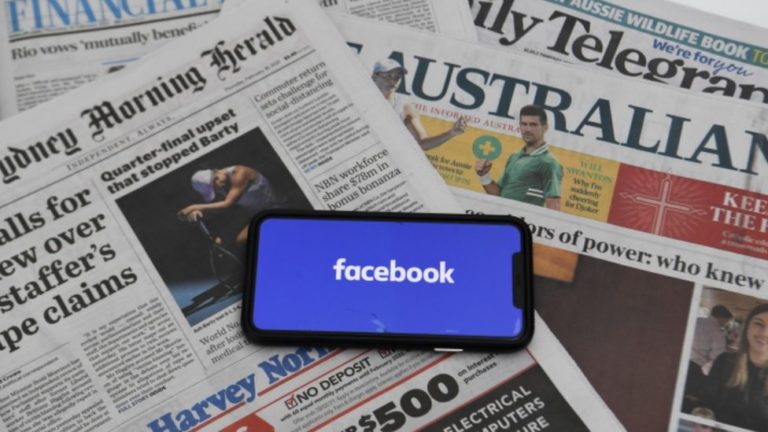
Ever-growing tensions between world governments and Big Tech escalated to a new level in February, when Facebook ‘unfriended’ Australia and blocked all news content to the entire country.

The Australian House of Representatives approved a law to compel internet companies to pay news organisations. In retaliation, Facebook restricted the posting of all news links and all posts from news pages in Australia.

Facebook said the law “fundamentally misunderstands the relationship between our platform and publishers who use it.”

However, Facebook not only blocked news websites but government health pages (which could have up-to-the-minute information about Covid). This was, to some, a passive-aggressive admission and demonstration of monopoly power.

It has raised concern and debate about the amount of power that Big Tech firms have, and where the line is drawn between competition and regulation.

In a statement, Australia’s Prime Minister Scott Morrison said, “Facebook’s actions to unfriend Australia today, cutting off essential information services on health and emergency services, were as arrogant as they were disappointing.”

“These actions will only confirm the concerns that an increasing number of countries are expressing about the behaviour of Big Tech companies who think they are bigger than governments and that the rules should not apply to them.”

“They may be changing the world, but that doesn’t mean they run it.”

The Facts

A law passed by the Australian government forces tech firms to pay for news content on their platforms. It comes after Australian authorities proposed the legislation to “level the playing field” on profits between the tech giants and independent publishers.

Facebook, in direct retaliation to this, subsequently banned news content from Australia. Facebook’s perspective is that it offers more benefit to news networks than news networks offer to them, and therefore to pay money would be a nonsensical decision.

Therefore, they restricted news content to Australia as a demonstration to show how little worth news companies have to their platform.

Facebook’s local managing director William Easton said in a statement, “[regarding the Australian legislation] It has left us facing a stark choice: attempt to comply with a law that ignores the realities of this relationship or stop allowing news content on our services in Australia. With a heavy heart, we are choosing the latter.”

Australian news outlets are no longer able to post links or content to their Facebook pages, and Australians will no longer be able to link news articles from not only Australian sites but all news sites around the world via Facebook.

Facebook also inadvertently blocked other pages (including government health pages) in an attempt to try and meet the definition of ‘news’. “As the law does not provide clear guidance on the definition of news content, we have taken a broad definition in order to respect the law as drafted”, a Facebook spokeswoman said.

CNBC discussed Facebook’s actions. Video credit: CNBC Television

Politicians, publishers and rights groups have condemned this move, accusing Facebook of bullying and attempting to control the flow of information. They consider it to be a power play, with criticism even coming from outside Australia.

UK Conservative MP Julian Knight called the move “crass”, and said “This is not just about Australia. This is Facebook putting a marker down, saying to the world that ‘if you do wish to limit our powers… we can remove what is for many people a utility’.”

Australia’s Prime Minister Scott Morrison said, “We will not be intimidated by Big Tech seeking to pressure our Parliament as it votes on our important News Media Bargaining Code.”

“Just as we weren’t intimidated when Amazon threatened to leave the country and when Australia drew other nations together to combat the publishing of terrorist content on social media platforms.”

To many people, this move is considered to be an act of war. This is the logical conclusion of unregulated Big Tech firms who have the power to bring a country to its digital knees, and the arrogance to do so. It was only a matter of time before something like this happened.

This situation is simply a competition for power, leverage and resources. For the crime of trying to keep struggling news outlets afloat, Australia took the bold step of charging Facebook to have news content on their platforms. It was essentially a tax on links to news, to hold Big Tech firms financially accountable for anti-competitive practices which harm smaller media outlets.

Facebook, in its arrogance, decided that they don’t have to play by the rules, because news didn’t contribute much to their revenue stream. They understood that, if anything, news publishers needed them more than they needed publishers. This was a power move.

Newt Gingrich, former Speaker of the House, makes his feelings known.

In addition to this not only did Facebook ban news articles and links, but they also banned non-news related pages including utility pages. Pages such as government and state health pages, emergency services, domestic violence charities and others simply disappeared.

Facebook’s excuse for this (not being able to distinguish between news articles and up-to-date info) is a weak one. This has demonstrated their true motive; to shut down and silence organisations (including sovereign countries) who dare to hold them accountable. By doing so, Facebook shot themselves in the foot.

This was a bad move, and will inevitably lead to more cases like this. When a private company has consolidated so much power, to the extent that they can silence entire countries and stop the majority of the flow of news and information at its will, action must be taken. It’s simply too much power for any company to have.

Big Tech is long overdue for a reckoning. Australia might be the first company to stand up to Facebook, but it shouldn’t be the last.

In recent times, Facebook has been in the news for negative reasons such as anti-competitive practices, media censorship or algorithmic bias. The ban in Australia is the latest battle Facebook is waging against governments.

No matter what moral justification Facebook or Australia had for their actions it is clear that this is ultimately about power. In a time where governments are looking to break up big tech, Facebook flexed their muscles. They have shown that there are consequences for governments that make decisions that are interpreted as hostile (to big tech companies).

An important thing to note is that Facebook is already paying for some news and has entered commercial deals with companies in the United Kingdom. Despite this, they blocked services in Australia for lawmakers proposing the same thing. It is clear that Facebook retaliates to legislation on a case-by-case basis. A warm or hostile response would depend on whether or not a certain response is beneficial for Facebook.

In my opinion, Facebook was well within its right to ban to retaliate the way it did. Facebook is not an NGO or charity. Neither is it a community interest company or any of the sort. It is a private company whose core business model relies on advertising and data and I think it is time our expectations of Facebook should be based on what Facebook is.

If we are being totally honest Facebook doesn’t care about the news. It fired its trending news team four years ago and replaced them with an algorithm. It was able to censor news for an entire nation with a snap of a finger. If Facebook wants to ban a region from its services (or seeing the news) then as a private company that is their prerogative.

Will Extended Furlough Do What We Need It To Do?

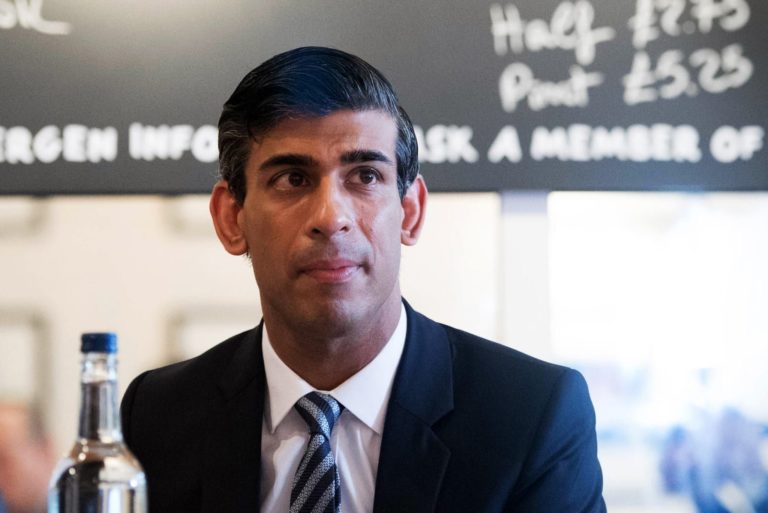
Following Boris Johnson’s roadmap to recovery, it has been reported that Rishi Sunak will extend the furlough scheme until the summer. in the roadmap, Prime Minister Johnson lays out the plan for when businesses will be back open. Employees and business owners could be waiting for a full opening for months – that is if the vaccination roll out goes according to plan. This means that while businesses remain shut, they aren’t making money which means they are unable to pay staff. We saw a huge amount of people losing their jobs at the begining of the lockdown in March 2020. Since then, many employees have been ‘hired’ back and put on furlough where the government will pay up to 80% of their wages. The only stipulation being that the employees cannot work for the company, in any capacity, once they have been furloughed for them.

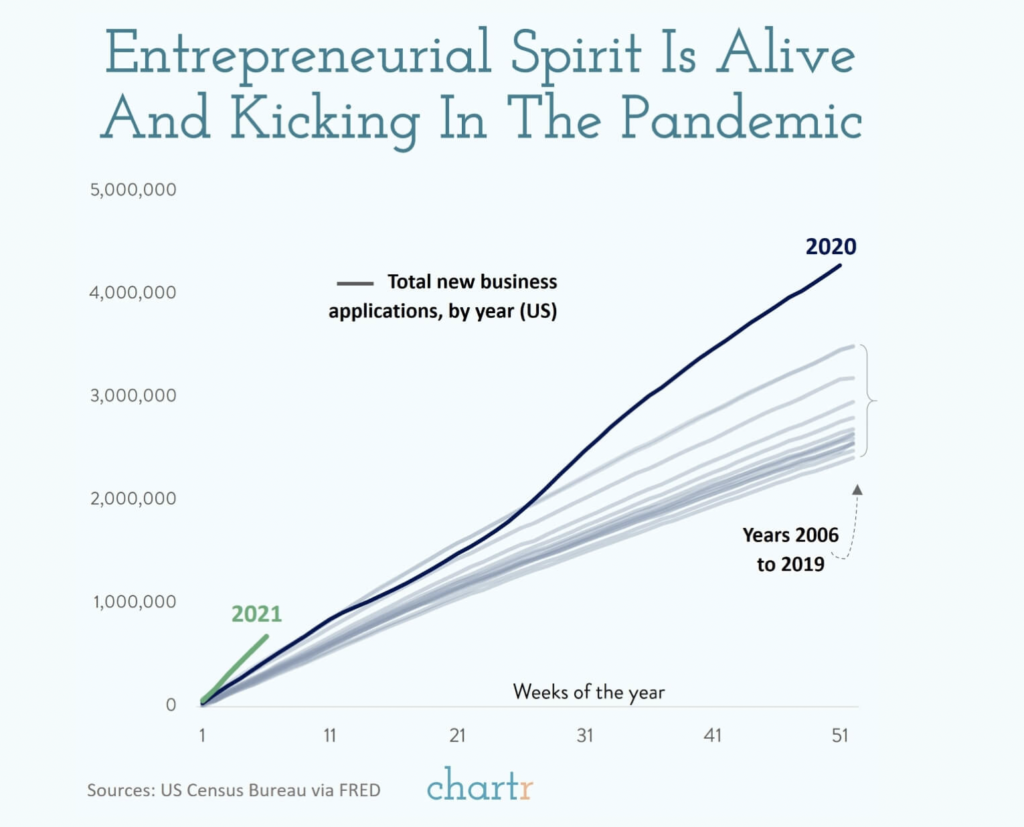
This has led to many people launching their side businesses. TikTok and Etsy have seen an increase in small businesses. Even in the US, it seems that people know not to waste a good crisis.

We asked our journalists about the furlough scheme and an extended furlough will be a good thing

The Government has now vowed that it will continue to pay 80% of wages for furloughed workers beyond the original deadline of March 31st. In the framework we now exist in- endless cycles of lockdown- this makes sense. The government cannot expect to be permitted to shut down two-thirds of the economy, and not give the public at least a (slim) percentage of what they are owed for the pleasure. However, this scheme, which the government claims will be phased out in autumn- though this is also what they claimed in 2020 and so ought to be taken with a pinch of salt- is not a solution but a withering plaster being slapped on a vast, infected wound.

By the end of March, the majority of those most vulnerable to the virus will be vaccinated. There is no reason not to re-open businesses if owners and customers are comfortable with the arrangement. Too, let us not forget that millions of businesses, after already being forced to close for a chunk of the year, were made to haemorrhage cash on “COVID-safe” materials ….And were then forced to shut anyway. Either they are “safe” or they are not?

Even the word ‘furlough’ itself was a haphazard addition to the British lexicon, lately pilfered from a term used by the US military term for instructing soldiers to not turn up for work. The entire concept is an exercise in ad hoc blundering. The Metro reported that, with the pandemic likely being prioritised in next week’s budget, “tax hikes [are] expected to be put on hold until November”, AKA: they will happen. Just not right now. An extended furlough scheme is simply delaying inevitability. We must let businesses and consumers decide their own fate.

Whether £18bn monthly furlough is the best use of government money long-term is debatable, but it does avoid the associated costs of rapid rises in unemployment. Being fired and rehired carries financial and emotional cost. Unemployment leads to mental and physical health deterioration, loss of sense of self-worth and lower prospects. Government needs to spend more on benefits with lower tax revenues. Society gets more antisocial behaviour, lower community trust, alienation and lost wealth.

Greater security of employment, if only “in name” and compensation, helps limit the damage of the recession and allows workers to pay their bills and rent. It is supposed to be a one-off event as we tackle a deadly pandemic. The economic activity is on hold and hopefully the economy can bounce back with furloughed workers getting back to productive business once we get through vaccine rollouts.

The alternative of offering unemployed benefits like the US has done, would also overwhelm benefit offices here, leaving many struggling to get the benefits they are entitled to.

Headlines touting 10% GDP cost of lockdown, or £18 billion a month, seem grim. Consider, however, preventing 10,000 excess monthly deaths against the Department of Transport value of £1.8 million for each avoided death and it doesn’t seem so costly. The new vaccines rollout shows a light at the end of the tunnel, one final push which has wider public support.

With furlough, we have fared better than our neighbours, UK employment was only 0.9% less in Q3 2020 versus 2019; meanwhile France was 2.6% less. It is much better to have 5% unemployment and furlough than 10% without. For the middle earners and up, the high level of household savings will carry them through. But it has shown how abysmal benefits are for those not on furlough: £409.89 per month Universal Credit. Many working people have bills far above this. Rather than pay for “ghost” jobs, e.g. nightclub workers, that may not be viable anymore, the government could rollout universal basic income as a fairer way to minimise poverty and limit the foreseeable inequality spike after Covid. The transition to post-Covid economy will be hard, but ensuring basic necessities are met and people don’t slip through the net is non-negotiable.

Brexit Isn’t Going Very Well

The free trade deal promised by Jan 1ST under the Withdrawal Agreement has failed to materialise thus far. With the teething issues, 20% of UK SMEs have suspended exports to the EU as transition regulations start to bite.

UK SME’s have had to setup in the EU, incur inflated courier fees, file more forms, get a “Customs Agent/ EU handler”, get health certificates, pay VAT duties for non-EU goods arriving in the UK, that we re-export onwards to the EU. In the Single Market, European imports could be processed and packed in Britain and sent on to the EU for sale. An EU bugbear has been Britain bypassing trade barriers to flood the European marketplace with cheap, low quality Chinese goods. Of the >25% of UK’s 6 million SME’s that trade with the EU; most lack the resources to shoulder these costs. They are the backbone of the UK economy, our most profitable and innovative – we cannot allow them to fail by the thousand.

As the UK no longer follows EU product standard rules, inevitably businesses wanting to continue trade with Europe will need to adapt to more checks. Otherwise, finding new customers and markets takes time and money. You need resellers, distributors, foreign entities, supply chains, etc.

Add rising GBP/weak Euro reducing profits over the coming 24 months and we are in for a rough ride. And yet, without doubt, Brexit is affecting businesses on both sides: we don’t hear about the plight of the French cheese manufacturer.

Brexit remains about breaking free into global markets, not putting up protectionist barriers to trade. We already get our wines from New Zealand, our blueberries from Chile. The loss to our companies exporting to the EU is somewhat offset by cheaper goods we can source from elsewhere.

With the UK coming in second behind China on inward FDI rankings (UNCTAD); Private Equity betting big on a strong UK recovery, with 6 buyout offers in 2021 announced, versus 14 total last year; we stand 8TH on the World Bank Ease of Doing Business; and the pound is at 34-month highs on the dollar – you could say things are rosier than they first appear.

Following the Singapore-on-the-Thames zero-tariff, low corporation tax, low wage zone model will be difficult as the UK is largely untrained, relying heavily on immigration.

If 1992 Czechoslovakia could split in half while privatising two companies an hour (Thatcher went two-a-year) in 6 months; issue new documents and end the currency union 6 weeks after, why not Brexit in 6 years? Difference being it happened too fast for organised interests to mount a defence of the status quo. Good faith of leaderships meant no divorce bill, point-scoring border gridlock (Calais), licenses not recognised, or jurisdiction continuing beyond your border. Time, and good faith, were of the essence.

Just how difficult they are still making UK extrication shows how embedded the vested interests/corruption is within EU overregulation. Walking away from 12,651 EU Customs external tariffs, such as 200% overpriced garlic to protect French farmers, was never going to be easy.

They did their worst to make the UK a secessionist martyr as warning to other would-be departees. Hey, they gave Greenland 3-years of hell for leaving in 1982; they cannot afford their second biggest contributor to walk out scot-free. Crises can favour familiar ways of doing business, but Brexit is a genuine chance to improve British society. As Churchill said, “Never let a good crisis go to waste.”

How Will The West Respond to Russia’s Treatment of Alexei Navalny?

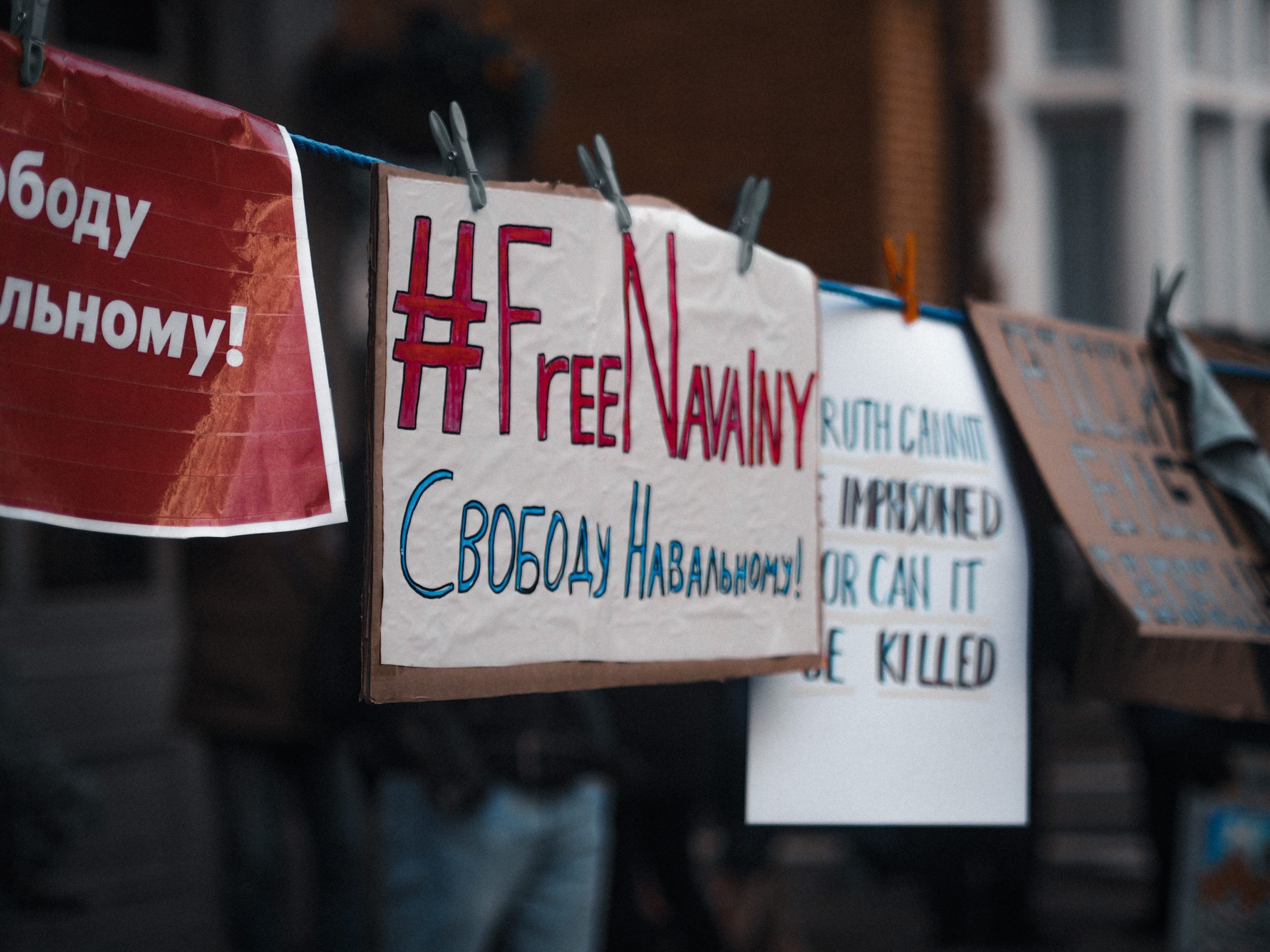
Russia’s most recent treatment of its opposition leader, Alexei Navalny has triggered a potential diplomatic headache for the Europe and the West. It remains to be seen whether Putin and his government will break under internal and external pressure calling for better treatment of the opposition politician and his supporters.

The Facts

Alexei Anatolievich Navalny was arrested on 17th January 2021 and sent to jail for 30 days on returning to Russia, after recovering from a near-fatal nerve agent attack in the country last August.

It has been alleged that the opposition leader had violated his parole conditions from his 2014 conviction of embezzlement. Then on the 2nd February, Navalny was sentenced to 2 years and eight months in a prison colony due to these parole violations. The opposition leader believes that his imprisonment is politically motivated with the European Union (EU) and the United States calling for his release.     

Since the start of this saga, mass protests have occurred in this country calling for Navalny’s release. There are estimates of over 100,000 people turning up to these demonstrates in over 100 Russian cities, most of which have taken place during sub-zero weather conditions. Facebook, Twitter and TikTok have experienced a surge in posts relating to these protests, amid threats of fines from by the Russian government for broadcasting the events.  

More than 5,130 people have been arrested since the start of these protests, and this number will likely increase.  Putin has labelled the current protests as “illegal” and “dangerous” while accusing the United States of interfering in Russia’s internal affairs. The president has also expelled three diplomats from Germany, Sweden and Poland for their alleged roles in the protests. 

In response to this, the three countries expelled a Russian diplomat, which has been seen as a tit-for-tat move.   

Meanwhile, the EU is considering levying sanctions on Russia due to this situation.

The crackdown of these protests is a horrible sight for many western observers, and western leaders are not holding back in their reactions to these protests. If that is calling for the release of Navalny, to end the crackdown on protestors, banning Russian diplomats or flirting with the idea of sanctions, the West is portraying an aggressive stance against Russia.

The question is: will this come at a cost?

The answer: a resounding yes.

An aggressive response to Russia by the West, potentially places further strain on an already complex diplomatic and economic relationship. Sergey Lavrov, Russia’s top diplomat, has said that Russia is ready to split ties with the EU if the institution pursues fresh sanctions. In doing so, not only will these sanctions or the potential cutting of ties create division and hostility, but the EU will lose another critical relationship from a global super power.

Meanwhile, US President Joe Biden will also need to tread carefully on this issue and as well as his general stance on Russia . The days of “rolling over” for Russia might be over for the United States, but by vocalising such a tone, this may tarnish the already strained US-Russia relations. The EU, United States and other western powers must consider if a relationship with Russia is worth pursuing in the long term. The current rhetoric points to a west prepared to walk away from this relationship, despite the potential fallout.


Alexei Navalny’s focus on corruption and channelling of anti-Putin frustration has resulted not only in social media success, but his crowning as the unofficial leader of the Russian opposition. Far-left Irish MEP Clare Daly claimed in a Russia Today interview this week that Navalny was a ‘puppet’ and that ‘Who rules Russia is a matter for the Russian people, not the EU’. The irony, of course, is that, given Russia’s highly corrupt oligarchical ruling system, it is difficult to gauge what the verdict of its population would be, if given a free and fair chance.

It is however worth pointing out that Navalny is no angel. In 2007 he backed Russia’s invasion of Georgia, and called for the expulsion of Georgian people from Russia, referring to them as ‘rodents’ (grizuni) – an ethnic slur often used by Russian nationalists.

Despite this, many Liberal-minded Russians feel they have nowhere to look but Navalny. In a 2013 interview with The Atlantic, journalist Matvei Ganapolsky explained: “I am completely pragmatic in my attitude toward Navalny. For me, he is a tool. His opinions about the authorities in Moscow, about the anti-Kremlin mood, completely correspond to my own,” Ganapolsky said. “I want to see honest elections in Moscow. I don’t have any other candidate.” 

Whatever future lies ahead for Russia, and it is in no way settled, Navalny’s focus on lambasting corruption, claiming swathes of the Caucuses and Crimea for Russia does not set the tone for a magical thawing of Moscow’s relationship with the West.

Why Is Trust In The Mainstream Media So Low?

According to some reports, public trust in the mainstream media is decreasing despite record audiences due to coronavirus keeping most of us inside in quarantine.

Surveys have painted a mixed message of the relationship between consumers and mainstream media (mainly news) organisations. Many different theories have been used to explain this slump.

Some believe that it’s due to journalist’s aggressive questioning and attitudes towards the government’s handling of the pandemic.

Others believe that it’s due to political affiliation and bias, as it makes sense that media companies with a political bias will be criticised by those who disagree more harshly than with whom they agree, further compounded by the stress caused by the effects of coronavirus.

Of course, there were different results between the kind of media in question. Newspapers and television audiences had similar but distinctly different results.

It’s also important to recognise that the results of trust in mainstream media as a whole was vastly different from the results of specific media organisations and journalists.

Despite this, other reports suggest that there has been no collapse in public trust in news media (with data taken from December 2019 to May 2020).

This should logically contradict other surveys that the trust has fallen. It should not make sense that both should coexist and maintain their respective validities, but that is the case.

The Facts

A report by the Guardian suggests that public trust in the British media and journalism is eroding, despite record viewership and consumption due to the ongoing coronavirus pandemic.

A YouGov poll over over 1,500 people reported that two-thirds of the public do not trust TV journalists, whilst nearly 75% of the public do not trust newspaper journalists.

It is assumed by some commentators that this is down to the mainstream media’s questioning and attitudes towards the government’s handling of the pandemic, which is perceived to be aggressive at times.

It’s said that this is contributing to a distrust in the media, as many see it as a form of fear-mongering and division of the British public when the nation is in dire need of unity more than ever before in recent history.

Mark Austen, a Sky News evening presenter, said, “We never come out that well in polls, we’re never going to be up there with Mother Teresa.”

“A lot of the criticism I’ve seen online is about [the media] not supporting the government enough, missing the mood of the country, not making a positive contribution. But it isn’t a journalist’s job to support the government.”

Theories about the erosion of trust have also been attributed to political bias and affiliation, specific outlets being trusted less than others and a sort of mental fatigue from the seemingly never-ending coronavirus news and updates.

There is more at play here than just facts and figures. This is less of a trust issue and more of an ideological and cultural issue. Society is becoming increasingly polarised and divided on certain issues, and many mainstream companies seem to take sides.

Distrust in mainstream media is just a symptom of a wider issue. Many feel as if their views are not being represented enough in the public eye, which leads them to create theories as to who can be trusted or not, and why they can’t be trusted.

Among other media outlets many people believe the BBC in particular – which was created to be impartial – has been slowly becoming more and more bias towards left wing opinions. The lack of balance of opinions in news articles have slowly become prominent, and it raises concerns about transparency and impartiality.

BBC Newsnight presenter Emily Maitlis received heavy backlash for her perceived biased introduction on the Dominic Cummings controversy. Video credit: The Independent

The BBC is especially obligated to provide impartial journalism and information, as that was its original goal. The fact that it’s funded by TV license fees makes the bias all the more concerning and insulting to some viewers, as many feel they are paying for a service they don’t want or need.

It is a criminal offence to not pay a TV license, and so many are irked at the idea of being forced to pay for it when they feel the BBC does not represent their views.

There have been several calls to decriminalise non-payment of TV licenses, which forced the BBC to review its policies and give warning to its presenters.

There is no such thing as totally unbiased media, but the mainstream media simply does not seem to be representing the opinions and viewpoints of a huge portion of the public.

The creation of upcoming news channel GB News is a perfect demonstration of this. GB News has declared a “commitment to impartial journalism”, implying that many news networks are not impartial (or at least, not enough).

Distrust in certain media outlets is nothing new, but simply a reaction to the proportion of representation of certain ideas.

Distrust in the mainstream media is nothing new, it’s a tale as old as time. 

The rise of self proclaimed ‘journalists’ on social media has seen this feeling of distrust deepen. 

Twitter, Facebook and Instagram has given anybody anywhere the opportunity to act like a publisher, allowing them to voice their opinions on everything topical.

Confirmation bias runs rampant online, and for every protest on a BBC News presenter’s use of the N-Word, there are calls for the broadcasting giant to unshackle itself from left wing bias and political correctness.

Each of these issues are compounded by a talking head on your mobile phone who will come with ‘facts and figures’ to confirm your bias that the BBC is racist, or that they are silencing right wing ideals.

It can be hard to argue that representation of different viewpoints in mainstream media are being silenced when Laurence Fox has appeared on The Daily Mail and The Times.  

Many might argue they are right leaning publications but they are hardly hyperlocal news sites with minimal reach.

This is not to say the mainstream is absolved of any responsibility and is an impartial institution that grates people from both sides of the spectrum.

However, if it is understood that mainstream media will never be unbiased and impartial. Then it’s important to make sure that you as a reader seek out the different opinions.

Why Doesn’t Priti Patel Support ‘dreadful’ Black Lives Matter Protests

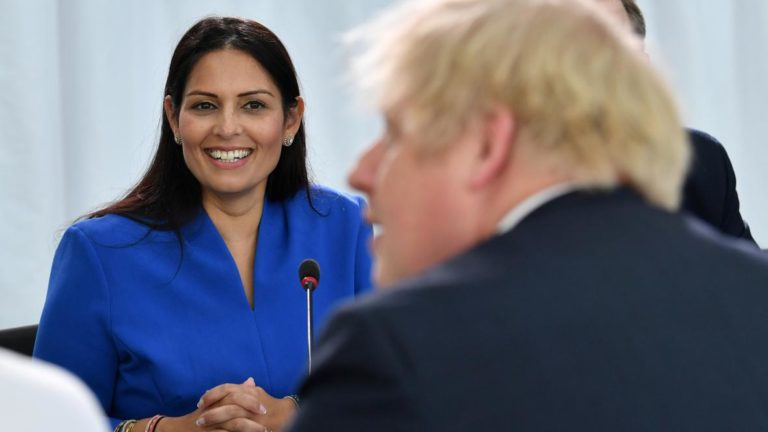
In a radio interview, Home Secretary Priti Patel stated that she would refuse to kneel in honour of the Black Lives Matter movement.

She described the protests last year – in the wake of George Floyd’s killing last year in the US – as “dreadful”, and that she would refuse to take the knee.

There has since been a public reckoning and debate in the UK with regards to whether or not some statues should remain erected or removed from public spectacle.

Several statues of historical British figures have been called into question due to their relations to slavery and colonialism, including a statue of Edward Colston (a former slave trader) which was toppled illegally and pushed into the nearby docks.

In a similar incident, a memorial of Winston Churchill in central London was vandalised with the words “is a racist” by Black Lives Matter activists.

Many people have questioned whether or not the United Kingdom is a safe place for black people, when powerful political leaders such as Priti Patel openly express disapproval and disgust for an anti-racism movement.

The Facts

In an radio interview with broadcaster Nick Ferrari, Priti Patel described the Black Lives Matter protests which took place last year as “dreadful”. Live on LBC Radio, Priti Patel made it abundantly clear that she did not approve of the “taking the knee” gesture.

She said [about being prepared to take the knee], “No I wouldn’t, and I would not have done at the time either.”

“There are other ways in which people can express their opinions, protesting in the way that people did last summer was not the right way at all … I didn’t support the protests. Those protests were dreadful.”

“We saw policing as well coming under a great deal of pressure from some of the protest. I don’t support protest and I also did not support the protests that were associated …”

When challenged by Ferrari, she clarified that she was referring to specific BLM protests, and not that she believed that people should not have a right to protest as a democratic right which citizens have the right to exercise.

The comments were related to recent comments made by Commons leader Jacob Rees-Mogg who accused London Mayor Sadiq Khan of overseeing “loony, left-wing wheezes“, following a commission to promoted diversity in London’s public spaces.

It has raised debate as to whether or not BAME people (particularly black) feel safe or welcome in the UK.

Priti Patel was not impressed with last year’s BLM protests. Video credit: The Guardian

It’s hard to decipher whether Priti Patel simply delights in offending minorities or whether she genuinely believes what she says.

In any event, her most recent comments are the latest in a saga of offence and gross indifference at plights of minorities, especially Black British people. For many, this latest episode will coalesce what they have come to believe about the Home Secretary as aloof and dense.

They will say that It is a damning indictment of our society that a British home secretary appears to be more offended by the pulling down of a statue, and more outraged at protests against racial inequality and injustice, than she is by the suffering of Black British people. It isn’t a good look for a woman who doesn’t have the best of reputations in the Black community and in politics, the optic matters. Ever since she made the statements, pressure has been growing on Priti Patel.

She branded the anti-racism protest movement Black Lives Matter “dreadful” and criticised the practice of taking a knee. Nick Thomas-Symonds, the shadow home secretary, said his counterpart’s comments were “unacceptable” and that the Black Lives Matter movement was “a powerful call for change from across society”.

Ms Patel had said she opposed the civil rights protests as “not the right way at all” and also that she opposed the peaceful symbolic gesture of “taking the knee”. The natural response is, well, what is the right way’?. Taking the knee” – these three simple words call attention to the racial inequality and racial injustice suffered by Black people. In her own words, there ‘many ways’ to make your voice heard and protestors decided taking the knee was one of them.

There is no monolithic view of what an ethnic minority woman should stand for. However, no one should use their position and influence to deepen racial inequality. 

The UK is a home for black people.

Not all black people think in a monolithic manner, and assuming so removes any kind of consideration for individuality and diversity of opinion. It is wrong to put all Afro-Caribbean people into the same ideological category.

Assumptions and loaded questions like this have the potential to further marginalise black individuals who do not identify with mainstream narratives about black people.

There are black individuals out there who agree with Patel and find the BLM protests distasteful. An example of this is Kemi Badenoch, Minister for Equalities, who called out BLM in a speech in Parliament that went viral.

Ironically, many of the people who claim that Britain isn’t a safe space for black people racially abused Badenoch after her speech.

Badenoch and Patel’s respective positions should not obligate them to take a certain stance on a movement such as BLM.

Minister for Equalities Kemi Badenoch makes her feelings known on BLM and the proposed teaching of Critical Race Theory in schools. Video credit: The Sun

Britain is not an innocent party in the history of racism, but to say that it isn’t a safe place for black people is an insult to the enormous amount of progress made.

Examples of this include Patel and Badenoch’s respective positions in Parliament. There was once a time in Britain where BAME people holding such prestigious positions in the government would unheard of and unthinkable. Now, it’s commonplace.

As recently as the 60s, there were signs which read “no blacks, no dogs, no Irish” in the windows of establishments. Now, there are laws and legislation which prohibit discrimination based upon characteristics, including race and ethnicity.

The truth of the matter is that two BAME people not only hold positions of power and influence, but have committed the grave sin of disagreeing with a movement.

Kemi Badenoch speaks on Black History Month and her experience as an immigrant.

If to be ‘safe’ means to have rights to not be discriminated against and to be able to choose your own path, then black people are more than ‘safe’.

If being ‘safe’ means to have intellectual comfort and be offended that another black person does not subscribe to your own viewpoints and ideology, then black people aren’t ‘safe’; then again, nobody should be.

To not be discriminated against is a right. Intellectual and ideological comfort is not.

Climate Action is the Key to Countering China

By Alex Game

Boris Johnson has begun to take a more cautious stance toward the Chinese regime over the past twelve months. Whether it be the promise to extract Huawei from our 5G networks by 2027 or offering citizenship and residency to the 1.5 million citizens of Hong Kong, a new attitude toward the Middle Kingdom is surely emerging- whether or not this was Johnson’s intention upon entering office.

Another issue at the forefront of the government’s long-term goals at home and abroad is emissions targets. Every nation will play its part, and the smallest changes may have the biggest impacts globally. Getting China, now the second-biggest economy in the world, on board with emissions targets is so important.

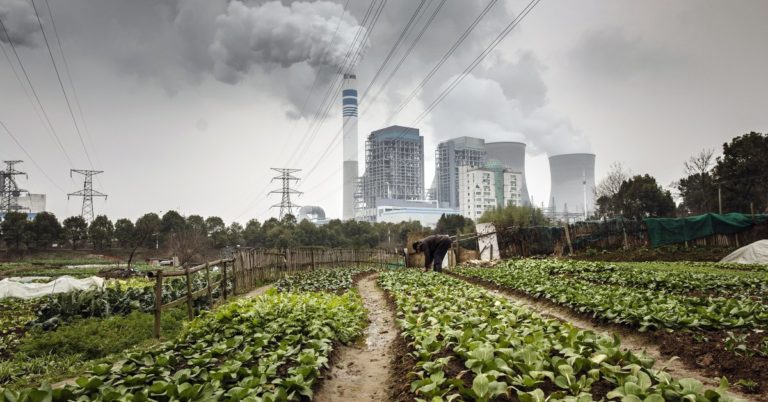
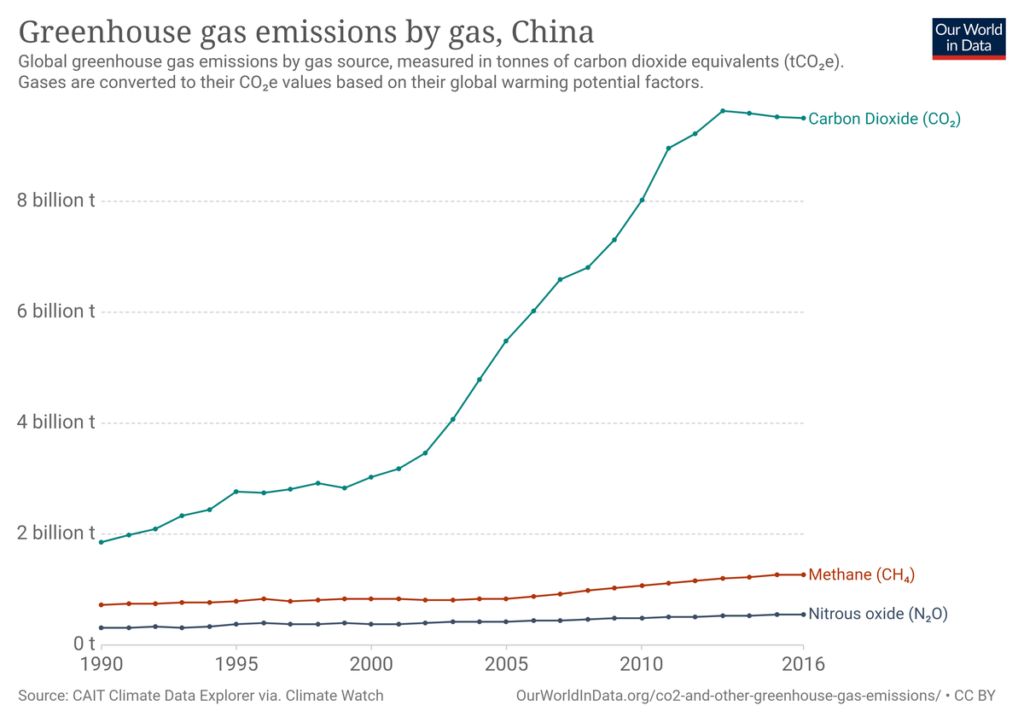
In 2018 China emitted just over 10GT of CO2 emissions-about 28% of the planet’s CO2 emissions for the whole year. This is a country that is showing little sign of slowing down its annual emissions, despite having announced its goal of carbon-neutrality by 2060. In 2020 China was expanding its use of coal for power in its economy at its fastest rate since 2015, this policy has been pursued due to the lust for more growth, but will massively hinder China’s chances of decarbonising fast enough to reach the Paris agreement levels of global temperatures rising by 1.5C compared to preindustrial levels. This also creates a dreadful environment for China’s residents, often subdued to dim and murky towns and cities consumed by smog.

China Greenhouse emission of gas from 1990 – 2016: Wiki

Another source of concern is China’s amping up of aggression on the foreign policy front, from clashes on its border with India, the construction of man-made islands in the South China sea or its breach of the Sino-British Joint Declaration in Hong Kong. Internally there is just as much room for concern. On top of its general framework of political repression since 2016 the government has implemented brutal policies of forced labour, sterilisation and survillance in an attempt to exterminate the Uyghur Muslim population mainly concentrated in the Northwest region of Xinjiang. This kind of politics cannot be rewarded and must not go unchecked by the West.

China’s human rights abuses are directly linked to Beijing’s new economic ambitions, they are tieing other nations closer to themselves economically so they don’t hold them to account for the atrocities that they commit. Through initiatives such as the Belt and Road scheme linking China and Central Asia by road and sea to Europe and Africa, we are witnessing strengthening trade links which lower China’s reliance on traditional naval routes. The initiative is also encouraging debt-dependency on lower-income countries, highly concentrated in Africa, for large scale infrastructure projects.

This is why it was baffling to see the EU sign a new investment deal with China at the end of 2020, rather than use its position to highlight the drastic differences between the attempts being made in Europe on both environment and human rights as opposed to China. Europe is seeing a drastic shift in their economies towards greener models and looking to invest in green innovations such as nuclear fission, solar, wind and so on. However, China is lacking in its approach and this must be and should be talked about on a global scale due to the sheer size of the nation. If China doesn’t get on board with decarbonisation then all of our efforts to reduce emissions in Europe will be powerless.

The vision of ‘Global Britain’ permitted by our exit from the European Union should prompt us to take on a world-leading role and hold the Chinese regime to account for their environmental record. Boris Johnson wants to be a world leader this year by setting out his agenda for how everyone can chip in, in the fight against rising global temperatures at the COP 26 in Glasgow this autumn. If he shows that you can hold China to account on issues such as human rights abuses and its poor environmental records, then other democracies will follow his lead. This will be seen as a victory for Johnson in his ‘Global Britain’ agenda and attempt to lead the world in decarbonising. Although it will be a tough task we must not forget that with Joe Biden now being President of the USA Boris will not get a better chance than now to try and lead a consortium of countries to bring pressure on China to do better. The trajectory of Chinese policy and global environmental crises are two issues set to define this century, and Britain must do all in its power to counter China’s hypocrisy and mismanagement on both fronts.

Alex Game is a Policy Researcher and Campus Coordinator for the British Conservation Alliance.

What do Joe Biden’s $1,400 checks mean for Americans

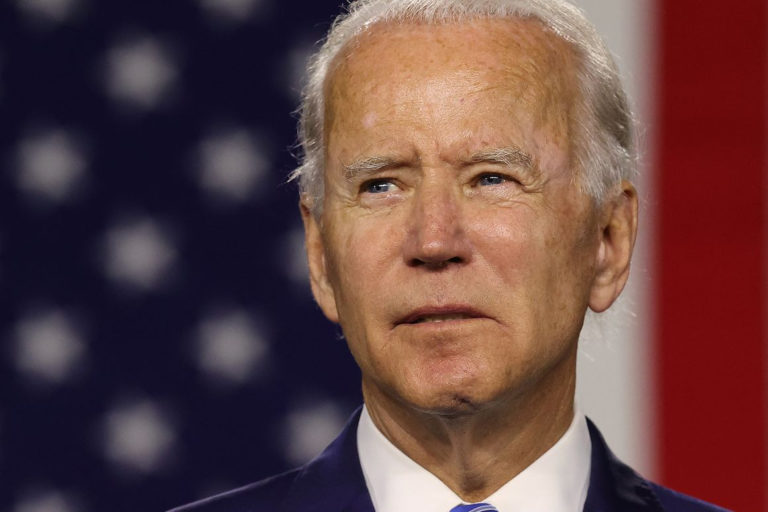
President Joe Biden has hit the ground running in his first few weeks in office: signing multiple executive orders which reversed many of the Trump-era policies, outlining a corona virus recovery plan and the most pressing one that this stage: trying to make good on his campaign promise for a stimulus package worth $1.9 trillion.

The Facts

During his presidential run, one of Joe Biden’s main promises to the American people was the delivery of a stimulus package to help struggling families.

Biden is looking to send a check worth $1400 to each deserving person. The COVID-19 relief proposal, totalling $1.9 trillion has been a serious point of contention in Washington since Biden took his oath of office.

The Democrats and Republications are yet to reach a consensus on the exact amount of the stimulus – including what each individual would receive – and the qualifying prerequisite for receiving aid. It looks likely that given the Democrats’ majority in both houses, Biden’s proposal will be approved without Republican votes.

In a recent press conference President Biden reiterated his commitment to making good on his campaign promise:

I’m not cutting the size of the checks, they will be $1,400, period. That’s what the American people were promised.

President Joe Biden speaking on the COVID-19 relief proposal

It is no surprise that COVID-19 rocked the world’s economy, with businesses forced to shut down due back in March of 2020.

With millions of Americans out of work and struggling to survive during this pandemic, the economy took a hit. While the world tries to slowly re-open and put more people back to work, it is a remains a very slow process. Therefore, Americans need more relief than what is currently proposed.

While some of the proposals the Republican lawmakers made have merit – the current debate is not clear cut. The GOP senators propose giving money to individuals who make less than $40,000 and couples who make less than $100,000.

Yes, individuals who make less than $40,000 should be the priority, after all they were hardest hit by the economic downfall. However, individuals making $50,000 in California could equally be struggling based on the cost of living alone.

The point is, every American’s circumstances are different. There need to be more variables factored into the American income than what is on their paystub (payslip).

A check of $1,400 doesn’t go far when rent or mortgages take half or most of that check for the average American. Plus, utilities, food, and other monthly payments will take the other half if not exceed it, depending on the particular city.

Only issuing $1,400 and doing nothing more is just as foolish as giving Americans $1,200 here and $600 there, as has previously been the case, hoping it would be enough to see them through this recession.

The people who really need the money are the families below the poverty threshold. The American government can and should do more. Americans need relief and should receive it. The government needs to make good on the promises it made to the Americans that elected them into office.

Government exists to coordinate response in unprecedented situations, like when you can’t mandate people stay home without providing adequately. Stimulus temporarily fills that need to prevent structural collapse by accelerating economic activity so the system sustains itself without stalling again. A protracted pandemic is different.

Ongoing stimulus can be inflationary if the extra money is chasing fewer goods and services – all that stuff not produced because of “social distancing”, and supply chain bottlenecks from closed borders.

That $6 Trillion isn’t just sat there, the US government sells IOUs to investors, even themselves, under a perpetual deficit – exporting their inflation to developing nations via the US dollar indirectly controlling world markets.

PV = nRT

Where P=prices, V=volume of goods and services, n=”money supply”, T=”velocity of money”.

We are increasing “n” with stimulus and decreasing “V” because stuff is not getting produced at the same levels during COVID-19 “social distancing” as pre-COVID-19. And after this passes “T” will want to be basically as it is now as all that pent up demand hits the economy – “P” has no mathematical alternative but to increase.

When we say inflation is unprecedented, we only need return to the 1970s Stagflation era.

The 2009 Cares Act stimulus didn’t create the “hoped for” inflation because “T” was too low. It was parked in stock buybacks, debt repayment, improving balance sheets – it wasn’t loaned out so the fall in “T” offset the rise in “N”.

Add in the $15 minimum wage, which is currently being mooted and it likely won’t help the numbers on payroll, but will mean the costs are passed on in higher prices.

In fact, mass layoffs and furloughs are deflationary. The US didn’t do enough during the Great Recession to stop 750,000 workers a month losing their employment. Instead, it extended unemployment benefits hoping the economic recovery would result in employers rehiring all those who lost their jobs. The widespread business failures meant the jobs no longer existed as the recovery began.

This time around, Democrats insisted on payroll grants, so employers maintain jobs, and business can ramp up later to provide the goods and services the public will need. This bottom-up approach avoided cascades of misery accompanying large-scale unemployment. Maybe the first package helped short-term. But more injections, and long-term lockdowns, remove the urgency to return to work. More stimulus before the economy reopens is like throwing money into a black hole.

Riding out the disruption was viable for a few months – not for 18 months, possibly longer. US debt per taxpayer was $170,000 before this latest $2T. Either higher taxes, covert taxation via inflation to reduce the dollar’s purchasing power, more debt, or significantly higher output will right the ship.

Delivering the direct payments in snippets would have enabled bills to be paid. But one-off, uncertain delivery of payments are political manoeuvring, to “buy votes”.

The stimulus should have gone exclusively to those earning below $25,000 a year, because they will likely spend it straight away, and stimulate the businesses to maintain operations. Those earning more than $25,000 will likely invest or save or pay down debts. Prepaid gift cards would have done the trick.

Those sectors hardest hit – entertainment, cuisine, etc. – crippled by forced mandate should receive help. Other sectors fared somewhat better. But with 40% of Americans not having $400 in savings for an emergency; locking down indefinitely for a virus with a 0.01% fatality rate for those in their 20s, and 0.4% for 50 year olds is the more dangerous course.

Meghan Wins Privacy Case Against Mail On Sunday

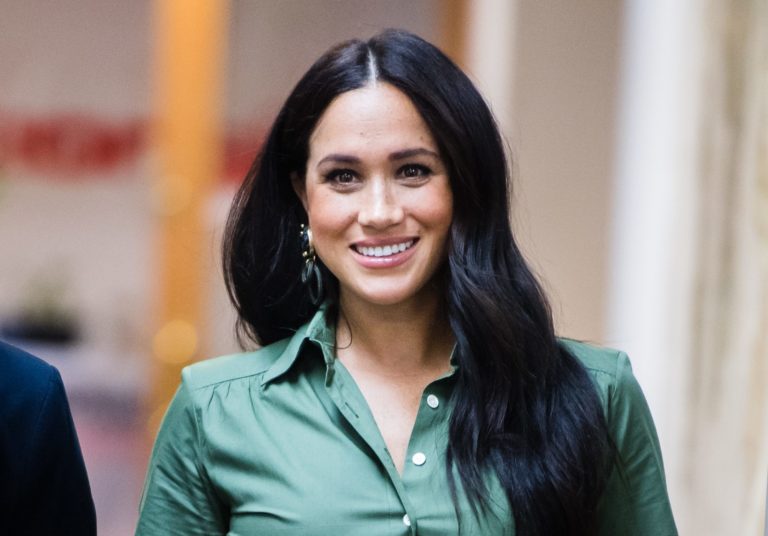
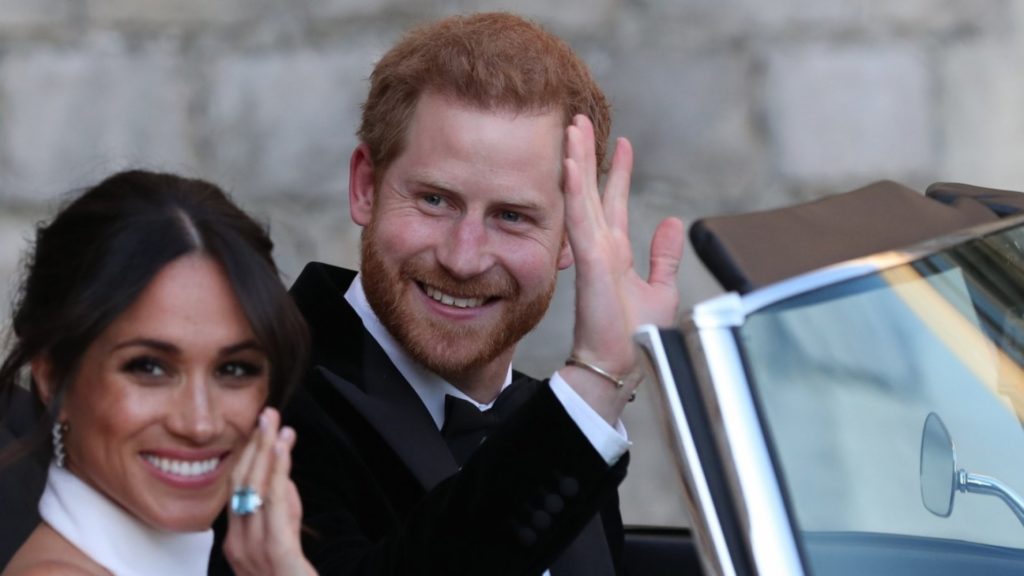
The Duchess of Sussex has won her high court privacy case against the Mail on Sunday, hailing her victory as a “comprehensive win” over the newspaper’s “illegal and dehumanising practices”.

After a two-year legal battle, a judge granted summary judgment in Meghan’s favour over the newspaper’s publication of extracts of a “personal and private” handwritten letter to her estranged father, Thomas Markle.

In his judgment, Lord Justice Warby found for Meghan in her claim for misuse of private information against Associated Newspapers, publishers of the Mail on Sunday (MoS) and Mail Online, over five articles in February 2019 that included extracts from the letter.

He said: “It was, in short, a personal and private letter. The majority of what was published was about the claimant’s own behaviour, her feelings of anguish about her father’s behaviour – as she saw it – and the resulting rift between them. These are inherently private and personal matters.

The Duchess’ Statement

In a statement, Meghan said: “After two long years of pursuing litigation, I am grateful to the courts for holding Associated Newspapers and the Mail on Sunday to account for their illegal and dehumanising practices.

“These tactics – and those of their sister publications Mail Online and the Daily Mail – are not new … For these outlets, it’s a game. For me and so many others, it’s real life, real relationships and very real sadness. The damage they have done and continue to do runs deep.

“The world needs reliable, fact-checked, high-quality news. What the Mail on Sunday and its partner publications do is the opposite. We all lose when misinformation sells more than truth, when moral exploitation sells more than decency, and when companies create their business model to profit from people’s pain.

“But, for today, with this comprehensive win on both privacy and copyright, we have all won.”

A spokesperson for Associated Newspapers said: “We are very surprised by today’s summary judgment and disappointed at being denied the chance to have all the evidence heard and tested in open court at a full trial. We are carefully considering the judgment’s contents and will decide in due course whether to lodge an appeal.”

The judge said “the only tenable justification” for publication would be to correct some inaccuracies about the letter contained in an article in People magazine that had featured an interview with friends of Meghan.

It was legitimate for Markle and the defendant to use a part of the letter to rebut a false suggestion in the People article that the letter represented some form of “olive branch” from the duchess to her father, he said. But it was the “inescapable conclusion” that it was neither “necessary or proportionate” to disclose the rest of the information in the letter, he added.

“Taken as a whole, the disclosures were manifestly excessive and hence unlawful,” he said.

EU-UK Vaccine Row Reignites Vaccine Nationalism Debate

The debate around vaccine nationalism has sprung up once again after the United Kingdom, and the European Union (EU) locked horns over vaccine supplies in the last coming weeks.

On one side of the debate, nations should be prioritising their citizen’s immunity, while in contrast, there are calls for more collaboration when it comes down to vaccinating people.

Tedros Adhanom Ghebreyesus, the director of WHO, is one of the many individuals who has previously spoken out against vaccine nationalism by saying that it would only “prolong the pandemic, not shorten it.”

Meanwhile, more than 12 million people have received the first dose of the vaccine in the United Kingdom, with the EU aiming to vaccinate 70% of people by the summer.

The Facts

In late January, the European Union (EU) tried to stop EU produce vaccines moving from Ireland to Northern Ireland by triggering Article 16 of the Northern Ireland protocol that is part of the Brexit Withdrawal Agreement.

This protocol allows an open border between the EU and North Ireland, meaning there are zero controls on exported products.

However, article 16 does allow in certain circumstances either the EU or the UK to cancel exported products that in their eyes are deemed to be causing “economic, societal or environmental difficulties.”

By having such an article in place and with the EU experiencing production issues with its supply of the AstraZeneca vaccine, the EU triggered this article to control their vaccine exports.

However, in doing so, it caused a considerable reaction from Dublin, Belfast and London.  

To try and calm the situation down AstraZeneca said that they would expand its vaccine deliveries to the EU by 9 million by next month, according to European Commission chief Ursula von der Leyen.

After constant talks between the EU and the United Kingdom, the EU retracted their article 16 claim, allowing EU produce vaccines to go across to Northern Ireland.  

Despite opinions from both sides of this issue, this whole saga has reignited the debate on vaccine nationalism.

Whilst I understand the collective mindset that the WHO has, I firmly disagree with it.

As a citizen of the United Kingdom, I feel that it is correct and proper to prioritise British citizens. Nations would be irresponsible and morally bankrupt to not give rights of first refusal to its citizens.

The vaccines are being distributed, free of charge, by the NHS. UK taxpayers are well within their rights to question and challenge such an idea.

They pay taxes which funds the health system, which means they are entitled to receive the vaccine before anybody else.

Nadhim Zahawi responds after the EU threatened to block exports of coronavirus vaccines to countries outside its jurisdiction. Video credit: Guardian News

It is not immoral to want to stay alive and be vaccinated against a virus before somebody else. The sooner we get vaccinated, the sooner life can return to somewhat normal.

The NHS is there to serve and protect UK citizens. It’s called the National Health Service, not the International Health Service.

People would argue that it is immoral to not contribute some spare vaccines to the poorer international arena, out of some misplaced sense of self-righteousness.

The truth of the matter is that, at this moment in time, there are a limited number of vaccines and that there will always be those who miss out. That’s the sad reality of the situation.

This is not an ego problem, or a ‘patriotic’ problem. This a legal and moral issue.

The UK, like any country, simply has a decision to make as to who is prioritised. It’s a catch-22 situation. With this being the case, the only other factor is to whom the UK shows its loyalty and allegiance, which would be the citizens. Britain cannot (and should not) help other countries before it helps itself.

What this EU-UK vaccine row has confirmed is that organisations and nations lack a moral compass.

The EU’s move shows that politics is getting involved over health, ethical and legal considerations of this vaccination process and more broadly, the pandemic itself. However, the EU is not alone in this one.  According to the People’s Vaccine Alliance, rich nations that only represented 14% of the world’s population have bought up to 53% of the eight vaccines so far. Meanwhile, nearly 70 countries can only vaccinate one in ten people against this virus for this year. Canada has enough vaccines to vaccinate their citizens five times over, while South Africa expects only to vaccinate 3% of its population.  

The economic gap between high to low-income nations might have shrunk, but a new gap has started in terms of vaccinations. As much I want to be selfish and say that we should prioritise ourselves, my moral compass is tingling. Hate to break it to the anti-globalists and the ultra-nationalists, but our world is interconnected, and this virus affects everyone. Having some parts of the world vaccinated while other parts of the world struggle to vaccinate their key workers will create more mutations, more lockdowns and more economic damage. By concentrating on ourselves, we will prolong this pandemic.

Us Brits might return to normal in a few months, but those who are not as privileged as us will not have this potential reality.  Coronavirus is a severe global issue, which needs a united globe to tackle this issue. Vaccination nationalism must be replaced with vaccine globalism, or else we will never return to normal. The question is, are people willing to listen to their moral compasses or their egos.   

A Short Guide To The Indian Farmer Protests

With 100 people missing and over 200 detained by local police, the farmer protests in India have careened out of control. Global coverage of the affair is growing as public figures share information on social media following continued bouts of violence along various highways to Delhi. The violence is an outcome of decades worth of bottled tension between farmers, and the Indian government who have regularly side-lined their interests. Understanding the growth of India’s agriculture sector is integral to deciphering the meaning behind these protests that are gradually tearing the nation apart.

India’s Green Revolution

Malnutrition in India during the 1960s incentivised the Green Revolution that transformed the nation’s agricultural sector. Irrigation, chemical fertilisers, high yielding crop varieties and pesticides were introduced to improve India’s self-reliance in the sector. Eventually, the modernisation of farming led to huge gains in the production of wheat and rice and consolidated the country’s position as the world’s second-largest exporter of grain.

The Old System

A nation-wide food marketing system was created to accommodate the rapid evolution of the sector. Before September 2020, farmers from across various Indian provinces such as Punjab, Haryana, and Karnataka, would sell their produce to wholesale markets colloquially termed ‘mandis’. Traders at mandis would then bid for these crops and sell them on to larger stores. A minimum support price (MSP) was instated to ensure a benchmark return for farmers whose livelihoods depend on these transactions.

Regardless of these measures, the pre-September 2020 system had its flaws. Traders often colluded and issued uncompetitive bids causing farmers to, more often than not, bare the financial brunt of trader conspiracy. On top of this, the production of wheat and rice now contributes to less than 20% of Indian GDP, reduced from 50% in the 1960s-70s. That and a rapidly increasing population has dwarfed the relative strength of this once lucrative sector. Farmers have therefore been urging the Indian government for decades now to implement legislation to preserve farming jobs and restore productivity.

The Big Problem

Instead of heeding these complaints, the Indian government has recently created legislation that worsens the plight of farmers already suffering from a fractured system.

In September 2020, the Indian government passed three crucial bills that have essentially enabled corporations to gain a stronger foothold in the agricultural sector and made farmers increasingly susceptible to exploitation.

  • The Farmers Produce Trade and Commerce (Promotion and Facilitation) Act – This essentially creates free, unregulated trade spaces outside the main markets where farmers originally traded. Traders looking to buy produce are therefore likely to move away from regulated trade spaces and into unregulated ones in which corporations have a monopoly, in order to avoid buying at the MSP.  
  • The Farmers (Empowerment and Protection) Agreement of Price Assurance and Farm Services – This bill creates a framework for contract farming deals. It affords little oversight, so farmers do not have much bargaining power. Since such deals happen outside wholesale markets, they could have the effect of fragmenting the market further and leaving farmers at the mercy of terms set by large corporations.
  • The Essential Commodities Amendment – This removes the storage limits previously set by the governments to control prices. Unlimited storage means wealthy players in the market can start influencing prices by stockpiling without supervision.

Overall, the three bills create two farming markets, one that is regulated and one that is not. By leveraging wealth and influence within an unregulated bubble, corporations can control the price of farmers’ products. Moving away from MSPs will inflict unlimited financial hardship on farmers who are now unable to benefit from fixed returns as corporations seek to maximise their profit margins.

The Protests

As a response to this, 250 million farmers have been marching over 360 km to Delhi in one of the largest protests in Indian history. The aim of the protest is to repeal the bills that purport to ‘modernise the Indian agriculture industry’ at the expense of farmer’s livelihood. Farmers from across the country have been setting up camp across various highways, with the intent of staying until the Prime Minister, Narendra Modi, relents and repeals. However, these protests have not been met peacefully. Thousands of security personnel and police officers have been deployed across the country to subdue the protests using tear gas, petrol bombs, metal spikes, brutal beatings, and regional internet blackouts.

Rihanna’s tweet about the farmer protests.

Renowned western celebrities such as Rihanna have spoken out about the protests, drawing criticism from Bollywood actors and actresses hedging their careers by gaslighting civilians into taking a middle ground stance.

An array of Bollywood celebrities and public figures posting suspiciously similar statements in response to Rihanna and Greta Thunberg tweets that support the Farmers Protest.

The Impact

The issue extends beyond the three bills issued by the Indian parliament in September 2020 as the Indian government’s violent response to the uproar is what is chipping away at the world’s largest ‘democracy.’

Farmer’s make up 50% of the Indian labour force yet the measures installed to protect them falls short. By relegating their interests, it is clear that either India does not care about its labour force or is under the impression that it is developed enough to modernise at the expense of agricultural workers. These changes have fundamentally jeopardised the country’s democratic foundation and has emboldened religious and socio-economic divisions in the country.

It is unclear what the situation will be like in the weeks to come as farmers remain persistent and talks between Prime Minister Modi and the protesters have proven futile. If things carry on as they are, Indian democracy and the livelihoods of Indian farmers is at extreme risk.

Should The Police Be Enforcing ‘Essential’ Journeys or Not?

British Transport Police tweeted an image of their officers at a train station, enforcing ‘essential’ journeys by turning people away and issuing fines to those refusing to comply.

There have been mixed reactions to this. It raises questions and debate about whether or not the government and in this case, Manchester Council is doing the right thing.

Firstly, some think that the government should apply this tougher stance to airports, as there are still thousands of people entering the UK everyday.

Secondly, there are those who welcome this stance, as they believe that this tough stance should deter people from spreading coronavirus, as well as controlling and limiting the spread.

Lastly, there are those who think these actions are symptoms of the British public sleepwalking into a police state.

The Facts

In February 2020, British Transport Police tweeted a photo of some of their officers at Manchester Piccadilly station.

The officers were at all entrances of the station, and were there to ensure that people were not leaving for ‘non-essential’ reasons.

The tweet said, “Today we are helping beat this virus by ensuring only essential travel from Piccadilly Railway Station. Police positioned at all entrances to Piccadilly ensuring only necessary travel. So far around 12 people refused travel for non essential reasons.”

British Transport Police with a seemingly innocent but somewhat chilling post.

It comes after Manchester has taken a tougher stance on people breaking Covid rules in recent weeks.

Greater Manchester Police reported issuing 190 fines in a single week in January, 87 of which were related to house parties.

Councillor Nigel Murphy, Deputy Leader of Manchester City Council, said [in relation to the house party rules]: “It is extremely frustrating that despite every warning we are still seeing people break rules. I appreciate how difficult it has been for everyone over the past year but this is not an excuse to put people’s lives at risk.

“We have the power to close properties for up to six months and prevent people from entering; this is something we have done before and will not hesitate to do again.”

Make no mistake; the government has crossed a line. I think that this decision is misjudged and quite frightening.

Misjudged, as the government should be prioritising other factors such as controlling international travel, which is a much more urgent matter at hand.

Frightening, for two reasons; firstly because the government should not be arrogant enough to decide which reasons are ‘essential’ and which aren’t, and secondly because it feels as if we are having our basic freedoms being taken away from us, with ‘public health’ being the justification.

To the UK’s credit, the government has introduced new guidelines which outlines what incoming passengers must do in order to self-isolate.

One of those rules includes being compelled by law to self-isolate in a hotel for 10 days. It costs £80 per day, with the costs to be borne by the passengers.

The government seems to be aiming to deter people from travelling to the UK by making it financially difficult for the passenger. £800 extra per trip and 10 days self-isolation seems to be a good deterrent.

I believe that the government should not only have done this sooner, but should take even harsher steps than this by banning all international travel to the UK altogether (aside from British citizens).

The UK still has thousands of non-UK nationals entering the country every day, so it makes me wonder why they waste resources on their own citizens rather than international travellers.

I also believe that there is something particularly Kafkaesque and concerning when the government decides to try and restrict and control the movements of its own citizens, in the name of safety.

It should not be up to the government to decide which journeys are ‘essential’ and which aren’t. The police should be used in a more urgent and practical capacity (such as stopping actual crimes), rather than try and control the movements of its citizens.

We are sleepwalking into a police state and the worst part about this is that there are those who will not only be willing, but practically begging for more authoritarian moves like this by the government, to give them a false sense of security.

In the name of safety, it seems that there is nothing the government can’t take away from a person. The ends will always justify the means.

Analysis by Hamish Hallett

Over the last year or so, the great British public, for the most part, has followed this rhetoric: “Stay at Home and Save Lives”.

As difficult as it is not seeing our loved ones for a very long time or to be able to travel the globe and experience what our local communities have to offer, drastic measures are needed to combat this virus. Coronavirus has taken over 100,000 lives in the UK alone and will take even more lives if we do not clamp down on those who breach the rules. The only way out of this mess is to stay at home and wait our turn for the vaccine. 

Suppose people need to go out of their homes for work that cannot be done at home, go to the shops for food, need medical attention and need to leave an abusive relationship, these reasons are valid and fall within the reemit of essential travel. But those who think that it is perfectly ok to go and travel 200 miles to have a coffee with their mates are not only selfish but incredibly naïve about the current situation.

There is more to this virus than the number of lockdowns this government has put us in, and there are thousands and thousands of cases within our country still. To return to some form of normality, we have to take drastic measures. If these measures include police officers asking us if our travel is necessary, then so be it.

Now is not the time to talk about conspiracy theories that suggest governments across the world are using this pandemic to exercise draconian controls. Instead, this dangerous and life-threatening situation needs stern collective action and togetherness, not individual selfishness and bottomless theories.