Home Blog Page 78

Sergio Marchionne: 1952 – 2018

by Rutvik Bhaskar Perepa

Sergio Marchionne, former CEO and chairman of the Fiat Chrysler Autombile group (FCA), Ferrari and Maserati passed away on the 25th of June, aged 66, due to complications from a shoulder surgery. FCA had previously been forced to remove Marchionne as CEO due to the increasing complications post-surgery. The legendary figure was being treated at Zurich’s University Hospital. The hospital said it had used “all the options offered by cutting-edge medicine” but did not disclose the exact nature of Mr. Marchionne’s illness.

Image result for sergio marchionneSergio Marchionne speaking at a press conference (Source: Wall Street Journal)

According to FCA policy, any health conditions or complications suffered by their leading members are private matters, and do not amount to a disclosure in any form. This means succession plans and company ambitions have the potential to be thrown into a cloud of smoke in emergencies such as these.

“Succession has been a topic that has obsessed all of us,” FCA Chairman John Elkann said at the company’s business plan event in early June. “This has been taken incredibly seriously by the board [and] by myself and we’ve been working on it for many years with Sergio,” he said. “We were also very clear about the timing of it, which is 2019.”

Elkann and Marchionne were in agreement that Mike Manley (currently in charge of Jeep) would be the next CEO, but the board had not made a decision, a spokesman said Thursday.

Drivers Sebastian Vettel and Kimi Raikkonen wear black armbands, in mourning,

Ferrari, on the other hand, were caught unawares as they were unaware of the “complications” and did not know the severity of Marchionne’s condition. They have since announced enlisted Philip Morris International Inc. veteran Louis Camilleri to run the company. Mr Camilleri was at the helm till 2013 when he voted to step down but remain on the board. He oversaw the transition when key markets faced cigarette bans, with he and the company since adopting a policy of incorporating new technologies in the industry.

Now some musical chairs have to be played to get the right people back in place. But the void left by Marchionne is large and will be hard to fill. Ferrari, as we see above, called in a Philip Morris vet, and FCA have Mike Manley lined up, but Sergio was a visionary and one the most brave men the industry witnessed. He orchestrated the merger of then-struggling FIAT but just turned profits and Chrysler to form the FCA corp.

Image result for fiat chrysler groupThe FCA headquarters, Auburn Hills, Michigan (Source: FCA)

He arrived in the auto industry as an outsider in 2004, taking over from Umberto Agnelli, whose family founded Fiat in 1899. He cut middle management jobs and reduced wages to help lessen the company’s multi-billion dollar losses. Then chairman Luca Cordero di Montezemolo handled the politics and unions. Going beyond the family hierarchy model and bringing in outsiders clearly paid diviends. About two years after Marchionne took over, Fiat turned its first profit in five years. There was a transformation in the brand’s car portfolio, with the hit Grande Punto being introduced under Marchionne’s stewardship. In addition he reintroduced the “people’s car”, FIAT 500, which became one of Fiat’s iconic exports as it expanded abroad. While he started small with limited industrial alliances, his ambitions soon grew.

Spinning off CNH (a reputed construction company) and Ferrari was another brilliant move that saw increased shareholder value but well after came the masterplan that saw him invest in the nearly bankrupt Chrysler in 2009, even in the midst of a global auto crisis. Over the years he gradually increased the share percentage and implemented the FIAT model in Chrysler. In 2014 he oversaw the tax office move from Italy to London as the Italian system essentially ran companies into the ground.

Marchionne was grooming Elkann (incidently part of the hereditary Agnelli family) to be his successor along with Manley. Elkann led the investment company EXOR based in the Netherlands, making him a sensible option for succession. More recently Marchionne layed out a plan to transform Ferrari and was fighting the two tier salary system negotiated by the UAW in 2007 in the United States.

At his last public appearance as CEO, in June, Marchionne attended a ceremony in Rome at which a Jeep was presented to the Carabinieri police. He noted that his father was a Carabinieri officer and he recognised in the Carabinieri “the same values at the basis of my own education: seriousness, honesty, sense of duty, discipline and spirit of service.”

Marchionne is an embodiment of all those values and a source of inspiration to all business and people who want to break into the automotive industry. He showed everyone what it meant, when you dared to be different in the right circumstances.

by Rutvik Bhaskar Perepa
Rutvik Bhaskar Perepa is a student at The University of Manchester working towards a MEng in Mechanical Engineering hoping to be on a placement after Year 3. He has had the privilege to travel around his home country, India and discover the rich heritage and diversity. His personal interests include Food and travel, history, Sport among many others. Often found in discourse on various issues ranging Engineering to Religious Practices, he never shy’s away from being expressive. He believes in being open minded, empathetic and analytical is the key to problems posed on a daily basis.

James Gunn and The Shady Right-Wing Conspiracy No One’s Talking About

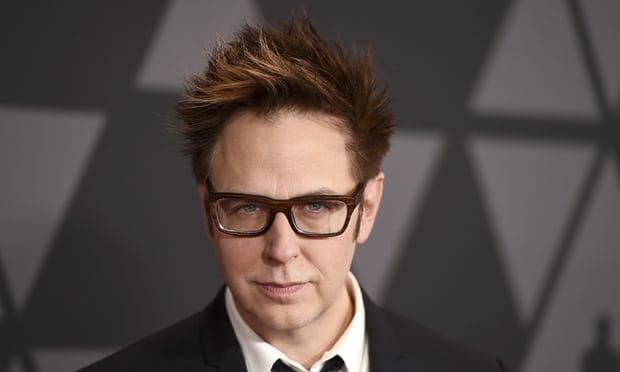
James Gunn, riding off the success of Avengers: Infinity War was incredibly hot currency in Hollywood. He brought the Guardians of the Galaxy to the silver screen with great directing and witty writing in 2014 but his advances into the limelight appear to have been abruptly ended this week by a far-right witchhunt into his tweets, specifically those made making light of pedophilia and rape between 2008 and 2012. This story isn’t all that it seems to be and at its heart, James Gunn’s firing is another win for a growing right-wing conspiracy online.

First of all, Gunn would probably be the first to say that his firing made absolute sense – in fact he did:

“Regardless of how much time has passed, I understand and accept the business decisions taken today. Even these many years later, I take full responsibility for the way I conducted myself” – James Gunn

From a business perspective, such humor would be inconsistent with Disney’s family-friendly image. Although, Gunn did hint that his wild sense of humour was probably what caught the eye of Disney’s subsidiary, Marvel Studios in the first place:

Guardian’s fans, like myself, will be upset that Gunn will no longer be at the helm of the project which he really made his own but we have to acknowledge that Disney did what was best for its public image when this issue came to public attention.

But wait, how did it come to public attention? James Gunn had already apologised for some of the things he’d said as early as 2012, why is he being fired now, almost a decade after most of the comments were made?

Meet the orchestrator of this scandal, Mike Cernovich. He’s the far-right crusader that has turned the liberal outrage machine against itself and you really should know about him.

Source: New York Magazine

It’s no understatement that this man is one of the most dangerous individuals on the internet right now, having a role to play in most of the recent and pernicious right-wing online conspiracies such as pizzagate, gamergate, and the coming ‘white genocide’. His role in Gunn’s firing was using his big network of alt-right cronies and bots to hijack the various algorithms of the social media sites and trick them into showing Gunn’s old tweets everywhere. The reason why this story should have all of us ‘free speech’ buffs on the left and the right shaken up is that it reveals how easily outrage can be weaponised. We all have skeletons in our closet and, if all it takes for us to have our lives irreparably altered is that our objectionable comments in the past take public prominence, then we all have something to worry about.

In itself, this kind of attack constitutes a gaping hole in the sanctity of free speech in public discourse and will silence satire, comedy and even political thought.

I don’t think that Disney should have let Gunn go. By doing so, rather than protecting its young audience, Disney has actually told them that they cannot make mistakes; every word that they have uttered will hang over them as a lasting indictment on their character for as long as they live.

Gunn is not Harvey Weinstein nor is he Donald Trump (whom Gunn maligned on Twitter, ironically making him a target for altright attack) and shouldn’t have been treated as some kind of parasite to Disney’s property for what were just really terrible jokes mad by his past self.

Tell me what you guys think? Should we be held accountable for the jokes we make in bad taste, especially when made in the past?

R Kelly – “I Admit”: A Confession or Denial?

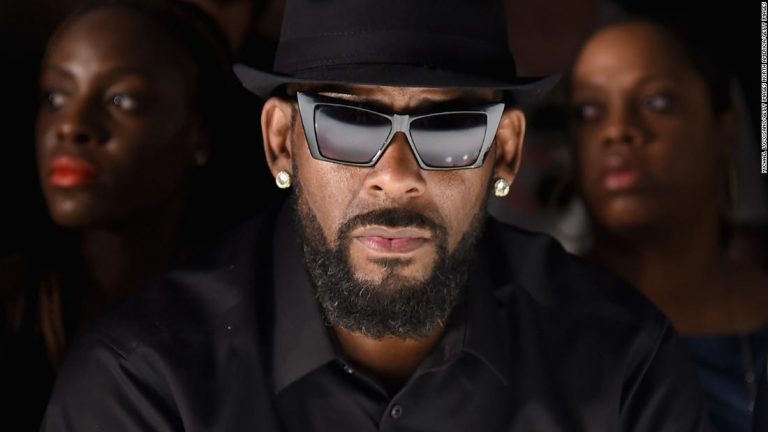
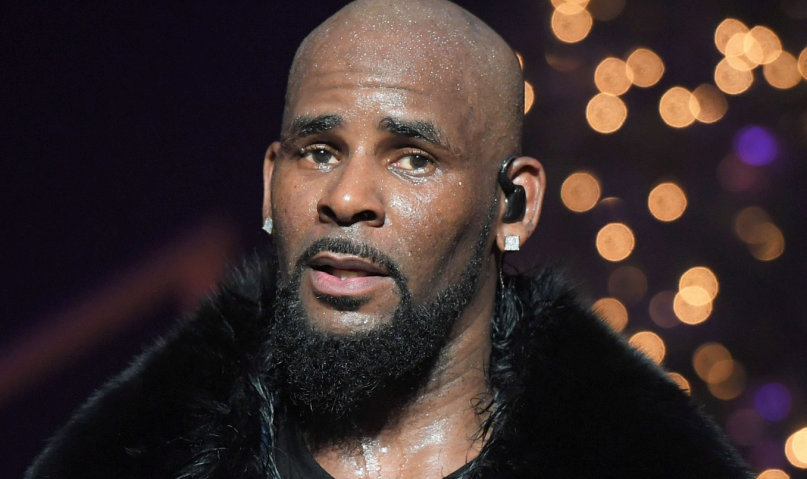
After facing countless allegations regarding “cults”, violence and the abuse of underage women, R’n’B singer R. Kelly has released a new single titled “I admit”.

The 19 minute long song is made up of 8 verses which go into detail on various stories that have come up about him over the years, without actually saying anything concrete about the allegations. The first verse talks about various elements of his past. The fact that he dropped out of school, the fact that focusing has always been hard for him and the fact that he has considered retiring from the industry but he has people around him that encourage him to continue striving. He also refers to himself as both a gift and a curse and admits to sleeping with some of his fans.

Verse 2 deals with his struggles with literacy and battles with dependency on alcohol and drugs. Kelly also talks about doing things that he regrets like making his mother cry and sleeping with his friend’s ex and his girlfriend’s friend.

As if those two verse weren’t enough, by verse 3 Robert feels comfortable enough to somewhat discuss the current cases against him. He starts by saying that his lawyers have told him that he can’t speak on certain things but that they want him to settle. He goes on to address the boycott by saying it isn’t right for people to treat him like an “amateur”, cancel his shows and turn his career upside down just because people are angry that he has “some girlfriends”. Ironically, in this verse he also goes on to compare himself to Bill Cosby, a man who has just been ruled a “sexually violent predator” by a Pennsylvania board and must now register as a sex offender before he can return to Massachusetts, by saying  “they tryna lock me up like Bill, in years like Bill” referring to Bill Cosby being found guilty of all three counts of aggravated indecent assault for drugging and sexually assaulting Andrea Constand in 2004. Cosby is due to be sentenced on the 24th of September.

R Kelly

Verse 4 isn’t nearly as dramatic with Kelly claiming that this is a big conspiracy but being thankful that he still has fans. Verse 5 gets slightly more interesting with him admitting to being a “freak” and saying that he has been with older and younger women but he also says that that isn’t enough to be labelled a paedophile and argues that he shouldn’t have to go to jail for someone’s “opinion”. He also briefly touches on a conversation he had with Wendy Williams, a conversation where he admits that he loved Aaliyah (though he makes no mention about whether or not their secret wedding, that allegedly took place when she was 15, was real). Kelly reveals that being dyslexic has d him in his career as he signed away the rights to his music without understanding and says that the reason he still tours is because he needs money to pay his rent.

Verse 6 takes a turn with Kelly admitting to being a victim of sexual assault at the hands of a family member from when he was a child through to the age of 14 and also losing his virginity to his abuser whilst being asleep. He details how parents have encouraged him to pursue their daughters, putting them on stage and saying that they’re of age only to try and get money out of him at a later stage. This is actually one of the longer verses and goes on to detail other things too including how he feels about being removed from Spotify playlists.

Verse 7 may be the most explicit (and the longest) with Kelly going on to detail some of the things that he has done with women and how he feels as though people have been after his downfall for years and verse 8 talks about how he wants to be seen as a role model and invited to talk to the youth and help to get them out of their current situations.

The song details and breaks down various allegations but if the things that Kelly has revealed about his past are true then it adds to the notion that hurt people hurt people. However, being hurt is never an excuse to hurt others.

Cameroon’s Anglophone problem

0

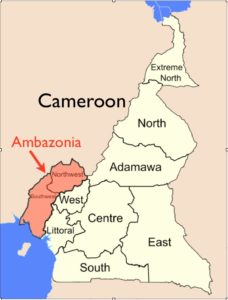
On the 19 of July the Human Rights Watch released a report accusing Cameroonian government security forces of committing grave abuses against citizens in the Anglophone regions. The region has been in turmoil ever since the 2016 and 2017 Cameroonian protests.

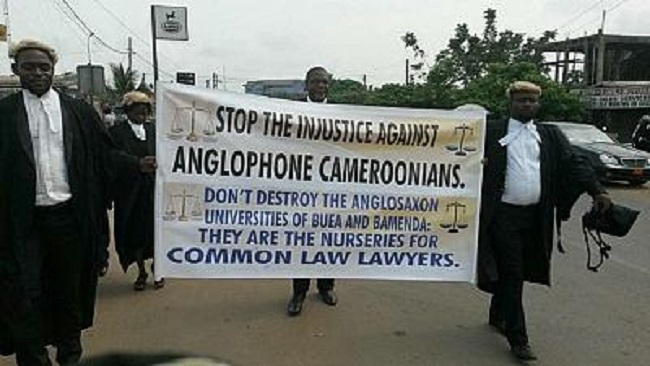
In 2016 a group of Anglophone lawyers went on strike after objecting the appointment of French-educated judges to their courts and new laws not being translated into English. Anglophone courts were being forced to conduct in French and Francophone judges were continually refusing to speak in English in these courts. The strike inspired various peaceful protests by other groups such as teachers and others from the civil society in Anglophone regions against discriminatory practices by the government.

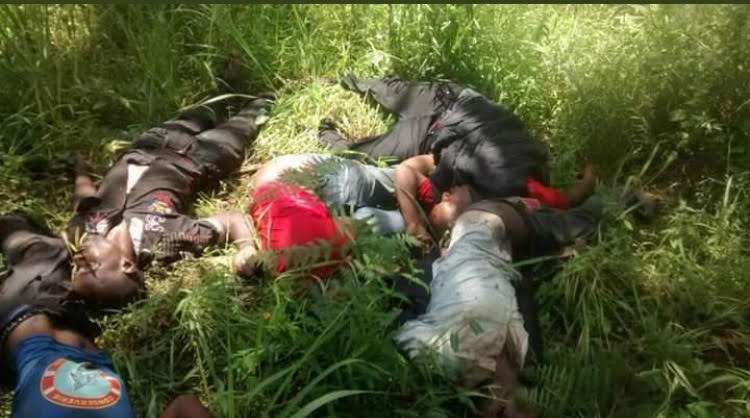
40 civilians killed by Military in Anglophone regions. (Source: twitter.com/Carlson201)

The response to the peaceful protests by the government has been heavily criticised by many for being “too severe” with some believing that this is a “intentional genocide” against English-speaking Cameroonians. The regions internet has been shut off for months on at least two occasions, credible reports of the police and army shooting civilians from helicopters have been released, villages are being burned down and both men and women are being tortured and raped.Social media has played a part in creating awareness to issues Northern and Southern Cameroonians are facing, with images of beheadings and killings of men, women and children surfacing on Twitter. Recently a video has been doing rounds on social media, the video depicts two women and two children being made to kneel down on the ground before being executed. The government has refused to acknowledge these atrocities and have even gone as far as stating the policemen in these images are not Cameroonian and the videos are “fake”.

Disturbing footage shows a little boy strapped to the back of one of the women during the killing. (Source: Watchlist)
Both the women and children are shot point blank by an alleged Cameroonian soldier


History of the Anglophone problem

The Anglophone problem in Cameroon is not a recent problem as some reports will lead you to believe, instead it has been a on-going social-political issue that has stemmed from their colonial past. Cameroon previously was referred to as “German Kamerun” and was a German colony but after the signing of the Treaty of Versailles, Cameroon was given to both England and France. Majority of Cameroon was given to the French while small territory’s of Northern Cameroon and Southern Cameroon were given to the British. Before Cameroons 1961 independence, The UN proposed two options to the English speaking regions: 1. join Nigeria or 2. stay with Cameroon as a federation. English-speaking Northern Cameroonians voted to join Nigeria while English-speaking Southern Cameroonians voted to join Cameroon.       


Separatists call for a “Republic of Ambazonia”

The uneven difference in how Cameroon was shared has created civil unrest with the English-speaking Cameroonians (known as Anglophones) feeling politically and economically and marginalized. This of course has led to the calling of a separate state: Ambazonia. In retaliation to Francophone president Paul Biya changing the name of the country from the “United Republic of Cameroon” back to the pre-reunification name of the French Cameroun, the “Republic of Cameroun”, in 1984 Fon Gorji Dinka declared “The Republic of Ambazonia”. Dinka viewed the change as a political change and argued that Biya had restored the Francophone state thus ultimately surrendered his authority to rule the Anglophone parts of the country.


Peaceful talks and Biya’s regime

The U.N and the UK have called for both sides to reject the violence and peaceful talks be held. Firstly This rhetoric is dangerous as it assumes both sides are at blame. It is true that some separatists are kidnapping and murdering French-speaking officials in response to the government’s tactics but we cannot ignore the disproportionate force used by the government against unarmed civilians.

Secondly the kidnapping and forced deportation of 47 Anglophone leaders from a meeting in Abuja with the help of local Nigerian security forces has further decreased the likelihood of peaceful talks between the government and the separatists.

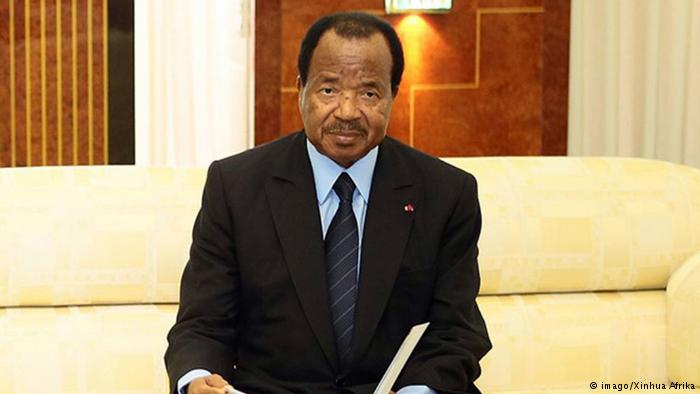
President Biya has been in power for over 35 years and is one of the world’s oldest heads of state

Though he has been placed under pressure by the U.N to engage in talks with the opposition, Biya has shown no signs of compromise. With the country gearing up for a presidential election on October 7, many  are grappling with the fear that Biya may use propaganda to manipulate the Francophone majority into rising against the Anglophone minority thus resulting in more bloodshed and violence in the country.

Violence Mars Pakistani Elections

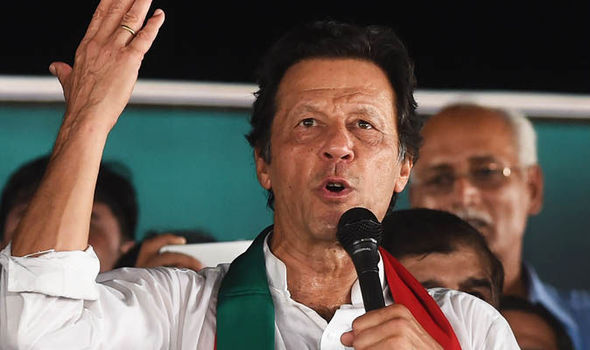
Pakistani voters go to the polls today in what is expected to be only the second democratic transfer of power in the country’s history. The leading prime ministerial candidates contesting today’s election are former cricketer Imran Khan, leader of the Pakistan Tehreek-i-Insaf (PTI) party, who is leading in many of the polls, and Shehbaz Sharif, leading the Pakistan Muslim League – Nawaz (PML-N) party, whose brother Nawaz had served as Prime Minister until he was deposed in 2017 and imprisoned earlier this year on the grounds of corruption. However, unfortunately for a country whose relationship with democracy has often been fragile, regular outbreaks of violence throughout the campaign have threatened Pakistan’s electoral process.

Imran Khan, leader of the PTI party (Source: Getty)

Indeed, since polls opened this morning a suicide bombing at a polling station in Quetta, capital of the province of Balochistan, has already claimed the lives of at least 28 people. IS has claimed responsibility for the attack, which has simply been the latest in a long list of acts of terrorism committed in the country in recent weeks in an attempt to disrupt the election. The most devastating of these took place in the town of Mastung on 13 July when a bomb at an election rally killed 153 people including Siraj Raisani, a candidate in provincial elections.

As well as IS-orchestrated attacks, violence has also broken out between members of rival parties, with one person killed and two more injured following gunfire between PTI and Awami National Party (ANP) supporters in the province of Khyber-Pakhtunkhwa. This political violence is symptomatic of a deep and angry mistrust between the country’s major political parties and their supporters. Khan claims the incumbent PML-N have been corrupt while in power, siphoning funds away from public services to benefit their own leaders’ interests. Shehbaz Sharif, meanwhile, has argued Khan has military connections which he is taking advantage of in order to rig the election.

As a result, the large-scale deployment of troops throughout the country organized by the military with the stated aim of ensuring the safety of civilians on election day has itself been open to accusations that it is encouraging the very violence and manipulation it is meant to curtail. Many fear the military establishment’s apparent support for Khan will lead it to threaten those who do not intend to vote for him, something Khan vehemently denies. Such allegations, though, may well result in further unrest following the elections if either side feels the result has been fixed against them.

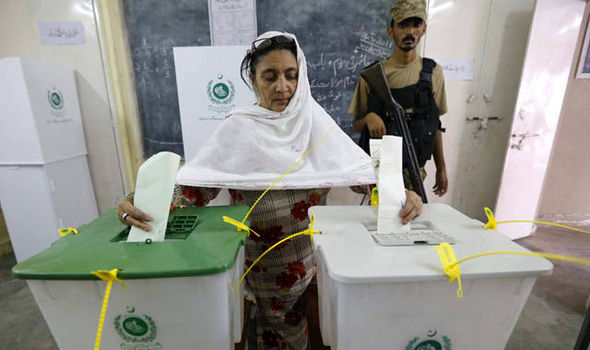
For the average voter, it has been suggested that the only way for democracy to have any enduring success in Pakistan is to brave the threats by turning out to vote. Encouragingly for many, there appear to be signs that voters are heeding such calls. In the region of Upper Dir, where women have been banned from voting for over 40 years due to apparent threats to their safety, videos have emerged today of women voters casting their ballots in defiance of the danger. If voters to continue to turn out despite the violence, they may well have a decisive effect on the election, which is expected to go down to the wire.

What They Don’t Tell You About Au Pairing

By Tanya Mwamuka

Many of you may have heard of the term Au Pair, and if you haven’t I’m sure you’ve at least worked it out from the name, it’s probably got some French origin. An Au pair is defined as a young foreign person, typically a woman, who helps with child care and maybe a little bit of housework.

In exchange, the Au Pair gets free accommodation, free food and some pocket money usually around 70-80 euros. Currently, I have been au pairing in Madrid since the beginning of July and will be leaving at the beginning of August. One thing I noticed when researching this, was the overwhelming information of all the positives of the experience. Very rarely did I see anything about the dark side of Au pairing. Personally, I’ve been experiencing nothing but a dream; with only the occasional homesickness or the rare disobedience from the children. I’ve definitely had my lows but nothing compares to the ridiculous situations some of the other au pairs have had. So in this article, I’ll let you really know how it really is; all the positives and all the negatives.

There’s Always a Positive

It would be impossible to outline the free food and accommodation as one of the biggest benefits of this experience. I guarantee a normal trip of this length would cost me way over £1000 and Au Pairing has cut this down by at least half. Not to mention the little bit of pocket money you get will help you fund all that restaurant hoping you feel obliged to do when on holiday. Outside the financial aid, you also get to live abroad rather than being a tourist since the minimum stay is usually one month. There’s something nice about being able to visit without the pressure of flying back home in the next four days. Visiting long term allows you to explore the nook and crannies of the area, and you really get to experience the place like a local rather than a naive tourist who falls under the traps of the non-authentic and overpriced.

It’s Not Your House and They Aren’t Your Family

This is something you’re always going to feel. Yes, your host family may do their absolute best to make you feel comfortable and at home, however, you really truly don’t have that sense of freedom you would normally have. Even with the overwhelming kindness that I receive from my family gives me, nothing is more freeing as having the house to myself when they go away. It’s the simple luxuries that really count; not having to be quiet when the kids go sleep; being able to eat like a pig without the fear of being judged for overeating. My host family had the right balance of care without smothering me. I’d be expected to let them know what time I’d be getting home to give them a piece of mind. But what time I get back and if I chose to tell them where I’m going was very much my decision. Unfortunately, this isn’t always the reality; many hosts have been known to impose ridiculous house rules like setting curfews (bare in mind this Au Pair is an adult of 23). The disregard of the Au Pair’s personal space within the house is something I’ve heard too many times; whether that’s executed by not knocking on their door before entering or asking them to do tasks outside of their pre-arranged “working hours”. Yes whilst the Au pair is part of the family during their stay, they also aren’t the host’s child and need their independence.

(source: onmilwaukee.com)

Also be prepared for late payments, and feeling awkward about reminding them that you 70 euros is four days late. If your fortunate enough to have chilled family then your luck might soon run out when it comes to food. Remember when I said the food was also provided, there’s nothing to say that the food actually has to taste nice. If your going to Au Pair you really can’t be a picky eater, but I’m sure nothing prepared one of my au pair friends when her host mum would consistently cook her a clear unseasoned chickpea soup every day for lunch.

Or the disrespect when she told them she doesn’t eat meat, but yet they consistently try sneaking it into her food. The funny thing is this is really only scratching the surface. I’ve even heard of host families ceasing their Au Pairs passports.

Kids From Hell

So this is something that every Au Pair will experience. I take care of two children a six-year-old and an eight-year-old, and the worst trouble I get is the kids not wanting to study English. When the six-year-old acts up her older brother usually backs me up and all is well. But like I said I’ve really been living a dream, generally, when I meet up with my friends there’s boasting about who has the worst kids out the bunch.

(source: twitter.com/camaracts/)

A Scottish Au Pair told me that her child is obsessed with private parts. Visit to the pool, usually consists of the four-year-old trying to pull off her bikini bottoms. To make it worse the siblings just love fighting with each other; when it comes to discipline they’re knowledge of English seems to mysteriously lapse despite being fluent two hrs prior. Once in the pool, they cease fire and come together as siblings for one purpose; the torment of the au pair. As she takes a relaxing swim across the length of the pool, out of nowhere the group of them pounce on her taking turns to drown her.

Your Going to Meet Some Absolute Weirdo’s

When it comes to personal life, frankly it’s quite easy to meet new people. The expat community, particularly in large cities like Madrid, are alive and thriving. You’ll find many facebook groups of foreigners with people posting, asking to hang out and the whatsapp group chats with activities, really easy to find. But that’s not the real issue. I forgot that back at home the people I’m around are generally people I like, and seemed to be naive in thinking that every meeting I go to I’m going find these cool like-minded people who I’m going to have all these laughs with.

Yes I did meet nice people and have been lucky enough to form a nice group of friends, but I’ve definitely met my handful of odd people. If they haven’t been odd they’ve definitely not met a black person because some of the questions I got set me back a little. Then again it’s all part of the experience. One thing I wanted to say these things shouldn’t put you off Au Pairing, for me, I’ve had nothing but positives really. But it’s important to know the other side to it. If you really want to make the most of the experience make sure you really do your research, also don’t be quick to say yes to the very first family that takes interest in you. Make sure you’re specific about what role you want to play as an Au Pair. For me, I wanted minimal hours and I wanted to be more there to help improve their English rather than a full time nanny. So with all this, you should be very much equipped and if any of this does happen to you then at least I can say I did warn you.


Tanya is currently studying Biomedical Sciences at the University of Manchester and hopes to pursue a career in science communication, media and African development. She is a lover of fashion, travelling and has a keen interest in racial- social issues. She enjoys learning languages, being fluent in two and is currently adding French to her resume.

Can I get some Immigration, National Identity and Acceptance in the same drink?

By James Okoli.

In the wake of Mesut Ozil’s retirement from the German National team for racist discrimination and echoed sentiments from athletes with dual nationalities, we have yet again been reminded that our sporting heroes are not immune to the remaining ills in our modern societies.

As public figures. they perhaps suffer more than most but ultimately, they may be our most effective antidote against society-wide discrimination.

Blind faith: Ozil and Mahrez’s religion doesn’t matter to most Arsenal and Leicester fans (Image: Stuart MacFarlane)

On the 27th June 2018 Germany, the reigning World Cup champions crashed out of the World Cup. Of course, there was a national fallout and the players, management and staff all came under heavy criticism; which is to be expected. However, some came under more fire than others. Mesut Ozil, the FIVE time German Player of the Year award winner, was given extreme criticism. This hasn’t been new to Ozil as he has been routinely criticised both at club and international level. Nonetheless, on Sunday the 22nd of July, Ozil took the opportunity to describe his experience playing for the German National Team.


Here Ozil alleges that there were racial and political motives behind his criticism which the German FA did not protect him from. I won’t go into whether these charges are true or not but instead, let’s focus on the impact of immigration on one’s national identity. You cannot help but see the same ideas echoed in other players and sporting heroes. For example, it has only been a week since France lifted the World Cup but all the talk has been around the “Frenchness” of the French team. Many of the French squad have African roots and so “Africa won the World Cup” according to Trevor Noah, presenter of The Daily Show. He attracted huge criticism for this but in the following days, dialogue had begun on French identity and immigration. France’s neighbours, Belgium also have many second-generation immigrants on their side. Their number 9, Romelu Lukaku in an interview with the Player’s Tribune, released at the beginning of the World Cup said the following:

“When things were going well, I was reading newspapers articles and they were calling me Romelu Lukaku, the Belgian striker.

When things weren’t going well, they were calling me Romelu Lukaku, the Belgian striker of Congolese descent.”

It’s easy to think this is just a European phenomenon. But with Brexit and comments such as the ones made by “Ian” in an LBC  video (see below)

All these instances raise wider questions for us in dealing with matters of national identity, acceptance and immigration.

Who decides who we are?

The obvious answer to this question is that everyone should have the ability to decide how they ought to lead their lives. However, as with many other aspects of our identity, society plays a huge role.  Is society this external monster that picks and chooses how to shape people and put them into boxes? I don’t think so. We collectively make up society and that means, at least on a micro-level, we may have to look at ourselves and see how we come to make people from immigrant backgrounds feel accepted. On a larger scale, the authorities and the media also can shape one’s perception towards national identity. Policies that restrict immigrants to low-level work or stories run by the mainstream media that portray immigrants as troublemakers or criminals all play a factor in how accepted one feels within a nation.

Where are we heading?

Immigration is a hot topic in politics, particularly in Europe with far-right ideas clashing with more liberal ones about national identity (the recent elections in Eastern European nations such as Hungary have displayed this). The problem persists in the US too with Trumps pending great wall. Governments are coming under increasing pressure from people to close their borders and to protect the interests of the national citizens. However, as we can see with France and even our NHS, immigration does have its benefits. Unfortunately, the role some media outlets play can influence that vast majority of people’s perception towards a certain group of people. The case of Mesut Ozil will become more and more frequently -not just in football – but sporting stars, who are often the icons of a nation will be under even greater scrutiny.

What is The Common Sense outlook?

The Common Sense Network prides itself on providing opinions from both sides of the debate and coming to a “common sense” conclusion. Matters pertaining to immigration, national identity and acceptance can be complex but what must be done is unbiased, straight-shooting reporting. Immigration has its benefits no doubt, but also no one can argue that it must be controlled. National identity can bring many together but at the same time there are aspects of national identity that are more exclusive than others. Acceptance is something we should all strive for yet unfortunately it’s not something that we can always guarantee.

James Okoli is a contributor for the TCS Network. Currently studying Theology, Philosophy and Ethics at the University of Manchester, you will find James writing on a variety of faith and ethical issues within local and globalised society. James is also a sports and television aficionado so expect raving reviews on television masterpieces or raging rants on football results.

UK’s Recycling is Still a Cause for Concern

By Dolline Mukui.

On average, British households throw out 22 million tons of non recyclable and recyclable waste each year and this waste is then transported to different locations around the world.

However, what we aren’t all aware of is that British waste that is sent overseas for recycling could end up in a landfill site instead of being properly disposed of with due care. This is due to inadequate checks on the UK’s part, according to the government’s spending watchdog. So whilst we’re working on ‘going green’ over here, we have still managed to contribute negatively to the world’s poor overall health.

Despite it’s history of wealth and power on a global perspective, Britain simply does not have the infrastructure to recycle its own plastic waste which is why it is sent abroad.

Under this government scheme, businesses can meet their recycling obligations by paying for ‘recovery evidence notes’ from reprocessing plants or exporters.

Last year, waste that was sent abroad to countries such as China, Turkey, Malaysia and Poland only accounted for half of the packaging reported as recycled.

The National Audit Office (NAO) warned that packaging material might add to pollution because the Environment Agency does not have enough control to prevent abuse of the system. NAO’s report found that businesses paid £73 million towards the cost of recycling their packaging in 2017, while local authorities spent £700 million.

Michael Gove’s Department for Environment, Food and Rural Affairs was criticised for not doing enough to assess the effectiveness of the system and managing the associated risks with the rise of exports of waste.

The government’s spending watchdog said “the system appears to have evolved into a comfortable way for Government to meet targets without facing up to the underlying recycling issues”

“The Government has no evidence that the system has encouraged companies to minimise packaging or make it easy to recycle.”

Last year, Greenpeace released a report and according to that data, British companies alone have shipped more that 2.7 million tons of plastic waste to China and Hong Kong since 2012.

The head of the NAO, Sir Amyas Morse said “If the UK wants to play its part in fully tackling the impacts of waste and pollution, a tighter grip on packaging recycling is needed.” He also added “the government should have a much better understanding of the difference this system makes and a better handle on the risks associated with so much packaging waste being recycled overseas.”

A Defra spokesman said “Since the current packaging producer responsibility regime was introduced, recycling rates have increased significantly. However, there is much more to do, we don’t recycle enough waste, and we export too much of it.”


What are your thoughts on how to tackle waste and recycling? Is it a long time coming before the UK sees any real improvements?


Dolline is a traveller, journalist and blogger who has palate to try new things. She is a very spontaneous person; you might find her skydiving over the Kenyan coast or kayaking on Lake Como in Italy. She can be an over thinker who considers every outcome to the last detail, but on her off days, she welcomes the surprises of things unplanned. Dolline is a very simple person who is always in search of fun company, downtime in a good book and enjoys living in the moment. Dolline also writes for her small personal blog called ‘Swatches of Beauty’ and contributes to a radio show called a ‘A Chat with Elle Celeste’.

Twitter: @ceraz_x

Cold Hearted Raptors – Kawhi Leonard to Toronto

0

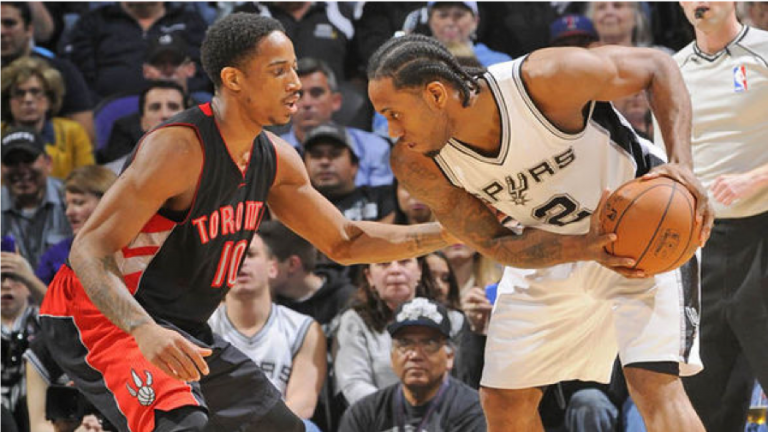
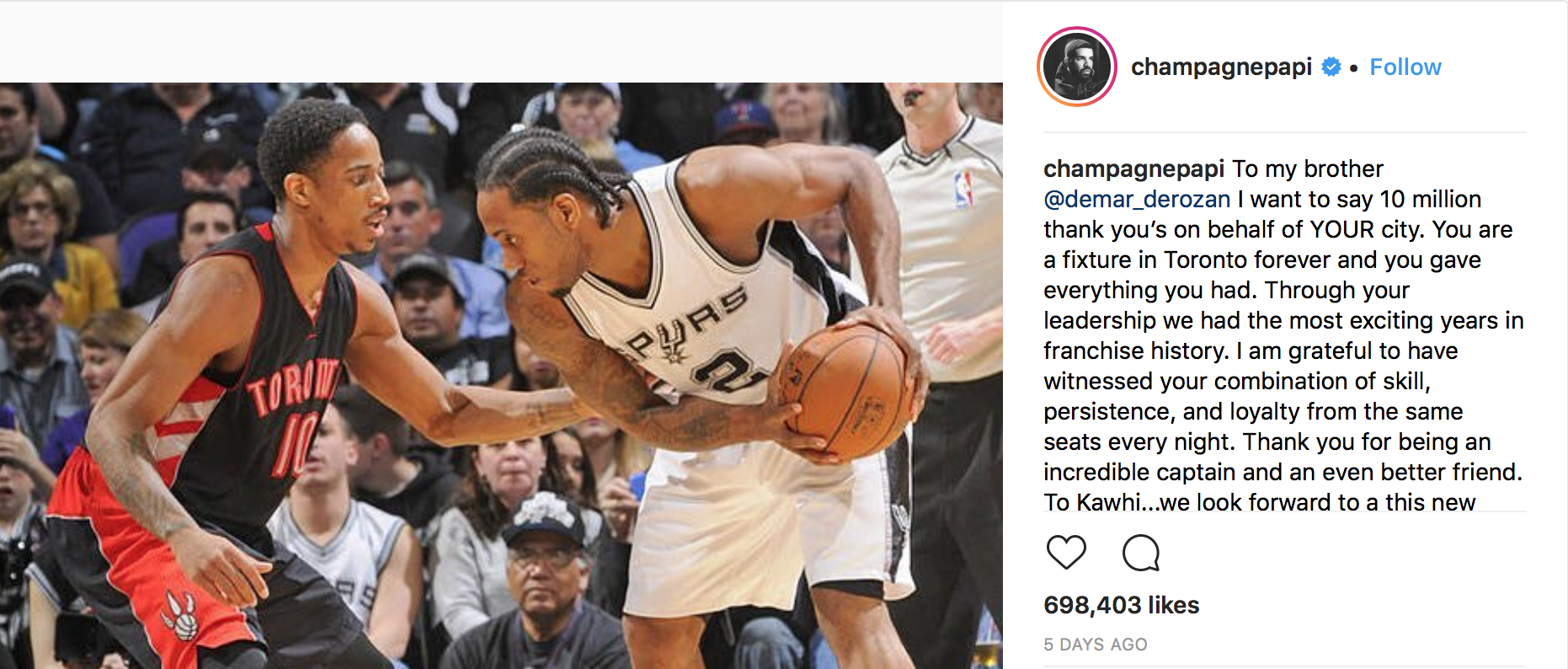
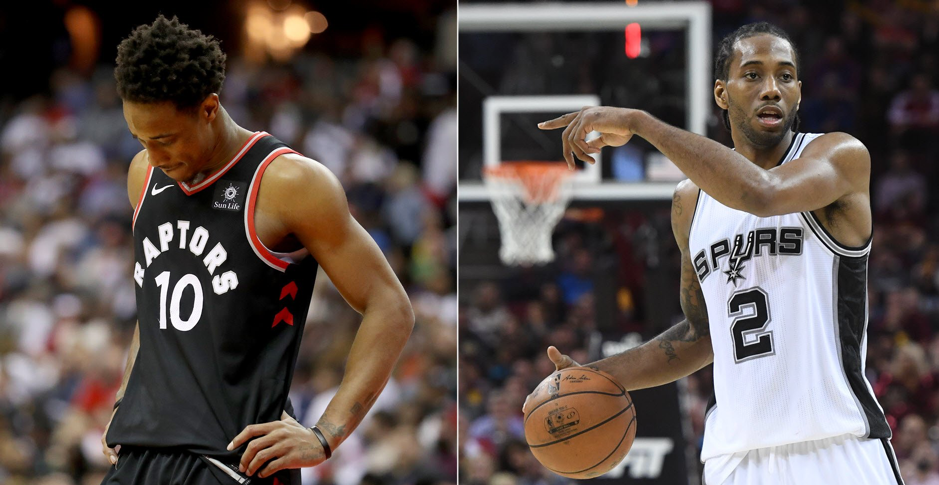
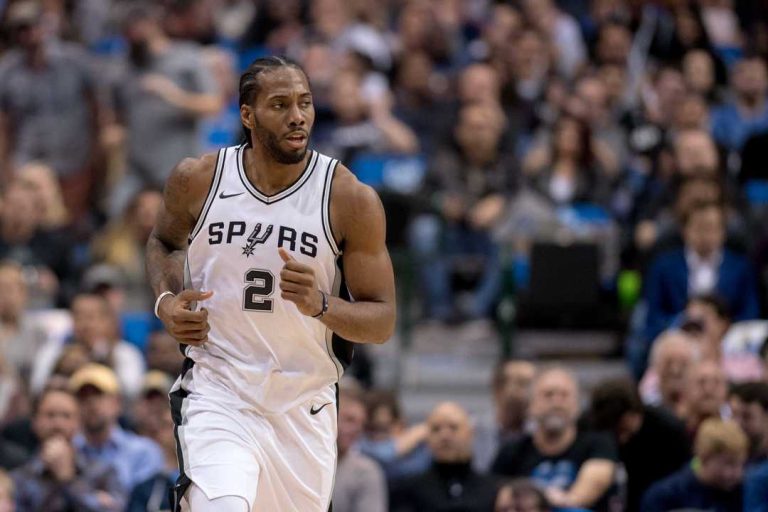
The city that’s been put on the map by its native member Aubrey Drake Graham has just received a new superstar on its infamous basketball team. This acquisition came at a great cost with bridges and friendships being burnt, proving that players should not remain loyal to a franchise as the same courtesy is frequently not provided. DeMar DeRozan, an 4x all-star, the Toronto Raptors franchise player and the fans favourite was traded on Wednesday to the San Antonio Spurs for Kawhi Leonard and Gerald Green whilst the Spurs also got Jakob Poeltl and a 2019 First Round pick in the trade. When rumours surfaced of Kawhi wanting out of the San Antonio franchise, it was reported that LA his hometown was his destination, whether that was for the Los Angeles Lakers or Los Angeles Clippers was to be determined.

Reports stated the Spurs were looking to trade him to Toronto due to not wanting to make a Western Conference team better, if you were the average follower of the NBA there was only 2 players that Toronto could trade for Kawhi that were close in playing ability. DeRozan being one and Kyle Lowry being the other, but the dynamic duo has played so long together, becoming the best of friends, budding a bromance and achieving a First Seed Eastern Conference spot in the last NBA Season. Although they were swept in the second round by LeBron James’ Cavaliers with the firing off the Coach of the Year Dwane Casey it was still assumed that the Raptors were going to keep their back-court members together and have another shot at reaching the NBA finals. The Toronto Raptors had other plans in play and took the opportunity to get arguably the second or third best player in the game.

DeMar Derozan and Kawhi Leonard both reported to be unhappy about their trades (Source: Business Insider)

Kawhi Leonard is a better player than DeRozan or Lowry, he is an immovable wall in defence and an unstoppable force in offence, most importantly he has proven himself during the play-off season, averaging more points every year than his regular season averages. Whether this was the San Antonio effect we will have to wait and see. Nonetheless having already won an NBA championship and a Finals MVP for the Raptors this is a winning situation in theory, whether it will work in practicality is a different story.

A few NBA analysts and reporters have stated that Kawhi Leonard has no intention or desire to play for the Raptors and is willing to sit out the whole season if he has to. This is similar to what he did in San Antonio due to his quadriceps injury rarely playing any games last NBA season. Although Raptors owners have said they see no inclination from Kawhi that he will not play due to having talks with him. Their aim is to convince him to stay long term so they can build around him.

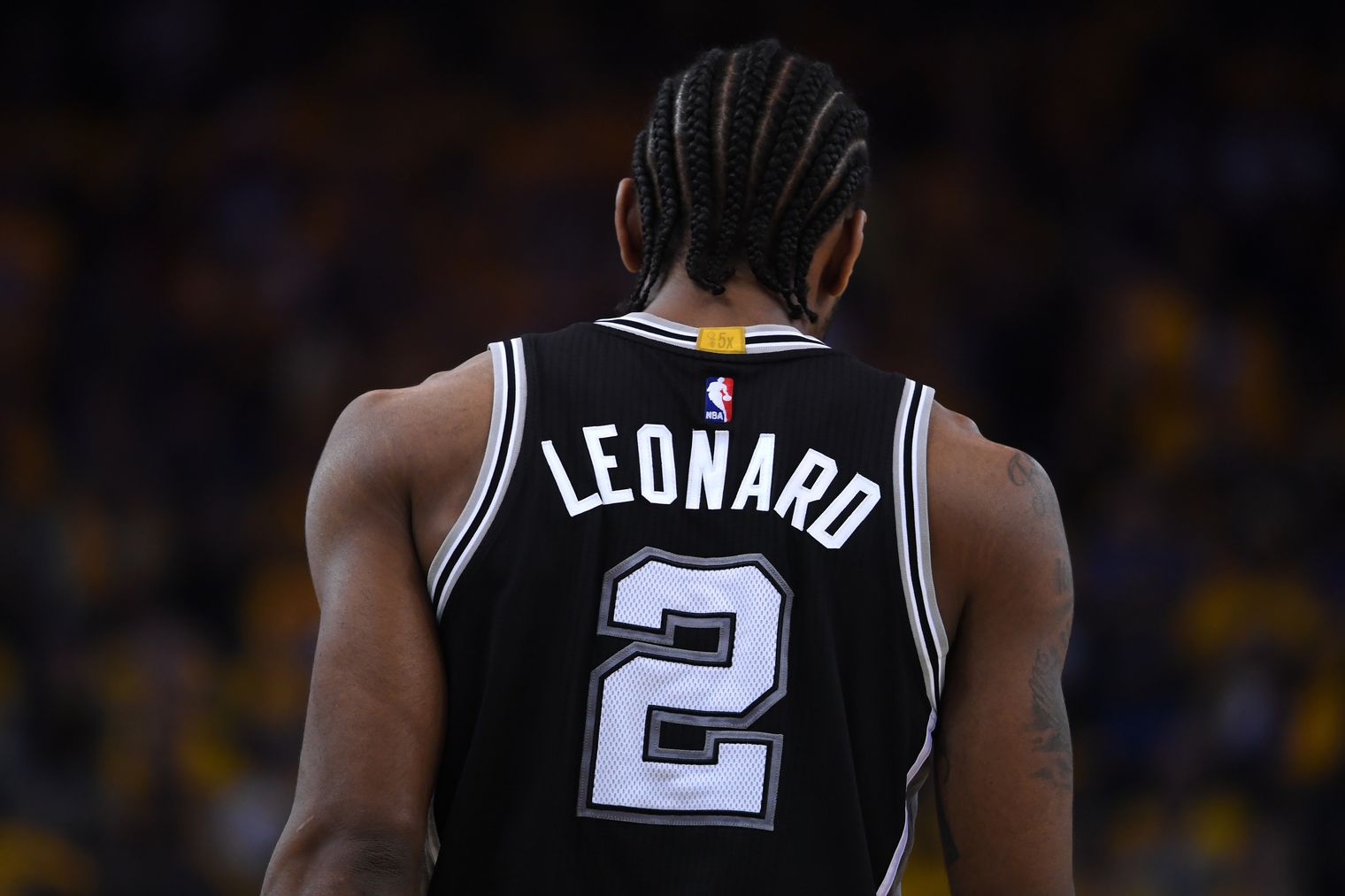
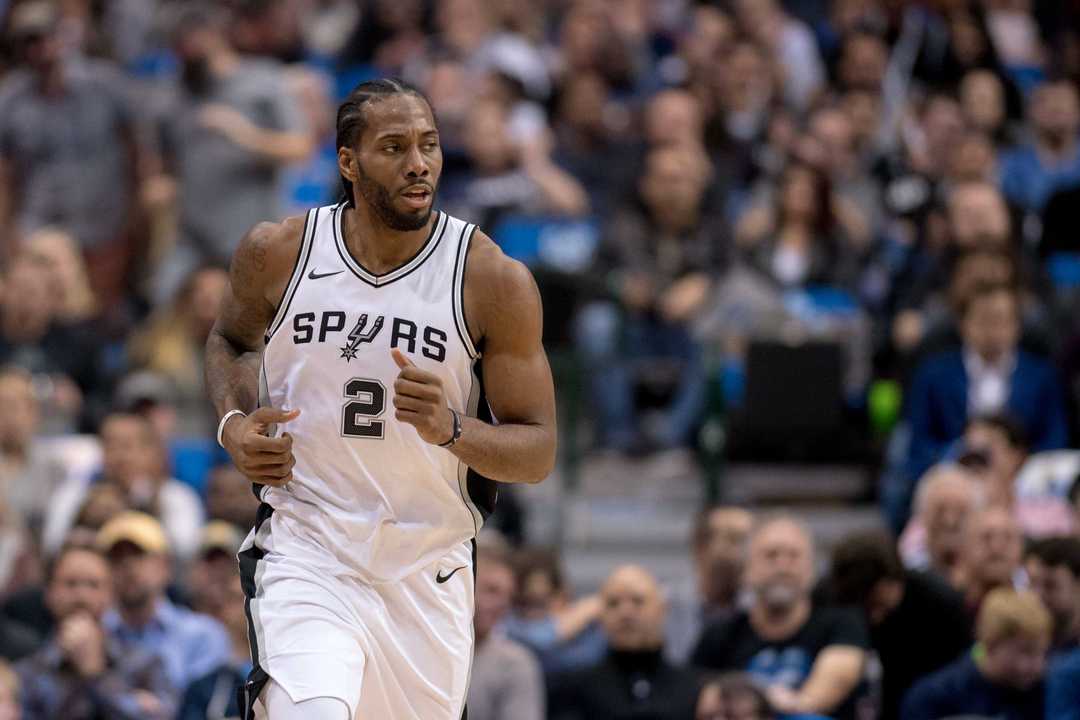
Kawhi Leonard and his time with the San Antonio Spurs is over (Source: RaptorsHQ)

With Kawhi and Green being traded this now means that the 2014 winning championship starting 5 for the Spurs no longer exist. In a franchise like the Spurs where players stay for the long haul due to the culture and it being like a family this doesn’t spell good things. Now with DeMar most likely being the franchise player things will have to change in San Antonio, DeMar will vastly benefit from the system of play there concerning his assists due to only averaging 5 assists last season but his 3-point percentage and defensive duties will have to be elevated from his own individual hard work. He will also have to face the tougher Western Conference which now has even more All-Star calibre players than before. Kawhi on the other hand can’t assert himself as the best player in the Eastern Conference if he regains his form and possibly win the MVP award next season if he plays all year long.

One thing is for sure what the Toronto Raptors did was a smart move for the team but as a fan and a fellow NBA player it leaves a bitter taste in your mouth. DeMar will most definitely go down as an all-time great Raptor, where Toronto fans decide to place him in their estimations is all down to them and his leaving legacy.

‘Snowflakes’ are as rife on the Right as the Left

We’re all familiar with the term ‘snowflake’ – along with ‘gammon’, ‘deplorable’ and ‘Remoaner’ it is one of the most-used political insults of our time. Beloved by many of those on the Right, we have become used to hearing it sneered by Piers Morgan and bellowed by Alex Jones alike, at liberal-minded people who it is claimed are suppressing points of view with which they disagree. The idea is that these liberals, usually young and university-educated, are emotionally as delicate as their icy namesakes, being unable to hear any opinion they do not agree with before becoming upset and trying and censor the offending opinions rather than hear any more of them.

A little uninspired though the snowflake metaphor is, it arguably serves to put forward a somewhat valid point. On the whole, societies do not appear to benefit from banning commonly-held opinions, particularly those which do not overtly encourage violent or hateful acts. In most cases, if such controversial viewpoints are so wrong, it should not be difficult to tackle them head on and expose their flaws in plain sight. The freedoms of speech and expression which ‘snowflakes’ are apparently impeding help us to develop the critical faculties required to understand the views and beliefs of others, and better define and defend our own. This is true as much on a university campus or a social media platform as it is in society as a whole.

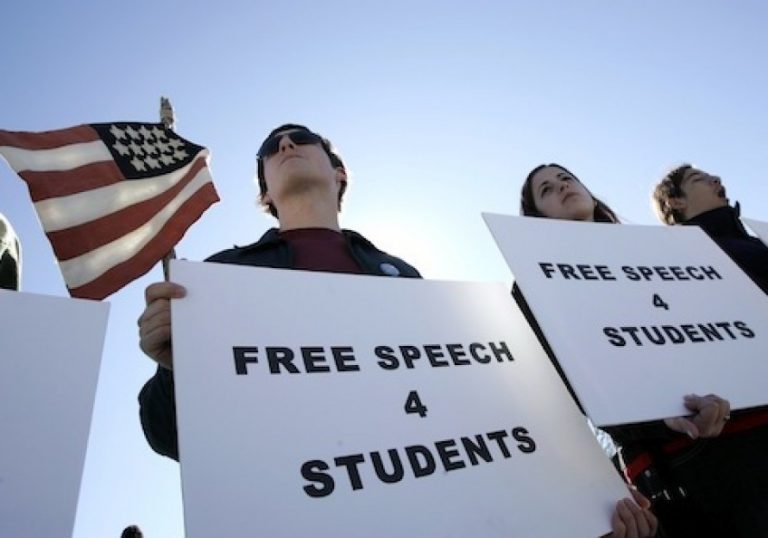
The problem with the outrage directed at liberal ‘snowflakes’ and their attacks on free speech is that some on the Right seem to have a fairly shifty idea of what free speech actually means. When it is their own beliefs and ideals being brought into question, freedom of expression curiously melts into the background.

Take, for example, the recent debate in the USA over whether NFL players should face sanctions for kneeling during the national anthem to protest racial inequality. A true free speech advocate would argue that whether they believe players are right or wrong to make such a gesture is irrelevant, but that those players should be within their rights to make a stand – a peaceful one at that – against aspects of their country with which they take issue. Yet none other than President Donald Trump waded into the debate by suggesting season-long bans for protesting players. The message such a statement sends is that free speech is fine as long as it does not clash with an unquestioning obedience of the nation and everything it stands for – hardly the kind of American freedom the world is used to hearing about.

The same kind of right-wing ‘snowflakery’ is evident in the UK too. Trump’s recent visit to the UK was met with a number of high-profile protests, which included the flying of a large balloon depicting the president as a baby. In response, TV presenter Piers Morgan, who is regularly outspoken about liberal ‘snowflakes’ and their intolerance of other opinions, appeared to suggest in an interview with London mayor Sadiq Khan that the balloon should be banned on the basis that it would be bad for diplomacy. Such view was repeated by others sympathetic to the president, including Nigel Farage.

Whether or not the balloon was the best way of protesting Trump (or indeed whether protests were merited at all), the simple fact the balloon may be viewed negatively by others would be no reason to ban it, and infringe on its creator’s freedom of expression in the process. To make such an argument is no less contradictory to the idea of free speech than ‘no-platforming’ a speaker at a university campus for having controversial views.

Looking at these examples, among many others, it appears as though right-wingers’ nationalism is not necessarily more favourable to the idea of free speech than liberals’ identity politics. Its proponents are just as likely to defend free speech only until it comes into conflict with their own beliefs, at which point the outrage and offence begins. By all means, concepts of free speech and expression can be appealed to in any context, from a sports field to an online debate, provided they are applied consistently. Yet it is often difficult to take those of any political persuasion seriously when they try to evoke rights such as these to let their allies speak, but forget about them as soon as their opponents begin to open their mouths.

M-PESA: The Kenya Phenomenon That Kept The Brick Phone Alive

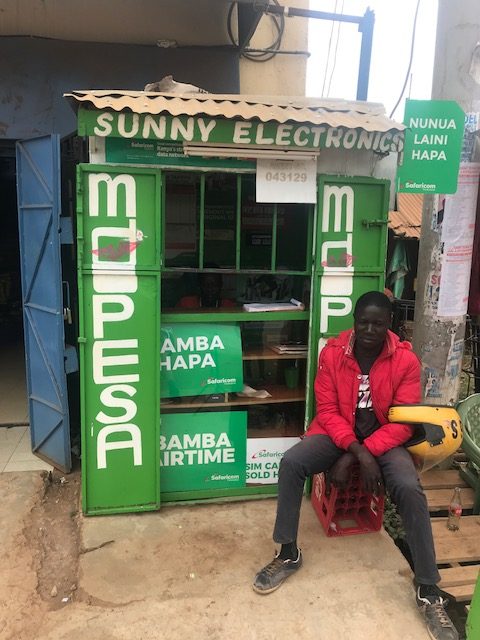
Brand domination that stretches down street corners is not an unfamiliar concept in the West. Subway, for example, holds 27,000 stores in America, ten thousand more than any other store. In Kenya however, roads are consistently embroidered with a different green logo. Whether it be the bustling streets of Nairobi, the beaches of Mombasa, or the quiet rural roads of Siaya county, a small box shaped M-PESA kiosk will always be within eyesight.

What is M-PESA?

M-PESA, launched by Safaricom in 2007, is arguably the most advanced mobile money transfer system in the world. Pesa is Swahili for money, and today over a quarter of Kenya’s 175-billion-dollar economy runs through M-PESA transactions. It is universally popular, 96% of households outside Nairobi hold at least one M-PESA account. As a result, Africa’s first mobile money platform has now been adopted by Tanzania, India, South Africa, Afghanistan and even Romania and Albania.

How does it work?

M-PESA’s key to source of success as banking service does not come from its complex array of features but ability to give ease of access and inclusivity to banking. MPESA offers a bank account that is connected to your sim card, and therefore governed from your phone. Using pin secured SMS text messages, it allows you to pay in shops, send money instantly to other users, withdraw from your account, bank money, and even take out loans. So, no internet, no credit card, nor laptop or even smartphone required. Any phone will do.

M-PESA is a branchless; customers manage their account through a network of 80,000 physical ‘agents’, who hunch beneath small green kiosks dotted along the road. These agents act as banking clerks with a unique personal code scrawled above their kiosk, using which customers can send as little as 10 shillings and withdraw as little as 50 shillings from their account. These agents are essentially super users of the platform. They do not hold funds belonging to M-PESA, but are investors in their own mobile money to exchange for cash of customers. All agents are directly recruited by Safaricom and given specific training, then visited on site approximately once every two weeks.

Enabling the rural

MPESA holds great advantages to those in rural areas who may be without reliable internet connection or access to a nearby bank. When it was first launched the average distance to the nearest bank was 9.2 kilometres. Eight years later in 2015 the average distance to the nearest M-PESA agent was a mere 1.4km. Although it is the transfer function which is the most useful. Those in isolated areas can now send and receive money from others far away.

This means avoiding the risks and significant costs of transporting physical cash. This is especially important for developing countries such as Kenya which have high dependency ratios. This means the few who earn money have to support many others – the children, elderly, and the unemployed. Therefore, there is a frequent need to circulate money between family members.

Before M-PESA it was common practise for Kenyan’s to linger around bus stations, searching for someone who is travelling to their village and is also trustable enough to deliver money to their families.

Others have argued M-PESA therefore raises dependency, as it has become easier to rely on instant money transfers from family members rather than seeking employment alternatives when it was less reliable.
However, this effect is mostly outweighed by new employment and business opportunities brought by the ease of transactions. Rural Kenyan’s can nowduct trade with those outside their community using M-PESA, creating more risk diverse business networks.

This means mobile money are more equipped to protect themselves against bad economic shocks that may be specific to their community. For example, droughts, fires, livestock diseases and floods. In these events users can conduct business with other areas where demand remains stable.


Women and M-PESA

Despite gender inequalities rising over the last five years in Kenya, it seems mobile money has done a certain amount to counteract this affect.

A recent study of the long run effects of mobile money in Kenya found that M-PESA’s transaction function had induced an estimated 185,000 women to switch from subsistence farming to business or sales as their primary occupation.

For example, in the Lake Victoria region, the economy relies heavily on fishing. Men produce an income from fishing in the lake, but it is then the women’s role to sell it at local markets. Fish yields a higher price the further away from the lake it is sold. So women have the option to send their fish to customers throughout Kenya, but will having to take the lengthy journey themselves to conduct the transaction.

In the past this transport operation would be too costly and not feasible for a women to leave her family overnight to take fish to other regions. But now, where it may have taken a women two weeks to sell two bags of fish in Nairobi, she spends one morning buying and sending the fish on a bus. M-PESA allows women in the lake region to sell their fish at a higher price for a lower cost.


M-PESA also gives women the ability to save in a safer way. In Kenya, women have less access to the formal banking sector than do men. In many cases this is because women do not earn enough money to reach the minimum amount required to set up an account. For example, the Post Bank minimum balance required is Kshs 1200; for Equity Bank it is Kshs 150; for KWFT it is Kshs 500; and for Co-operative Bank it is Kshs 100. However, MPESA only requires that a customer have Ksh 1, equivalent to less than 1 pence, to keep their account open.

Before mobile money women were often forced to store personal amounts of cash in their homes, which was often taken by their husbands to buy alcohol or other personal items. Many women state that access to an M-PESA account has made it much less likely their savings are spent, than when they were kept at home.

Even under the circumstance a women’s M-PESA account is frequently accessed by their husband, there is still an option to create savings which are locked for agreed amount of time and not assessable under any circumstances.

This is called the M-Shwari function, which acts as an extension of your M-PESA account on your phone. Not having access to savings for an extended period can minimise the potential for financial disputes in the household over whether to withdraw it, which are a common cause of domestic violence in Kenyan households.

Surveyed women in the Lake Victoria region also professed this savings function has been crucial in enabling them to pay their children’s school fees. Especially as schools have increased the number of days children attend school, thus increasing the price of tuition.


Is M-PESA secure?

M-PESA is surprisingly secure. It is difficult to commit account fraud, as users must present their ID when withdrawing, as well as have their sim card and know their own M-PESA pin.

Having said this, an account connected to your mobile phone can present a risk that it becomes lost or stolen, which discourages account holders to save large amounts on their account. This is reflected by a study which found M-PESA is not commonly used as a saving mechanism because it is too risky, and holds a low storage of value.

In other respects, M-PESA accounts are safer than most others in the world. All funds are held by a Trust which Safaricom cannot access. This is because it is a requirement of the Kenyan central bank that the funds must always remain the property of M-PESA users, meaning account holders would not lose any money in the event Safaricom goes bankrupt.

M-PESA transactions are also regularly examined for evidence of money laundering in reports that are required by the Kenyan central bank. Although this aspect of M-PESA remains contentious. The US stat
e department accused M-PESA of being vulnerable to use by money launderers in multiple reports, as “criminals could potentially use illicit funds to purchase mobile credits at amounts below reporting thresholds.” Although these reports have not been substantiated with major evidence, and appear to take a jealous tone above all else.

The charming cartoon icon of M-PESA resembles an ironic simplicity that development experts have sometime failed to see. it makes a big difference for people to have greater control and safety over their immediate income. Rather than brandishing loans, investment, and interest as quick fixes for the worse off.

England Beat India To Clinch The Series, Destined For Cricketing Glory?

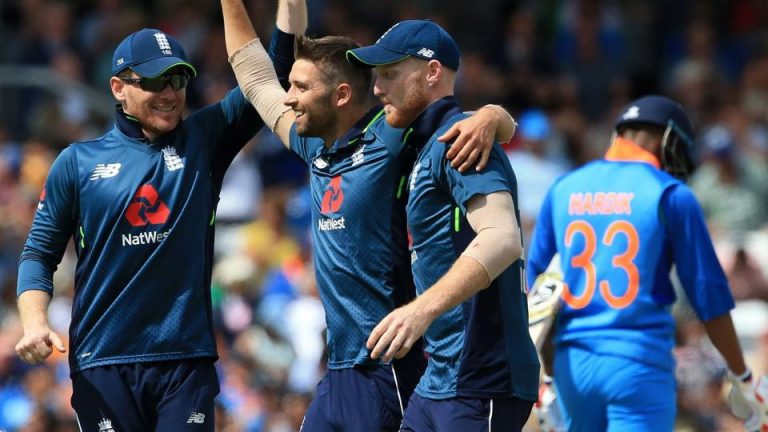
England prance home to victory after convincingly trashing the unbeaten Indian side led by captain Virat Kohli. This makes it, yes you guessed it, his first ever bilateral series loss as Captain. It had to happen but this series puts a number of questions in the side that hope to be answered before the World Cup. The confidence of this English side could not be higher. Beating India at home ahead of the world cup on home soil is the best possible assurance they could’ve asked for.

India started off the 3rd and final ODI in the bilateral series, the series clincher by losing opener Rohit Sharma cheaply and looking really vulnerable to the duo of Willey and the superb Mark Wood . Shikhar Dhawan and captain Kohli at his favorite 3 position stitched together a 70 run partnership before Dhawan fell to a direct hit run-out from star Ben Stokes. A fine display of stroke play, patience and the rotation of strike and attempting to play the right deliveries saw India’s total rise to a respectable 125 for the loss of two wickets at the 24th over. Disaster struck as Karthik was dismissed by Adil Rashid to an inside edge off the bat. Captain and highest scorer Kohli departed after scoring 71 runs and Suresh Raina soon followed-all at the hands of Rashid’s spin. That spell saw India reeling at 158 by the 31st, with half the side back in the pavillion. Hard hitters Dhoni and Pandya kept dealing in singles or dots, barely managing to keep Moeen Ali and Rashid wizardry at bay. Dhoni sent a couple to the fence but was undone by Willey. Cameos from Pandya, Thakur and Kumar took India to a decent 256 at the end of the first innings.

“We were never up to the mark as far as runs were concerned. We had 25-30 runs too little. England were clinical in all departments and thoroughly deserved to win. We need to be at our best against a team like England. The pitch was slow throughout the day which was surprising, not damp, just slow. Against the new ball it was two-paced but slow with the spinners. Haven’t seen pitches like that here before. The bowlers did well, especially their spinners who didn’t get greedy and contained the runs before getting wickets eventually.” was Kohli’s assessment.

The English side started off strong with Bairstow taking the opening Indian Bowlers to the cleaners and Vince keeping steady company at the other side of the wicket. The agressive onslaught was halted as England lost Bairstow (the classic soft dismissal) and James Vince shortly after. Joe Root and Skipper Morgan arrived and were in fine touch from the get go. Shardul Thakur was brutally hammered and when the spinners Chahal and Yadav were brought in, they could not do much. Kohli persisted with them as Root and Morgan raced to their 100 run partnership by the 29th over and they stood at 180 for the loss of two wickets only at the 30 over mark. Chasing the target was a mere formality as they were in cruise control mode. There were no surprises as England led by Joe root-chased the target down by the 44th over with root bringing up his century in style-A boundary of Pandya to bring up his century and win England the match, and clinch player of the series.

Image result for 3rd odi india vs england

Some would say Vivian Richards esque, but Joe Root and the strong English side have their strong batting going for them. The Bowlers have to pull their weight on home soil, but Leeds was an example of Bowling done right. Skipper Eoin Morgan said,

“Outstanding performance. The tone was set by the bowlers. Wood and Willey were on the money, had their lines and lengths down. The ball swung a little for 4-5 overs. We took our opportunities well whenever we got the chance. We know the conditions here well, and we are happy we took advantage of that. I didn’t think it would be a belter, probably a 300-320 ground, but our spinners today were brilliant.” He added that, “The chase was started by the two openers, and then Joe and I carried on. It’s the guys on my right, my team, that make my decision look good. You’re only as good as your team. Our guys were brilliant. In Trent Bridge we were off, and India punished us, and since then we have done well, and grown as much as we could. It’s satisfying that we learnt over the series, made plans, and executed what we said we’d do. So that builds confidence in the team. We need to be at our best before the World Cup, and remove any glitches from our game.”

While England scalp their latest victim in their incredible run, top heavy India faces glaring holes at the number four spot and reliability lower down before Pandya shows. An option could be to move Pandya up the order, but that’s a temporary fix as that would mean either Rahul or Rahane would be dropped to a position that they cant play.

Legendary opener Sourav Ganguly said that Karthik’s position was better down the order: “Dhoni, Raina, Karthik — very good at 5, 6, 7. India need to find a number 4. I think two of your best batsmen are not being looked after properly. I’m not saying it’s deliberate. Maybe it’s a mistake, maybe when you look at things from the other side you look at it differently. But it’s my opinion, from this side of the ground, (either) of those two (KL Rahul or Ajinkya Rahane) have to play at 4 because it’s too much pressure for Rohit Sharma and Virat Kohli.”

It is still an experimenting phase, India need to discover a formula that is right for them and quick. As for the bowling, it was appalling. The quality of the English side shredded the Indian unit. To be fair, their best limited overs bowlers Bhuvaneshwar Kumar and Jasprit Bumrah were out injured.
It may be “coming home” after all, but not the sport one might be thinking about if this fine run keeps up going into the World Cup next summer. Beating a strong side sends some good signals as we await the progress.


by Rutvik Bhaskar Perepa
Rutvik Bhaskar Perepa is a student at The University of Manchester working towards a MEng in Mechanical Engineering hoping to be on a placement after Year 3. He has had the privilege to travel around his home country, India and discover the rich heritage and diversity. His personal interests include Food and travel, history, Sport among many others. Often found in discourse on various issues ranging Engineering to Religious Practices, he never shy’s away from being expressive. He believes in being open minded, empathetic and analytical is the key to problems posed on a daily basis.
Our Brexistential Crisis

As the magic of the World Cup wears off, we’ve got to come to terms with the fact that the UK is slowly imploding politically. It’s increasingly looking like the Brexit that we will get, is nothing like the Brexit any of us wanted.

sad cristiano ronaldo GIF

In my opinion, in the event of a hard Brexit, the only choice must be a second referendum. If we put aside the conspiracy theories and the racialised and xenophobic subtext of the Leave Campaign and assume that the critical reason for our departure from the EU was regaining our sovereignty, the options left on the table seem set to underwhelm like you wouldn’t believe.


A Hard Brexit 

The referendum gave us the options to ‘leave the EU’ or ‘remain in the EU’. The problem is, after voting ‘leave’ we’ve realised that there’s more than one way that we could end up leaving. The most disastrous way to exit Europe, in my opinion, is via a term you’ve probably heard already – a hard Brexit. On the ‘leaving spectrum’,  this is the far right position in which formal ties with the EU are cut and subsequent legal relationships (especially those that concern movement of people between the EU and UK, the primacy of EU law over UK law and access to the EU’s single market) will have to be renegotiated under our own terms.

Source: Europorter Politics

For Leavers, this is good; as the ‘hard’ in ‘hard Brexit’ would mean hard borders, hard immigration requirements and a return to the hard rule of Parliamentary Sovereignty.

No one really wants a hard Brexit. This is my opinion. While the above seems fine, especially if you value the independent statehood of the United Kingdom, the independent statehood of the United Kingdom will be under direct threat if we leave the European Union in this fashion. Why? Here are a few reasons:


We’d be really lacking in friends…

Without any formal access to the European Union, the UK’s standing internationally will be diminished, especially since we have an informal role as “America’s man on the inside of the EU“. A big part of Britain’s economic and political appeal was its clout in Brussels which is set to end the moment that we exit the EU institutions next year.

Sad Spongebob Gif GIF by SpongeBob SquarePants


It Threatens the UK’s Very Existence 

A Hard Brexit throws into question the constitutional relationship between Northern Ireland and the Republic of Ireland; the former in the UK, the latter in the EU. Least of all, it could render the Good Friday Agreement inoperable and could reignite the bloody conflict between the nations. Northern Ireland voted by a 10% margin to remain in the EU and may choose cessation to the Republic over the potential conflict sparked by leaving with the rest of the EU.

british family GIF

In a similar way, Scotland which voted overwhelmingly to stay in the EU could launch its own Second referendum and this time the Scottish Independence campaign has a much clearer example of the tyranny of Westminster to bolster their claims that Scotland should withdraw from the UK.
At least Wales will probably still be with us!

A Poorer Britain 

Britain will be poorer in the short term, probably in the long term too. The Office for Budget Responsibility calculated that financial obligations owed towards the EU will continue until 2064, with an estimated £37 Billion owed to them. This is because under the UN Treaty of Vienna, a party leaving a treaty still pays existing obligations under that treaty.

We could always just leave the UN as well though, I guess.

broke no money GIF


The only people who could possibly be OK with the threat of these possibilities are nihilists who are willing to hold on to their ideological position over the good of the country. Our government has refused the idea of a second referendum but may have to consider it because the will of the people seems to be the only thing preventing the Brexit hardliners in the Tory party from sinking the entire nation.

Is a second referendum the way to go now?

NBA Off Season Trades – Dramas and Stories

0

The NBA offseason is always full of drama and storylines, its considered by some the best part of the NBA with speculations and rumours always floating around, who’s going where? What agents are scheming under the radar? Who’s putting in the work to improve their game and take it to the next level? What theatrics and cryptic messages are players putting on their social media to garner attention? The 2018-2019 off season has already started with a bang with some very big moves.

Los Angeles Lakers

Lakers have acquired the talent of the best player in the game 3x NBA champion, 4x season MVP LeBron James for a 4-year $154 million deal. In his recent loss to the Warriors in the NBA final it was all but inevitable for him to leave the Cleveland Cavaliers, moving to a historic team and also playing in the Western conference for the first in his career. It is reported that the move was mainly based on himself and family reasons, Los Angeles is a place full of opportunities and dreams. With the additions of Lance Stephenson, a player who some would consider a clown and definitely a nuisance on LeBron James’ back throughout his career but when James says he wants you in his team its hard not to say no. 2x Champion centre of the Golden state warriors and A Shaqtin a fool MVP JaVale McGee, 1x NBA champion and veteran point guard Rajon Rondo are also added to the squad. No word of Kawhi Leonard joining as off yet. With the young pieces in play, the team looks exciting but whether they can hold on to these young players is another story if they want to get another superstar player. However, with these additions their number 1 player of last season Julius Randle had to be moved to the New Orleans Pelicans on a 2, year $18 million contract, which in itself is surprising as to how the Lakers couldn’t pay $9 million a year to a player with amazing upside and constant improvement every single season.

Lebron James embraces the Hollywood lifestyle


Golden state Warriors

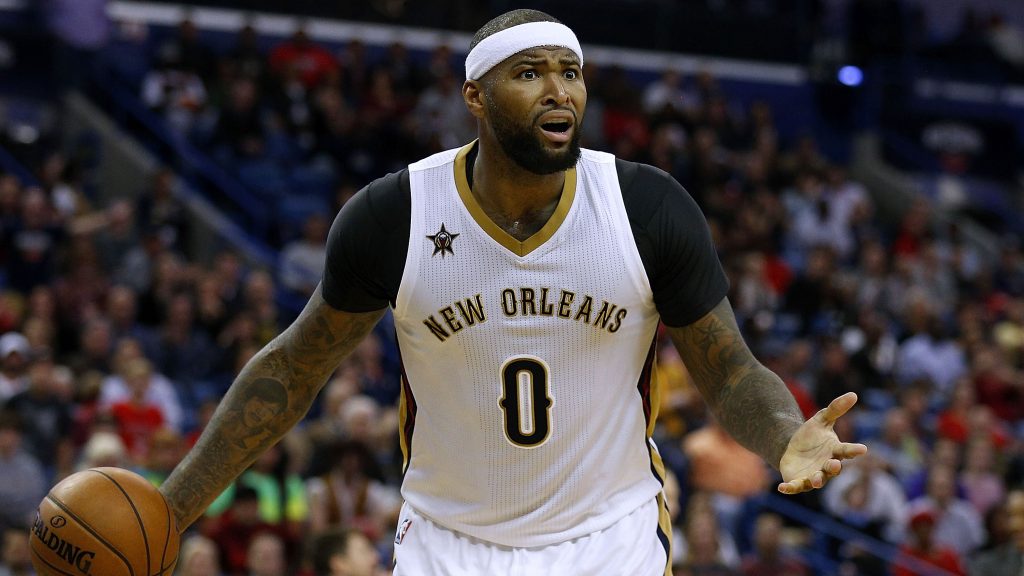
With teams not offering what he’s worth Demarcus Cousins (put in his stats) decided to join the back to back NBA champions on a one year $5.3 mid-level exception contract. It was a shocking move to the rest of the NBA. Due to his Achilles injury, offers weren’t flying left right and centre for him and there was rumours that Anthony Davis wasn’t even interested in keeping him at the New Orleans Pelicans. With the loss of McGee no one could have thought that a Demarcus Cousins addition to the organisation would be possible simply because of the salary cap alone. This now means GSW have a starting 5 of 5 All-Star calibre players, consisting of 2 MVP’s, 3 of the greatest shooters of all time, one former Defensive player of the year and one of the best big man in the game. Stacked can’t even begin to describe this team. The Golden State Warriors front office have done a marvellous job creating and drafting a winning culture and they’re favourites to win a title this year. Cousins has been known to be a disruptive character, however having already played with the current squad’s stars in the Olympics he’ll be sure to be on his best behaviour. Kevin Durant also signed a new 2-year $61.5 million contract with the Warriors taking a pay cut to keep the band all together.

Former New Orleans Pelicans makes shock move to the NBA champions The Golden State Warriors

Oklahoma City Thunders

Paul George decided to stay at the Thunders instead of playing with LeBron in LA. Signing a 4-year $137 million deal. Lots of speculation surrounded George as he left the Indiana Pacers with the hopes of landing in LA, but they weren’t aggressive enough in their pursuit of him and was eventually traded to the Oklahoma City Thunders. It means that Westbrook and George have another shot together after being bounced out of the first round in the playoffs last year to Rookie Donovan Mitchells Utah Jazz. This is definitely a blow to the Lakers as Cousins and George were both on their radar to make the squad championship ready.

It is also rumoured that the Thunders are looking to depart with Carmelo Anthony which will he interesting to see where he goes.

Charlotte Hornets have attained veteran player 4x NBA champion, 1x Finals MVP Tony Parker who left the San Antonio Spurs after a glorious span of 17 seasons there. This might spell the end of an era in San Antonio with all the core original players leaving or retiring. The organisation is currently in turmoil. Kawhi Leonard does not want to play for the team anymore having sat out the remainder of last season due to an injury to his quadriceps, although fans and pundits questioned the seriousness of that injury. Kawhi Leonard was pitted as the next MVP of the league and the second-best player in the game. The Spurs have no intention in trading him to the Lakers though as they wouldn’t want to help out a rival organisation without having come at a cost. Alternatively, if the Lakers wait it out for another year then Kawhi can leave the Spurs as a free agent. Whether the GM Magic Johnson can get Kawhi to sign to the Lakers is another story.

San Antonio Spurs’ Kawhi Leonard unhappy with his life at the organisation

With the offseason still going there’s sure to be more moves that teams want to make and setups they’re looking for with integration of their rookies from this year drafts and other free agents to ultimately get that prestigious Larry O’Brien trophy.