On Tuesday 13th November, the Fourth group held their annual Politics Summit. The Fourth Group, a public advocacy group that represents citizens’ interests in an ever-growing digital era is founded by Alvin Carpio. Their mission, is to essentially shape technology for all people, ensuring that everyone’s voice is heard.
When it comes to the digital age, we need to think about the how we as millennials can hold others to account for the use of our data.
Accountability
Nowadays, social media is the most efficient way to keep up with the latest news updates. Social media pushes and even obligates people to be accountable but an effective leader must be willing to be accountable without having the pressure to do so.
Many politicos have used social media to their advantage, by bombarding Twitter, Facebook and Instagram with heartwarming pictures and videos, making it an an easy place to gather supporters and even avoid mainstream media. But every rose has a thorn, and even social media has also brought an end to many political careers. According to POLITICO, in 2016, former Republican US presidential candidate Ted Cruz fired his spokesman, Rick Tyler, “for misrepresenting a video clip on social media that made it seem as though rival Marco Rubio was mocking the Bible” – a blatant attempt of social media manipulation gone wrong.
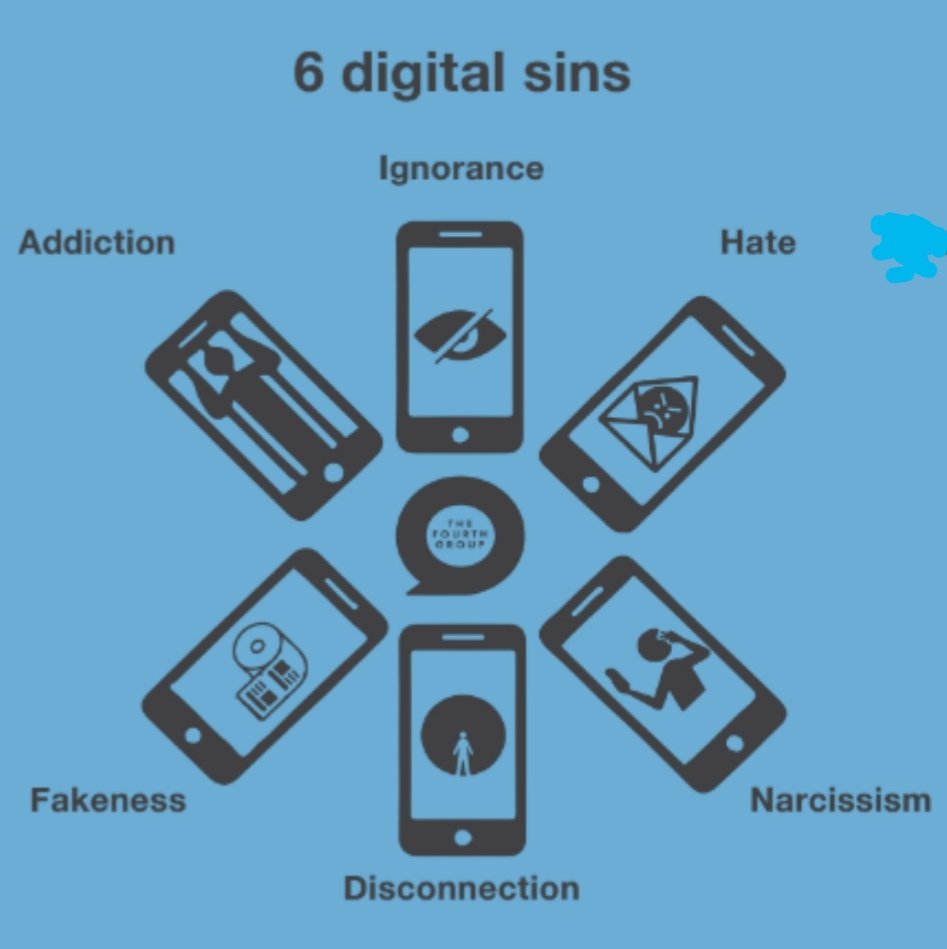
It’s a place where people have access to all manner of things, whereby many major news outlets have taken material from social media and broadcasted it. Director of the Global Social Entrepreneurship Network, Peter Ptashko, stated that two out of the six digital sins are ignorance and disconnection – two factors that affect our current leadership during this digital age, in that they are ignorant to the power and effect of social media causing them to be disconnected from their constituents as a result – which in turns leads to a lack of accountability.
6 Digital Sins presented by Peter Ptashko, Director of Global Social Entrepreneurship Network
Tech-savvy
Carrying on from the need for accountability of the leaders in a digital age, leaders would also need to primarily be ‘tech-savvy’, in that they would need to have an awareness of how to operate in a digital world so as to be able to be relatable to their constituents. Having said that, the most significant attribute of being a tech-savvy leader is the ability to communicate with different levels of tech ‘saviness’. This is needed in order to be able to relate to younger age groups who are very technologically knowledgeable and also to elderly groups who may well have a limited understanding in this area. Though a ‘tech savvy’ (political) leader may sound like a utopian concept, such a leader is the future of politics in age where the escape from technology with the hope of still remaining in touch with politics, is next to impossible.
Having said all this, there is no obligation for Theresa May to begin Snapchatting everything she says and does in the House of Commons or at EU negotiations, but rather there is (or should be) an obligation for current and future leaders to be aware of the ever-growing impact of technology in society, both in and outside of politics, and to respect and yield to that.
Kerric Harvey, author of the Encyclopedia of Social Media and Politics, stated: “Both the technology itself, and the way we choose to use the technology, makes it so that what ought to be a conversation is just a set of Post-it notes that are scattered,”. If we are to be true leaders in a digital age, we must hold the responsibility of making sense of these scattered notes and forming a clear bridge of trusted communication between the leader(s) and the citizens.
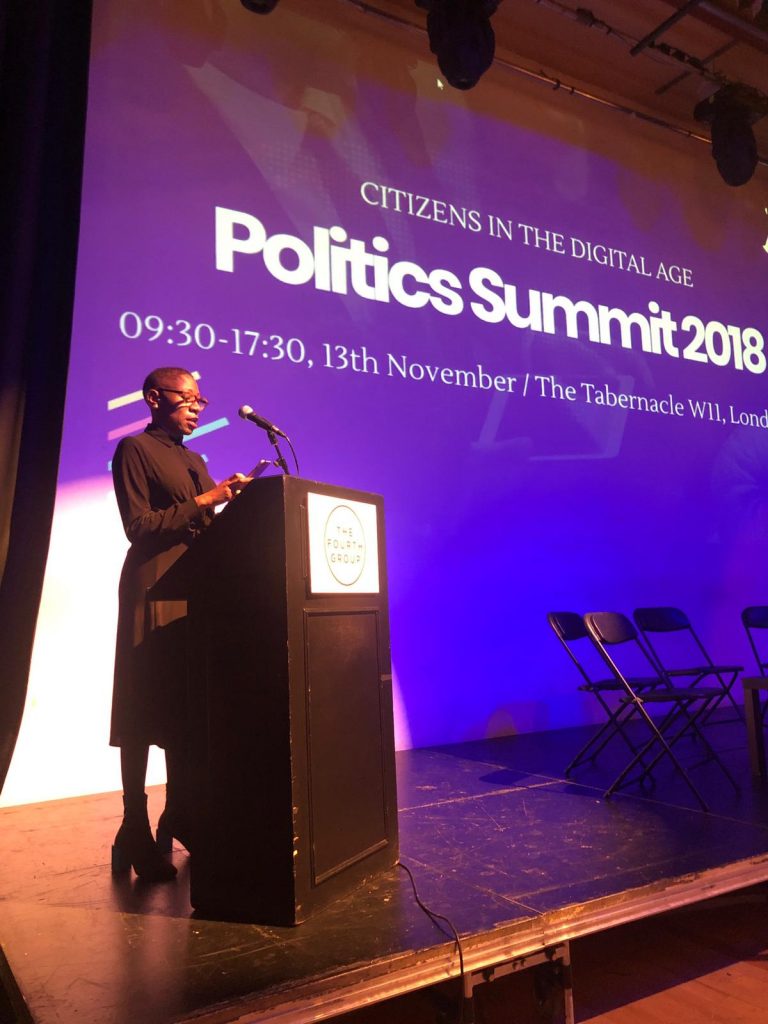
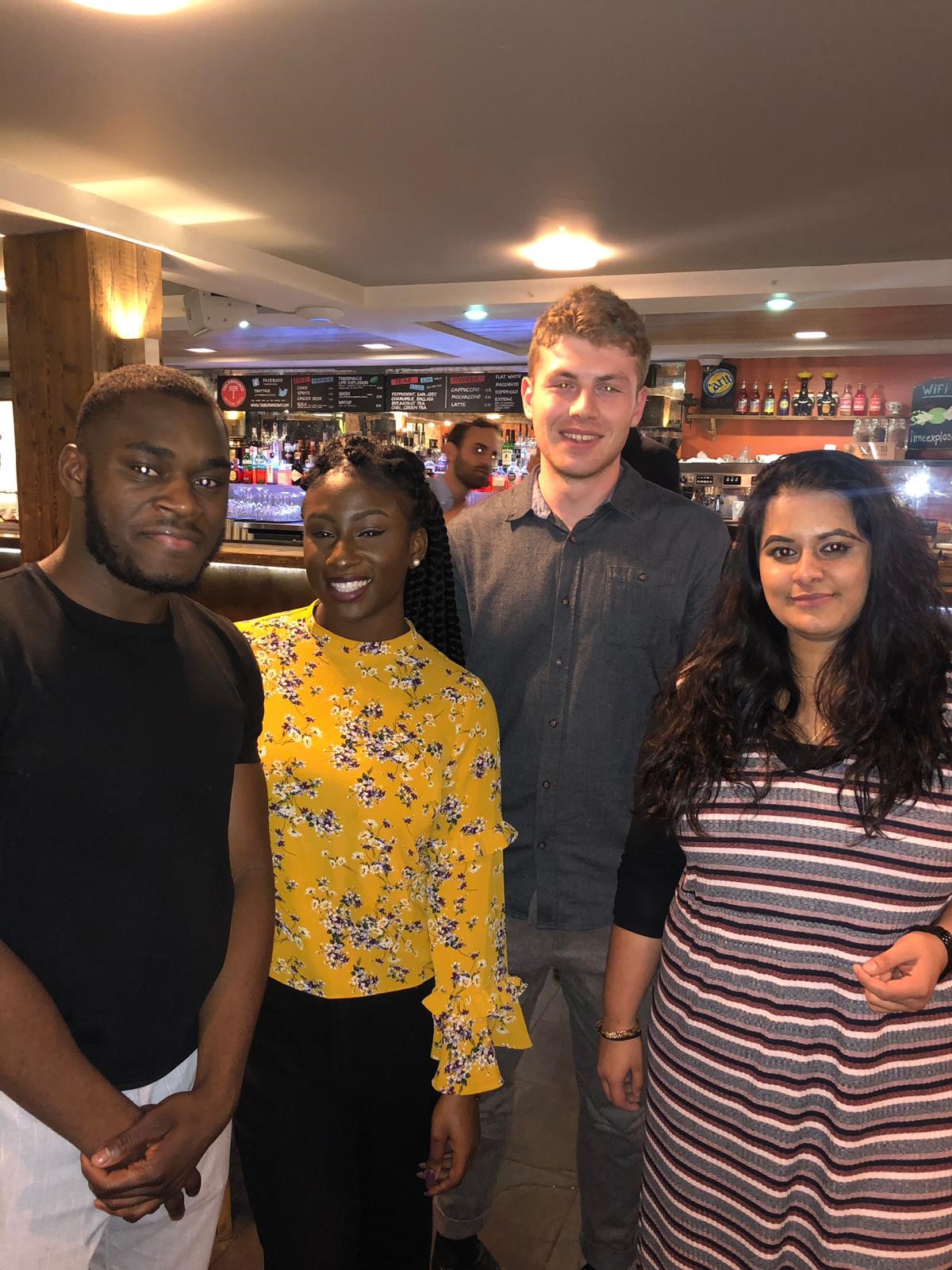
This Tuesday 13th November, the Common-Sense Network attended the Politics Summit 2018 in London.
The event was organised by The Fourth Group, led by CEO and founder Alvin Carpio. The day took a focus on our fast-changing role as citizens in the digital age, featuring speakers, panellists, and group discussions.
NEWS: A global coalition of community organisations – representing over 200,000 people worldwide – has launched a global inquiry into the problems caused by technology on society. To have your say and shape the agenda, go to https://t.co/DwGhxgGj4f. #UnitedCitizenspic.twitter.com/ZG4qYMLfCi
The event comes as part of the ‘We are #UnitedCitizens‘ campaign. A global coalition of companies and volunteers, with the long term objective of mobilising international citizens to take collective action, to ensure technology is a force for good.
At two years old, The Fourth Group, a crowdfunded initiative, delivered the Politics Summit, grouping new leaders together to raise awareness of the key issues that technology brings to our political processes.
The Summit featured guests and panelists ranged from tech leaders, CEOs, politicians, data experts, editors, and academics, racking heads together on topics such as fake news, data protection, and social media echo chambers.
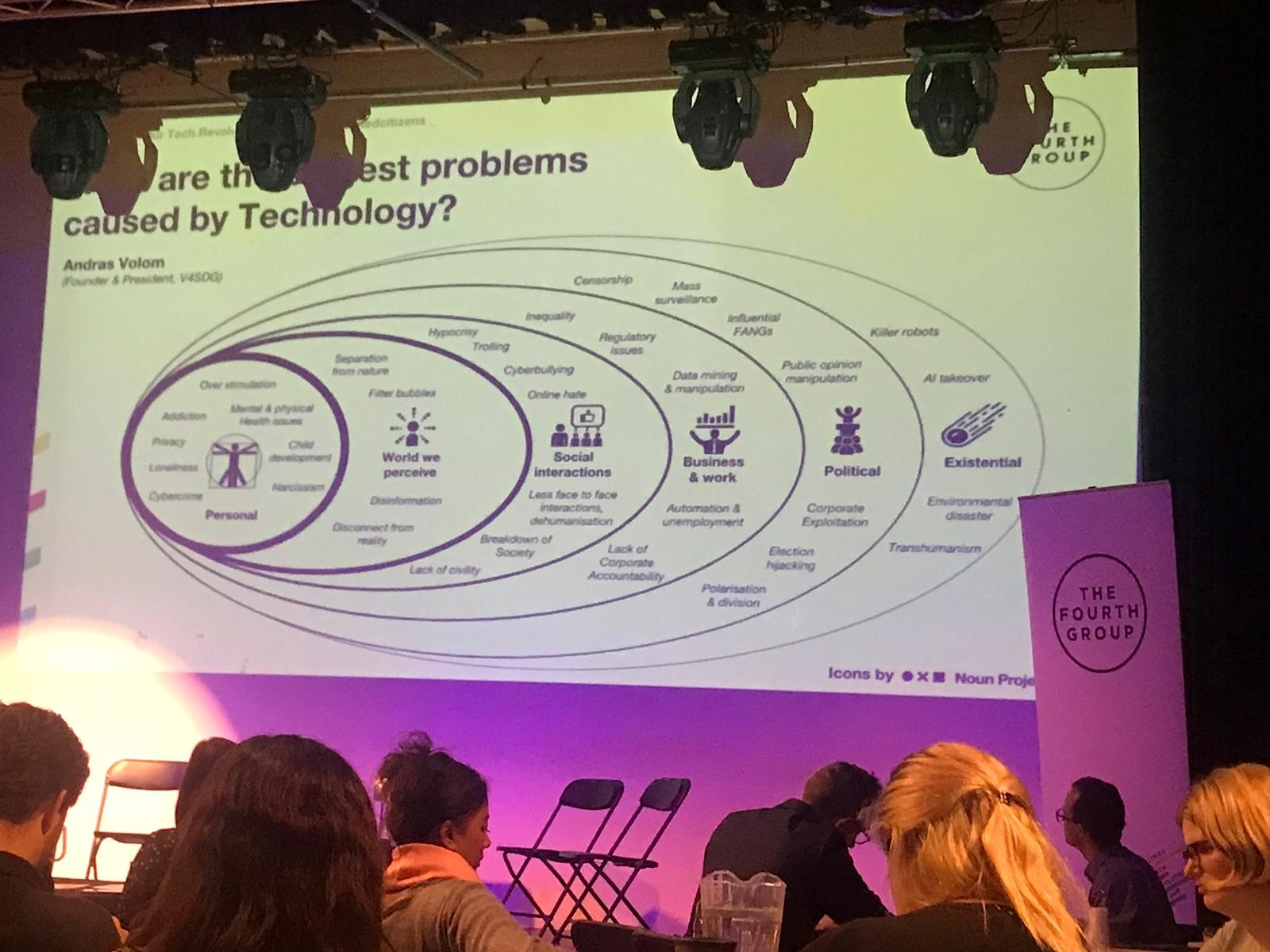
The day started with a collection of speakers introducing the key issues that we are now faced by us as citizens in the technological era. Andras Volom, President of V4SDG, broke these down to a broad range of concerns across our social, business, political lives and our existential future.
Andras Volom introduces issues caused by tech
Throughout the afternoon, myself and our other representatives from the Common Sense Network took a lead in debates over the causes and effects of social media echo chambers. Our contributions led panelists to consider the importance of not just tackling strong algorithms online, but also taking political discussions offline.
Democracy certainly requires accountability, collective action, and equal participation, which can become lost in the suffocating whirlpool of purposely controversial one line statements, endlessly piling on top of each other on our news feeds.
Many other speakers urged the audience not just to highlight the issues, but investigate measures we can take to solve them.
Malini Mehra for example, argued that alternatives to Facebook do exist, which can protect us having our data being used in ways we don’t want it to be (see Cambridge Analytica debate). The CEO of GLOBE Lesgislators enforced the point that an overuse of one platform leads to a frightening level of data knowledge and power given to one company.
Malini Mehra: Even amongst as these things we arent talking about the alternatives. We also have an assumption that the law makers have more power and resource – most are deeply under-resourced and underfunded. Be sure to send your reports to parliamentary libraries #PS18pic.twitter.com/AuGKhgWU83
A series of fascinating panel discussion that followed featured more radical proposals. Areeq Chowdury, CEO of WebRoots Democracy, shared his teams work on introducing a tax to be paid by the social media giants per user on their platform, which would then be redistributed back into the education and raising awareness of children/young people understanding their data.
Later speakers encouraged us to gaze further into the future.
Speaker Jamie Bartlett focused on the Cambridge Analytica scandal. The author highlighted that what is remarkable is not the scandal in itself but the speed at which the tools politicians can use to win votes are developing.
‘Elections being hacked’. What’s actually being hacked is trust. It’s now very easy to claim impropriety / cheating even if it made no difference to the result – because rules aren’t fit for purpose. This is why electoral reform is so vital.
Bartlett urged us to use our imagination and think about what tech in politics might look like in decades to come. Raising the somewhat comic possibility that data collecting fridges could present us with holograms of Donald Trump when we open them most at our most hungriest, and therefore most vulnerable to the messages of authoritarian leaders.
In summary, this hugely stimulating occasion recognised not only the biggest issues that tech presents to us today, but the signs of far broader impacts we must prepare for in the decades to come.
The Common Sense Network Team
It was a pleasure to meet so many others with similar objectives to the Common Sense Network, devoted keep our democractic systems alive and well in the ever changing world of technology. Thanks for having us! We look forward to next year.
The recent controversy about Anthony Ekundayo Lennon, a white man who identifies as black, who received the Talawa Theatre Company Artistic Director Leadership Programme (ADLP) has illuminated the discussion around whether identifying as ‘transracial’ is acceptable.
On one side, Anthony’s case presents a quandry vis-à-vis Rachel Dolezal who purposefully lied about being white and changed her appearance to hide the fact. Anthony on the other hand, while being of white-Irish parentage, from a young age was racially profiled as black because of his darker skin and afro-Caribbean hair. In Anthony’s instance does transracialism make sense? It throws up the nuances of the discussion as to what constitutes Black and Minority Ethnic (BAME)? Is it your immediate heritage or whether you can pass for white based on your features and skin colour?
Since the story broke last week, both Talawa and Anthony himself have responded in respective statements. Talawa takes the position that ‘in the spirit of inclusivity’ on the basis of which Talawa has operated since 1986, Anthony was awarded the traineeship as a person of mixed heritage. Michael Buffong further responds to the Anthony’s eligibility:
“About a year ago, I was made aware of some quotes taken from a book that Anthony had contributed to about his identity, these were contrary to what I had understood about him. I asked Anthony about this and he said he was misquoted. I took this very seriously and sought legal advice to check whether he was indeed eligible for the ADLP scheme. From the advice I was given, because of the complex nature of his case, he was deemed to still be eligible.”
Buffong also dispelled the myth that Anthony had received £400,000 worth of BAME funding which is not the case. Anthony’s own statement published in the Guardian, doesn’t really acknowledge his assuming a mixed-heritage identity but presents it tacitly. Talking of when he moved close to a black community at the age of 12 when his parents divorced:
“It was like being adopted or fostered by people who “got” you, or knew what you needed. It was at about that time that I heard the word “throwback”. I wasn’t sure what they were talking about. But in my mind there is no doubt that I have some African ancestry.”
The popular comparison to Lennon’s case is that of Rachel Dolezal but how they have both positioned themselves within the black community is crucially important, while Rachel had extreme appreciation of black culture, Lennon was defined that way by society and therefore welcomed as a mixed heritage individual. While Michael Buffong explains that Lennon’s story is complicated and said that he “welcome[s] the debate around identity and while I am no arbiter of that debate, surely we must acknowledge that there are nuances and grey areas.”
Of course, there are grey areas, nobody is disputing that fact. It is inherently hard to draw a line in terms of how far you go by generations to qualify as BAME. Or conversely how BAME do you have to look for you to qualify for opportunities, predicated on the fact that the more BAME you look the less opportunities you must have had in life. This is an accepted correlation by the Arts Council who has focused on the importance of diversity in relation to social mobility.
Like gender equality, the purpose of BAME initiatives is to make themselves redundant. Especially in the arts, BAME opportunities are working towards a future goal where there is diversity in race and backgrounds not only proportional to the ethnic mix in the UK but based on merit alone. They are a means to a truly multicultural end.
Re: Anthony Ekundayo Lennon situation. Have a watch of this BBC Doc. https://t.co/TJGY3LS11Z I think it puts things into perspective! Let’s not jump to conclusions until we know the full story. Skip to 5mins10secs
— Kalungi Ssebandeke aka Kalungi Fresh (@Kalungi_) November 4, 2018
To those who are asking whether transracialism will continue to grow and be accepted by society at large, for some the answer lies in the broadening of who is accepted for BAME opportunities. From the latest census findings BAME represent 16% of the working population, while the latest report from the Arts Council’s 2016-17 ‘Equality, Diversity and the Creative Case’ reported that only 10% of Artistic Directors were from BAME background – inferring that it is 6% lower than it should be. Although the Arts Council has only been collecting data on diversity since 2013, the categories and ways of collecting data seem to evolve as the debate around diversity continues. For example, In last year’s report, “white – other was included in the ‘Black and minority ethnic’ grouping. We now recognise this grouping does not give an accurate picture of ethnic diversity in the sector, so in this report ‘white – other’ is shown as a separate category.”
As well as this, the “prefer not to say” category also presents problems for comparability of the data year on year and prohibits the collection of diversity data from giving a full picture.
Further, within the report the statement from Sir Nicholas Serota CH addresses the successes of increasing diversity at all levels within the arts but also acknowledges the challenges and highlights leadership roles as an area to focus on. The report goes on to say that “…aspirations are not always translating into meaningful actions or significant appointments. The reasons are complex, but leadership plays a major role. More power should be in the hands of those who understand the need for change.”
The traineeship which Anthony is receiving is directly a corrective measure to increase the proportion of BAME individuals in leadership roles within the arts. According to Sir Nicholas’ statement, Anthony represent someone who understands the need for change however due to the limited opportunities available to BAME individuals in the positions were true change can be made, is it still fair for this opportunity to go to someone who is BAME in the arts council definition?
This is important because the popular conception now is that in the post-New Labour world, the multiculturalism project has failed. A survey carried out by the anti-fascist group Hope Not Hate, found that 43% of respondents predicted relationships between different communities would deteriorate over the next few years while only 14% who felt things would improve.
In today’s times we have much more nuanced approach to talking about identity in general whether it is about gender, race, religion, heritage and even ability. You can now add citizenship to that list following the Windrush scandal and the hostile environment policy set by the Home Office. Part of this is deconstructing what this identity means in terms of power and access, by outlining what is problematic in order for it to be corrected towards the aim of inclusivity. But those who are marginalised are not the only ones defining identity and especially from a racial perspective, far-right groups inherently have a problem with immigration and Islam. The defining of identity especially based on race looks set to continue, and the goal of BAME opportunities making themselves redundant looks like a distant dream moving further away. As such these BAME opportunities become all the more political with the grey areas and nuances presenting themselves as not speculative but real dilemmas.
Homera Cheema is a writer based in Manchester. After some years working in aid in the UK and in field missions she is now undertaking an MA in Creative Writing at Manchester Writing School and writes reviews on author events, books as well as articles.
‘Yeah, I’d say I’m pretty left.’ They said, nervously
circulating their gaze around the group, hoping the topic of discussion would
move on.
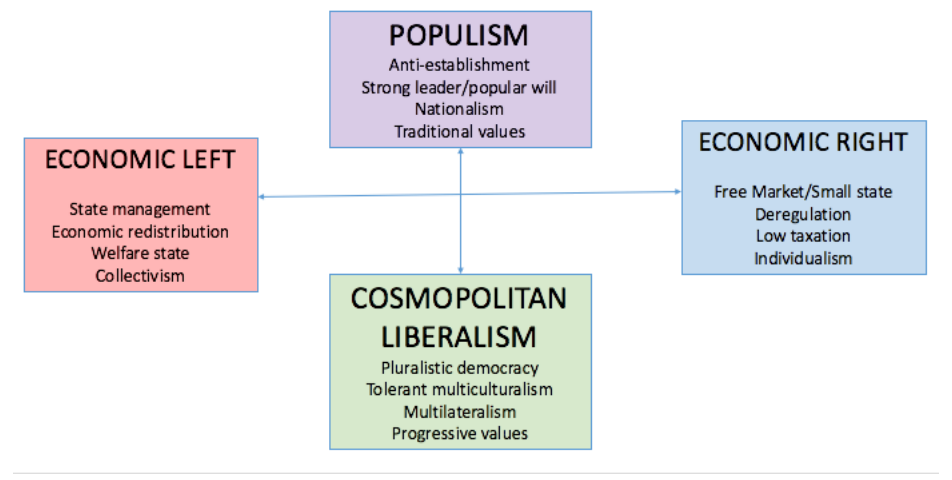
But what does being left-wing actually mean in 2018? After decades of people being split separate ways by a growing plethora of issues, can a simple left-right border line describe much about us at all? We are right to feel confused by a measure like this.
Where does left-right come from?
Originally it comes from a debate in 18th century
France. The left, who were against the
idea of a monarchy, opposed the right, who supported it.
In the UK, the left-right wing split was most prominently defined by a debate over how the government should manage the economy, after World War 2. The Labour party on the left, believed that industries such as the bank of England, coal, and transport, should be managed under government ownership, funded by taxation. The Conservatives, on the right, thought the government should let industry be privately managed by businesses, resulting in lower taxes.
The history of the left-right divide
However today this discussion is far less contested. In the
decades following, a broad consensus was reached that the majority of these industries
should became privately owned. By this measure Britain’s overall stance as a
country is ‘right wing’. That’s right, you’re right wing.
In the absence of calls for nationalisation, the right-left
divide became largely about debates over social welfare, education spending,
minimum wage and benefits.
In addition, social concerns surfaced as a large cause of
divide amongst voters; attitudes towards issues such as women’s rights, LGBT
rights, religion, and race, gained ‘left-right’ status.
The social vs economic left/right split
This made being left or right wing a delicately built hybrid
machine, made up of a growing package of views. Either side carries
connotations of beliefs on the government economic role, the monarchy, immigration,
attitudes to love life and everything in between.
This is problematic. There are lots of people who care about
the environment but favour a monarchy or low taxation. Equally wanting higher
taxes or opposing a monarchy doesn’t guarantee your passion for the
environment, show that you want to remain in the EU, reveal your thoughts on
immigration, or guarantees your opinion on LGBT+ for that matter
A Global World
Unfortunately, things aren’t getting any less complicated.
Every day that we roll out of bed there will be new issues we have to force
into the overcrowded left-right compartments.
A lot of our debates today are in fact no longer nationally
confined but centred around global issues, such as climate change, national identity,
the morals of artificial intelligence, and the EU.
Let’s take Brexit. The biggest debate of our time has been sided by an unconventional formation of left-right thinkers. With the desire to leave the EU having been championed by right wing voices like Nigel Farage and Boris Johnson, but also previously long campaigned for by ‘left-wing’ Labour leader Jeremy Corbyn.
On the flip side, the voice of remain is made up of a
mixture of left-right voices from Labour’s Chuka Ummanu, to Tony Blair, to
Conservatives David Cameron, and George Osborne.
With all this clutter in mind, trying to make yourself into
a person that can align as left or right wing causes more than a headache. It isn’t
really possible for most of us. In
reality these right-left camps are becoming more associated with identity or moral
connotations rather than having any particular meaning.
For example, universities are left wing places, where it is
good to be left wing. But in practise we all at university have our individual
takes on these complex bundles of issues, which would fail to complete the
paradigm of being ‘left wing’. In this respect being left or right wing might better
describe where we are, rather than who we are.
We need to update ourselves to new times. To avoid being trapped into the left-right debate. If anything, these false homes prevent our ability to discuss issues in detail, by checking our broken political compass for guidance.
In the late hours of Wednesday the 14th of November, a seemingly battered, yet gleeful Theresa May emerged from 10 Downing Street after what she titled “5 hours of heated debate”. She looked tired and flabbergasted, however, the news she had to share was positive. For the first time in 2 years, despite the bitter in-fighting and resignations, the Cabinet had finally backed her Brexit withdrawal plans.
She said she was optimistic and that ‘her head and heart’ were behind the deal as she proclaimed that cabinet unity would see the deal through.
Theresa May’s Brexit Statement in full
Resignations
Despite the earlier proclamation of unity, the morning after was not kind to Mrs May. Before 10:30am the next day an all too different story had emerged. Before her speech to Parliament was over, we had already seen at resignations from senior and junior ministers alike.
Down Goes Dominic
In a devastating blow, Brexit Secretary, Dominic Raab quit shortly before the prime minister was due to give her statement to MPs in parliament, saying he could not support the withdrawal agreement struck with the European Union and approved by Cabinet on Wednesday.
Raab, who is the second occupant of the office to resign this year, after David Davis’ departure in July, said he “cannot in good conscience support the terms proposed for our deal with the EU.”
In his resignation letter to the prime minister, Raab said he was concerned the regulatory regime for Northern Ireland proposed under the “backstop” guarantee (more on this later) for avoiding a hard border between Northern Ireland and the Republic of Ireland represented “a very real threat to the integrity of the United Kingdom.”
He added that he could not support an “indefinite” backstop arrangement. Raab had been known to favor a unilateral mechanism for the U.K. to leave the backstop — a provision which was not included in the draft withdrawal agreement published on Wednesday.
Today, I have resigned as Brexit Secretary. I cannot in good conscience support the terms proposed for our deal with the EU. Here is my letter to the PM explaining my reasons, and my enduring respect for her. pic.twitter.com/tf5CUZnnUz
McVey was next to go, quitting just an hour after Raab and was swiftly followed by Suella Braverman, a junior minister at the Department for Exiting the EU. Braverman, who is a former head of the European Research Group of backbench Brexiteer MPs, tweeted she looked forward to “working to support Brexit from the backbenches.”
In her letter to the prime minister, McVey, a longstanding Brexit supporter, accused May of putting a deal to Cabinet that “does not honor the result of the [2016 EU] referendum.”
“The proposals put before Cabinet, which will soon be judged by the entire country, means [sic] handing over around £39 billion to the EU without anything in return,” she wrote. “It will trap us in a customs union, despite you specifically promising the British people we would not be.”
McVey said “I could not look my constituents in the eye” and defend the draft deal.
In her resignation letter, Suella Braverman said that the negotiations had been an “uncomfortable journey.”
It is with deep regret and after reflection that I have had to tender my resignation today as a Brexit Minister. Thank you for the opportunity. I look forward to working to support Brexit from the Backbenches. This has not been an easy decision. pic.twitter.com/C0kply8aLE
“Throughout this process, I have compromised. I have put pragmatism ahead of idealism and understand that concessions are necessary in a negotiation,” she said. “However I have reached a point where I feel that these concessions do not respect the will of the people.”
Shailesh Vara, a junior minister responsible for Northern Ireland, also resigned. Vara said in his resignation letter that the draft withdrawal agreement doesn’t deliver on the promises made to voters, and “leaves the U.K. in a half-way house with no time limit on when we will finally be a sovereign state.”
She May’be Going
It did not take long to emerge that, as well as fighting to push this withdrawal agreement through parliament, a possibility that the parliamentary arithmetic does not allow, Mrs May might also have to fight for her political future as a vote of no-confidence looms ever closer.
Leading backbench Brexiteer Jacob Rees-Mogg submitted a letter of no confidence in her to Sir Graham Brady, chairman of the Tories’ backbench 1922 Committee.
Only 48 Tory MPs have to write letters to Sir Graham for a vote to be triggered.
Mr Rees-Mogg told reporters that the negotiations had “given way on all the key points” adding: “The deal risks Brexit because it is not a proper Brexit.”He denied being involved in a coup against the PM, saying he was “working through the procedures of the Conservative Party” which was “entirely constitutional”.
The embattled Prime Minister was briefing MPs in the House of Commons on the draft deal on Thursday morning amid rumours that the number of letters submitted by Tory MPs to the 1922 committee was nearing the 48 needed to trigger a confidence vote.
Mrs May is facing a battle to get the deal, which was passed by Cabinet on Wednesday night, through Parliament with Brexiteer Conservative MPs, Remainers, the Labour party and the DUP all saying they will vote down the plan. She has been accused of breaking promises and handing control back to Brussels.
How Would No Confidence Work?
A ‘no confidence vote’ takes place if the Prime Minister is no longer deemed fit to hold her role by her own MPs. A total of 48 Tory MPs must write to the party’s 1922 Committee chair Graham Brady to request a vote of confidence. If the Prime Minister won the confidence vote, she would remain in office and be awarded immunity for a year.
If the Prime Minister loses a confidence vote, she is obliged to resign and would be barred from standing in the leadership election that follows.
What Would Happen Next?
If this is the case, what is known as a two-week ‘cooling off’ period will commence. During this time, Parliament is dissolved, although Mrs May would still remain in Downing Street.
If the Tories cannot choose a new leader and form a new Government with the support of a majority of MPs within 14 calendar days, an early General Election is triggered.
A new government could also include a cross-party allegiance and could dramatically change the government as we understand it now. However, if an alternative government cannot be formed with a majority support, the prime minister would be forced to set a date for another general election – the second while Mrs May has been at Downing Street.
House Of Cards Deal
The draft withdrawal agreement is all about how the UK leaves the European Union. It’s not about any permanent future relationship.
Most of the details in there are of the financial settlement (often dubbed the divorce bill) that the two sides agreed some months ago: over time, it means the UK will pay at least £39bn to the EU to cover all its financial obligations.
There’s also a long section on citizens’ rights after Brexit for EU citizens in the UK and Brits elsewhere in Europe. It maintains their existing residency rights, but big questions remain about a host of issues, including the rights of UK citizens to work across borders elsewhere in the EU.
Some key takeaways.
Transition
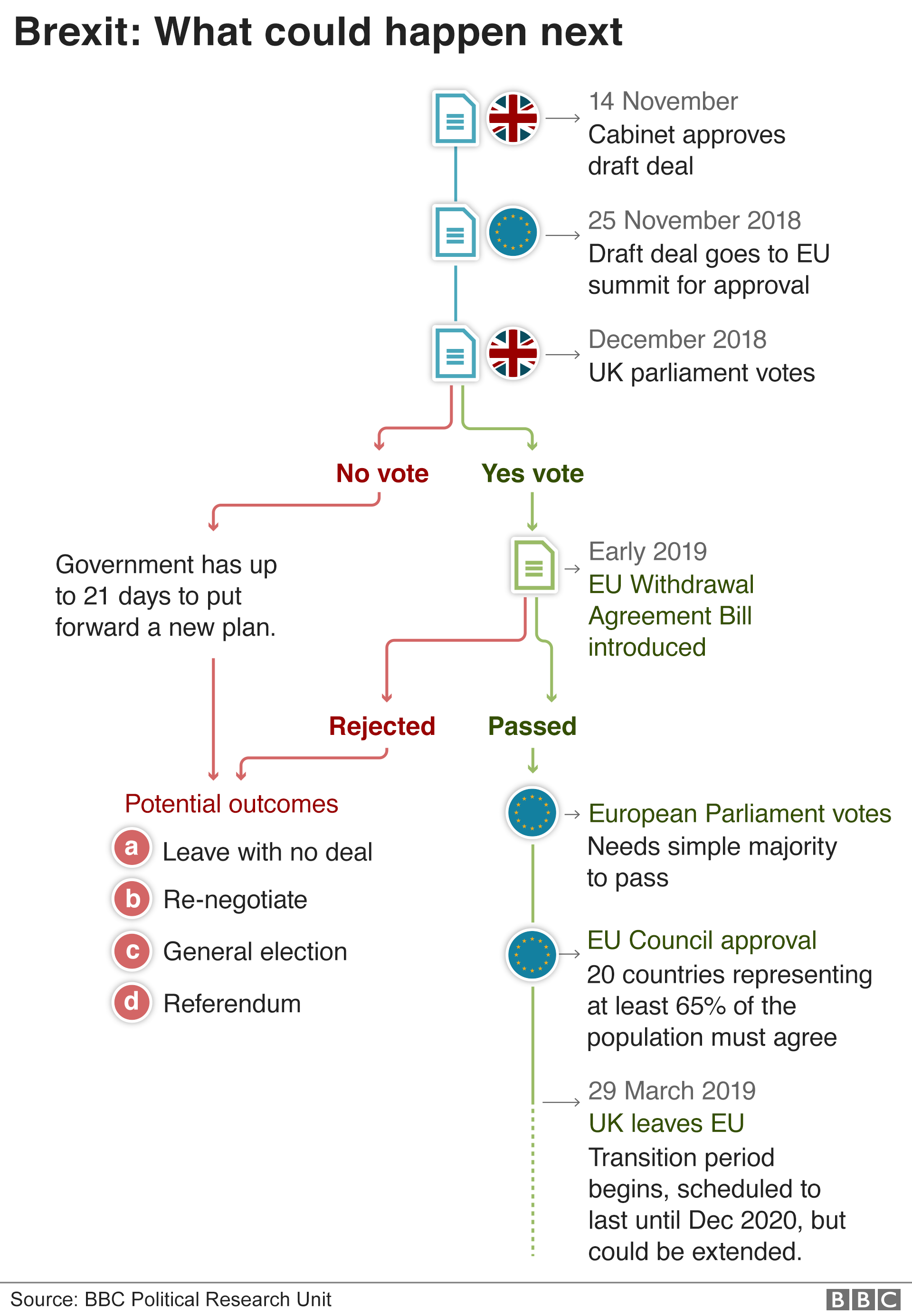
The legal basis for a transition (or implementation) period, beginning after Brexit is due to happen on 29 March 2019. It would be 21 months during which the UK would continue to follow all European Union rules (in order to give governments and businesses more time to prepare for long term change).
That means that during transition, the UK would remain under the jurisdiction of the European Court of Justice (in fact, the ECJ is mentioned more than 60 times in this document). The document says that decisions adopted by European Union institutions during this period “shall be binding on and in the United Kingdom”.
The transition period is also designed to allow time for the UK and the EU to reach a trade deal. The draft agreement says both sides will use their “best endeavours” to ensure that a long term trade deal is in place by the end of 2020. Significantly, if more time is needed, the option of extending the transition appears in the document (although, it makes it clear that the UK would have to pay for it).
The document doesn’t say how long the transition could be extended for (in fact they’ve left the date blank), only that the Joint Committee may take a decision “extending the transition period up to [31 December 20XX].” UK officials hope that the date will be clarified by the time of the proposed EU summit on 25 November.
Northern Island
If there was no long term trade agreement and no extension of the transition, that’s when the so-called “backstop” would kick in. It’s the issue that has dominated negotiations for the last few weeks and months: how to ensure that no hard border (with checks or physical infrastructure) emerges after Brexit between Northern Ireland and the Republic of Ireland.
Both sides agreed back in December 2017 that there should be a guarantee to avoid a hard border under all circumstances. That guarantee came to be known as the backstop, but agreeing a legal text proved very difficult.
So what exactly does this draft agreement say about the border, the backstop and the legal guarantees that underpin it? If a backstop is needed, it will – as expected – take the form of a temporary customs union encompassing not just Northern Ireland but the whole of the UK.The draft agreement describes this as a “single customs territory”.
Northern Ireland, though, will be in a deeper customs relationship with the EU than Great Britain, and even more closely tied to the rules of the EU single market.
Possible outcomes following the announcement of the Brexit withdrawal agreement
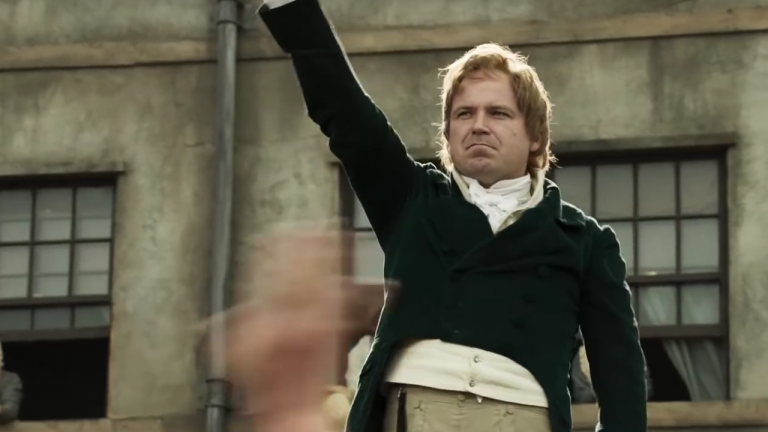
This month saw the release of Mike Leigh’s highly anticipated Peterloo. Peterloo tells the largely untold story of one of the worst massacres in British history at a democratic rally in Manchester’s St Peter’s Field. Having gathered in the hopes of improving parliamentary representation and suffrage, the crowd of 60,000-80,000 people found themselves charged upon and attacked by the Manchester and Salford Yeomanry. The estimations of fatalities have ranged between eleven and eighteen, with those injured fluctuating around the upper hundreds. Leigh has cited his own indignance at not being taught about this massacre during his school years as a key driver in his decision to make the film.
With most great films that address mass suffering, there is a focus on one individual in order to personalise atrocities that can otherwise be viewed in numerical and statistical terms. Leigh rejects this trope in a concerted effort to not value any one character’s experience at the expense of another, a tangible nod to the Mancunian unity felt keenly to this day.
While this decision is based in admirable sentiment, it ultimately leads to a lack of connection to the people involved, and multiple missed opportunities. One prime example being David Moorst’s character, Joseph. Seen in the opening sequence as a bewildered bugler at Waterloo, he provides the framework through which the brutalities of Waterloo and Peterloo are directly compared. It is painfully clear how deeply affected he is by war, and his suffering only increases when he finds returns to a home ravaged by industrialisation and the Corn Laws. Yet his true feelings regarding his situation are hardly explored, save from a brief seconds-long shot of him trying and failing to find work.
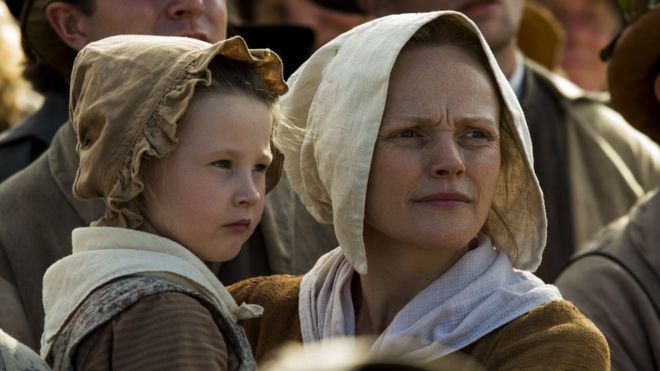
Maxine Peak (a still from the film Peterloo 2018)
The script itself is constructed with an expert hand, it holds a poetry that translates beautifully in both the pomposity of the upper classes and the rugged articulation of the lower. This is displayed particularly in the many rallying speeches we see delivered to the people of Lancashire throughout the first act. Leigh’s dedication to historical accuracy is distinctly clear in this area, almost to a fault. While it is true that Peterloo was a march inspired by words, the structure of rallying speech followed by rallying speech becomes repetitive. As with any over-communicated political slogan, the message loses impact, and the audience’s inspiration fades with it. It assumes an almost academic air and wrought up memories those scarce lessons when the teacher would allow you to watch a film – as long as they got to pick it.
What cannot be questioned, however, is the brilliance of the final act. With the massacre itself injected with a vibrancy of colour that directly contrasts the grim palette of the world presented previously, the film, rather ironically, comes to life when the life of many others is coming to an end. The massacre itself toes the line between realism and action with notable delicacy. Avoiding the usual bombasity of most action sequences, Leigh manages to communicate a sharp horror and sobering calm in equal measure. This is then followed with shots to the army general who skipped service in order to go to the races, and Tim McInnerny’s Cruikshank-esque portrayal of the prince regent who barely remembers Manchester’s name, which incites the first sharp sense of injustice on the behalf of the lower class.
It is, in some ways, a perfectly timed film. Just one year after the Manchester attack, and with the country’s democracy hurled into national question and debate over Brexit, this film should tap into many political frustrations being felt today. However, while the final payoff is beautifully crafted, this film requires a patience that I am sad to say I do not possess. By the time I reached the final moments, I was left wondering why my emotions had been neglected at first only to be deeply engaged in the closing scenes. What I was left with was a sense of being overwhelmed. Overwhelmed with information, the sheer length of the thing, and an enhanced discontent towards social inequality. Which, while I question the delivery, I suppose is what Leigh intended to inspire.
Ellie is a recent graduate in History and Politics from the University of Manchester. Originally from Bristol, Ellie moved to Manchester in 2015 and has no intention of leaving any time soon. She spent the final year of her degree as Editor of the university’s only historical publication, The Manchester Historian, and continues to present/produce weekly news videos for Manchester start up, Student Inspire Network. She has dreams of becoming a journalist and hopes to embed her passion for politics and popular culture in all of her work.
It’s long been a trope of left-leaning politics in the UK to criticise austerity and cuts to public funding. This occurrence is usually met with indignant criticisms of over-idealism and a move towards the dreaded ‘socialism’. When assessing the landscape of the past month’s headlines, however, it is clear that the true consequences and impacts of austerity have been displayed in all their ugly, naked truth. And not only have these outcomes come to the fore, but the foremost victims of austerity have become increasingly clear.
Public expenditure on the police force has dropped 18% since 2010. This continual decrease has resulted in a police culture based on prioritisation over need. They have been forced to focus their ever-diminishing resources on high crime such as terrorism at the expense of crimes considered to be of ‘lower impact’. While this prioritisatory approach has its benefits in maintaining the safety of the country as a whole, it is at the cost of individual safety and liberty of the youth, minorities, and women.
This comment in last week’s Question Time about Knife Crime calling for a ‘particular breed’ of human being ‘be dealt with like the cancer they are and exterminated’.
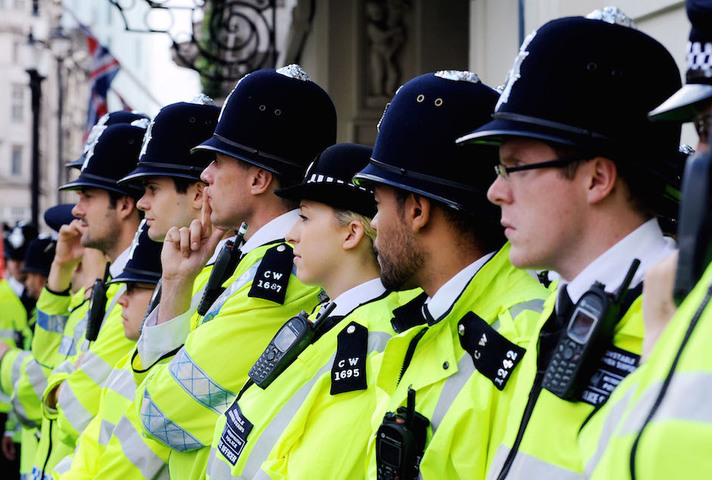
After the Question Time audience member said those who commit knife crime should be exterminated, Theresa May's new police force has been spotted. #bbcqtpic.twitter.com/HTKg89ZD1S
This discriminatory impact was presented clearly in British media over the last couple of weeks as London’s knife crime crisis took center stage once more. With Christmas still over a month away, knife crime in London is already at its highest since 2010 – with the majority of those involved, both victims and perpetrators, being young people. In a desperate situation such as this, discriminatory tactics such as stop and search thrive. And 2016 to 2017 saw black people being eight times more likely to be stopped than their white counterparts. London’s knife crime has become a microcosm of the disproportionately felt consequences of public cuts. Both young people and the black community are bearing the burden of responsibility and accountability for the crisis. But it is an irrefutable fact that cuts to police funding and the general hopelessness instilled in young people due to these cuts are a key component.
One prevailing voice that emerged following the revelation of the severity of London knife crime was that of senior police chief Sara Thornton. Though she did not aim criticism for the government for crippling her area of the public sector, she did not label cuts as the reason crime is on the up, she claimed that the police had to recognise less misogyny based hate crimes to free up resources. And all of a sudden, feminism too became a scapegoat for this government’s overzealous austerity.
Austerity doesn’t look like its going to end anytime soon, will the changes in the government and the focus on Brexit and other issues mean that policing if effected more than ever?
Ellie is a recent graduate in History and Politics from the University of Manchester. Originally from Bristol, Ellie moved to Manchester in 2015 and has no intention of leaving any time soon. She spent the final year of her degree as Editor of the university’s only historical publication, The Manchester Historian, and continues to present/produce weekly news videos for Manchester start up, Student Inspire Network. She has dreams of becoming a journalist and hopes to embed her passion for politics and popular culture in all of her work.
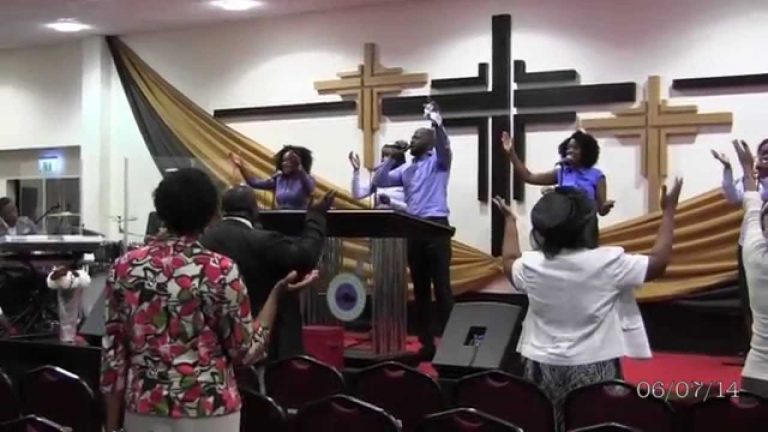
Earlier this week, a video was posted online about an undercover investigation conducted by ITV news on the alleged homosexual “conversion” in Winner’s Chapel ministry – causing uproar in the online Christian community. A reporter supposedly faked being a homosexual man in a pathetic attempt to attack the ministry. There are many problems with this investigation but because this isn’t a dissertation – I’ll keep this as a brief article on the few concerns held with this investigation.
Distortion of Christian values
The Christian community, for so long, has been defined as an intolerant section of society that reject anyone that doesn’t believe in Jesus, when this is simply false. At the end of the video, a caption states: “[The church] say they comply with the law and follow the “biblical teachings of love for everyone regardless of their belief, gender, background or sexual orientation”. That alone, is the gospel. Without pulling out scripture as evidence, the primary goal of the Christian community is to reach out to those who do not believe and, instead of excluding them, exemplify the love of God to them, which is exactly what the accused Pastor did. He took the time to sit in his office with the fake-homosexual reporter, educate him on his beliefs and even prayed with him in solitude for 20 minutes. This is all an example of love, the very foundation of the Christian faith. It is an outrage that ITV would try to use language such as “conversion therapy” to manipulate the public.
Believer sticks to their beliefs – shock horror (!)
In addition, the pastor of Winner’s Chapel ministry said and did NOTHING that was contrary to the Christian faith. It is no secret that Christians typically believe that homosexuality is against the teachings in the Bible – however; this does not mean that the entire Christian community hates all homosexual people. Like every religion, there are extremists that preach hate towards people that engage in homosexual activity when in fact – believers typically separate the act from the person – because they believe that all have sinned so none can judge other than God. The point is, not all believers are the same and no one should be shamed for what they believe in. Stop defining all Christians as hateful homophobes. It is unsettling that ITV would go undercover to investigate a church that believes and practices what the Bible teaches about homosexuality and call it “conversion therapy” so that legal action might be taken. They would never go to a mosque with this sort of energy, but the passivity of the Christian faith is often taken for granted. UK Media, either accurately report the values of the Christian community, or steer clear entirely. Enough distortion.
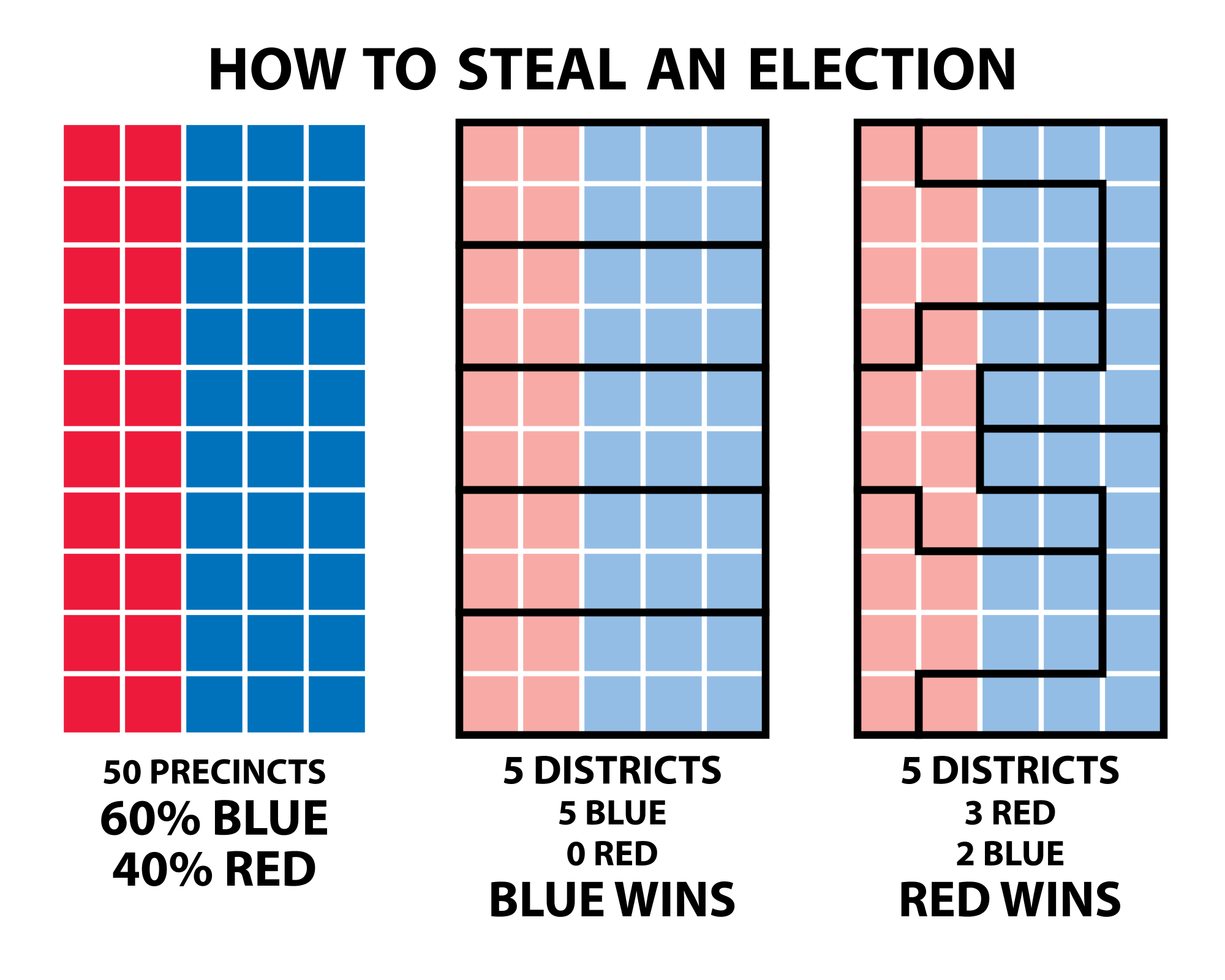
Last week, the United States held their bi-annual midterm elections to congress – which typically occur between presidential races (every 4 years). Each of the 435 individuals from the House of Representatives are up for election whilst only a third of the Senate are. So, members of the House serve only 2 year terms whilst Senators serve 6 year terms. During the midterm elections, a party requires 51 seats in order to control the Senate and 218 are required for the House. There are a number of issues with the US voting system. However, there are two big issues exclusive to the midterm elections – gerrymandering and the spoiler effect.
What is gerrymandering?
The act of gerrymandering is to manipulate/control the boundaries of electoral districts in order to give one party an unfair advantage over its rivals. This is used to weaken political enemies as well as protect incumbents – a common practice under plurality voting systems. During the 2016 midterm elections, many congressional seats won at the national and state levels were caused by some degree of gerrymandering by both Republicans and Democrats. One of the most famous examples concern District 1 and District 12 in North Carolina, where racial lines were unconstitutionally drawn to increase the populations of African American majorities.
Why ‘trusted’ political representatives even hold the power to draw boundary lines for their own political advantage is beyond any sort of sound reasoning. The US political system prides itself in checks and balances and the separation of powers between the executive, legislature and judiciary – yet the legislature holds the right to manipulate boundaries to increase chances of re-election. Although the Supreme Court has and can declare some instances of gerrymandering to be unconstitutional (as was the case with the two districts in North Carolina) it is difficult to understand why gerrymandering isn’t declared unconstitutional altogether. This manipulation of electoral results is likely to make anyone constituent feel uncomfortable.
What is the spoiler effect?
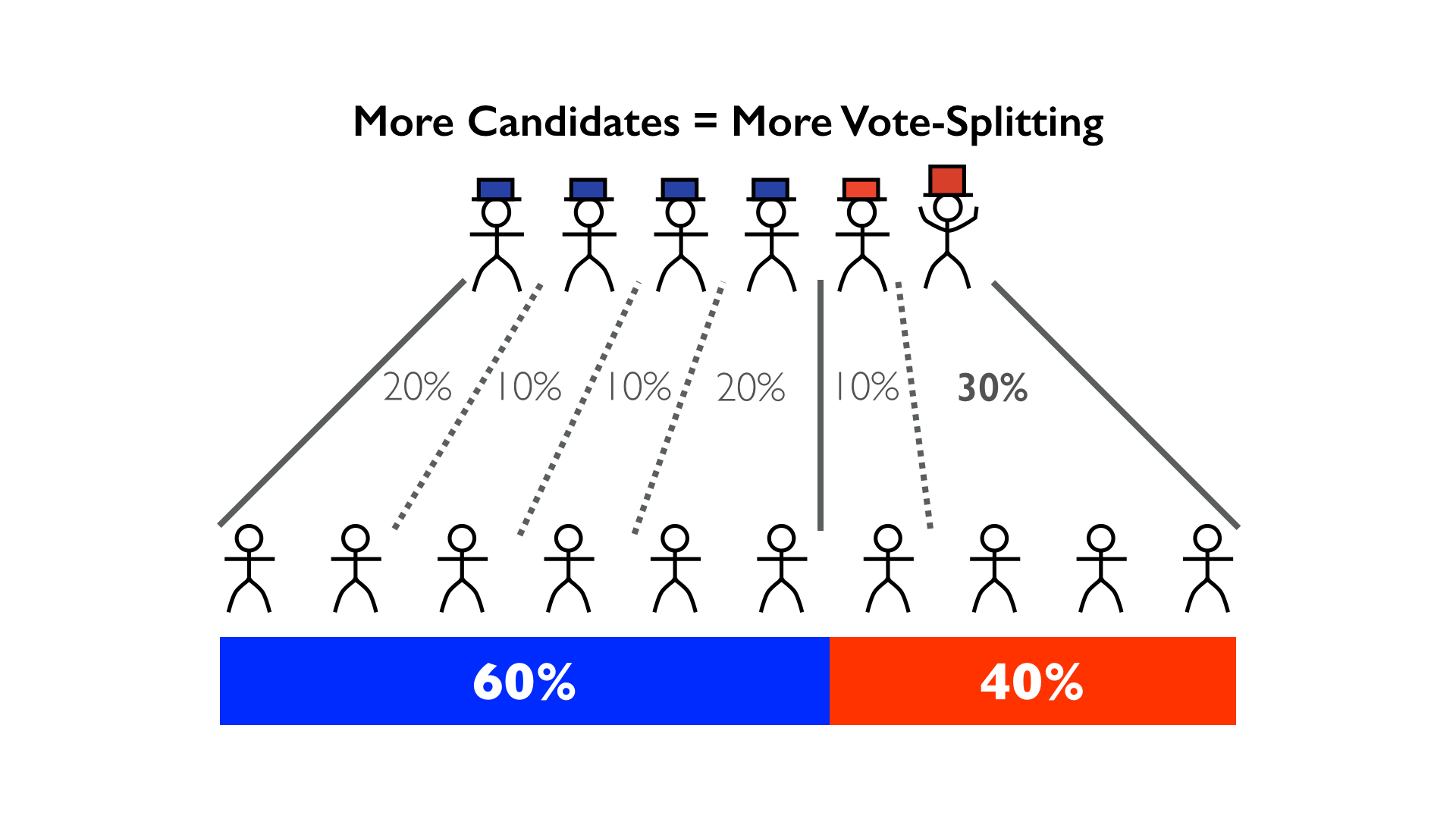
The US elections are prone to the spoiler effect. A spoiler is a non-winning candidate whose presence on the ballot affects which candidate wins, essentially a political candidate. In other words, they exist on the ballot simply to mess up the results.
This causes the “winner” of an election to be the candidate whom the majority of voters liked least. Such was the case in 2016, in the New Hampshire Senate midterm elections, “conservative independent candidate Aaron Day won about 18,000 votes. Given his political leanings, it is likely that the vast majority of his voters otherwise would have voted for incumbent Senator Kelly Ayotte, who lost to Governor Maggie Hassan by about 1,000 votes, thus costing Ayotte reelection”.
This characteristic of plurality elections leads to a bigger issues. With the end goal to keep the spoiler impact from adversely affecting their odds, political parties will confine the quantity of competitors running. This then leaves voters with no viable decision as races frequently include voters only endorsing the competitor picked by the majority party in their region.
Philip Bump for the Washington Post found that “1.5% of general election races in the U.S. from 2006 to 2012 were spoiled by third-party candidates”.
Though this is an almost non-existent amount, the very fact that this is even a tactic that exists, permits the co-existence of voter insecurity. I stand by the fact that no existing voting system is perfect, even the First-Past-The-Post voting system in the UK leads to the existence of safe seats and thus results in a number of wasted votes – however, the manipulation of electoral results in the UK is rare – and far too widely used or even considered in the United States. Abolition of gerrymandering is necessary, as for the spoiler effect, there is no legal grounds to oppose adding a “non winning candidate” to a ballot – it’s just an unfortunate loophole in the US electoral system.
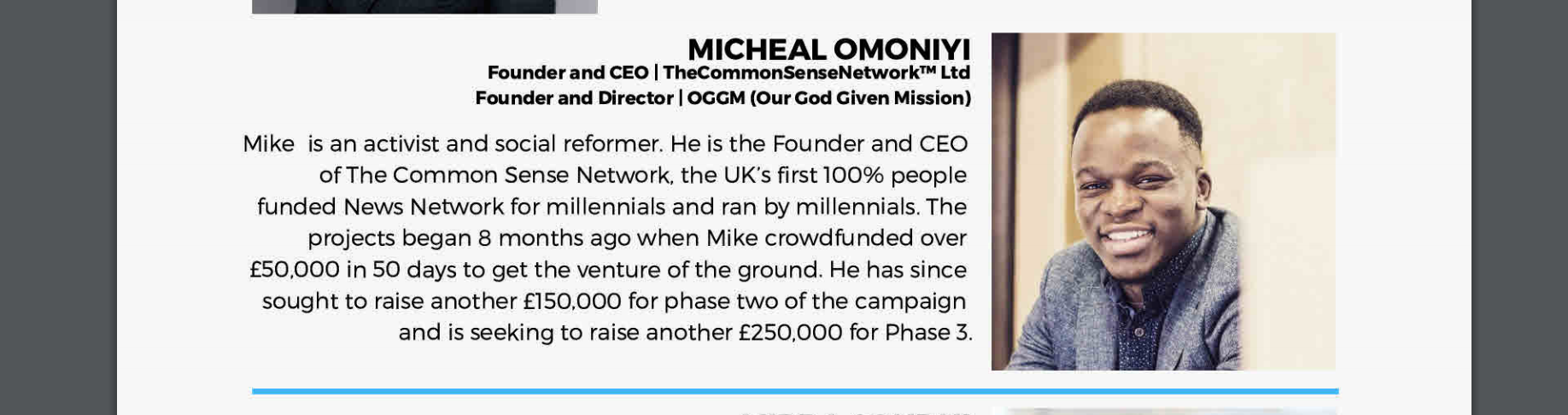
Founder and CEO of The Common Sense Network, Mike Omoniyi has been Recognised as Top 100 BAME Leader in Tech.
Mike Omoniyi has today been announced as one of the top 100 most influential Black, Asian Minority Ethnic (BAME) leaders in the UK tech sector. The list, produced by board appointments firm Inclusive Boards, will be released today at the House of Commons as part of the official launch of the Inclusive Tech Alliance.
The Alliance has been set up in response to new research by Inclusive Boards that will show the sector is significantly lagging behind others on diversity within senior leadership. The founder of the Inclusive Tech Alliance (ITA), Samuel Kasumu, who is also a member of the Prime Minister’s Race Disparity Advisory Board said:
“Technology is increasingly playing an important role in driving our economy and there is a great need to ensure that everyone can fully participate in the jobs and opportunities technology brings. Mike Omoniyi and others featured in this list today are role models that will inspire the next generation, and hopefully help to improve diversity within the sector.”
Excerpt on Mike Omoniyi in the Report.
Those featured in the top 100 include senior leaders from Facebook, LinkedIn, IBM, Twitter and financial services firm EY. Judges include Tim Sawyer CBE (COO, Innovate UK), Sandra Kerr OBE (Race Equality Director, Business in the Community), and Catherine Muirden (Director of HR, Co-Op Foods).
The Golden State Warriors is an organisation that has propelled its rankings in the NBA history books with Championships, MVP’s, record breaking numbers and being a modern super team that is considered as being in if not top 3 then certainly top 5 ever. Players have revolutionised today’s NBA in the way the game is played. They’ve brought back to back champions home, winning 3 championships in 4 years. They only have one singular goal in mind. To win.
Giannis Antetokounmpo (Photo by Stacy Revere/Getty Images)
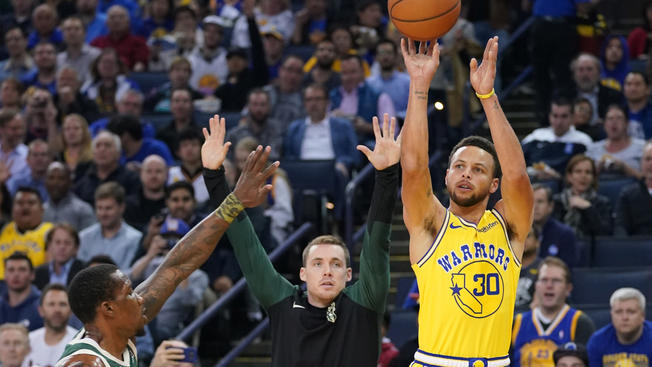
On November 9th the Golden State Warriors faced the Milwaukee Bucks at the Oracle Arena. To put it bluntly, it was a blowout and not something expectant of an NBA champion team.
The back to back champions with 2x MVP and best 3-point shooter in the game, 2x NBA final MVP and one of the best offensive weapons ever, the second-best shooter in the game and a defensive juggernaut the Golden State have no shortage of stars and fire power. However this game proved that the biggest stumbling block to that illusive three-peat title will be the Warriors themselves, with injuries from Draymond Green and the key bench player Shaun Livingston already out for this game. The depth of the team is weakened but with 3 All stars on the court and 2 of them being MVP winners and 1 of the 2 being a 2x MVP winners, surely the test of the Bucks who boast a very impressive record so far in the NBA championship could be a competitive thriller.
Giannis Antetokounmpo a.k.a the Greek Freak led his team to a win 134-111, with 24 points, 9 rebounds and 4 assists. Adding to his approval of possibly being this year’s MVP, his presence in the paint causes teams to shift their focus creating spaces for his perimeter teammates to shoot, especially having the ability to get to the basket in merely 2 steps means he’s an instant threat. Eric Bledsoe also had a great game putting up 26 points, 4 rebounds, 6 assists. The Bucks outscored the Warriors in the first 3 quarters with the final quarter having the Warriors only outscoring them by 3 points, by that time it was already over. With 5 of the Bucks players all at least having 15 points in the game, it was going to be a very good night for them. Klay Thompson was the only warrior with above 20 points whilst Kevin Durant had 17 points himself which is unusual of the 2017 NBA finals MVP. The Bucks are the number 1 team in the NBA at making 3-point shots closely followed by the Golden state Warriors, clearly the style the Bucks are adopting is quite reminiscent to the style that made Golden State so revolutionary in their 2015-16 season.
Steph Curry’s subpar performance against the Milwaukee Bucks that also ended with him coming off injured
With only 10 points in the game, Steph Curry pulled up injured with what seemed to be a muscle groin injury that came on unexpectedly and coincidentally also happened while he was having a terrible game overall.
It’s come to a few people’s attention that when Curry isn’t being as proficient or playing to his ability, an excuse in the form of an injury usually follows. I believe he was injured, but his performance was truly woeful with 5 for 14 shooting whilst playing 26 mins of basketball, he did manage 6 assists but really didn’t do enough to keep his team in the game. Overall this might all be blown out of proportion for the Warriors or it might genuinely be a chink in their armour and possibly a way how to beat them. Any doubts that the Bucks are not the real deal should be dispelled as their asserting themselves as an elite team in the NBA. The NBA season so far has been a thriller with the title contending teams not competing at the levels they should and out of contention teams picking themselves by the boots by having relatively winning starts.
The midterms, are a set of elections that take place every four years halfway into the current US President’s four-year term. The 2018 US midterm elections were an opportunity for Americans to judge and scrutinise Donald Trump and his administration since the start of his presidency two years ago. The 2018 results show a significant shift in power in the House of Representatives, weakening Trump’s position.
A Night Of Firsts
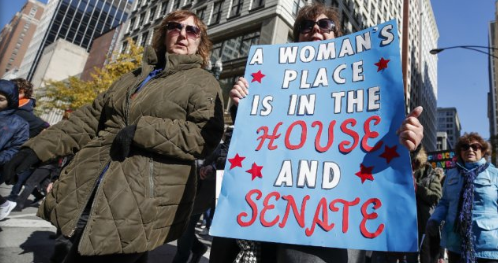
This year’s midterms recorded an unprecedented number of women winning, making history in Congress and American politics. Currently, 84 women serve in the U.S. House (61 Democrat and 23 Republican) and 23 (17 Democrat and 6 Republican) in the Senate. Overall, female representation in Congress has increased from 20% to 22%. In total, it is projected that at least 118 women will serve in the House and Senate, which marks major accomplishments for women.
It was a historic night in so many ways: For the first time ever, over 100 women were elected to Congress—including a record number of women of color.
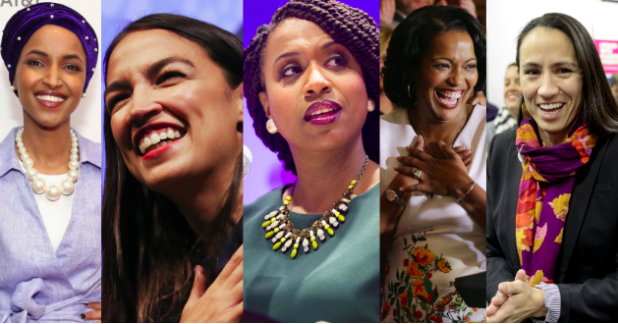
Several individual candidates achieved historic firsts: The nation’s first female House Speaker, Nancy Pelosi. Kansas’s Sharice Davids became the first-ever Native American and gay woman elected to Congress, along with New Mexico who elected Deb Haaland, a member of the Laguna Pueblo tribe. Michigan Democrat Rashida Tlaib and Democrat Ilhan Omar from Minnesota will become the first Muslim women in Congress; with also Tlaib being the first Palestinian-American, and Omar as the first Somali-American and Muslim refugee to take office.
African-American women will represent Massachusetts and Connecticut in Congress for the first time ever with Ayanna Pressley and Jahana Hayes. Veronica Escobar and Sylvia Garcia were elected by Texas voters as the first Hispanic women in Congress. At 29 years old, Alexandria Ocasio-Cortezwas elected in New York, making her the youngest woman to ever be elected in Congress. The first woman and first African-American to hold the role of attorney general, Democrat Letitia James, was also elected by New York. South Dakota (claimed by Kristi Noem), Maine (won by Janet Mills), and Guam (role filled by Lou Leo Guerrero) voters elected their first ever female governors in history.
This surge in female representation was driven largely by Democrats who took control of the House. Women will now historically represent two-thirds of the districts.
How Does This Compare To The UK?
With a new America on its way, resulting in a surge of female representation from the midterms, is the UK leading by example or do we need to follow America’s lead?
In the 2017 General Election, a record high of 208 women MPs were elected to the House of Commons, making up 32% of the House. As of January 2018, 206 female peers are Members of the House of Lords, making up 26% of the male-dominated House. Currently, there are 6 women including the Prime Minister (Theresa May), which is 26% of the total 23 permanent Cabinet posts. As of 1st October 2018, the UK is globally ranked at 38th and the U.S. ranked at 104th for the percentage of female representation in the Lower and Upper House.
Presently, the female population in the UK is 50.8% so we still have a long journey to go until females get an accurate representation in Parliament. However, we cannot ignore the fact that female representation in Parliament has increased, especially with Theresa May being the second female Prime Minister this country has had. As reported by YouGov polls, May has a rating of 32% positive opinion, 46% negative opinion and 21% are said to be neutral. Additionally, Margaret Thatcher (first female PM) was also not very much liked by the British public – with the Wizard of Oz song ‘Ding Dong! The Witch Is Dead’ reaching number two in the music charts following Thatcher’s death. This notably highlights the lack of fondness for the only female Prime Ministers the UK has ever had, perpetuating the view that women are not fit for a role in power.
Nevertheless, it is safe to say that the UK is leading by example for female representation compared to the US (current female population of 50.6%), but America deserves the praise it gets for making history in the 2018 midterms, not only in Congress but also in American politics. According to the CNN exit polls, nearly 80% of voters thought it was very important or somewhat important to see more women elected in public office. It is without a doubt that America will eventually climb the global ranking for female representation, bringing in new perspectives that could reshape policy in the future to come.
Jamie Aira Agbuya was born in the Philippines and grew up in the UK. She is currently studying American Studies at Swansea University. She blogs about mental health, writes poetry and short stories, and is currently a contributor for TCS. Her interests are in American history, culture and politics. Follow her on twitter @jamieaira.
Earlier this year the government introduced the highly controversial sugar tax and now, with this ongoing rhetoric of a “healthier Britain”, public health lobbies seek to extend this tax to red meat. The “meat tax” was suggested by the same pioneer of the controversial sugar levy – Oxford Professor Reverend Mike Rayner who is part of the Nuffield Department of Population Health.
What are the benefits of the meat tax?
Nutritional experts believe that this is the only way forward, if we are to reduce obesity in the United Kingdom, with researchers from the University of Oxford suggesting it could prevent more than 6,000 deaths and saving the NHS more than £700m in healthcare costs.
Why is red meat harmful?
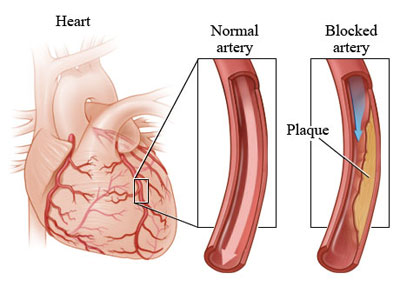
The simple answer is – Coronary Heart Disease (CHD). CHD – sometimes known as ischemic heart disease, has until recently (falling slightly behind dementia) been the biggest killer in the UK. It is characterised by the build-up of fat (atheroma) in the arteries, causing them to narrow and restrict blood flow to the heart.
A digram of the heart and arteries
The disease it turns out can be completely avoided and one of the biggest risk factors for it is obesity. Weight gain can increase the risk of diabetes (another risk factor for CHD), cause deposition of fat in arteries and increase blood pressure which all add to the likelihood of developing the condition.
Red meat can also increase the risk of other diseases. In 2015 the World Health Organisation warned that processed meats such as ham and bacon and red meat could increase the risk of developing cancer; pair that with habits like smoking and the risk gets even larger.
Other than health, our demand for red meat is also damaging the environment. 15% of greenhouse gases are contributed by farming of animals. Outside of the fact we burn fossil fuels for the transport and processing of meat, the sheer number of cattle being farmed – already impacts global warming. Cows contribute hugely to the build-up of greenhouse gases – through their expulsion of methane daily, and the more meat we eat the more cattle we need to farm – ultimately the more damage we do to our planet.
How much is this going to cost us?
A tax of 14% on red meat and 79% on processed meat could reduce consumption by two portions per week. So, an 8 pack of sausages could rise from £1.50 to £2.69. Sirloin steak from Tesco’s would rise from £3.80 to £4.33 for just 277g and a tin of span would rise from £1.50 to £2.68 and the list goes on.
The opposition
Whilst I’m sure vegans and vegetarians are either celebrating or laughing in the face of meat addicts – there is off course huge opposition. Liz Truss, the Secretary to the Treasury being just one of them. After hearing the proposal, she took to twitter to furiously share her opinions on the matter, writing “what a claptrap” to the suggestion of how many lives this tax could save. Chris Snowdon of the Institute of Economic Affairs also showed his frustrations.
“They’re now teaming up with the vegetarians and eco-warriors to make a meat more expensive.”
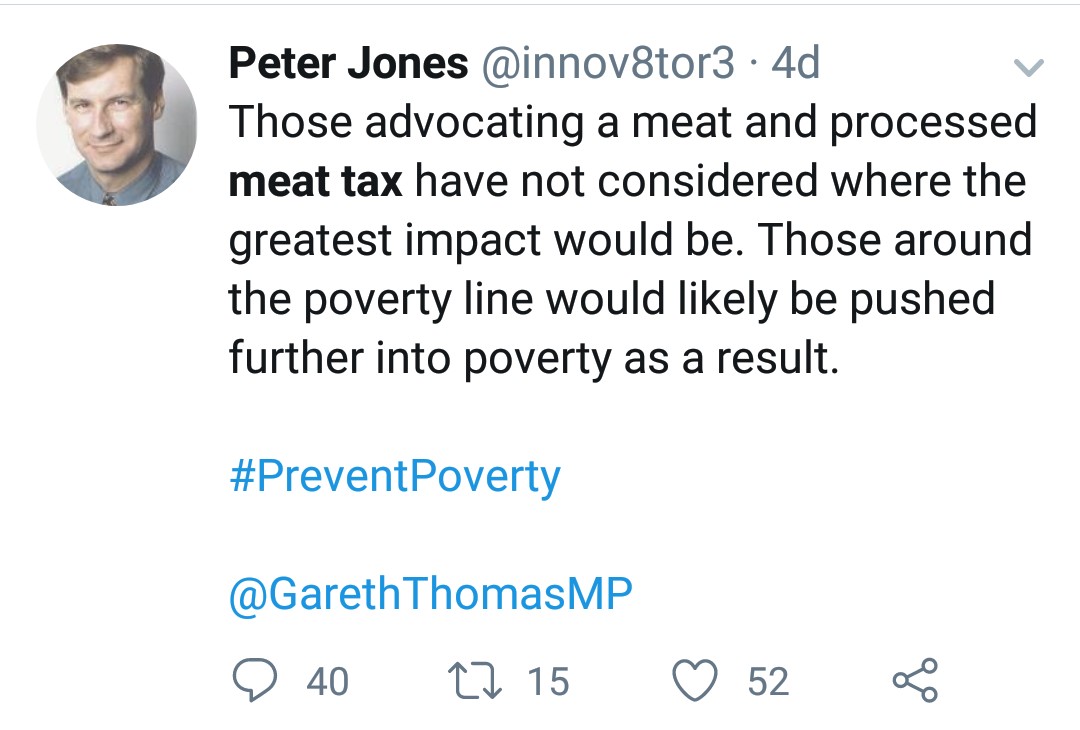
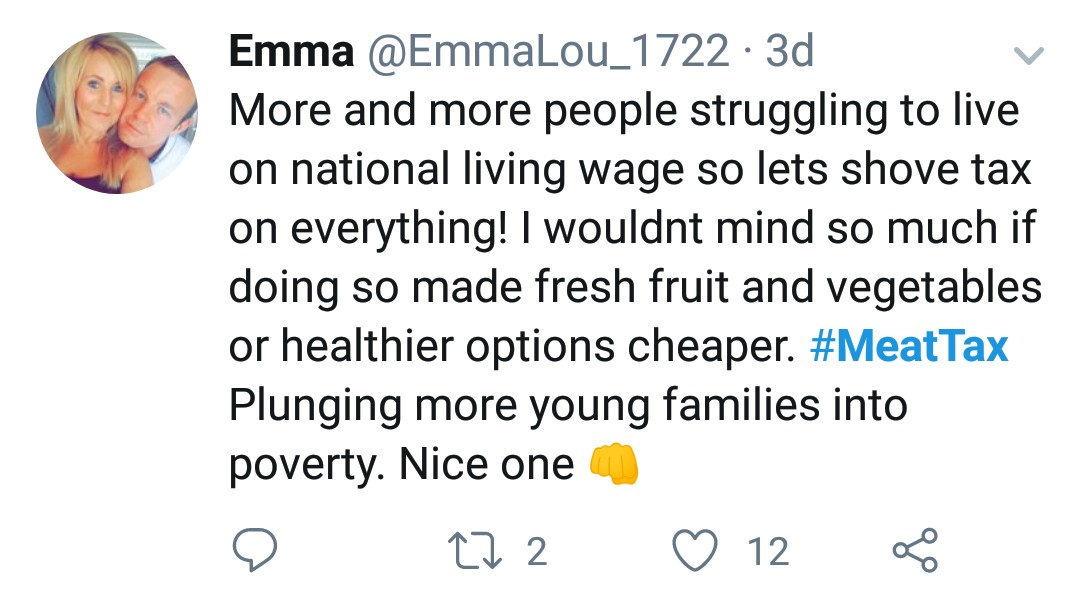
One thing that concerns some people is the effect the meat tax will have on low income households.
While this meat tax will take several years to see effect, one thing that is certain, it most definitely is inevitable. A big question does come to mind, will it work? The price of a fry up may increase, but the appetite of meat lovers certainly won’t reduce. Unfortunately taxing of red meat doesn’t mean the price of fruit and veg will go down, showing that the meat tax is only solving half the problem.
As someone who wants to go to into public health – spending many lessons in anatomy and physiology, learning about the consequences of obesity; at first glance, the meat tax seems like the saviour that could remedy this country’s emerging health crisis. Despite this, I have full social awareness, that unhealthy food tends to be the cheapest, which ultimately leaves me wondering – is this tax making the nation healthier – or punishing those on the poverty line for being poor?
Tanya is currently studying Biomedical Sciences at the University of Manchester and hopes to pursue a career in public health and African development. She is a lover of fashion, travelling and has a keen interest in racial- social issues. She enjoys learning languages, being fluent in two and is currently adding Spanish to her resume.
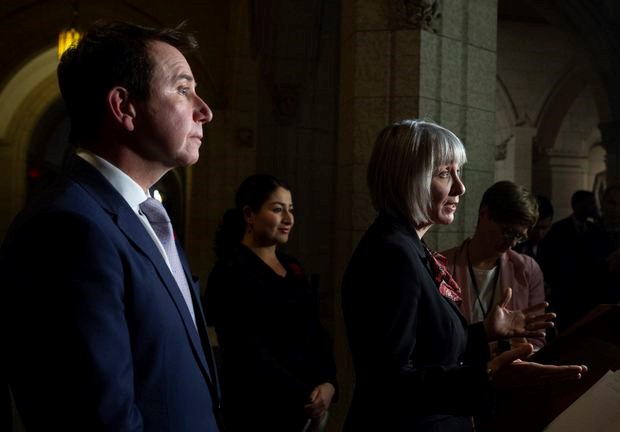
The Canadian government has announced its plan to introduce a pay equity legislation that is constructed to ensure that women and men receive equal pay in the federal workplace. The main objective of the legislation to protect women’s rights in the workplace by closing the pay gap between men and women in the workplace.
Under this legislation, federally regulated workplaces will be required to review their compensation practices and ensure that women and men receive equal pay for their value in the workplace such as the federal private sector, federal public service, Parliamentary workplaces and Minister’s offices will all need to abide by the pay equity legislation. They will have three years to implement the requirements stated by the legislation. The new regime will apply to federal employers with 10 or more employees. The government has set out two sets of requirements, one for employers with 10 to 99 employees and one for employers with over 100 employees.
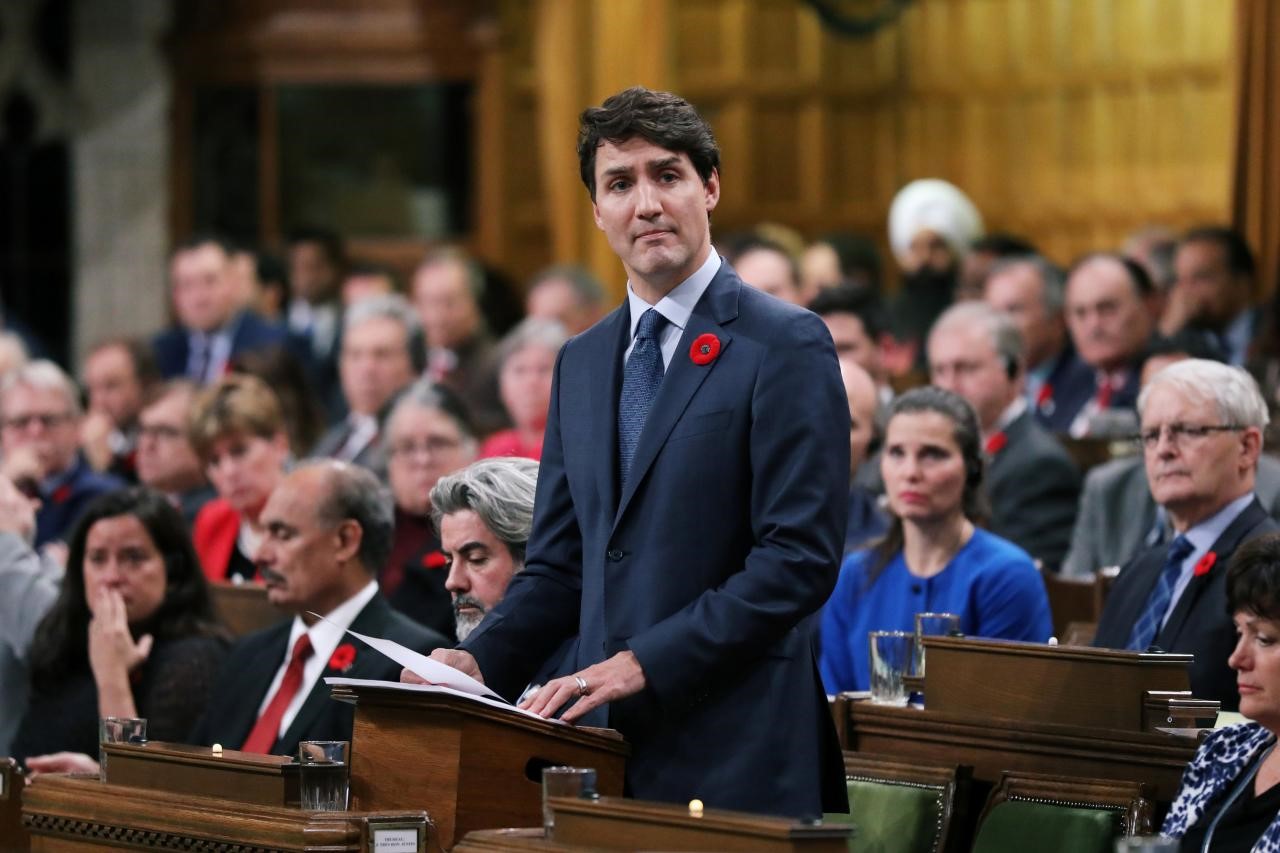
Justin Trudeau Prime Minister of Canada and Leader of the Liberal Party
The Canadian government have also announced that under this new legislation a Pay Equity Commissioner will be appointed, which will be under the support of the Canada Human Rights Commission. Under the decree of this law the Commissioner has several objectives under this legislation, such as ensuring that employers and workers know all the guidelines of the new law. Additionally, they are responsible for resolving pay disputes, carrying out audits and inquiries and imposing penalties for the violation of the pay equity legislation.
To highlight this conundrum that women face of underpayment in the workplace, Statistics Canada data revealed in 2017 that for every dollar a man earned, a woman earned 88.5 cents on the dollar as measured in hourly wages for full-time workers. Additionally, it was also underlined that when comparing the overall earnings on an annual basis, women earned even less by earning 69 cents for every dollar earned by men, despite having the same education qualifications and experience as their male counterparts.
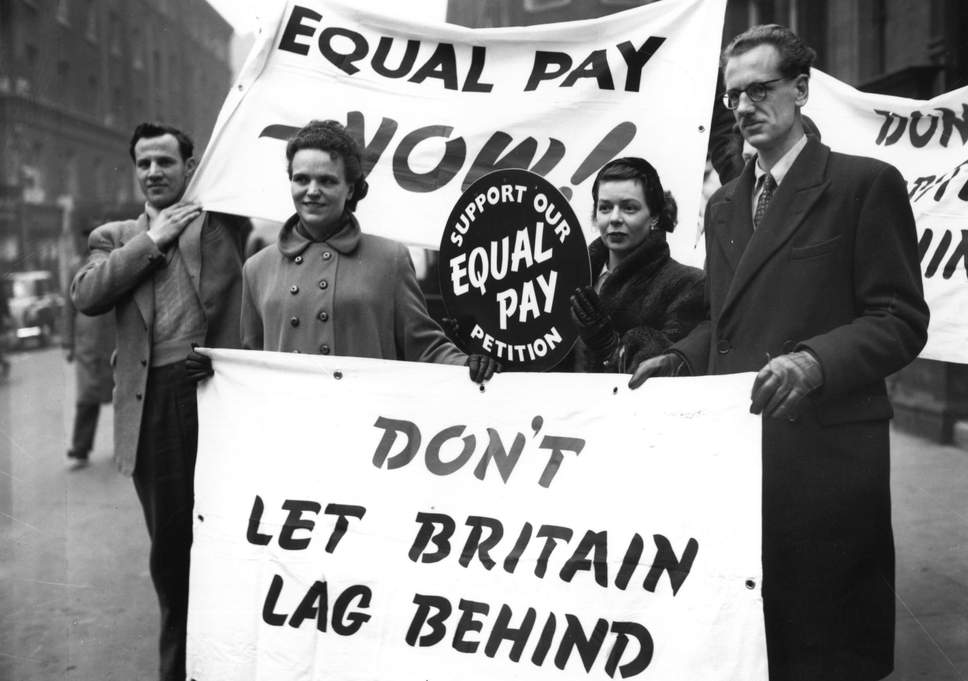
Equal Pay Campaigners in the UK in 1954
Advocates of Pay equity in Canada such as MP Terry Sheehan who has been a long advocate for pay equity in Canada, argues that this legislation has been long overdue at the same time he lauds the Government’s efforts to close this gender pay crisis in Canada. On the other hand, critics such as MP Sheila Malcolmson from the (NDP) New Democratic Party contend that the new legislation plan is a positive step in achieving equality for women, she also underlines the fact that the law does not consider the pay discrimination which minorities encounter, as the income disparity amongst minorities and people with disability is even wider, according to Statistics Canada Data.
Enoch Akinlade is a writer who has a profound interest in British, American and Canadian politics, and other topics such as health, social inequalities, crime and sport. Furthermore, he is also deeply interested in topics such as the criminal justice system in the United States, Britain, Australia and Canada. He is also highly interested in the Prison industrial complex in America.