Millions of public sector workers, including teachers, police and junior doctors, are to be offered pay rises between 5%-7%, the government says.
Police and prison officers will receive a 7% pay rise, while teachers and junior doctors will get a 6.5% and 6% rise respectively. Prime Minister Rishi Sunak said he had accepted recommendations made by the pay review bodies “in full”.
He said the rises would not be funded by borrowing more or increasing taxes. He added that the offer was “final” and further industrial action would not change that decision, saying: “There will be no more talks on pay. We will not negotiate again on this year’s settlements and no amount of strikes will change our decision.”
Following the announcement, the education unions said they would now put the offer to their members with a recommendation to accept the pay award, and said the deal would allow the strikes to be called off. Mr Sunak said the pay awards in the education department would be fully funded, but did not set out details how it would be achieved.
Over the past year, rising prices have prompted public sector workers to ask for pay rises matching or exceeding the rate of inflation which currently stands at 8.7%.
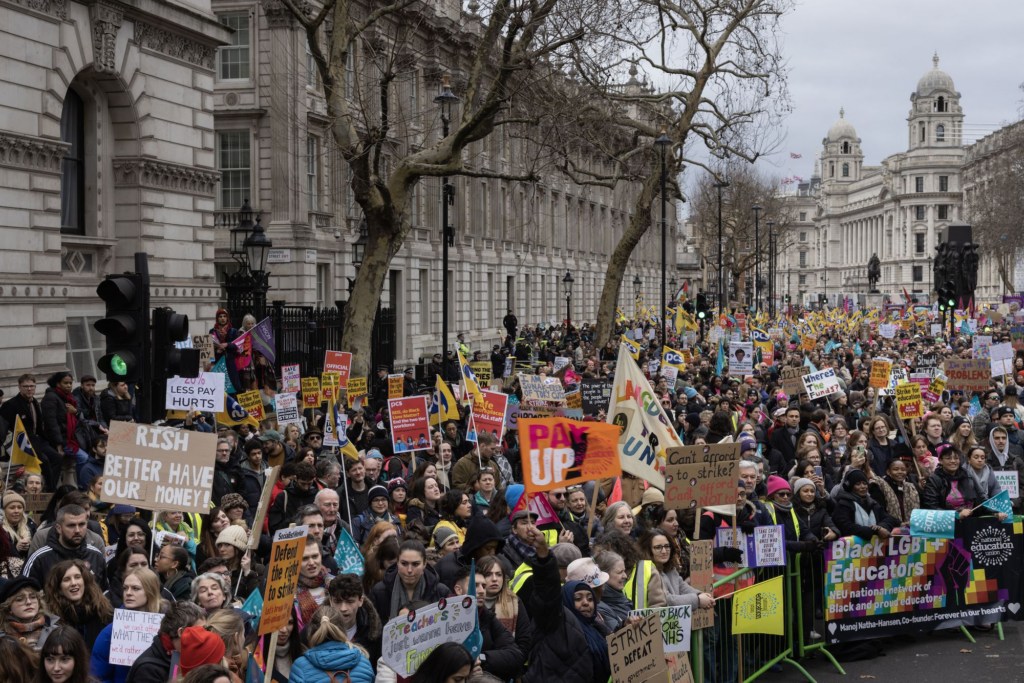
Disputes over salary have led to a series of strikes hitting schools and hospitals.
What pay rises have been offered?
- Police officers: 7% (England & Wales)
- Consultants, dentists and GPs: 6% (England)
- Junior doctors: 6% + £1,250 consolidated increase (England)
- Prison officers: 7% and more for support grades (England & Wales)
- Armed forces: 5% + £1,000 consolidated increase (UK)
- Teachers: 6.5% (England)
In welcome news for No 10, the leaders of the National Education Union, Association of School and College Leaders, National Association of Head Teachers and NASUWT said they hoped to “resume normal relations with government”.
Earlier this week, Jeremy Hunt said delivering “sound money” was the government’s number one focus. In a Mansion House speech, the chancellor said: “That means taking responsible decisions on public finances, including public sector pay, because more borrowing is itself inflationary.
“It means recognising that bringing down inflation puts more money into people’s pockets than any tax cut. And it means recognising that there can be no sustainable growth without eliminating the inflation that deters investment and erodes consumer confidence.”
Sunak was similarly strict about not adding more to the national debt when he was asked about the decision on public sector pay earlier this week.
Speaking at the Nato summit in Lithuania on Wednesday, the prime minister said: “Everyone knows the economic context we are in and we need to make sure that government decisions, particularly when it comes to not borrowing more, are made responsibly so we don’t fuel inflation, make it worse or last for longer.”